

Fokker D.XXI
The simple, rugged Dutch monoplane that made its name on skis over Finland
The Fokker D.XXI: the plain little fighter that became a Finnish legend
The Fokker D.XXI was never meant to be glamorous. It was designed to be cheap, simple and tough enough to fly from rough fields at the far edges of a small air force. That modesty is exactly why it is remembered: overwhelmed in five desperate days over the Netherlands in May 1940, the very same aircraft became a giant-killer on skis over the frozen forests of Finland.
Work began in the mid-1930s, a moment when fighter design was changing faster than budgets could follow. The sleek all-metal monoplane with a retractable undercarriage, enclosed cockpit and cannon armament was arriving, but it was expensive and complicated. Fokker, and its chief engineer Erich Schatzki, aimed at a different target: a fighter that a small or cash-strapped nation could actually afford, build under licence, and keep flying in the field. The prototype first flew on 27 March 1936.
The result was a deliberate compromise. The D.XXI kept a fixed, spatted undercarriage rather than a retractable one, saving weight, cost and complexity at the price of some top speed. Its structure was mixed: a welded steel-tube fuselage with fabric and metal skinning, and a plywood-skinned wooden wing. Power came from a licence-built Bristol Mercury radial of roughly 830 horsepower, and the armament was four rifle-calibre machine guns. Nothing about it was cutting-edge; everything about it was practical.
Simple, sturdy and forgiving, the D.XXI asked little of its pilots and its ground crews, and gave back reliability when it mattered most.
On paper it was already behind the curve when war came. A top speed of around 460 km/h and four light machine guns put it at a clear disadvantage against the Messerschmitt Bf 109. But the D.XXI was nimble at low and medium altitude, strong, and easy to maintain, and in the right hands and the right conditions those qualities counted for a great deal.
What makes the D.XXI so instructive is precisely that it was ordinary. It was not a secret weapon or a technological marvel; it was a sensible, affordable fighter of the kind many nations were buying in the late 1930s. Its career shows how much the fate of such an aircraft depends on things outside the design office, on strategy, numbers, geography and leadership, and how a machine dismissed as second-rate in one setting can become decisive in another.
The Netherlands built its own small batch and had roughly two dozen serviceable when Germany invaded on 10 May 1940. Finland, meanwhile, bought a licence and built the type at its State Aircraft Factory, and it was there, against the Soviet Air Force in the Winter War of 1939 to 1940, that the D.XXI found the war it was made for. Denmark also built a handful, and Republican Spain ordered a batch that the Civil War left largely unfinished.
The story of the D.XXI is therefore really two stories: a brave, doomed stand in the west, and an improbable run of success in the far north. Both are worth telling honestly, without the myth-making that so often attaches to underdog aircraft.
Nothing captures the second story better than a single morning. On 6 January 1940, over the frozen Gulf of Finland, a Finnish pilot named Jorma Sarvanto caught a formation of unescorted Soviet DB-3 bombers in his D.XXI and, in the space of a few minutes, shot down six of them. It was one of the most extraordinary single-sortie feats of the entire air war, and it was flown in an aircraft that the textbooks had already written off as obsolete. That contrast, humble machine, spectacular result, is the essence of the D.XXI.
It is worth stressing how modest the type looked to a contemporary eye. In an era when the Spitfire, the Bf 109 and the Hurricane were setting the standard, the D.XXI was fixed-geared, fabric-and-plywood in places, and armed with guns better suited to 1935 than 1940. Yet it was in production, it was affordable, and it was available in numbers that a small nation could actually put into the air, which in a real war counts for a great deal more than a specification sheet suggests.
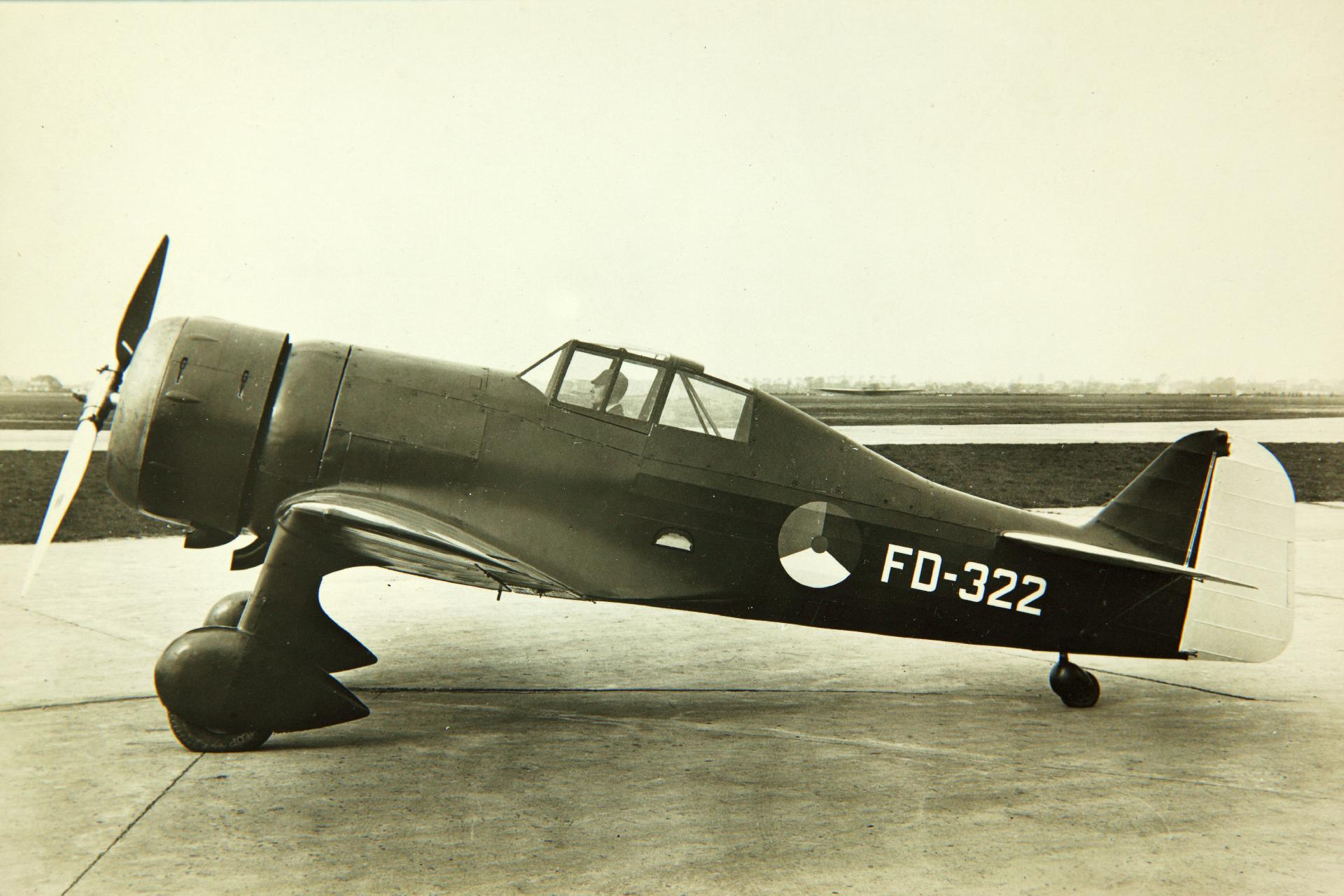
01Why the Fokker D.XXI was built simple on purpose
By the mid-1930s the writing was on the wall for the open-cockpit biplane fighter, but the fully modern monoplane, all-metal, retractable, cannon-armed, was costly. Fokker and Erich Schatzki set out to bridge that gap with an aircraft a small air force could buy in numbers or build under licence. The fixed undercarriage, mixed wood-and-metal structure and rifle-calibre guns were not oversights; they were deliberate choices to keep the aircraft affordable and easy to service.
The gamble was that ruggedness, ease of maintenance and pleasant handling would matter more, for the customers Fokker had in mind, than the last thirty kilometres per hour of top speed. In Finland that gamble paid off spectacularly; over the Netherlands it did not, though there the problem was numbers and opposition rather than the aeroplane itself.
There is a wider lesson in the design brief, too. Fokker had been one of the great names of the First World War and the 1920s, but by the mid-1930s it was struggling to keep pace with the all-metal, high-technology direction that fighter design was taking. The D.XXI was, in part, a pragmatic answer to that pressure: rather than compete head-on with the most advanced fighters, Fokker built something it could sell to the many air forces that could not afford the state of the art. It was a commercial strategy as much as an engineering one.
02The Fokker D.XXI and the small-air-force fighter
The D.XXI belongs to a small family of late-1930s fighters, alongside types like the Fiat G.50 and the Brewster Buffalo, that ended up serving with air forces on the margins of the great powers. What set the Fokker apart was how well it suited operators who valued reliability and simple field maintenance over outright performance.
Exactly how many were built is quoted differently by different sources, commonly somewhere around 150 completed machines across the Netherlands, Finland and Denmark, with the unfinished Spanish licence batch pushing higher totals in some accounts. Treat any single figure as an estimate.
The spread of operators tells its own story. A fighter designed in the Netherlands ended up being built under licence in Finland and Denmark and ordered by Republican Spain, precisely because it was the kind of aircraft a national industry could take on without vast resources. That licence-friendly simplicity is why the type saw combat in theatres as different as the Low Countries and the Arctic, and why its longest and most successful career unfolded far from the country that designed it.
03Two very different wars: how one aircraft earned two reputations
Few aircraft carry two reputations as different as the D.XXI does. To a Dutch audience it is remembered for a courageous, hopeless defence in May 1940, a symbol of a small country overwhelmed. To a Finnish audience it is a national hero, the fighter that helped hold off the Soviet Air Force in the darkest winter of the Winter War.
Both memories are accurate, and the difference between them has almost nothing to do with the aircraft and almost everything to do with circumstance: the opposition it faced, the numbers available, the conditions it operated in, and the tactics of the men who flew it. Understanding the D.XXI means holding both of those truths at once, and resisting the urge to flatten them into a single simple verdict.
What the Fokker D.XXI got right, and what it gave away
The D.XXI was an exercise in disciplined compromise. Nearly every design decision traded a little performance for a lot of simplicity, cost and durability, and understanding those trades is the key to understanding the aircraft.
Where a fighter like the Bf 109 or the Spitfire represented the leading edge of 1930s aeronautical engineering, the D.XXI was consciously a generation behind, and it was built that way on purpose. Its designers were not trying to win a performance contest; they were trying to deliver a serviceable, affordable fighter that a modest air force could buy, build and keep in the air. Every choice, from the fixed gear to the mixed structure to the rifle-calibre guns, flows from that single objective.
The pay-off was an aircraft that was strong, easy to fly and, crucially, easy to look after. In an age when many advanced fighters demanded skilled maintenance and careful handling, the D.XXI was tolerant of rough fields, hard use and less experienced hands. Those are unglamorous virtues, but they are exactly the ones that decide how many aircraft a small air force can actually put over the front on any given day.
A mixed, rugged structure
The D.XXI used a welded steel-tube fuselage with mixed metal and fabric covering and a wooden, plywood-skinned wing. It was not the lightest or most modern approach, but it was strong, cheap, and repairable with basic tools and materials in the field, exactly what a small air force needed.
Fixed gear and an enclosed cockpit
The most visible compromise was the fixed, spatted undercarriage. It cost speed through drag, but it saved weight, complexity and maintenance, and it made the aircraft easy to operate from rough or snow-covered strips, especially once fitted with skis. The cockpit was enclosed and gave a good view.
Bristol Mercury power, four light guns
A licence-built Bristol Mercury radial of roughly 830 hp drove the D.XXI to about 460 km/h. Armament was four rifle-calibre machine guns, commonly cited as 7.9 mm, light by 1940 standards but reliable and enough against the lightly built aircraft it usually met over Finland.
Built to be built anywhere
Perhaps the cleverest thing about the D.XXI was how easy it was to manufacture. Its simple, well-understood construction meant it could be licence-built by modest national industries in Finland and Denmark, and ordered by Spain, without the tooling and expertise a stressed-metal fighter demanded. That, as much as its flying qualities, shaped where and how it fought.
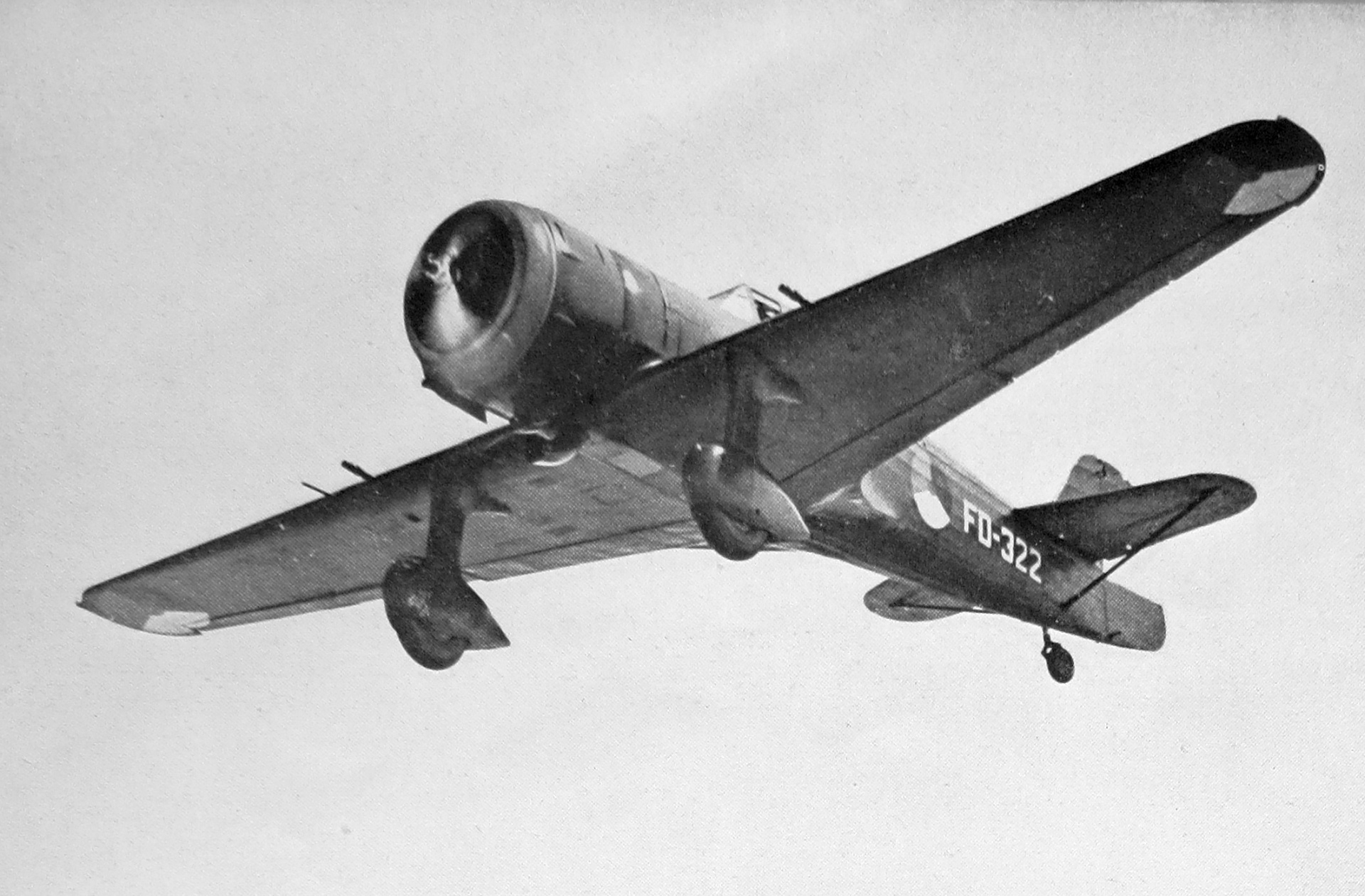
04The Fokker D.XXI’s fixed undercarriage: the trade that defined it
Placed beside the retractable-gear fighters entering service in the late 1930s, the D.XXI looks dated at a glance, and the fixed gear is why. Retracting the wheels would have cut drag and added speed, but it would also have added weight, mechanical complexity, cost and another thing to break or freeze.
For Finland, operating from frozen lakes and snow strips, the fixed gear was close to ideal: it was easy to swap for skis, and there was no retraction mechanism to seize in extreme cold. The same simplicity that made the D.XXI look old-fashioned in the west made it thrive in the north.
05Handling and character: nimble, forgiving and easy to keep flying
Contemporary accounts describe the D.XXI as pleasant and forgiving to fly, agile at low and medium altitude and stable as a gun platform. It was not fast and it did not climb like a thoroughbred, but it turned well and it did not punish an average pilot.
Just as important, it was straightforward for ground crews. In Finnish service, where trained mechanics and spare parts were precious, the D.XXI’s simplicity translated directly into high availability, more aircraft ready to fly on any given freezing morning than a more sophisticated fighter might have managed.
06Engines and variants: Mercury, and the American experiment
Most D.XXIs flew behind the Bristol Mercury radial, licence-built in the Netherlands and Finland. Finnish production spanned more than one sub-variant, and later Finnish machines experimented with an American Pratt and Whitney Twin Wasp Junior radial when Mercury engines grew scarce, an installation generally judged less successful than the original Mercury.
Danish machines are sometimes noted for a heavier armament fit, with underwing gun or cannon options, including Madsen weapons, illustrating how the same basic airframe was adapted to each operator’s needs. Exact variant figures vary between sources.
The willingness to re-engine and re-arm the D.XXI underlines its character as a practical, adaptable design rather than a finely optimised one. An aircraft built around simple, robust engineering could absorb changes, a different radial here, a heavier gun fit there, without a fundamental redesign. That flexibility helped keep the type useful even as the war moved on and supplies of any one component grew uncertain.
The Fokker D.XXI at war: five days over Holland, a winter of glory over Finland
The D.XXI fought two utterly different wars. In the west it made a brave, hopeless stand against the Luftwaffe. In the north it became one of the most effective fighters, relative to its opposition, that Finland ever flew.
The contrast is so stark that it is worth pausing on before diving into the detail. The same aircraft, with the same performance and the same armament, is remembered in one country as a symbol of gallant defeat and in another as a giant-killer. The explanation lies not in the machine but in everything around it: how many there were, who they fought, in what conditions, and how well they were led. Keep that in mind as the two campaigns unfold below.
When Germany invaded the Netherlands on 10 May 1940, the Dutch had only around 28 serviceable D.XXIs to defend the country. They were hopelessly outnumbered by Bf 109s and Bf 110s, yet they fought hard. Dutch pilots did particular damage to the slow Junkers Ju 52 transports ferrying German paratroops toward the airfields around The Hague and Rotterdam, and D.XXI pilots were credited with a share of the Dutch air victories in those days.
It could not last. Attrition, a shortage of aircraft and overwhelming German air power ground the small fighter force down, and by the Dutch capitulation on 14 May only a handful of D.XXIs remained airworthy. The stand was courageous and it inflicted real losses, but it was decided by numbers, not by the qualities of the aeroplane.

Finland told the opposite story. When the Soviet Union attacked in November 1939, the Finnish Air Force had a modest number of D.XXIs, licence-built at the State Aircraft Factory, and it used them brilliantly. Against large numbers of Soviet bombers and fighters, often less well flown and less well organised in the early fighting, the nimble, reliable Fokkers ran up a remarkable kill-to-loss ratio during the Winter War of 1939 to 1940.
The conditions suited the aircraft perfectly. On skis it operated from frozen lakes; its simple systems shrugged off the cold; and Finnish tactics, dispersal, careful maintenance and aggressive, well-led flying, made the most of every airframe. Several Finnish pilots became aces on the type, and individual D.XXIs amassed strings of victories.
The most famous single episode came on 6 January 1940, when Lieutenant Jorma Sarvanto intercepted a formation of Soviet DB-3 bombers returning unescorted from a raid and shot down six of them in a matter of minutes, a feat that made headlines around the world and stood among the most remarkable single-sortie scores of the war. It was, inevitably, a case of the right target at the right moment, unescorted bombers caught by a determined pilot, but it was flown in the supposedly obsolete D.XXI, and it did much to cement the type’s legend. Other Finnish pilots, including future top-scoring aces, opened their accounts on the Fokker before moving on to newer fighters.

By the Continuation War, which began in 1941, the D.XXI was being overtaken by newer types, including Brewster Buffalos and later Messerschmitt Bf 109s, and it slipped from the front line into secondary and reconnaissance roles. But its Winter War record had already secured its reputation. Denmark, by contrast, saw almost none of this: the German invasion of 9 April 1940 overran the country within hours, and the Danish D.XXIs had no real chance to fight.
07The Fokker D.XXI over the Netherlands: the fight against the Ju 52s
One of the defining images of the Dutch D.XXI’s brief war is its assault on the German airborne landings. Ju 52 transports, lumbering and lightly defended, were exactly the sort of target the lightly armed Fokker could destroy, and Dutch pilots claimed a number of them in the chaotic fighting around the western airfields.
Those successes could not change the outcome, but they were real, and they came at a heavy cost to German transport aviation, a cost that would be felt in later airborne operations. The Dutch stand is a case of an obsolescent aircraft used with courage against impossible odds.
It is worth remembering that the Dutch fighter force was tiny to begin with, and that every D.XXI lost was effectively irreplaceable in the timescale of a five-day campaign. That the surviving handful kept flying and fighting until the capitulation says a good deal about the determination of the crews, and about an aircraft simple enough to be patched up and sent back into the air overnight.
08Finland’s Winter War: why the D.XXI punched so far above its weight
The Finnish success with the D.XXI was not luck. It flowed from a good match between aircraft and situation: a simple, rugged fighter that could be kept flying in extreme cold, operating on skis from improvised bases, flown by highly motivated and increasingly skilled pilots against a numerically huge but, in the early fighting, often poorly coordinated opponent.
The commonly quoted kill-to-loss figures for the type in the Winter War are strikingly favourable to the Finns. Exact numbers vary between sources and should be treated with the usual caution about wartime claims, but the broad picture, that the D.XXI was a genuine giant-killer in Finnish hands, is well supported.
Finnish tactics deserve much of the credit. The Finns learned to use dispersal, ground control and clever positioning to bring their small numbers of fighters to bear where they could do the most damage, and to avoid being caught at a disadvantage. Against unescorted or poorly escorted bomber formations, the D.XXI, steady, reliable and a good gun platform, was in its element, as Sarvanto’s six-in-one-sortie showed in the most dramatic way possible.
09From front line to footnote: the D.XXI’s long, quiet tail
Few fighters of its generation stayed in service as long as the D.XXI did in Finland. Overtaken as a front-line fighter, it soldiered on in training, reconnaissance and second-line duties, and Finnish D.XXIs were still flying into the years after the Second World War.
That longevity is a quiet tribute to the original design brief. An aircraft built to be simple, cheap and durable turned out to have exactly the qualities that keep an airframe useful long after its glory days have passed. By the time the last examples were retired, the D.XXI had outlasted many of the sleeker, faster fighters that had once made it look obsolete.
Fokker D.XXI full specifications
Figures are broadly representative of a Mercury-engined D.XXI and vary between variants and sources; treat them as indicative rather than exact. Values marked “estimate” are especially uncertain.
| Posádka | 1 (pilot) |
|---|---|
| Motor | 1 × Bristol Mercury radial (licence-built), ~830 hp |
| Top speed | ~460 km/h (estimate; varies by variant, ~440–460) |
| Cestovní rychlost | ~430 km/h (estimate) |
| Servisní strop | ~11,000 m (estimate) |
| Rozsah | ~900–950 km (estimate) |
| Climb to 6,000 m | ~7.5 minutes (estimate) |
| Landing gear | Fixed, spatted (ski-equipped in Finnish winter use) |
| Délka | ~8.2 m |
|---|---|
| Rozpětí křídel | ~11.0 m |
| Výška | ~2.9 m |
| Prázdná hmotnost | ~1,600 kg (estimate) |
| Loaded weight | ~2,000 kg (estimate) |
| Vyzbrojení | 4 × rifle-calibre machine guns (commonly 7.9 mm; some sources 7.7 mm) |
| Number built | ~150 completed (figures vary; ~150–190 including the unfinished Spanish batch) |
| Unit / programme cost | Not reliably recorded (WWII) |
Values marked “estimate” and all production totals should be read as approximate; contemporary and modern sources disagree on the details.
10The Fokker D.XXI’s cost and economics: cheap on purpose
Unlike modern jets, the D.XXI has no cleanly documented unit price or cost-per-flight-hour, and any figure would be an invention. What the record does make clear is the intent: the aircraft was designed to be inexpensive to buy, to build under licence and to maintain. That was its entire commercial logic.
The clearest measure of its economy is indirect. Finland was able to build and sustain a useful fighter force around the type using its own modest industry, and to keep the aircraft flying for years, precisely because it was cheap and simple. Where cost data would normally go, the honest entry here is simply: not reliably recorded.
11Reading the numbers: why D.XXI figures never quite agree
Production totals, victory tallies and even top-speed figures for the D.XXI differ from source to source. Different variants had different engines and weights; wartime claims were not always confirmable; and record-keeping in 1940 Netherlands and wartime Finland was inevitably imperfect.
The sensible approach is to quote ranges and flag estimates, which is what this page does. The big picture, an obsolescent design that fought bravely in the west and brilliantly in the north, is not in doubt; the third decimal place always will be.
12Survivors, museums and the 2022 flying replica
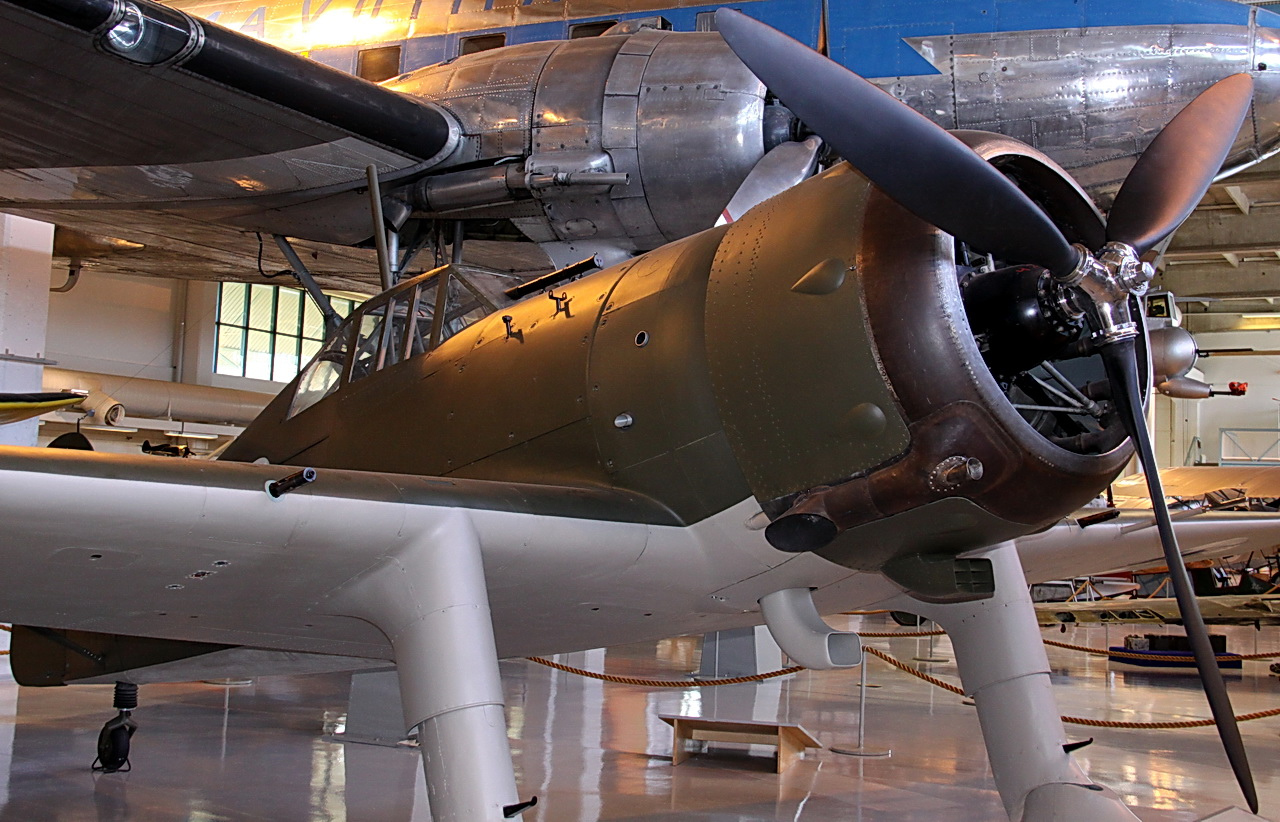
Genuine original D.XXIs are among the rarer WWII fighters to survive. The best known is the Finnish airframe FR-110, associated with the type’s highest score and preserved at the Finnish Air Force Museum in the Jyvaskyla area, where it stands as a centrepiece of the Winter War story. In the Netherlands, museum examples and reconstructed airframes keep the type’s Dutch heritage alive, and partial remains of wartime machines have been recovered and displayed.
The most remarkable recent chapter is a flying replica: after a long restoration and rebuild effort in the Netherlands, a D.XXI took to the air again in 2022, giving modern audiences the rare sight of the type in flight. It is, however, a replica and a single-seater, so it is not something the public can book a ride in, an important distinction for anyone hoping to fly the aircraft themselves.
For that reason, the honest answer to the perennial question, can I fly a D.XXI, is no. The nearest experience on offer is to fly a genuine, combat-capable jet fighter, which is exactly what MiGFlug arranges, rather than any Fokker D.XXI.
13The Fokker D.XXI versus the Bf 109: an honest comparison
Set directly against the Messerschmitt Bf 109 it faced over the Netherlands, the D.XXI was outclassed on almost every measured axis: it was slower, climbed less well, was more lightly armed and had fixed rather than retractable gear. In a straight performance contest there was no argument, and the May 1940 fighting reflected that grim reality.
But raw performance is only part of the story of any fighter. Against the opponents and in the conditions it met over Finland, unescorted or lightly escorted Soviet bombers, freezing weather, improvised bases, the D.XXI’s virtues of reliability, agility at low and medium level and easy maintenance mattered enormously, and it delivered results a specification sheet would never predict. The comparison is a useful reminder that a fighter is only ever as good as the war it is asked to fight.
14The D.XXI among its peers: Brewster Buffalo and Fiat G.50
The D.XXI is best understood alongside the other second-tier fighters of its generation, and especially the two that shared its Finnish career: the American Brewster Buffalo and the Italian Fiat G.50 Freccia. All three were modest performers by the standards of the great powers, and all three found a more sympathetic home in Finnish service than their reputations elsewhere might suggest.
The Buffalo, mocked in the Pacific, became a celebrated success in Finnish hands; the Fiat G.50 was steady and strong but under-armed and short-legged; and the D.XXI was the simplest and slowest of the three, yet arguably the best suited to the improvised, sub-zero conditions of the Winter War. Taken together they make the same point three times over: in the right circumstances, and flown by the right people, a supposedly second-rate fighter can achieve first-rate results.
15Colours, markings and the D.XXI in Finnish service life
In Finnish service the D.XXI wore the pale-blue swastika national insignia used by the Finnish Air Force at the time, a marking unrelated to the German one and adopted years earlier, applied over a camouflage of greens and browns with pale undersides, and white or mottled schemes in winter. Individual aircraft carried FR-series serials, and machines such as FR-110 became closely identified with particular pilots and their scores.
Day-to-day operational life revolved around dispersal and improvisation: aircraft scattered around the edges of frozen lakes, warmed and maintained in bitter cold, and flown hard whenever Soviet formations appeared. It was a far cry from the tidy peacetime air forces the type had originally been designed for, and it was in exactly those harsh conditions that the D.XXI’s simple, rugged character proved its worth.
16The D.XXI’s place in Fokker’s long story
Fokker was one of the legendary names of aviation. Anthony Fokker’s designs had dominated stretches of the First World War, and in the 1920s and early 1930s Fokker airliners were a common sight across Europe and North America. But the company built its reputation on wood-and-steel-tube construction at exactly the moment the industry was shifting to stressed-metal monocoque design, and by the mid-1930s it was struggling to stay at the front rank of fighter development.
Seen in that light, the D.XXI is a transitional aircraft, a monoplane fighter that still leaned on the older construction philosophy Fokker knew best. It was competitive enough to sell and to fight, but it was not the leap into the all-metal future that rivals were making. In a sense the D.XXI is the last great fighter of the classic Fokker tradition, and its mixed fortunes mirror the company’s own position at a hinge point in aviation history.
17Myths and misconceptions about the Fokker D.XXI
Because its story is so dramatic, the D.XXI attracts a certain amount of myth. It is sometimes described as a war-winning fighter; it was not, it was a capable, well-used one that achieved remarkable results in specific circumstances. Its Finnish kill-to-loss figures are sometimes quoted with more precision than the records can really support, and single spectacular feats, above all Sarvanto’s, can be mistaken for the everyday norm.
The honest picture is more interesting than the myth. The D.XXI was an ordinary, affordable fighter that happened to be extraordinarily well matched to one particular war, and that was flown by aircrew who made the most of it. Recognising both the achievement and its limits does the aircraft, and the people who flew it, more justice than turning it into a wonder weapon it never was.
18Why the Fokker D.XXI still matters today
More than eighty years on, the D.XXI endures as one of the classic underdog stories of military aviation, and as a case study that instructors and enthusiasts still return to. It is the clearest possible illustration that a fighter’s value cannot be read off a specification sheet: opposition, numbers, conditions, maintenance and, above all, the skill and morale of the people flying it can matter every bit as much as raw speed and firepower.
It also stands as a reminder that simplicity is a design virtue in its own right. In an era that prized ever-greater complexity, the plain, tough little Fokker kept flying, kept fighting and kept scoring long after cleverer aircraft had been grounded by damage, cold or want of spares. That is a lesson with a very long shelf life, and it is a large part of why the D.XXI is still worth a place in any serious aircraft museum.
19The bomber war over Finland: the targets the D.XXI hunted
Much of the D.XXI’s Winter War success came against Soviet bomber formations, above all types like the Tupolev SB and the Ilyushin DB-3, sent to strike Finnish towns, railways and troop positions. Early in the war these formations were often inadequately escorted, and against them the steady, reliable D.XXI was a genuinely dangerous interceptor.
Sarvanto’s famous six-in-one-sortie was the extreme example, but it was not unique in kind: again and again, Finnish fighters caught bombers that had outrun or lacked fighter cover and inflicted losses out of all proportion to their own numbers. As the war went on the Soviets improved their escort and tactics, and the task grew harder, but the pattern of the early fighting did much to build the D.XXI’s reputation, and to blunt the Soviet bombing effort at a critical time.
20Operating the D.XXI: skis, cold and field maintenance
The practical business of keeping D.XXIs flying in a Finnish winter is a story in itself. Aircraft were dispersed and hidden at the edges of frozen lakes and forest strips; engines had to be warmed and protected against temperatures that could freeze oil and fuel systems solid; and ground crews worked in brutal conditions to turn machines around between sorties.
Here the D.XXI’s design brief paid off directly. A simple airframe with a robust radial engine and no retraction mechanism to seize was far easier to keep serviceable in extreme cold than a more delicate, complex fighter would have been, and the ski undercarriage let it operate where wheeled aircraft could not. High availability, more aircraft ready to fly on any given freezing morning, was one of the quiet foundations of the type’s combat record, and it flowed straight from the decision to build the aircraft simple.
The Fokker D.XXI: from drawing board to Finnish legend
A deliberately simple fighter. Fokker, under chief engineer Erich Schatzki, sets out to design an affordable monoplane fighter for small air forces, accepting fixed gear and light armament to keep it cheap and rugged.
First flight. The D.XXI prototype takes to the air for the first time, powered by a Bristol Mercury radial.
Adoption and licences. The Netherlands orders the type, and Finland and Denmark acquire licences to build it; Republican Spain also orders a batch.
Finnish production begins. Finland’s State Aircraft Factory starts building D.XXIs, tailoring them for local conditions, including ski undercarriages.
The Winter War begins. The Soviet Union attacks Finland; the D.XXI becomes the backbone of Finnish fighter defence.
First Winter War victory. A Finnish D.XXI is credited with shooting down a Soviet bomber, opening a remarkable run of successes.
Six in one sortie. Jorma Sarvanto shoots down six unescorted Soviet DB-3 bombers in minutes in his D.XXI, one of the most celebrated single-sortie feats of the air war.
Giant-killer on skis. Operating from frozen lakes, Finnish D.XXIs achieve an excellent kill-to-loss ratio against Soviet aircraft; several pilots become aces on the type.
Winter War ends. The Moscow Peace Treaty ends the Winter War; the D.XXI has secured its reputation as the backbone of Finnish fighter defence.
Denmark overrun. Germany invades Denmark; the country falls within hours and the Danish D.XXIs see essentially no combat.
The Dutch stand. Around 28 serviceable D.XXIs fight the German invasion, savaging Ju 52 transports before being overwhelmed in five days.
Continuation War. Now outclassed, the D.XXI is gradually replaced in Finnish front-line service by Brewster Buffalos and Bf 109s, moving to secondary roles.
Long twilight. Finnish D.XXIs continue in training, reconnaissance and liaison work, flying on past the end of the war.
Rare survivors. Originals are extremely scarce; preserved examples and replicas exist in Finland and the Netherlands, and a flying replica took to the air in the Netherlands in 2022.
Twelve things worth knowing about the Fokker D.XXI
Scroll through the essentials, from a fighter built cheap on purpose to its improbable winter of glory over Finland.
Cheap, rugged, and proud of it
The D.XXI was designed to be affordable and simple to build and maintain, a fighter for air forces that could not afford the state of the art. Where rivals chased speed with retractable gear and cannon, Fokker chose fixed gear and four light machine guns, and built something a small nation could actually field in numbers and keep flying from rough strips.
Erich Schatzki’s practical fighter
Fokker’s design team under chief engineer Erich Schatzki aimed squarely at the export and small-air-force market. Every compromise in the D.XXI, its mixed wood-and-metal structure, fixed gear and light armament, served the same goal: a durable, forgiving fighter that ordinary national industry could build under licence without vast resources.
Airborne in March 1936
The prototype first flew on 27 March 1936 behind a Bristol Mercury radial. It was already a conservative design for its moment, more cautious than the sleek monoplanes then emerging, but it flew well, and the good handling shown from the outset would become one of the type’s lasting trademarks.
Why fixed wheels made sense
The fixed, spatted undercarriage is the feature everyone notices, and the one that dates the aircraft most. It cost drag and top speed, but it saved weight, cost, complexity and a mechanism that could fail or freeze, and it made the aircraft easy to put on skis, which mattered enormously once the type reached Finland.
Four rifle-calibre machine guns
Armament was four rifle-calibre machine guns, commonly cited as 7.9 mm, with some sources quoting 7.7 mm and some Danish machines carrying heavier weapons. Light against armoured, well-built opponents, but reliable and entirely adequate against the lightly constructed bombers and fighters the D.XXI usually met over Finland.
Twenty-eight against the Luftwaffe
On 10 May 1940 the Netherlands had only around 28 serviceable D.XXIs to defend the country. Hopelessly outnumbered by Bf 109s and Bf 110s, they fought hard for five days, doing real damage, before attrition and overwhelming German air power decided the outcome by the capitulation on 14 May.
Cutting into the paratroop transports
Dutch D.XXIs took a heavy toll of slow Ju 52 transports carrying German paratroops toward the airfields around The Hague and Rotterdam. It was exactly the target a lightly armed fighter could destroy, and the losses inflicted on German transport aviation would be felt in later airborne operations.
The war it was built for
Finland licence-built the D.XXI at its State Aircraft Factory and used it superbly. Against the Soviet Air Force in the Winter War of 1939 to 1940, the nimble, reliable Fokker ran up a kill-to-loss ratio, favourable enough that it turned an obsolescent design into one of the great underdog stories of the air war.
From frozen lakes
Ski-equipped D.XXIs flew from frozen lakes and snow strips that would have grounded more delicate fighters. The fixed gear made the swap to skis easy, and simple systems that shrugged off the cold gave the Finns the one thing that mattered most: aircraft ready to fly on freezing mornings when they were needed.
Sarvanto’s six in one sortie
On 6 January 1940 Jorma Sarvanto shot down six Soviet DB-3 bombers in minutes in his D.XXI, a feat that made headlines around the world. Several Finnish pilots became aces on the type, and future top-scoring aces opened their accounts on the Fokker before moving on to newer fighters later in the war.
A licence, but no chance to fight
Denmark built a small number of D.XXIs under licence, some with a heavier armament fit, but the German invasion of 9 April 1940 overran the country within hours. The Danish machines had essentially no opportunity to prove themselves, a reminder that an aircraft’s reputation depends as much on circumstance as on quality.
Flying on after the front line
Overtaken by newer types like the Brewster Buffalo and Bf 109, the D.XXI slipped from the Finnish front line into training, reconnaissance and liaison work, and kept flying into the years after the Second World War, outlasting many of the faster fighters that had once made it look obsolete.
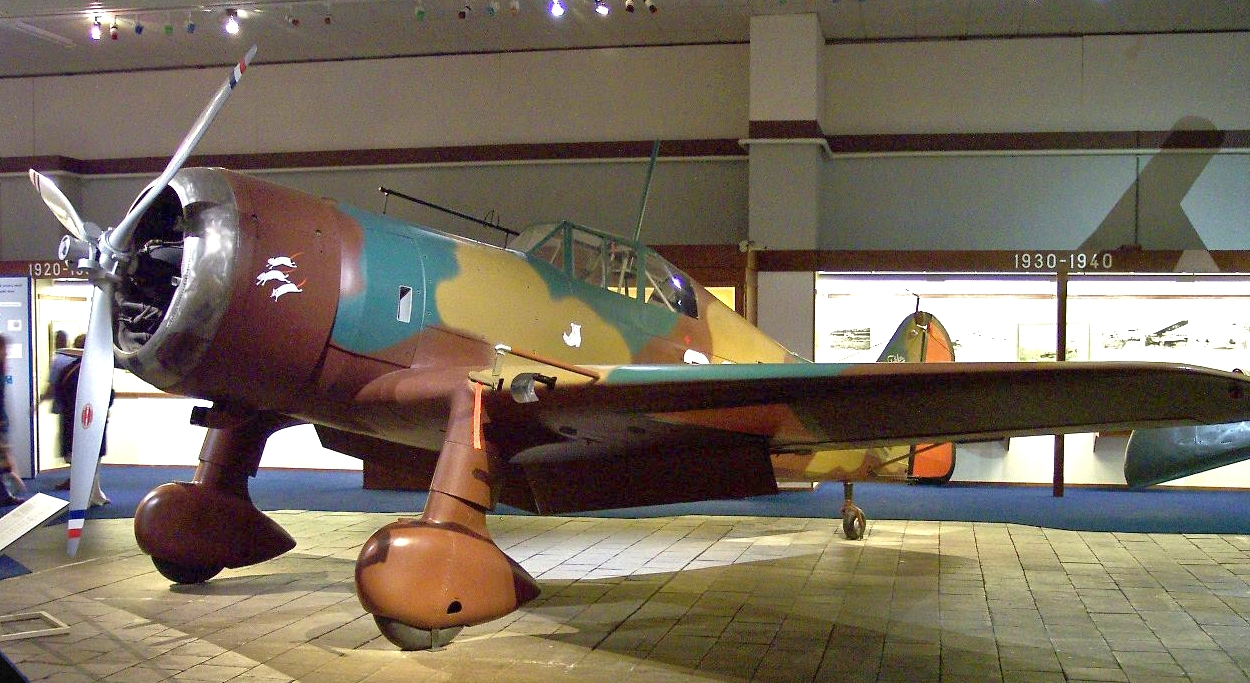
The Fokker D.XXI in photographs
Wartime images and preserved survivors, from Finnish snow strips to Dutch museums. Click any photograph to enlarge.


The Fokker D.XXI on video
A concise, well-sourced history of the Dutch fighter and its surprisingly long career, from Ed Nash’s Military Matters.
“The Fokker D.XXI; Dutch Defender that Served a Surprisingly Long Time” — Ed Nash’s Military Matters (~113,000 views). An accessible overview of the type’s origins, the Dutch stand of May 1940 and its Finnish service.
Where the Fokker D.XXI flew: from Dutch skies to the Finnish front
Colour-coded by role: origin and manufacturer (the Netherlands), theatres of combat service (the Netherlands in May 1940, Finland in the Winter and Continuation Wars, and Denmark), licence and export operators (Finland, Denmark and the Spanish Republic’s order), and countries with surviving airframes and replicas. Hover or tap a country for detail.
The Fokker D.XXI by the numbers
The D.XXI’s record is a study in contrasts: brave but overwhelmed over the Netherlands, and a genuine giant-killer over Finland. Precise victory and loss figures vary between sources and reflect the usual uncertainties of wartime claims; the figures above are indicative. The Dutch total of roughly 28 serviceable machines on 10 May 1940 is well attested, as is the collapse to a handful by the capitulation on 14 May; the Finnish Winter War kill-to-loss ratio is consistently reported as strongly favourable, even if the exact numbers are debated. Read every figure on this page as a careful estimate rather than a settled fact.
Fokker D.XXI: your questions answered
Can I fly in a Fokker D.XXI?
No. The Fokker D.XXI was a single-seat fighter, originals are extremely rare museum pieces, and while a flying replica took to the air in the Netherlands in 2022, there is no airworthy, two-seat or bookable D.XXI you can ride in. MiGFlug does not offer Fokker D.XXI flights. However, you can fly in several genuine military jets today, from the L-39 Albatros to the MiG-29. See what is bookable at migflug.com/flights-prices/.
Was the Fokker D.XXI a good fighter?
It depends entirely on where and when. By 1940 standards it was obsolescent, slow at around 460 km/h, lightly armed with four rifle-calibre guns, and burdened with fixed landing gear. But it was rugged, nimble at low and medium altitude, forgiving to fly and easy to maintain, and in Finnish hands against the Soviet Air Force it was outstandingly effective. It was the right aircraft in the right place, if not on paper. The clearest verdict is the one the record gives: overwhelmed by numbers and superior fighters over the Netherlands, but a genuine giant-killer over Finland, where its virtues counted for more than its shortcomings.
Why did the Fokker D.XXI have fixed landing gear?
To keep it simple, cheap and durable. A retractable undercarriage would have added speed but also weight, complexity, cost and a mechanism that could fail or, in extreme cold, freeze. Fokker deliberately chose fixed, spatted gear so that small air forces could afford the aircraft and keep it flying with basic facilities. The choice cost some top speed, and it is the main reason the D.XXI looks dated beside its retractable-gear contemporaries, but it paid off handsomely in Finland, where the gear was easily swapped for skis and there was nothing to seize in sub-zero conditions. It is the single design decision that best captures the whole philosophy of the aircraft.
How did the Fokker D.XXI do over the Netherlands in 1940?
Bravely, but the odds were impossible. Around 28 serviceable D.XXIs faced the German invasion on 10 May 1940, hopelessly outnumbered by the Bf 109s and Bf 110s of a vastly larger and more modern Luftwaffe. They fought hard for five days and did real damage, notably to the Ju 52 transports carrying paratroops toward the airfields around The Hague and Rotterdam, before attrition and overwhelming German air power ground the small fighter force down. By the Dutch capitulation on 14 May only a handful remained airworthy. It was a courageous stand decided by numbers, not by any failing of the aircraft.
Why was the Fokker D.XXI so successful in Finland?
A good match of aircraft, conditions and tactics. Licence-built and often ski-equipped, the simple, reliable D.XXI thrived in extreme cold and operated from frozen lakes, while highly motivated and increasingly skilled Finnish pilots used dispersal, ground control and aggressive, well-led tactics against a numerically huge but, early on, often poorly coordinated Soviet opponent. Against unescorted or lightly escorted bomber formations it was a genuinely dangerous interceptor, as Jorma Sarvanto proved by downing six bombers in a single sortie. The result was an excellent kill-to-loss ratio in the Winter War, remembered ever since as one of the great underdog performances of the air war.
Who designed and built the Fokker D.XXI?
It was designed by a Fokker team under chief engineer Erich Schatzki in the Netherlands, and the prototype first flew on 27 March 1936. Besides Dutch production, it was built under licence in Finland, by the State Aircraft Factory, and in Denmark, and ordered by Republican Spain, whose batch was left largely unfinished by the Civil War. That spread of builders was possible precisely because the aircraft was designed to be simple to manufacture, a deliberate choice that shaped its whole career.
How many Fokker D.XXIs were built?
Sources disagree. A commonly cited figure is around 150 completed aircraft across the Netherlands, Finland and Denmark, with some totals reaching roughly 190 if the unfinished Spanish licence batch is counted. The Netherlands built a few dozen, Finland the largest share, licence-built at its State Aircraft Factory, and Denmark a small number, while the Spanish order was left largely unfinished. Any single number should be treated as an estimate; the production records simply do not support false precision.
What engine and armament did the Fokker D.XXI have?
Most D.XXIs used a licence-built Bristol Mercury radial of roughly 830 hp, giving a top speed of about 460 km/h. Armament was four rifle-calibre machine guns, commonly cited as 7.9 mm, though some sources say 7.7 mm, and some Danish machines carried a heavier fit including cannon. Later Finnish aircraft experimented with an American Pratt and Whitney Twin Wasp Junior radial when Mercury engines grew scarce, an installation generally judged less successful than the original. As with the production totals, exact figures vary between variants and sources, so the numbers here are best read as representative rather than definitive.
Are there any surviving Fokker D.XXIs?
Genuine originals are extremely rare. Preserved examples and reconstructed airframes exist in Finland, including the well-known FR-110 associated with the type’s highest score and displayed at the Finnish Air Force Museum, and in the Netherlands, where museum examples and recovered remains keep the Dutch heritage alive. A flying replica returned a D.XXI to the air in the Netherlands in 2022. But there is essentially no airworthy original aircraft, and even the flying replica is a single-seat machine that the public cannot book a ride in.
How does the Fokker D.XXI compare with the Brewster Buffalo or Fiat G.50?
All three were late-1930s fighters that ended up serving with smaller air forces, and, remarkably, all three flew for Finland against the Soviets. The D.XXI was the simplest and slowest, with fixed gear, but was rugged and, in Finnish hands during the Winter War, outstandingly effective. The Brewster Buffalo, mocked in the Pacific yet celebrated in Finnish service, and the Fiat G.50, steady but under-armed and short-legged, were broadly contemporary competitors. The Finnish experience with all three makes the same point: in the right conditions and the right hands, a supposedly second-rate fighter can deliver first-rate results.
Did the Fokker D.XXI stay in service long?
Longer than most of its generation. Overtaken as a front-line fighter during the Continuation War by types like the Brewster Buffalo and Bf 109, the D.XXI moved into training, reconnaissance and liaison roles in Finland and kept flying into the years after the Second World War. That longevity was no accident: an aircraft built to be simple, cheap and durable had exactly the qualities that keep an airframe useful long after its front-line glory days have passed, and it outlasted many faster fighters as a result.
What was Jorma Sarvanto’s famous feat?
On 6 January 1940, over the Gulf of Finland, Finnish pilot Jorma Sarvanto intercepted a formation of unescorted Soviet DB-3 bombers in his Fokker D.XXI and shot down six of them in a matter of minutes. It became one of the most celebrated single-sortie scores of the war and helped make the D.XXI a Finnish legend. As with all such feats it depended on circumstance, unescorted bombers caught at a disadvantage, but it was genuinely flown in the D.XXI.
Why did the Finns fit skis to the D.XXI?
Because it turned Finland’s winter into an advantage. With frozen lakes and snow-covered strips everywhere, a ski undercarriage let the D.XXI operate from dispersed, improvised bases that would have been unusable to a conventional wheeled fighter. The type’s fixed gear made the swap to skis straightforward, and its simple systems kept working in extreme cold, so the aircraft stayed available when it was needed most.
Was the Fokker D.XXI used by Spain?
Republican Spain ordered a batch of D.XXIs to be built under licence, commonly cited as around 50 aircraft, but the Spanish Civil War disrupted the programme and the order was left largely unfinished, with production facilities overtaken by events. As a result Spain never fielded the type in the way the Netherlands and Finland did; the Spanish story is one of an order more than of operational service.
Is the Fokker D.XXI the same as the earlier Fokker D fighters?
No, and it is an easy but important confusion to avoid. The D.XXI is a 1930s single-seat monoplane, and it should not be mixed up with Fokker’s famous First World War fighters such as the Fokker D.VII biplane, the Dr.I triplane flown by the Red Baron, or the Eindecker. Those are completely different aircraft from an earlier era and an earlier war. Despite sharing the Fokker name and a D designation, the D.XXI belongs to the run-up to the Second World War, and it is best remembered not for the Western Front of 1917 but for its Dutch stand of May 1940 and its remarkable Finnish service against the Soviet Air Force in 1939 and 1940.
Fly a real fighter with MiGFlug
The Fokker D.XXI survives only in museums and in a single flying replica, and it was a single-seat fighter, so there is no airworthy original to book a ride in. What you can do is strap into a genuine, combat-capable jet fighter with MiGFlug and fly it yourself.
Explore more fighters in the museum
Where the facts on this page come from