
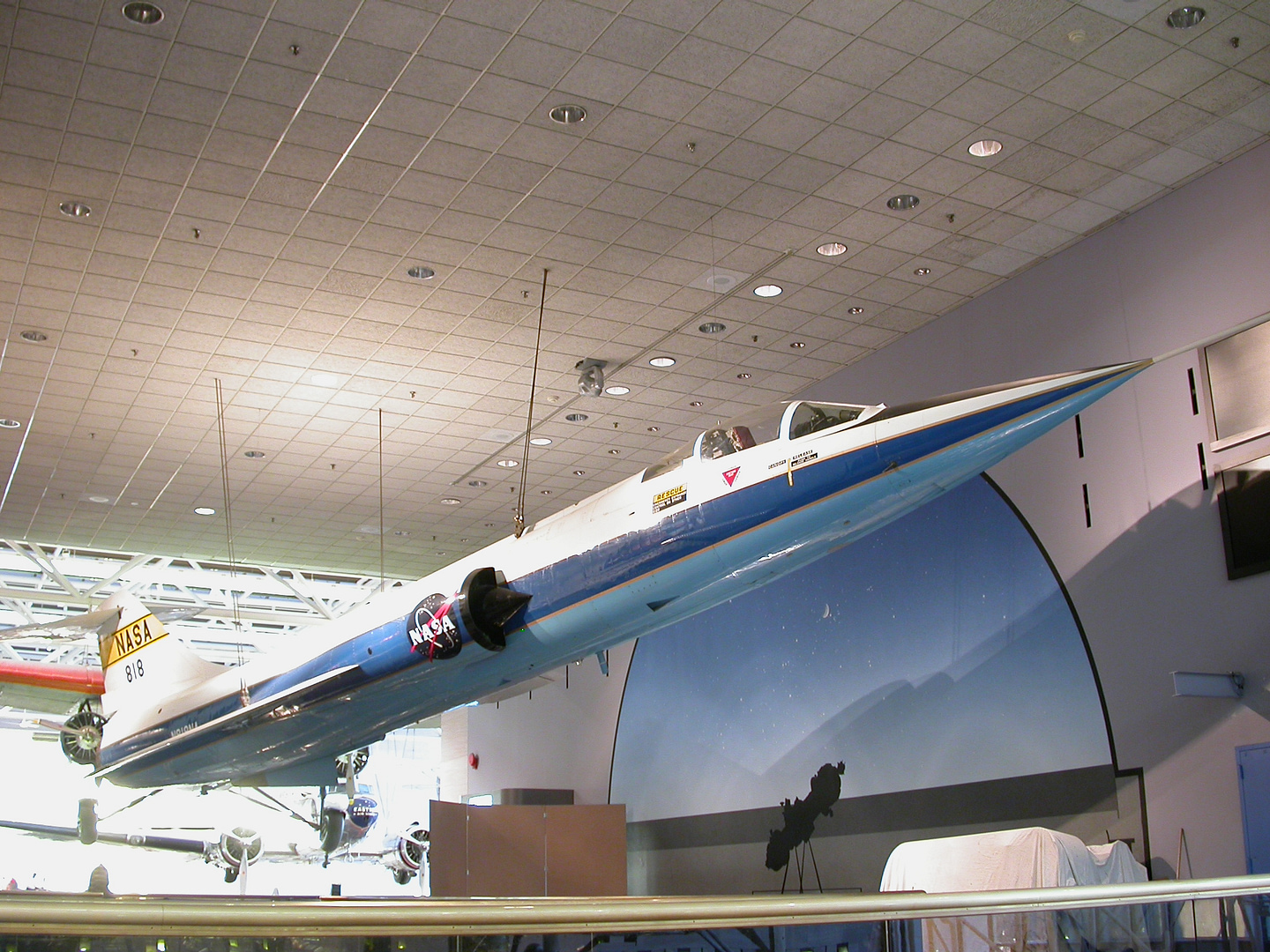
Lockheed F-104
“Starfighter”
The “missile with a man in it” — a needle-nosed Cold War dart with razor-thin wings, born to out-climb and out-run everything in the sky. It held the world speed, altitude and climb records at once, wore a fearsome “Widowmaker” reputation in German service, and remains one of the rarest jets a civilian can still fly supersonic.
The missile with a man in it
The F-104 was born from frustration. In late 1952 Lockheed’s legendary chief designer Clarence “Kelly” Johnson toured Korean War fighter squadrons and heard the same complaint again and again: pilots flying the F-86 Sabre against the MiG-15 wanted more speed, more altitude and faster climb — even at the cost of range, armament and manoeuvrability. Johnson returned to the Skunk Works and wrapped the smallest possible airframe around the most powerful engine available: one pilot, minimum fuel, a needle fuselage and a stubby, knife-thin wing.
The prototype XF-104 first flew on 4 March 1954, and the type entered USAF service in early 1958. For a few dazzling years it was the fastest, highest-climbing thing in the sky — the first aircraft ever to hold the world speed, altitude and time-to-climb records simultaneously, and the first to take off under its own power and exceed 100,000 feet. It looked like the future: a manned rocket with tiny razor wings and a thunderous J79 howl.
Then came the reckoning. West Germany, flying the heavier F-104G in punishing low-level, all-weather strike roles it was never designed for, lost roughly a third of its fleet, and the tabloids christened it the “Widowmaker.” Yet the aviators who flew it adored it — and today, flown as designed at altitude in clear skies, the Starfighter is still one of the most thrilling machines a civilian can ride. You can fly one with MiGFlug.
01The F-104 Starfighter’s two lives: American record-breaker, European workhorse
Early USAF interest in the Starfighter cooled quickly — the short-legged interceptor did not suit America’s needs, and only a few hundred A/C-models were built. The type found its real career abroad. The multirole F-104G became the backbone of a vast NATO and allied licence-production programme across West Germany, Italy, the Netherlands, Belgium, Canada and Japan, with around 2,578 built in total across all variants.
The family runs from the F-104A/B early US interceptor and trainer, through the F-104C/D USAF fighter-bomber, to the definitive European F-104G (more than a thousand of the total), the Japanese F-104J, and the ultimate F-104S — the all-weather Italian interceptor that soldiered on until 2004. One airframe, two utterly different reputations.
What makes the F-104 special
The razor wing
The Starfighter’s trapezoidal wing spanned barely 6.7 m — shorter than the fuselage is long — with only ~18 m² of area and an ultra-thin ~3.4% thickness ratio. The leading edge was so sharp it was covered on the ground to protect crews. It gave phenomenal low-drag, high-Mach performance; the trade-off was very high landing speeds and unforgiving low-speed handling, tamed by blown flaps (boundary-layer control).
The General Electric J79
A single afterburning turbojet producing roughly 15,600–15,800 lbf in reheat — enormous thrust for so light an airframe, giving a near 1:1 thrust-to-weight ratio and sustained Mach 2+ capability. Its distinctive howl is unmistakable, and it powered a blistering climb of around 48,000 ft/min.
T-tail & the downward-firing seat
A high-mounted stabilator kept the tailplane clear of the wing wake at speed. Because engineers feared a pilot could not clear the tall T-tail, early Starfighters used a downward-firing ejection seat — lethal at low altitude on take-off and landing. It was later replaced by upward-firing Martin-Baker seats.
02The F-104’s wing: brilliant fast, brutal slow
Everything about the Starfighter was optimised for high-Mach flight. The tiny, razor-edged wing produced almost no drag at speed and let the jet punch to Mach 2 and zoom toward the edge of space — but it generated little lift at low speed, forcing fast, nose-high approaches. To make it landable at all, Lockheed fitted a boundary-layer control system that blew engine bleed air over the flaps, cutting approach speed. It was a Mach-2 airframe that demanded respect every time it came home.
03The F-104’s record climb: a manned rocket
With its light airframe and thunderous J79, the Starfighter climbed like almost nothing before it — roughly 48,000 ft/min. That energy is what let it set the time-to-climb records of 1958 and, in December 1959, zoom past 100,000 ft under its own power. Three examples were even fitted with a Rocketdyne rocket in the tail (the NF-104) to train astronauts in space-edge handling, briefly turning the fighter into a part-time spacecraft.
Full specifications (F-104G)
Airframe & Performance
- Origin
- United States (Lockheed)
- Multitud
- 1
- Longitud
- ~16.7 m (54 ft 8 in)
- Envergadura
- ~6.7 m — tiny, shorter than the fuselage
- Altura
- ~4.1 m
- Max takeoff weight
- ~13,000 kg (~29,000 lb)
- Max speed
- Mach ~2.2 · ~2,400 km/h at altitude
- Techo de servicio
- ~15,000 m (zoom-climbs far higher)
- Tasa de ascenso
- ~244 m/s (~48,000 ft/min)
Propulsion & Systems
- Motor
- 1 × GE J79-GE-11A afterburning turbojet
- Empuje
- ~15,800 lbf with reheat
- Cannon
- 1 × M61 Vulcan 20 mm
- Missiles
- AIM-9 Sidewinder; up to ~1,800 kg stores
- Radio de combate
- ~675 km
- First flight
- 4 March 1954 (XF-104)
- Built
- ~2,578 (all variants)
- Unit cost
- ~US$1.4–1.7 million (F-104G, early 1960s)
04The F-104’s cost: a bargain built by the thousand
Because most Starfighters were built under licence across Europe, Canada and Japan, unit prices varied widely by variant, year and country. Period figures for the F-104G cluster around US$1.4–1.7 million in early-1960s money — treat these as approximate. The bigger cost was political: the vast multinational F-104G programme, and the sales practices behind it, became one of the era’s notorious procurement scandals. No reliable modern cost-per-flight-hour figure exists in open sources for the handful of airworthy warbirds flying today.
Half a century of the Starfighter
The idea
Kelly Johnson tours Korean War squadrons and conceives a minimalist, high-speed interceptor — speed and climb above all else.
First flight
The XF-104 prototype flies; a YF-104A exceeds 1,000 mph the following year.
Enters USAF service
The Starfighter joins the 83rd Fighter-Interceptor Squadron in January/February 1958.
Owning the sky
The F-104 holds the world speed, altitude and time-to-climb records simultaneously — the first aircraft ever to do so.
Past 100,000 ft
Capt. Joe Jordan zoom-climbs an F-104C beyond 100,000 ft — the first aircraft to do so under its own power.
The F-104G era
Licence production ramps across NATO and allied nations; West Germany alone takes more than 900.
Yeager’s NF-104 fall
Chuck Yeager loses control of a rocket-boosted NF-104A at ~104,000 ft and ejects — later dramatised in The Right Stuff.
Combat over the subcontinent
Pakistan Air Force F-104s see combat against India — an early supersonic night kill in 1965, tougher going by 1971.
Italy retires the last
Italy withdraws the F-104S/ASA-M after ~46 years; the type lives on as warbirds — and MiGFlug rides.
From the flight line: twelve Starfighter stories
“The Missile With a Man in It”
Kelly Johnson built exactly what Korea’s pilots asked for: raw speed and climb over all else.
Read the full story
Owning the sky in 1958
For one giddy stretch the F-104 held the world speed, altitude and climb records at once.
Read the full story
The German “Widowmaker”
West Germany lost roughly a third of its fleet — but the truth was more complex than a “bad jet.”
Read the full story
Starfighters Inc. — rockets & runways
At Kennedy Space Center, a private fleet keeps the F-104 flying for airshows and aerospace research.
Read the full story
Ride a Starfighter with MiGFlug
A real supersonic F-104 flight over Florida, from the historic Shuttle Landing Facility.
Read the full story
The NF-104 & Yeager’s fall
Three F-104s got a rocket in the tail to train astronauts — and nearly killed Chuck Yeager.
Read the full story
Pakistan’s supersonic duels
Among the first supersonic fighters in combat — a contested legacy still argued over today.
Read the full story
The Taiwan Strait clash
In 1967 ROCAF Starfighters tangled with mainland MiG-19s, each side claiming a kill.
Read the full story
The wing you could cut yourself on
The leading edge was so sharp that ground crews fitted guards to avoid injury.
Read the full story
The missile with a woman in it
Jacqueline Cochran borrowed an F-104 and became the first woman to fly Mach 2.
Read the full story
Italy’s 46-year Starfighter
While others retired the jet in the 1980s, Italy flew the F-104S on QRA until 2004.
Read the full story
Cult of the Zipper
“Zipper,” “Zip-104,” the “Widowmaker” — few jets inspire such fierce affection.
Read the full story
The Starfighter in pictures
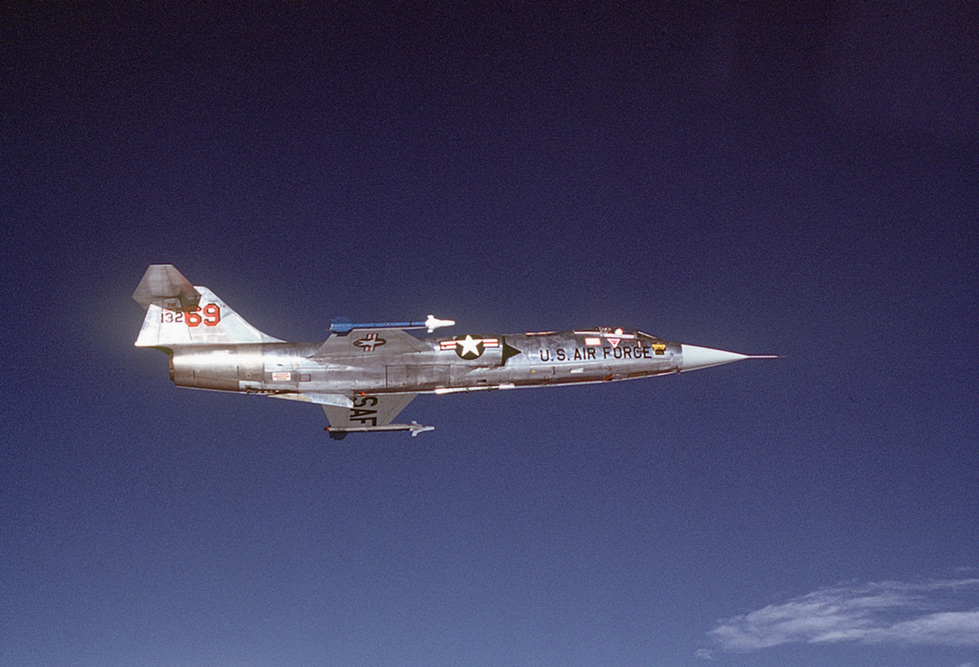
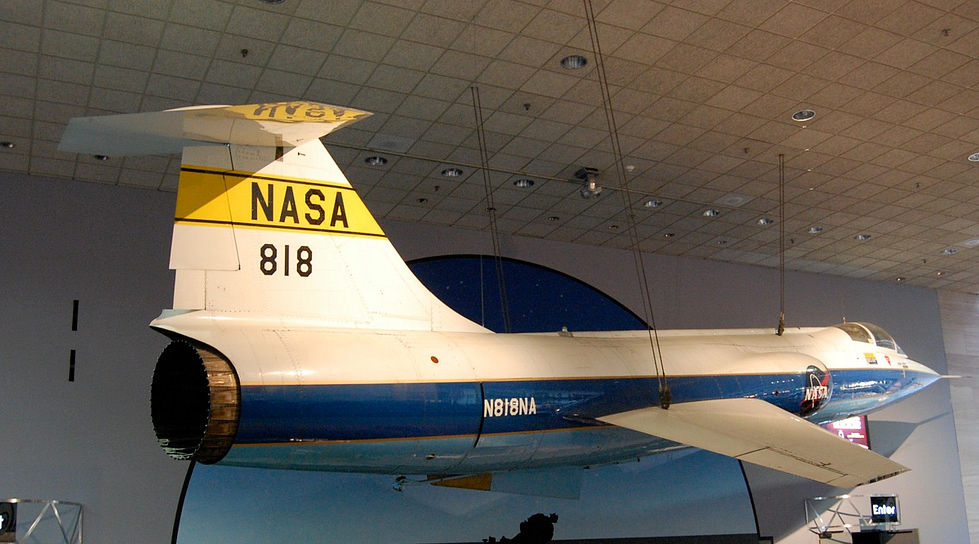
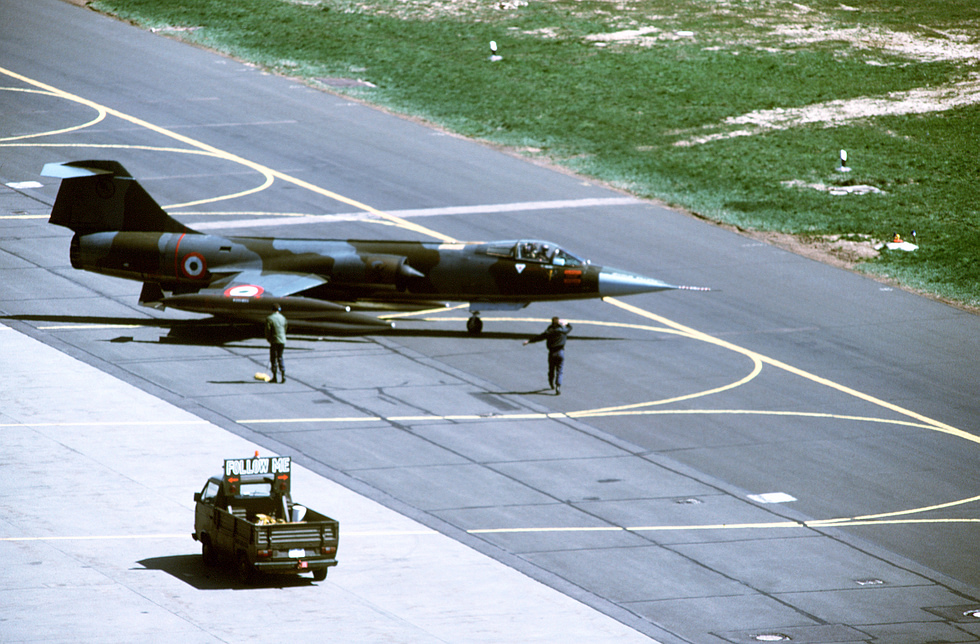
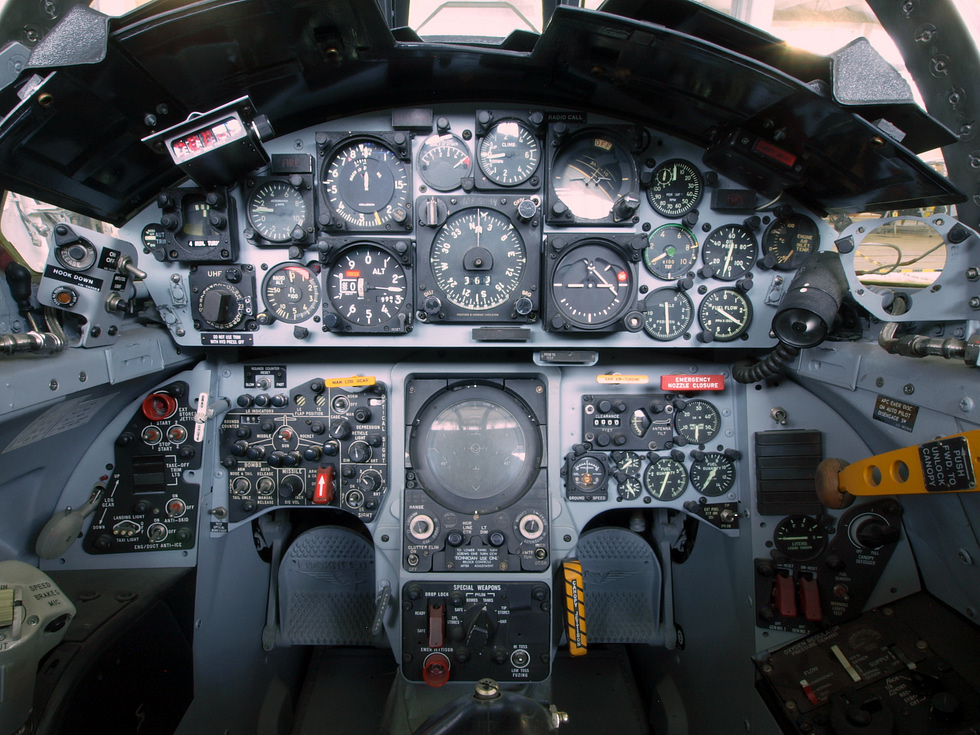
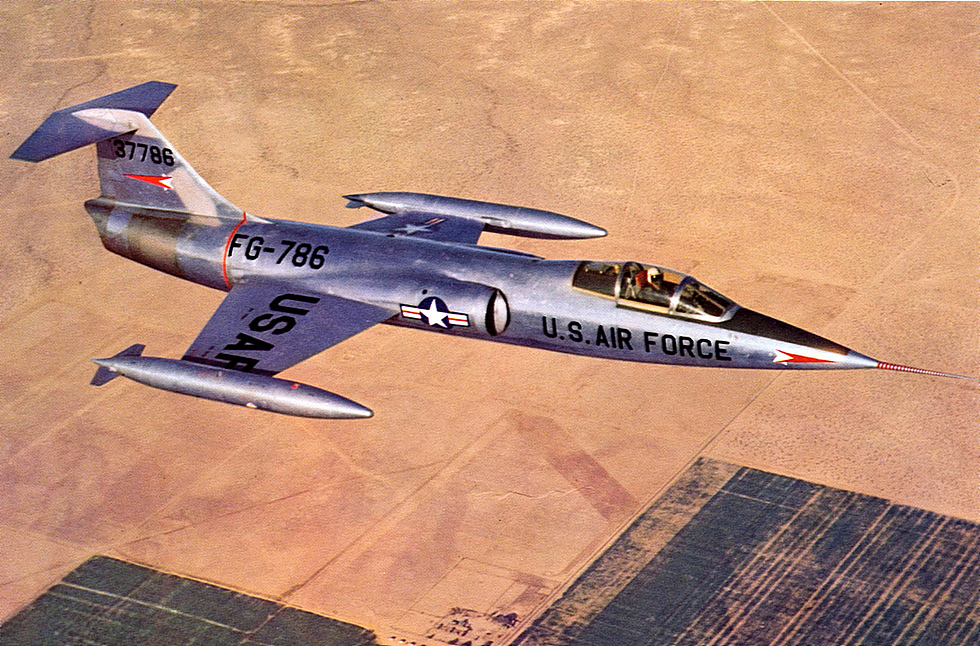
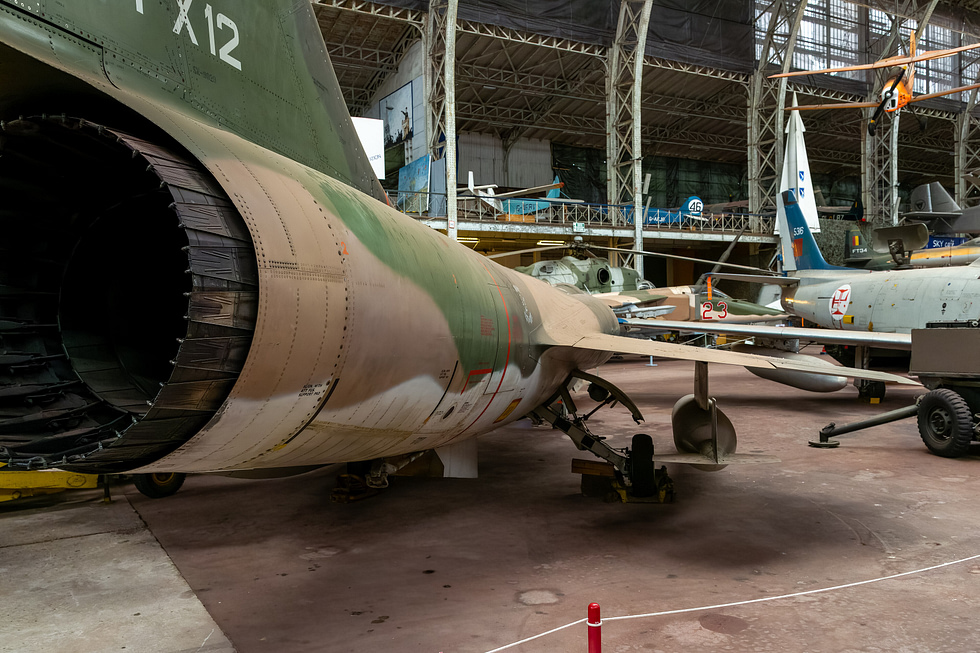
Where the Starfighter flew
Records first, dogfights second
The Starfighter’s fame rests on speed and records, not air-to-air kills. Its combat career was modest and its tallies contested: Pakistan flew it against India in 1965 and 1971, Taiwan clashed with mainland MiG-19s in 1967, and USAF F-104Cs flew MiG-deterrent patrols over Vietnam without scoring an air-to-air victory. Always cite the 1965/71 and Taiwan Strait figures as claims, not settled scores.
Compare the combat record of every military aircraft. Figures as of July 2026.
Everything people ask about the F-104
Can I fly in an F-104 Starfighter?
How fast is the F-104?
Did it really break world records?
Was the “Widowmaker” reputation fair?
Is it still flyable anywhere?
How many were built?
What makes the F-104G different?
Why was it called “the missile with a man in it”?
Tú can actually fly the F-104.
Pick your cockpit.
Some legends only live in museums — others are fuelled and waiting. MiGFlug has put civilians in real military jet cockpits since 2004.
 Fly the L-39 AlbatrosThe world’s most-flown jet trainer — aerobatics included
 Fly the F-104 Starfighter“The missile with a man in it”
 Fly the MiG-21The Cold War’s most-produced jet
 Vuela el T-33 Shooting StarAmerica’s first jet trainer
 Fly the DH VampireA piece of early jet history
 Fly the S.211Agile Italian jet trainer
 Fly the MB-326The classic Aermacchi jet
 Fly the MiG-15The Soviet legend of the Korean War
Continue the tour
Every fact, checked
- MiGFlug — F-104 Starfighter supersonic flight over FloridaThe flights, the fleet and the Shuttle Landing Facility operation.
- MiGFlug Afterburner — how Germany turned a masterpiece into the WidowmakerThe full context behind the Widowmaker reputation.
- HistoryNet — “The Missile With a Man In It”Development, records and the Starfighter’s two careers.
- International F-104 Society — records & operatorsDetailed record and operator data.
- The Aviationist — the NF-104 Aerospace TrainerThe rocket-boosted Starfighter and Yeager’s crash.
- The Aviation Geek Club — why the Luftwaffe dubbed it Widow MakerThe German loss record in context.
- The Columbia Star — the F-104 Starfighter, Part Two: CombatCombat use over Pakistan, Taiwan and Vietnam.
- Starfighters Inc. / Fly a Starfighter (Kennedy Space Center)The airworthy F-104 fleet behind MiGFlug’s flights.