
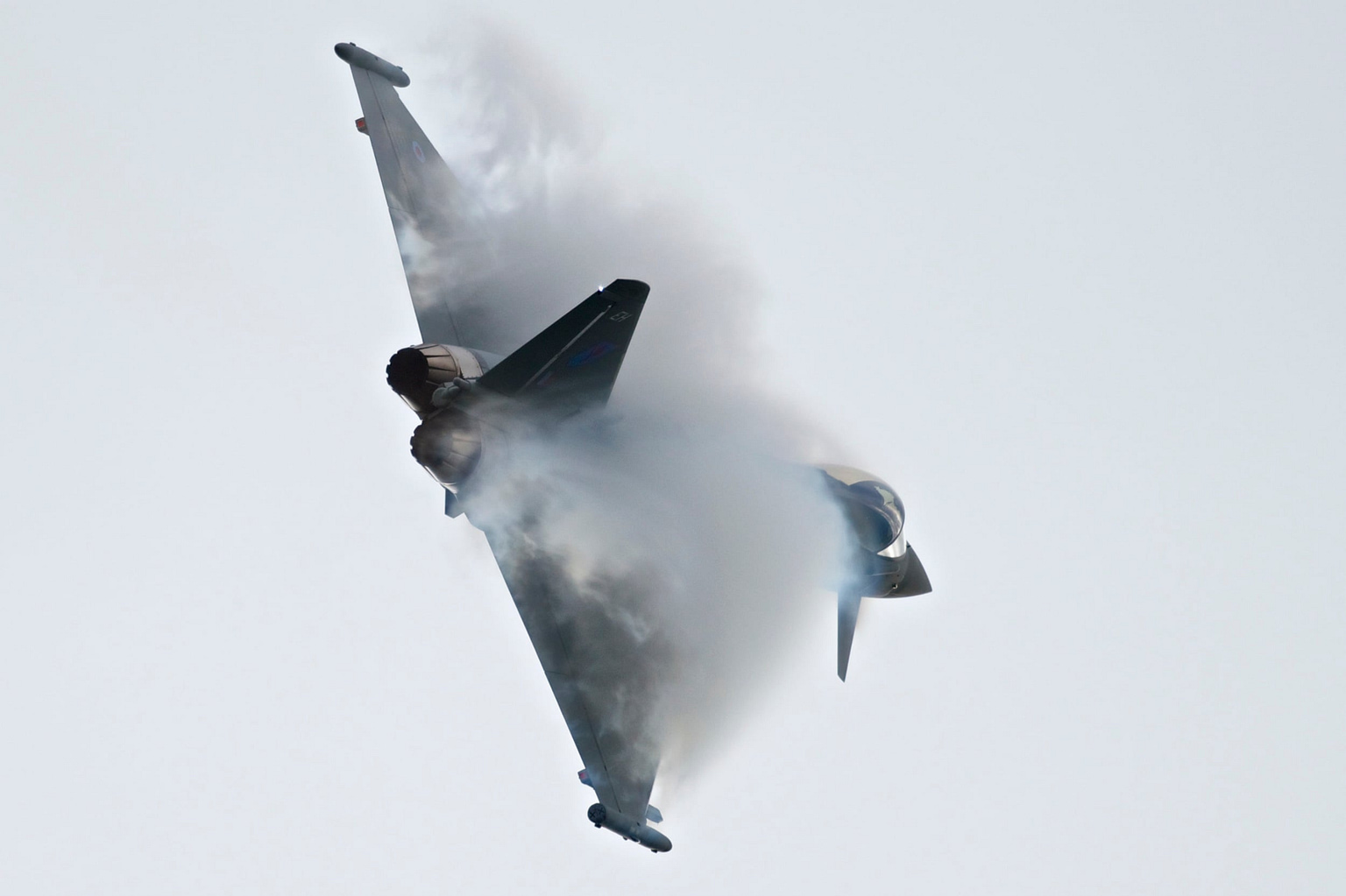
Eurofighter Typhoon
Europe’s canard-delta
A four-nation European air-superiority fighter — deliberately unstable, tamed by fly-by-wire and pushed by twin supercruising EJ200s into one of the most agile 4.5-generation jets ever fielded. Built by Britain, Germany, Italy and Spain, still in production and frontline across Europe and the Gulf in 2026.
Four nations, one fighter
The Eurofighter Typhoon is a four-nation industrial epic. In 1986 the United Kingdom, Germany, Italy and Spain formalised the Eurofighter consortium — pooling design, engineering and money to build a sovereign European air-superiority fighter to rival anything American or Russian. Its technology roots lay in British Aerospace’s EAP demonstrator, which first flew on 8 August 1986 and validated the canard-delta, fly-by-wire configuration the whole programme would bet billions on.
The first development aircraft, DA1, flew from Manching in March 1994; a production contract for an initial 620 jets followed in 1998, split into progressively upgraded Tranches. Type acceptance came on 30 June 2003, and the German Air Force led service entry that August, followed by Italy, the UK and Spain. The Typhoon is deliberately aerodynamically unstable, tamed by quadruplex fly-by-wire and pushed by twin supercruising EJ200s — trading stealth for raw energy, climb and turn performance.
It began as a Cold War interceptor and matured into a genuine swing-role fighter: sweeping the skies one sortie, striking ground targets the next. From RAF Quick Reaction Alert intercepts and combat over Libya in 2011 to a growing export book across the Gulf, the Typhoon has become one of the most successful European fighters of its generation — and, with fresh Tranche 4/5 orders and a 2025 Turkey deal, it remains in production in 2026.
01The Eurofighter Typhoon’s origins: how four nations built a single canard-delta fighter
The programme is managed today by Eurofighter Jagdflugzeug GmbH, with industrial partners BAE Systems, Airbus Defence & Space and Leonardo, and engines from the Eurojet consortium. Workshare, final-assembly lines and cost were split four ways — a structure that produced decades of negotiation and workshare fights, but also Europe’s most successful collaborative fighter, still rolling off four national assembly lines.
Production continues in 2026 with new Tranche 4/5 orders from Germany and Spain and a 2025 Turkey deal signed via the UK. More than 600 have been built — 613 delivered as of September 2025 — a moving figure as the line keeps running.
What makes the Typhoon special
Unstable on purpose
The Typhoon is intentionally aerodynamically unstable in pitch. Foreplane canards ahead of the delta wing generate lift and instant nose authority, while a quadruplex digital fly-by-wire system makes thousands of corrections a second to keep it flyable. The payoff is exceptional instantaneous turn rate, climb and high-alpha handling — a genuine energy-fighter in the dogfight.
Twin EJ200s and supercruise
Two Eurojet EJ200 afterburning turbofans give a high thrust-to-weight ratio and let the Typhoon supercruise — sustain supersonic speed without afterburner — improving persistence, range and combat energy over jets that must burn reheat to go fast.
Sensor fusion at 9 g
El Captor radar — mechanically scanned Captor-M, upgraded to the Captor-E AESA array — is paired with the passive PIRATE infrared search-and-track, defensive aids and data-link, fused into a glass cockpit with helmet-mounted sight so a single pilot can fight while pulling up to 9 g.
02The Eurofighter Typhoon’s agility: why instability plus fly-by-wire beats a stable airframe
Designers made the Typhoon unstable, then handed control to a computer making constant corrections. A naturally stable jet resists manoeuvre; an unstable one wants to depart controlled flight, so every twitch of the stick is amplified into razor-sharp response by the flight-control laws. The result is agility no naturally stable jet in its class can match — the pilot commands, the software keeps it flyable, and the airframe turns like almost nothing else of its generation.
03The Eurofighter Typhoon’s supercruise: fast without the fuel-guzzling reheat
Supercruise means sustaining supersonic flight without afterburner. The Typhoon’s twin EJ200s — around 90 kN each in reheat, 60 kN dry — give enough dry thrust to hold supersonic speed, which buys more range, more persistence and more combat energy than a jet that must light reheat and drink fuel to go fast. It is a performance trait shared with only a handful of the world’s top fighters, and a signature of the Typhoon’s air-superiority pedigree.
Full Eurofighter Typhoon specifications
Airframe & Performance
- Multitud
- 1 (2 in twin-seat trainer)
- Longitud
- ~15.96 m
- Envergadura
- ~10.95 m (RAF cites 11.09 m)
- Altura
- ~5.28 m
- Max takeoff weight
- ~23,500 kg
- Max speed
- Mach 2 (~2,120 km/h); RAF cites Mach 1.6 operational
- Techo de servicio
- ~16,765 m (~55,000 ft)
- Number built
- ~600+ (613 by Sep 2025)
Propulsion & Armament
- Engines
- 2 × Eurojet EJ200 turbofans
- Empuje
- ~60 kN dry / ~90 kN reheat each
- Gun
- 1 × 27 mm Mauser BK-27
- Air-to-air
- Meteor, AMRAAM, ASRAAM, IRIS-T
- Air-to-ground
- Storm Shadow, Brimstone, Paveway IV
- Radar
- Captor-M / Captor-E AESA + PIRATE IRST
- First flight
- 1994 (DA1); EAP 1986
- Unit cost
- ~$100–125 M (varies by tranche)
04The Eurofighter Typhoon’s cost and numbers: what a four-nation fighter actually runs
Typhoon unit costs are quoted anywhere from roughly $100 million to $125 million, but the figure is highly source-dependent: flyaway, program and export prices differ enormously by tranche, operator and year, and are often bundled into multi-billion support packages. Treat any single number as indicative, not authoritative.
Delivery counts move too. More than 600 airframes have been built — 613 delivered as of September 2025 — and production continues, so the total keeps climbing. Speed figures are similarly hedged: Mach 2 is the commonly published maximum, while the RAF cites Mach 1.6 as an operational figure.
Four decades of the Typhoon
Consortium formed
UK, Germany, Italy and Spain form the Eurofighter consortium; BAe’s EAP demonstrator first flies on 8 August, proving the canard-delta layout.
DA1 flies
The first development aircraft, DA1, flies on 27 March from Manching, Germany.
Production contract
A contract for an initial 620 aircraft is signed; Tranche 1 confirmed.
Service entry
Type acceptance on 30 June; the German Air Force enters service that August, followed by Italy, the UK and Spain.
First export
Austria takes its first Typhoons; Saudi Arabia’s Al Salam deal gets under way.
Combat debut over Libya
RAF Typhoons fly Operation Ellamy (NATO Unified Protector), air-policing then striking ground targets.
Anti-ISIS strikes
RAF Typhoons strike ISIS in Iraq and Syria under Operation Shader with Paveway IV and Brimstone.
AESA and new exports
Captor-E AESA radar flight trials; Kuwait (2016) and Qatar sign export contracts; Meteor enters service.
Still in production
600+ delivered; new Tranche 4/5 orders (Germany, Spain) and a Turkey deal signed via the UK; upgrades continue.
From the flight line: twelve Typhoon stories
The Four-Nation Gamble
How four rival aerospace industries built one fighter.
Read the full story
The Demonstrator That Started It All
EAP: the British prototype that proved the shape.
Read the full story
Unstable On Purpose
Why the Typhoon fights better because it wants to fall apart.
Read the full story
Meteor: Reaching Out
The ramjet missile that redrew the no-escape zone.
Read the full story
Scramble: The QRA Life
Minutes from cockpit to Mach 1.
Read the full story
Baptism Over Libya
2011: the Typhoon goes to war.
Read the full story
The Gulf Order Book
Saudi, Qatar, Kuwait and Oman buy European.
Read the full story
Supercruise
Fast without the fuel-guzzling reheat.
Read the full story
Typhoon vs Rafale
Europe’s two 4.5-gen thoroughbreds.
Read the full story
Eyes Without Emissions
PIRATE: hunting in silence.
Read the full story
Growing an AESA Eye
Captor-E and the “super Typhoon.”
Read the full story
Built To Keep Flying
A 1980s idea still in production in 2026.
Read the full story
The Typhoon in pictures
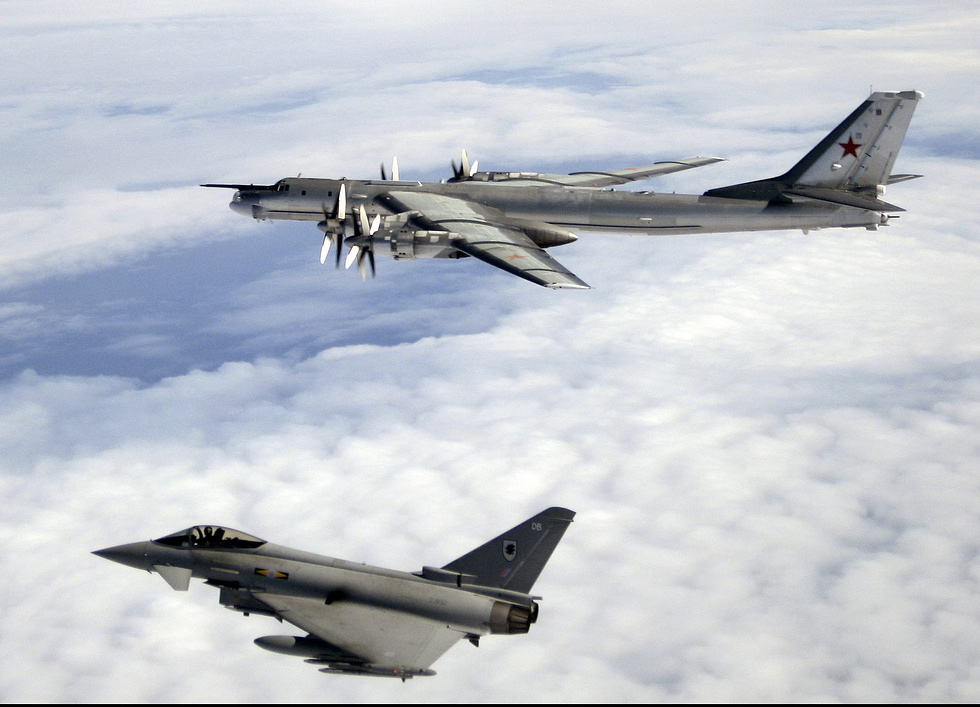
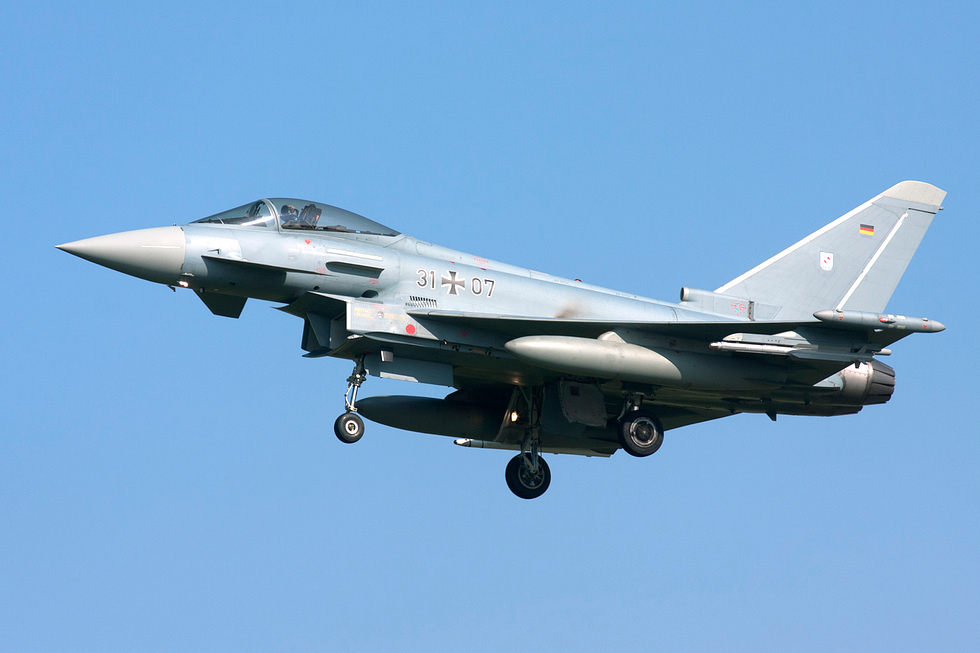
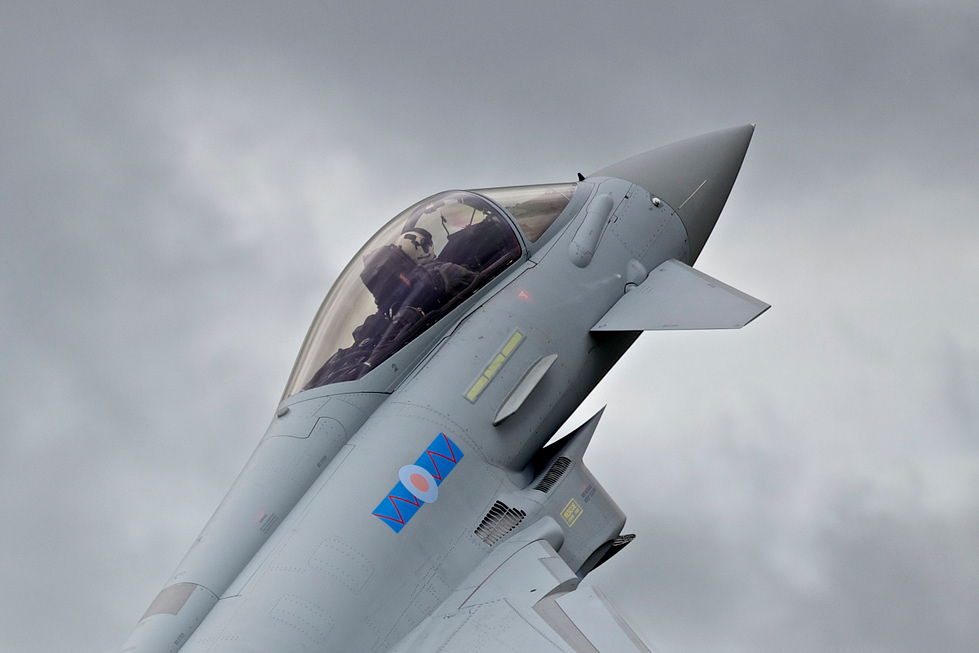
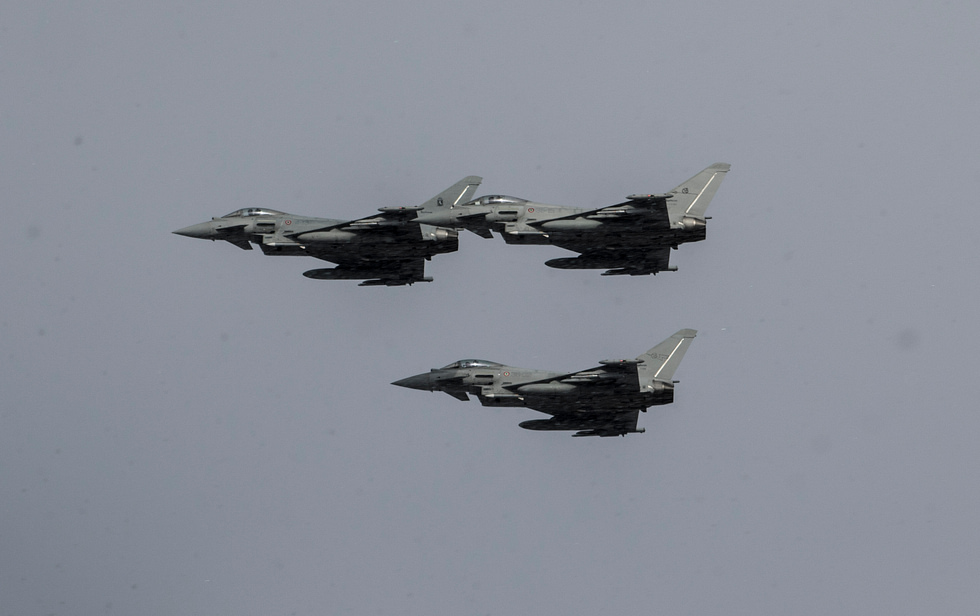
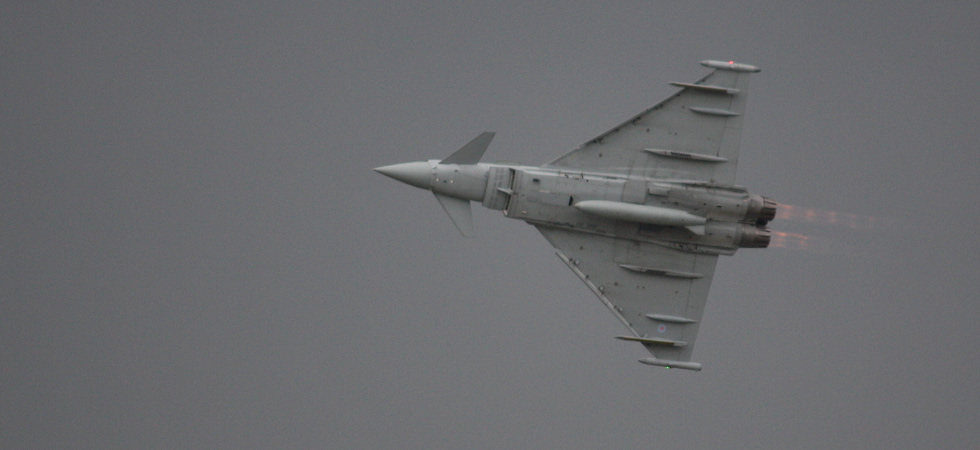
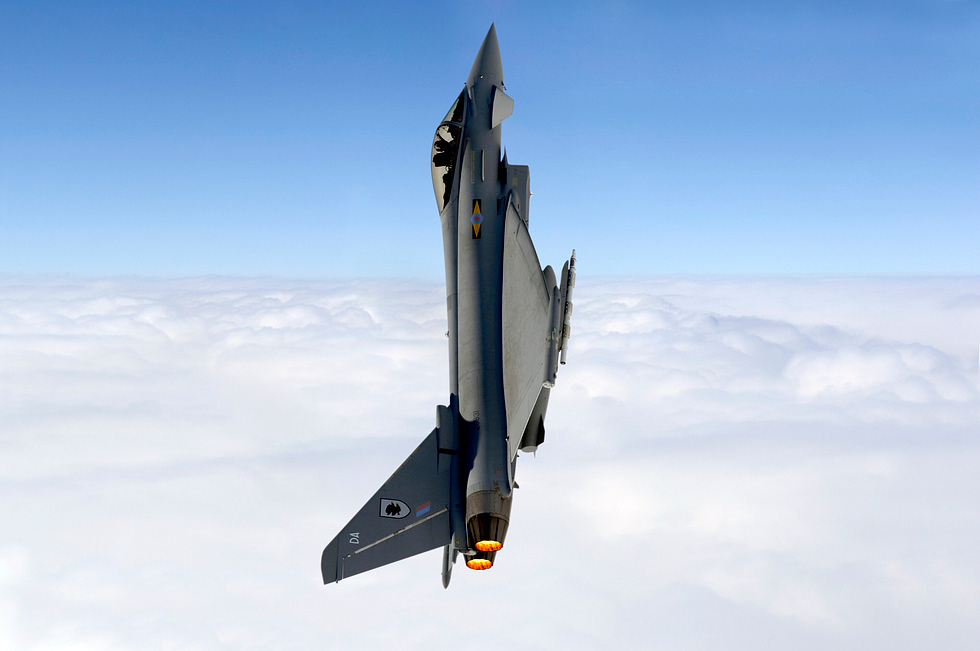
The Typhoon in motion
Video coming soon — an official Eurofighter display reel is being selected and verified for embedding.
Where the Typhoon flies
Air policing, strike — and a hedged kill record
The Typhoon’s combat career is dominated by air policing and precision strike rather than dogfighting. It made its combat debut over Libya in 2011 (Operation Ellamy), struck ISIS in Iraq and Syria from 2015 (Operation Shader), and stands continuous Quick Reaction Alert across Europe and the Baltic. Saudi Typhoons have reportedly flown strike sorties over Yemen.
The Typhoon has no confirmed air-to-air combat kills; its record is strike and QRA, and operator sortie claims are often undisclosed — treat specific figures cautiously. Compare the combat record of every military aircraft. Figures as of July 2026.
Everything people ask about the Eurofighter Typhoon
Can a civilian fly the Typhoon?
How fast is the Eurofighter Typhoon?
Is the Typhoon agile?
Can it supercruise?
Is it still in service and production?
Which nations fly the Typhoon?
How many have been built?
How does it compare to the Rafale?
What is its main radar?
You can’t fly the Typhoon.
These, you can.
Some legends only live in museums — others are fuelled and waiting. MiGFlug has put civilians in real military jet cockpits since 2004.
 Fly the L-39 AlbatrosThe world’s most-flown jet trainer — aerobatics included
 Fly the F-104 Starfighter“The missile with a man in it”
 Fly the MiG-21The Cold War’s most-produced jet
 Vuela el T-33 Shooting StarAmerica’s first jet trainer
 Fly the DH VampireA piece of early jet history
 Fly the S.211Agile Italian jet trainer
 Fly the MB-326The classic Aermacchi jet
 Fly the MiG-15The Soviet legend of the Korean War
Continue the tour
Every fact, checked
- Royal Air Force — Typhoon FGR4Official RAF aircraft page; performance and operational figures.
- MilitarnyiEurofighter surpasses 600 Typhoon deliveries (613 by September 2025).
- GlobalSecurity.orgEurofighter development history: EAP, DA1, tranches and consortium.
- Leonardo (Aeronautics)Eurofighter Typhoon product page — sensors, radar and industrial partners.
- UK Parliament / House of Commons LibraryTyphoon fighter sovereign capability briefing (2025).
- Simple Flying20 years of service: a brief guide to the Eurofighter Typhoon.
- The Defense PostEurofighter Typhoon complete guide (July 2026).
- MiGFlug — Flights & PricesThe genuine military jets you can actually fly today.