
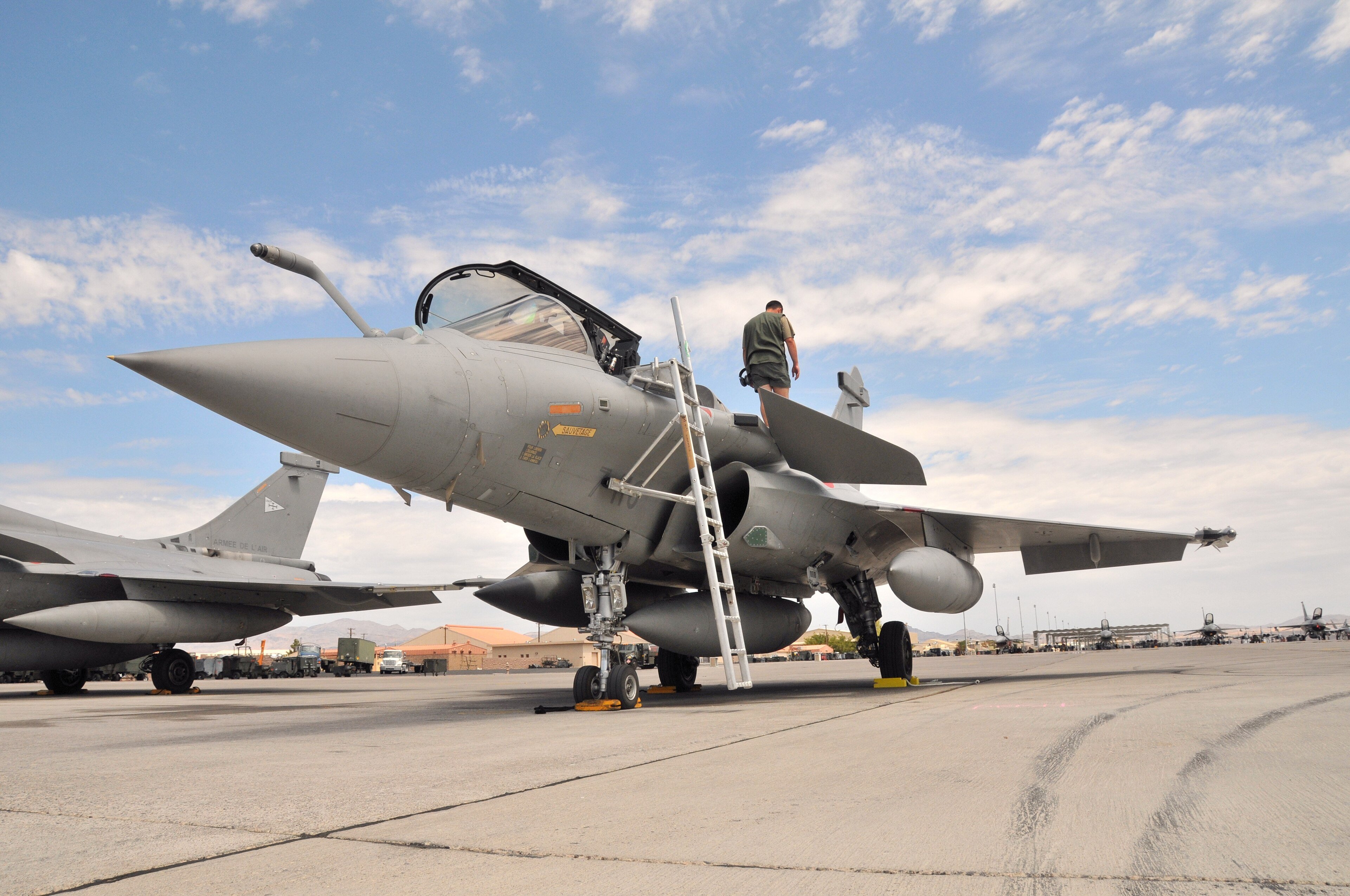
Dassault Rafale
“gust of wind”
France’s sovereign omnirole fighter — a twin-engine canard-delta built to fly every mission from a single airframe, cleared for air defence, deep strike, anti-ship, reconnaissance and airborne nuclear deterrence, and now a runaway 2020s export success.
One jet, every mission
The Rafale is France’s sovereign fighter — the aircraft that lets Paris field one type for every mission and answer to no partner nation for its upgrades or exports. When France walked away in the mid-1980s from the multinational programme that became the Eurofighter Typhoon, it bet on a smaller, carrier-capable, wholly French design. That bet defined the Rafale’s identity: “omnirole.” The Rafale A demonstrator flew on 4 July 1986; the definitive jet reached the French Navy in 2004 and the French Air Force in 2006.
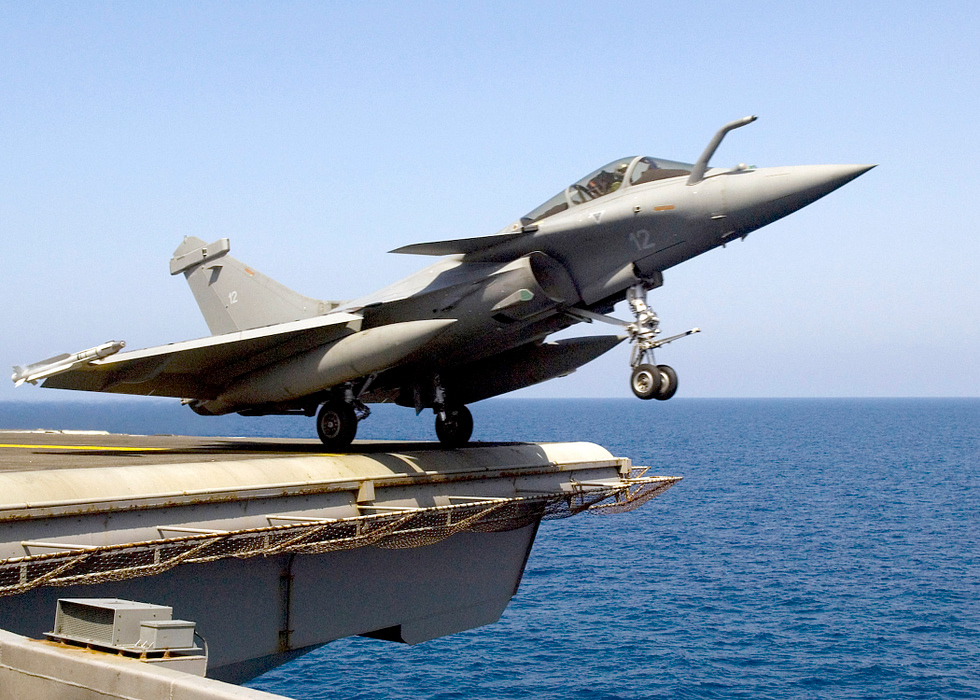
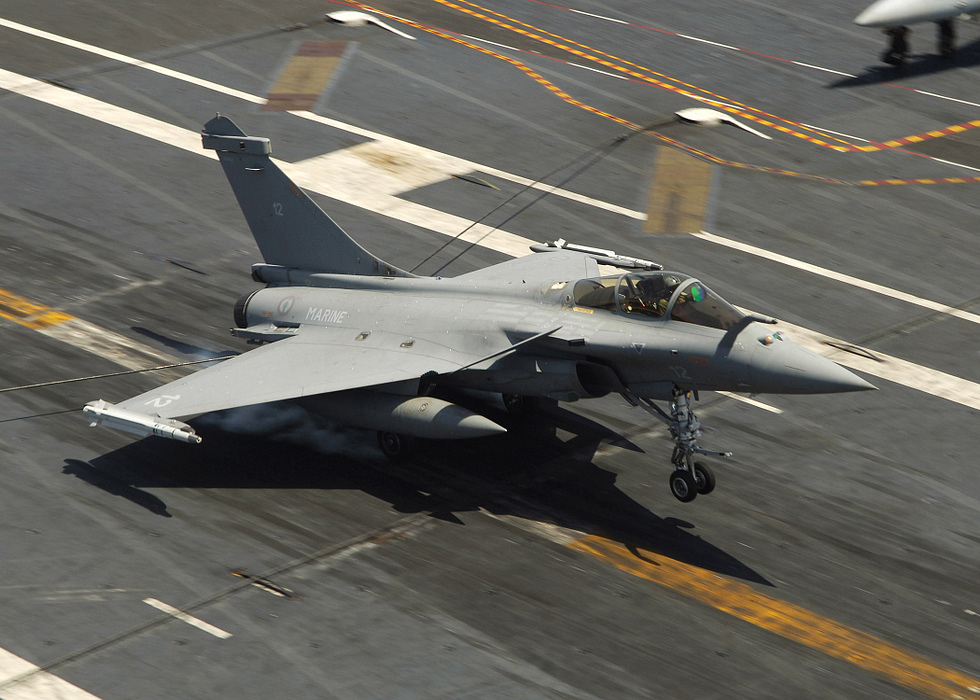
A single Rafale can fly air defence with Meteor and MICA missiles, precision strike with SCALP cruise missiles and AASM Hammer bombs, anti-ship missions with the Exocet, tactical reconnaissance, and — uniquely among current European fighters — France’s airborne nuclear strike with the ASMP-A missile. It operates from land bases and from the carrier Charles de Gaulle. Three variants share around 80% commonality: the single-seat Rafale C, the two-seat Rafale B, and the carrier-capable Rafale M.
After years without a single foreign buyer, the Rafale became a 2020s sales phenomenon — ordered by India, Egypt, Qatar, Greece, Croatia, the UAE, Indonesia and Serbia, and combat-proven over four continents. Dassault delivered its 300th Rafale in October 2025, with more than 500 aircraft on firm order and production climbing toward three to four jets a month.
01The Rafale’s divorce: how France’s exit from Eurofighter created two rival jets
In the mid-1980s France was part of the multinational effort that would become the Eurofighter Typhoon, but it wanted something the partners would not build: a lighter jet, capable of operating from an aircraft carrier, and under complete national control of design, upgrades and exports. Unable to reconcile those demands, France left in 1985 and went its own way. The split produced two competing European fighters where there might have been one.
The cost of that sovereignty was enormous — a whole fighter programme funded alone — but the payoff was total control. Decades on, the Rafale has outsold the Typhoon on the export market and remains the only European fighter cleared to carry a nuclear cruise missile and to fly from a carrier deck. For France, the Rafale is less a product than an instrument of strategic independence.
What makes the Rafale special
Close-coupled canard-delta
The Rafale’s foreplanes sit close to and slightly above the delta wing; their vortices energise airflow over the wing at high angle of attack, boosting lift and control authority. The airframe is deliberately relaxed-stability for agility, tamed by a full digital fly-by-wire system with carefree handling — giving a +9 g / −3.2 g envelope and crisp instantaneous turn without the pilot fighting the jet.
Twin Safran M88 turbofans
Two Snecma/Safran M88-2 engines each deliver roughly 50 kN dry and about 75 kN in afterburner (Dassault quotes “2 × 7.5 t”). Twin engines give combat survivability and single-engine recovery, and the M88 is optimised for the full mix of high-altitude interception and low-level strike — supporting strong sustained performance in a clean configuration.
SPECTRA, AESA radar & sensor fusion
Rather than chasing all-aspect stealth, the Rafale invests in the SPECTRA integrated electronic-warfare suite — threat detection, jamming, decoys and angular threat location — plus the Thales RBE2 AESA radar and the OSF optronic sensor. A multisensor data-fusion core merges it all into one tactical picture. The Rafale is also the only current European fighter cleared to carry an air-launched nuclear missile.
02The Rafale’s SPECTRA: survival by electronics, not shaping
While the F-35 chases a minimal radar cross-section, the Rafale bets on SPECTRA — an integrated electronic-warfare system that detects, locates, jams and decoys threats, and can angularly pinpoint hostile emitters. Combined with the RBE2 AESA radar and optronics, the aim is to let the pilot detect and engage first, then slip away. It is a fundamentally different philosophy of survivability from all-aspect stealth: not being invisible, but always knowing more than the other side — and it keeps a 1980s airframe tactically relevant decades on.
03The Rafale’s nuclear role: Europe’s only airborne nuclear fighter
French Rafales carry the ASMP-A, a stand-off nuclear cruise missile that forms the airborne leg of France’s independent deterrent — the force de dissuasion. Dedicated squadrons train specifically for the nuclear strike mission. No other current European fighter fields such a weapon, which is why the Rafale is best understood not merely as a tactical jet but as an instrument of French strategic sovereignty — a capability France was unwilling to place under any partner nation’s control, and a core reason it built the aircraft alone.
Full Rafale specifications
Airframe & Performance
- Multitud
- 1 (Rafale B/M two-seat exists)
- Longitud
- 15.30 m
- Envergadura
- 10.90 m
- Altura
- 5.30 m
- Peso vacío
- ~10 t
- Max takeoff weight
- 24.5 t (~54,000 lb)
- Max speed
- Mach 1.8 · ~750 kn
- Techo de servicio
- ~50,000 ft (~15.2 km)
- Load factor
- +9 g / −3.2 g
Propulsion & Systems
- Motor
- 2 × Safran M88-2 turbofans
- Empuje
- ~50 kN dry / ~75 kN afterburner (each)
- Cannon
- 1 × 30 mm Nexter 30M791
- Air-to-air
- Meteor (BVR), MICA (IR/EM)
- Air-to-ground
- SCALP-EG, AASM Hammer, LGBs
- Nuclear
- ASMP-A (French aircraft only)
- First flight
- 1986 (Rafale A)
- Built
- 300+ delivered (Oct 2025); rising
04The Rafale’s price tag: why there is no single sticker number
The Rafale is often quoted at around US$100 million or more per aircraft, but that figure is misleading if treated as a hard flyaway price. Export deals bundle weapons, spares, training, infrastructure and long support contracts, and the per-jet cost swings enormously with the package, the year and the buyer. India’s 36-jet deal, Egypt’s and Qatar’s orders and Croatia’s ex-French airframes were all priced very differently. Treat any single “Rafale costs $X” headline with caution: the honest answer is that the price is package-dependent, and Dassault does not publish a simple unit figure.
Four decades of the Rafale
France goes solo
France leaves the joint European fighter project, choosing to build its own carrier-capable, nationally controlled jet.
Rafale A first flight
The Rafale A technology demonstrator flies for the first time on 4 July, proving the canard-delta concept.
Production prototype
The first production-standard prototype, the Rafale C01, takes to the air.
First delivery
The first series-production Rafale is delivered to France.
Enters naval service
The Rafale M enters service with the French Navy aboard the carrier Charles de Gaulle.
Enters air-force service
The French Air Force declares the Rafale operational.
Combat debut over Libya
Rafales fly among the opening strikes of Opération Harmattan, enforcing the Libya no-fly zone.
Export era begins
Egypt becomes the first export customer, opening a run of foreign orders from Qatar, India and beyond.
300th Rafale delivered
Dassault delivers its 300th Rafale; the Indian Navy orders the Rafale M and the type sees combat in India’s Operation Sindoor.
From the flight line: twelve Rafale stories
The divorce that made two fighters
France went solo — and Europe got two rivals.
Read the full story
One jet, every job
What “omnirole” really means.
Read the full story
SPECTRA: seeing without being seen
Survival by electronics, not stealth.
Read the full story
The carrier Rafale
Built to launch from a pitching deck.
Read the full story
India’s Rafale saga
From bitter tender to biggest-ever deal.
Read the full story
Meteor: the long arm
A ramjet missile that rewrites BVR range.
Read the full story
France’s airborne nuke
The only European fighter with a nuclear cruise missile.
Read the full story
The export boom
From zero sales to a global order book.
Read the full story
Cross-decking with the US Navy
A French jet on an American carrier.
Read the full story
Sahel strike from home soil
Mali targets hit from France.
Read the full story
The canard advantage
Little wings up front, big agility payoff.
Read the full story
F4, F5 and a loyal wingman
Keeping a 1980s design current into the 2040s.
Read the full story
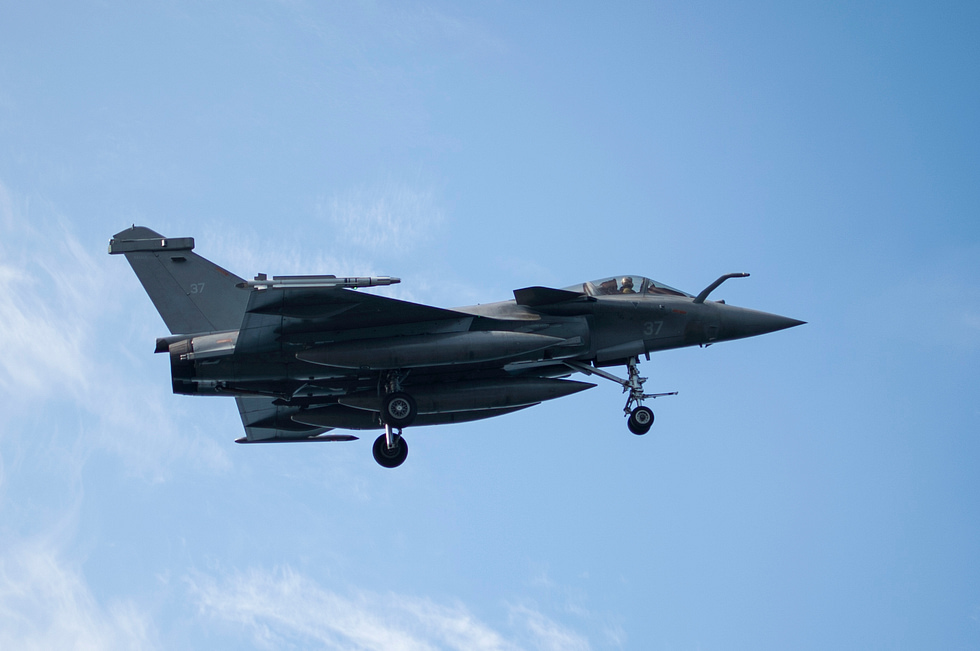
The Rafale in pictures
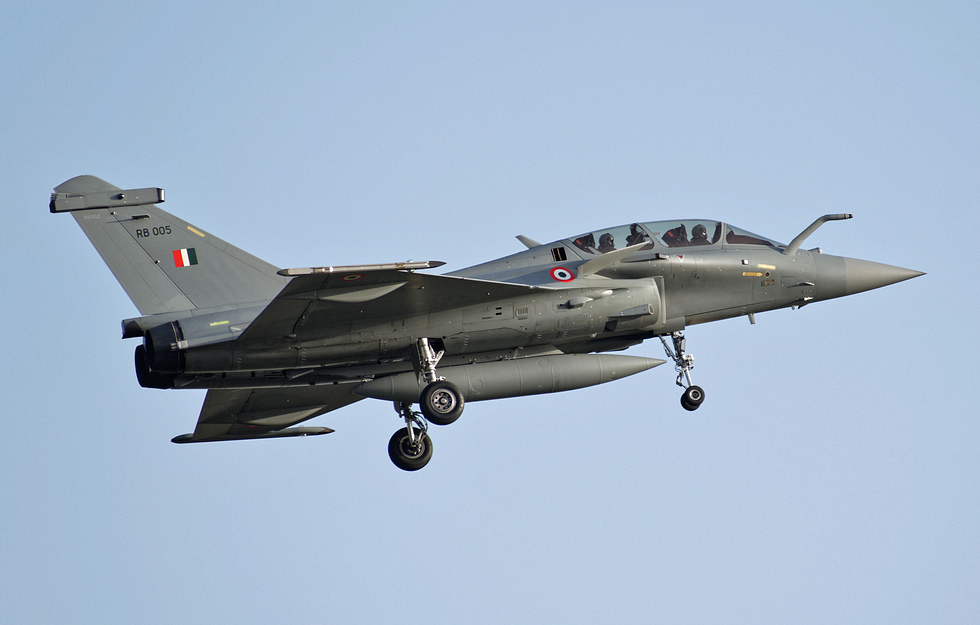
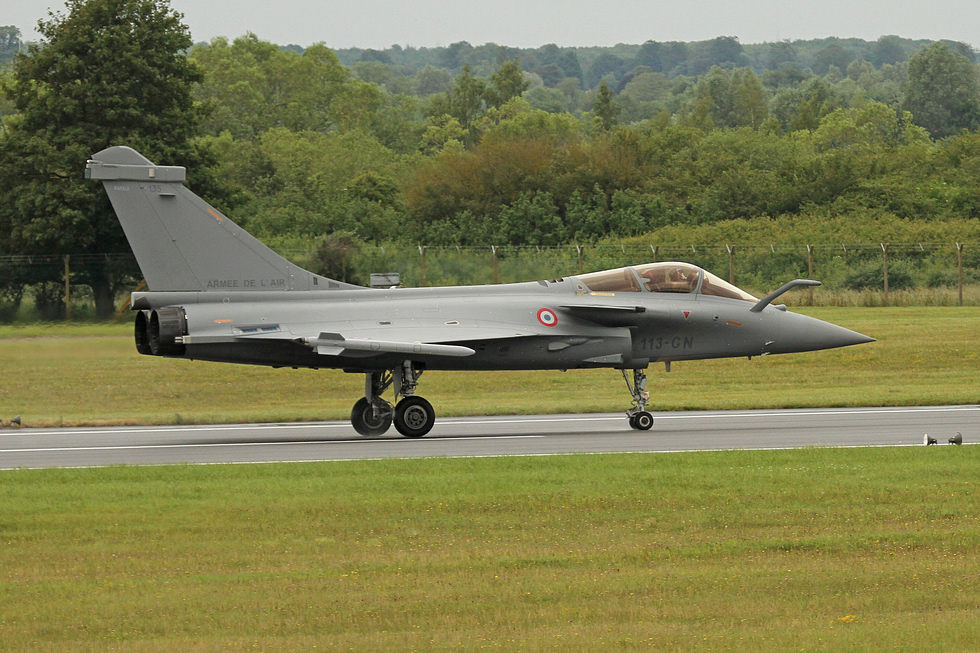
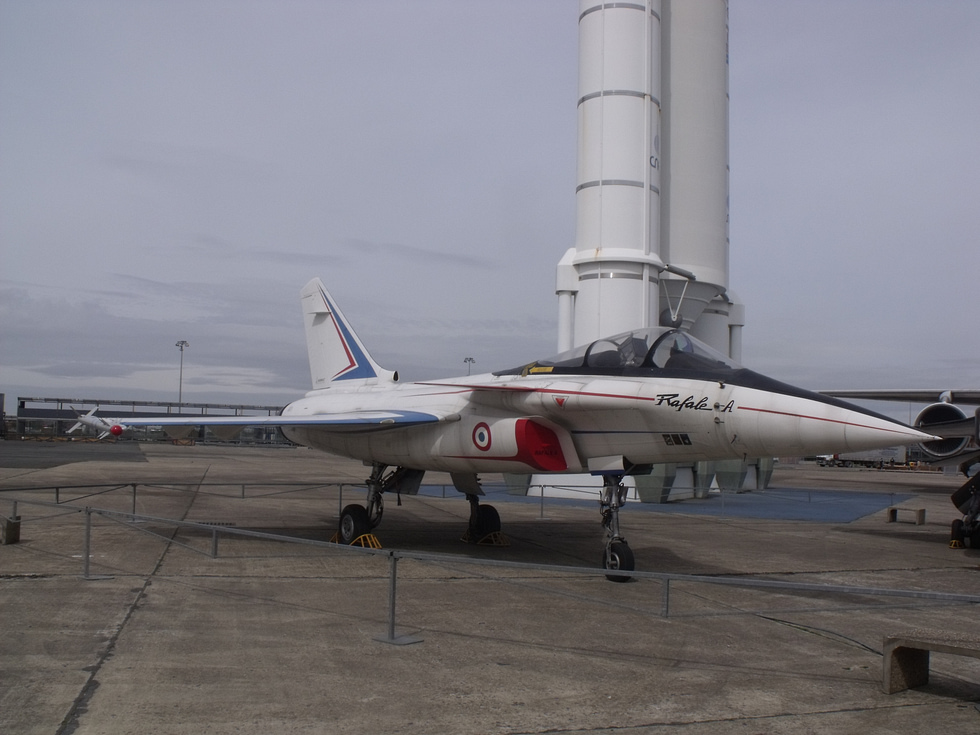
The Rafale in motion
A showcase film of the Rafale in flight is coming soon.
Where the Rafale flies
Combat-proven across four continents
The Rafale is genuinely combat-tested: close air support in Afghanistan, the opening strikes over Libya in 2011, long-range strike across the Sahel from Mali (2013) and a sustained precision campaign over Iraq and Syria (2014+). Its record is overwhelmingly air-to-ground and strike; it has no confirmed air-to-air kill against a peer manned fighter documented in neutral open sources, so there is no meaningful “kill ratio” to quote.
Indian Rafales operated during the May 2025 India–Pakistan clashes (Operation Sindoor); loss and kill claims from that episode are heavily disputed between Indian, Pakistani and third-party sources and should be treated as unverified. Compare the combat record of every military aircraft. Figures as of July 2026.
Everything people ask about the Rafale
Can I fly in a Rafale?
How fast is the Rafale?
What does “omnirole” mean?
Rafale vs Eurofighter Typhoon — what’s the difference?
Is there a carrier version?
Can it carry nuclear weapons?
Who flies the Rafale, and how many are built?
Is the Rafale combat-proven?
You can’t fly the Rafale.
These, you can.
Some legends only live in museums — others are fuelled and waiting. MiGFlug has put civilians in real military jet cockpits since 2004.
 Fly the L-39 AlbatrosThe world’s most-flown jet trainer — aerobatics included
 Fly the F-104 Starfighter“The missile with a man in it”
 Fly the MiG-21The Cold War’s most-produced jet
 Vuela el T-33 Shooting StarAmerica’s first jet trainer
 Fly the DH VampireA piece of early jet history
 Fly the S.211Agile Italian jet trainer
 Fly the MB-326The classic Aermacchi jet
 Fly the MiG-15The Soviet legend of the Korean War
Continue the tour
Every fact, checked
- Dassault Aviation — Rafale specifications & performanceOfficial manufacturer figures for dimensions, weights and powerplant.
- Dassault Aviation — Rafale programme overviewThe manufacturer’s “omnirole” concept and variant descriptions.
- European Security & Defence“300th Rafale delivered” (October 2025) — production milestone and output plans.
- Flight GlobalHow France’s Rafale evolved into an export champion.
- Shephard MediaUpgrades and fresh orders reinforcing Rafale demand (updated 2026).
- AirpowerAsiaIndia’s proposed Make in India Rafale deal and production-hub ambitions.
- GlobalMilitary.netRafale combat aircraft specs and operator list (2026).
- MiGFlug BlogThe Dassault Rafale in combat — every operation from Mali to Syria.