

CANT Z.1007 Alcione
Italy’s elegant three-engine “Kingfisher” — a fast, all-wood medium bomber that looked the part and flew well when new, yet was slowly betrayed by the very timber it was built from.
The CANT Z.1007 Alcione: Italy’s wooden trimotor that flew beautifully and aged badly
The CANT Z.1007 Alcione — the name means “kingfisher” — was one of the three bombers on which the Regia Aeronautica leaned hardest during the Second World War, alongside the trimotor Savoia-Marchetti SM.79 and the twin-engine Fiat BR.20. Fast, clean and handsome, it promised a great deal on paper. In service, its all-wooden airframe turned that promise into a running battle with warping, damp and heat. It is an aircraft best understood not as a success or a failure, but as a fascinating, honest illustration of what a talented but under-resourced aviation industry could — and could not — achieve.
The aircraft was the work of Filippo Zappata, one of Italy’s most gifted designers, who had already given the country the graceful Z.506 Airone floatplane. Working for CANT — Cantieri Aeronautici e Navali Triestini, the aircraft arm of the Trieste-based shipbuilder CRDA — Zappata drew a slender, three-engine monoplane whose lines owed as much to the drawing office’s love of clean form as to any rulebook. The prototype first flew in March 1937, powered by three Isotta-Fraschini Asso XI in-line engines of around 830 horsepower each.
Those early inline engines were quickly judged inadequate, and the definitive version, the Z.1007bis, was re-engined with three Piaggio P.XI RC.40 radials of roughly 1,000 horsepower apiece. The “bis” also grew: a longer, wider fuselage, a stronger structure and revised systems. It was this variant, entering service from 1939–40, that most people mean when they say “Alcione.” Around 560 aircraft were built in total, the majority of them the bis — though sources disagree, and figures as high as roughly 660 are sometimes quoted.
What set the Alcione apart from almost every contemporary was its construction. Where Britain, Germany and the United States were racing toward all-metal stressed-skin airframes, the Z.1007 was built almost entirely of wood — wooden wings, wooden fuselage, plywood skinning over a timber frame. In 1937 that was a defensible choice: Italy was short of the light alloys that metal bombers devoured, wood was cheap and available, and a well-made wooden aeroplane could be light, smooth and aerodynamically clean. When new, the Alcione was genuinely quick and pleasant to fly, and reasonably accurate as a bomber.
The Alcione was a fine aeroplane on the day it left the factory — and a maintenance headache six months later in the desert.
The trouble was that wood does not enjoy the Mediterranean and North African climate. In the heat, damp and sun of Sicily, Libya and the Aegean, wooden structures warped, glued joints weakened and skins delaminated. Aircraft left in the open — as they usually were — could go out of true, throwing controls out of rig and, in the worst cases, weakening the airframe itself. Ground crews fought a constant war against the weather, and serviceability suffered. The very material that made the Alcione cheap and elegant also made it fragile in the field.
None of this stopped the Z.1007 from serving hard and serving widely. From 1940 it bombed Malta and hunted the convoys that kept the island alive; it flew over the Western Desert against the British Eighth Army; it took part in the Balkans campaign and the war against Greece; and a small expeditionary force even operated on the Eastern Front against the Soviet Union. Some Alciones flew long-range raids toward Gibraltar and the Nile Delta, feats that showed off the aircraft’s range and clean design even as its defensive weakness left it exposed to modern fighters.
These were not token appearances. For much of 1941 and 1942 the Z.1007 was a genuine workhorse of the Italian bomber arm, flying by day and night, in ones and twos on reconnaissance and in formations on set-piece raids. It carried the ordinary, unglamorous weight of an air war: the repeated sorties against the same targets, the slow attrition of crews and airframes, the constant improvisation of a force that never had quite enough of anything. If the SM.79’s torpedo strikes provided the drama, the Alcione provided a good deal of the daily grind.
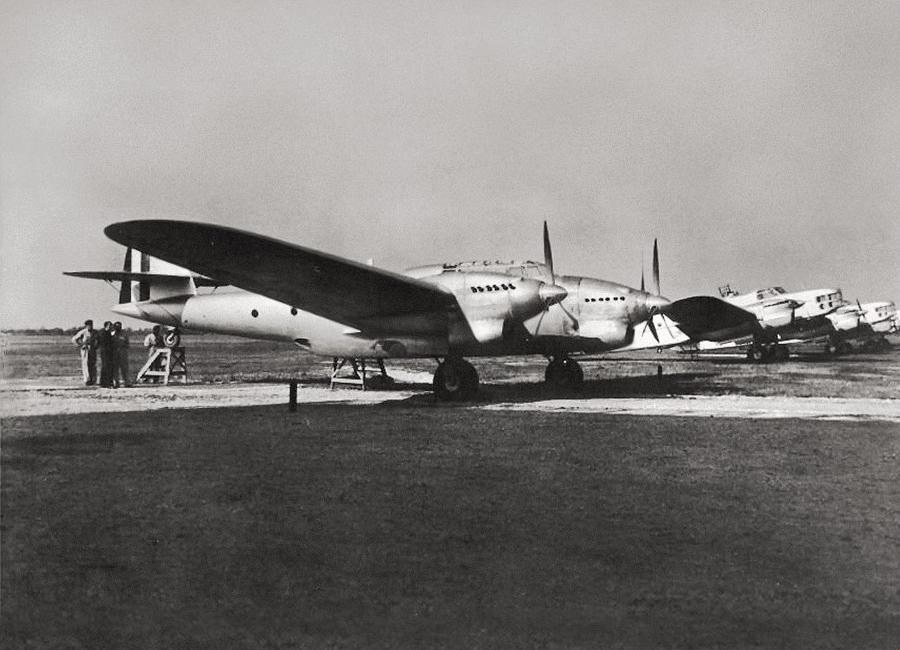
The Alcione’s story is, in miniature, the story of the whole Italian air war. Italy had brilliant designers, brave and skilful crews, and a handful of genuinely good aircraft. What it lacked was the industrial depth to build them in quantity, the engines to keep improving them, the fuel to fly them freely, and the raw materials to make them robust. The Z.1007 embodied all of this: an elegant, capable design let down not by any single flaw but by the accumulated weight of a war its country was not equipped to fight.
It is worth resisting the easy caricature of Italian wartime aviation as simply hopeless. The Regia Aeronautica achieved real successes, particularly in the anti-shipping war, and aircraft like the Alcione were respected by their opponents. The problems were structural and strategic rather than a matter of talent or courage. Understanding that is the key to understanding the Alcione — and to giving the men who designed, built and flew it a fair hearing.
Because it was a bomber built for a nation with a small industrial base, the Alcione was always fighting above its weight class. Its defensive armament — a pair of heavy 12.7 mm machine guns and a pair of lighter 7.7 mm weapons — was modest by 1942 standards, and like most Italian bombers it lacked the heavy power-operated turrets that protected its Allied counterparts. Against Hurricanes and Spitfires over Malta, losses could be painful, and crews learned to rely on speed, altitude and tight defensive formations rather than on the guns themselves.
Yet it would be unfair to paint the Alcione only as a victim. In the hands of good crews it was a genuinely effective machine. Its long range and clean aerodynamics let it reach targets other Italian bombers could not, and its accuracy as a level bomber was respected. Italian airmen who flew it generally liked it: it was pleasant on the controls, stable, and forgiving in a way that mattered on long over-water sorties where an engine failure far from land was an ever-present fear. The three engines, for all the drag they added, meant that a crippled Alcione could often limp home on two.
After the Italian armistice of September 1943 the surviving Alciones were split, like the country itself. Some flew on with the Italian Co-Belligerent Air Force on the Allied side; others served the Aeronautica Nazionale Repubblicana (ANR) of Mussolini’s northern rump state, and a handful passed through German hands. By 1945 the type was worn out and obsolete. And here the wood took its final revenge: not one complete CANT Z.1007 survives today. The airframes that were not destroyed in the war simply rotted away. The Alcione lives on only in photographs, drawings and a few relics — an unusually clean-lined reminder of how far ingenuity could stretch a country that never had enough metal, engines or time.
That absence of a survivor is worth dwelling on, because it shapes how we remember the aircraft. The SM.79 has preserved examples; the great Allied bombers fill museums; even many obscure metal types have a single airframe hanging under a roof somewhere. The Alcione has none. Every image on this page is a photograph, because photographs are all that is left. For an aircraft that was, in its day, one of the three pillars of the Italian bomber force, that is a strikingly complete disappearance — and a direct consequence of the design choice that also made it possible.
01What the name “Alcione” means and where the Z.1007 fits among Italy’s wartime bombers
“Alcione” is Italian for kingfisher, part of a CANT tradition of naming aircraft after birds — the Z.506 was the Airone (heron) and the Z.501 the Gabbiano (seagull). The name draws on the Greek myth of Alcyone, whose story is tied to the calm “halcyon days” when the kingfisher was said to nest on the sea. For a maritime-minded firm on the Adriatic, it was a fitting choice, and it hints at the over-water role the aircraft would come to play.
The Z.1007 is almost always grouped with two other aircraft as the backbone of the Regia Aeronautica’s bomber force: the Savoia-Marchetti SM.79 Sparviero, also a wooden trimotor, and the Fiat BR.20 Cicogna, a twin-engine all-metal design. Together they carried the bulk of Italy’s level-bombing and anti-shipping effort from 1940 to 1943.
Of the three, the SM.79 is the most famous, thanks to its torpedo-bomber exploits; the BR.20 was the most modern in construction. The Z.1007 sat between them: cleaner and, in some respects, more capable than the BR.20, but sharing the SM.79’s wooden Achilles’ heel. Comparing the trio is the fairest way to understand the Alcione — it was neither Italy’s best bomber nor its worst, but a characteristic product of Italian aeronautical thinking in the late 1930s.
It is also worth remembering how quickly bomber design was moving in this era. The Alcione was conceived in the mid-1930s, when a fast twin- or tri-motor carrying a tonne of bombs at nearly 300 mph was a formidable weapon. By 1943 the yardstick had become the four-engine heavy — the Lancaster, the B-17, the B-24 — carrying several times the load over far greater distances. The Alcione did not get worse; the war simply moved past the category it belonged to, and Italy lacked the industry to leap to the next.
02Filippo Zappata and the design house behind the Alcione
Filippo Zappata (1894–1994) trained as an engineer and worked in France for Blériot before returning to Italy. His designs were known for their clean aerodynamics and elegant proportions. At CANT he produced the Z.506 Airone, a floatplane that set records and served as a bomber and air-sea-rescue aircraft, before turning to the landplane bomber that became the Z.1007.
CANT itself — Cantieri Aeronautici e Navali Triestini — was the aviation subsidiary of CRDA, Cantieri Riuniti dell’Adriatico, a major shipbuilder at Monfalcone near Trieste. That maritime heritage is part of why wooden construction, familiar from boatbuilding, came so naturally to the firm. It also helps explain the Alcione’s ship-like structural craftsmanship — and, ultimately, its vulnerability to the elements.
Zappata’s career did not end with the war. He continued to design aircraft into the post-war years, including the BZ.308 airliner, and lived to the remarkable age of 100. His reputation rests on a handful of clean, ambitious designs produced for a country whose industry could rarely match his imagination — the Alcione among the most characteristic of them. In another aviation nation, with metal and mass production behind it, the same designer’s ideas might have aged very differently.
03Why Italy built a front-line bomber almost entirely out of wood
By the mid-1930s most major air forces were moving to all-metal, stressed-skin construction. Italy chose differently for reasons that were partly strategic and partly practical. The country had limited domestic supplies of aluminium and other light alloys, which sanctions and the drive toward autarky (economic self-sufficiency) made more acute. Wood, plywood and skilled woodworkers were plentiful, and a wooden aircraft could be built without straining scarce metal stocks.
A well-designed wooden airframe could also be very smooth and light, which suited a fast bomber. The gamble was on durability. In the temperate factory conditions of northern Italy the aircraft were fine; in the field, exposed to sun, salt air and humidity, the timber and glue that made the Alcione possible became its greatest liability. It was a rational choice that the war’s conditions turned into a costly one.
There is a certain irony here. Britain built one of the war’s most celebrated aircraft, the de Havilland Mosquito, almost entirely of wood — and it worked superbly. The difference lay partly in climate, partly in the adhesives and manufacturing techniques used, and partly in how the aircraft were housed and maintained. Wood was never inherently the wrong answer; it was the combination of Mediterranean and desert service, open-air parking and a hard-pressed maintenance organisation that turned the Alcione’s timber from an asset into a chronic problem.
What made the CANT Z.1007 Alcione fast — and what made it fragile
Three design decisions define the Alcione: an aerodynamically clean trimotor layout, an all-wood structure, and a defensive scheme that never quite kept pace with the war. Understanding them explains both the aircraft’s early promise and its later reputation — and why the same aircraft could be praised and criticised in almost the same breath.
The trimotor layout
Three engines gave useful power and a measure of redundancy over the sea, but the nose-mounted engine forced the bomb-aimer and forward gun into a compromised position and added drag and weight compared with a twin. It was a distinctively Italian solution — shared with the SM.79.
All-wood structure
Wooden wings and a plywood-skinned wooden fuselage made the Alcione light, smooth and cheap in materials. The same structure warped and weakened in Mediterranean heat and damp, hurting serviceability and, eventually, safety.
Light defensive armament
Two 12.7 mm and two 7.7 mm machine guns, without heavy power turrets, left the aircraft exposed to modern fighters. Speed and altitude were its main defences — adequate in 1940, marginal by 1942.
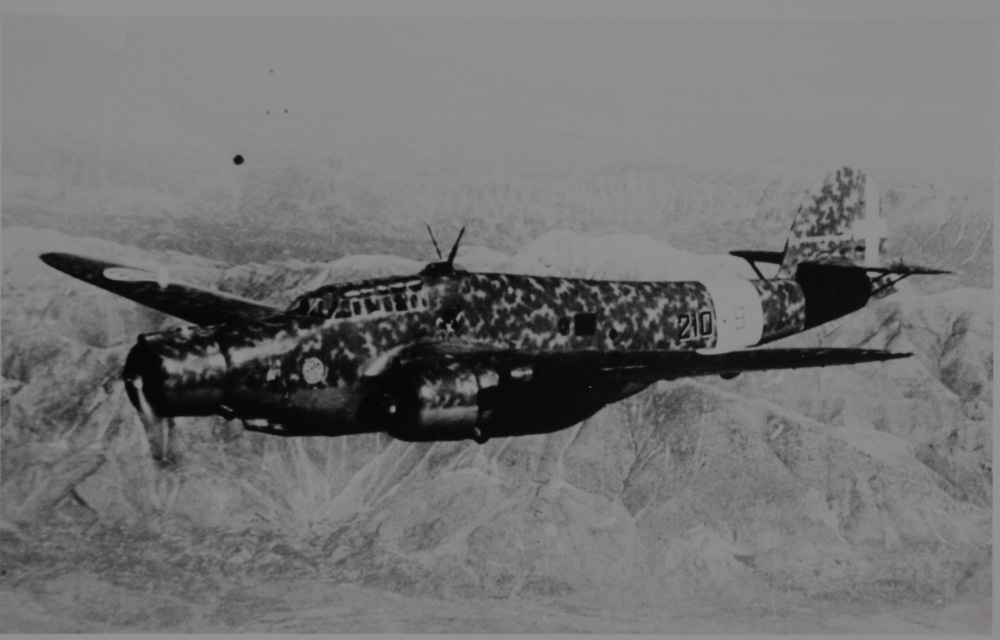
Look closely at any Alcione and the tension in its design becomes clear. The wing is a clean cantilever monoplane structure, beautifully faired into the fuselage, with none of the struts or bracing that cluttered earlier bombers. The fuselage is deep and smooth. Everything about the shape says “fast” — and it was. Yet every one of those elegant surfaces was a wooden component that had to be built, sealed and maintained to a high standard to stay true, and that standard was hard to hold in a wartime field unit.
The Alcione was also a large aircraft for a medium bomber, with a wingspan of nearly 25 metres. That size gave it the internal volume for fuel and bombs that underpinned its long range, but it also meant a lot of wooden structure to keep rigid. A metal wing of the same span could be made stiff relatively easily; a wooden one relied on the integrity of its spars, ribs and glued plywood skin — exactly the elements most vulnerable to moisture and heat. The design’s greatest virtues and its greatest weaknesses were, quite literally, made of the same material.
It is a mistake, though, to imagine the Alcione as flimsy. A well-maintained example was a strong, capable aircraft, and the redundancy of three engines gave it a genuine survivability edge over water. The problem was never the design on paper; it was the gap between the aircraft as drawn and the aircraft as it existed after months in the sun at a dusty Libyan airstrip. Closing that gap took more skilled labour and better facilities than Italy could consistently provide.
04The Piaggio P.XI radials and the Alcione’s performance
The definitive Z.1007bis was powered by three Piaggio P.XI RC.40 fourteen-cylinder radial engines, each producing roughly 1,000 horsepower at takeoff. This gave a maximum speed of about 458 km/h (285 mph) and a service ceiling near 7,500 m (24,600 ft) — competitive figures for a medium bomber in 1940. A later variant, the Z.1007ter, used the more powerful Piaggio P.XIX to claw back performance as combat loads grew, but only around 150 were built.
Range was a genuine strength: roughly 1,795 km (about 1,115 miles) with a useful bomb load, enough for the long over-water raids toward Gibraltar and the eastern Mediterranean that became something of an Alcione speciality. All of these figures should be read as nominal — wartime conditions, weathered airframes and heavy loads all eroded book performance.
The radial engines were a mixed blessing. Air-cooled radials were rugged and, in principle, easier to keep running in dusty, hot conditions than liquid-cooled inlines, which is one reason the switch from the Isotta-Fraschini inlines made sense. But three engines meant three times the servicing, three times the fuel plumbing and a thirstier aircraft overall. Italian engines of the period were also generally less powerful than their German, British or American equivalents, so the Alcione was always working to extract competitive performance from modest horsepower — a recurring theme across Italian wartime aviation.
05Bomb load, torpedoes and the offensive role
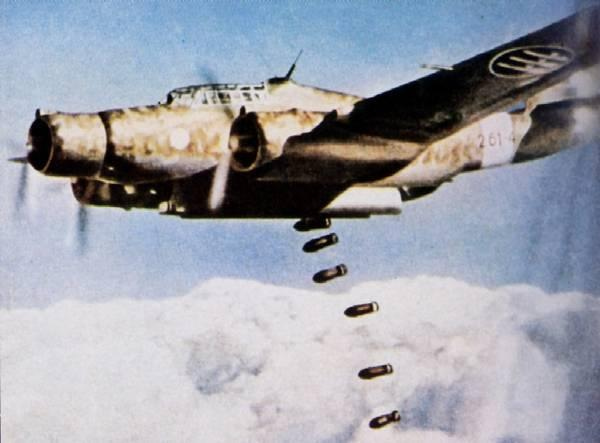
The Alcione could carry about 1,200 kg (2,645 lb) of bombs internally, with provision for additional external load bringing the maximum to roughly 2,200 kg (about 4,900 lb) in some configurations. In the anti-shipping role it could be adapted to carry torpedoes — sources describe a capacity of up to two torpedoes — following the same maritime-strike philosophy that made the SM.79 famous.
As a level bomber the Z.1007 was regarded as reasonably accurate for its day, helped by a stable platform and a competent bombsight. Its limitation was rarely accuracy; it was the modest size of the load compared with the four-engine heavies the Allies were fielding, and the difficulty of getting to and from the target in the face of increasingly capable enemy fighters.
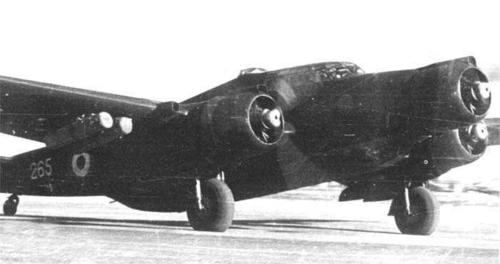
The nose-mounted engine created a specific design headache that shaped the whole aircraft. Unlike a twin with a clear glazed nose for the bomb-aimer, the trimotor had to route the bombing position and the forward field of fire around the centre engine. The Alcione solved this with a ventral gondola and offset positions, an arrangement that worked but was never ideal — a reminder that the trimotor layout, so beloved of Italian designers, always carried a hidden ergonomic and aerodynamic tax.
In the anti-shipping role the aircraft joined a distinctly Italian tradition. Italy invested heavily in aerial torpedo attack, and its torpedo-bomber crews — the aerosiluranti — became some of the most respected airmen of the Mediterranean war. The SM.79 is the type most associated with this work, but the Alcione’s range and stability made it a natural candidate for maritime strike as well, and it contributed to a campaign that genuinely worried Allied naval planners for a time.
06Single fin or twin: telling the tail variants apart
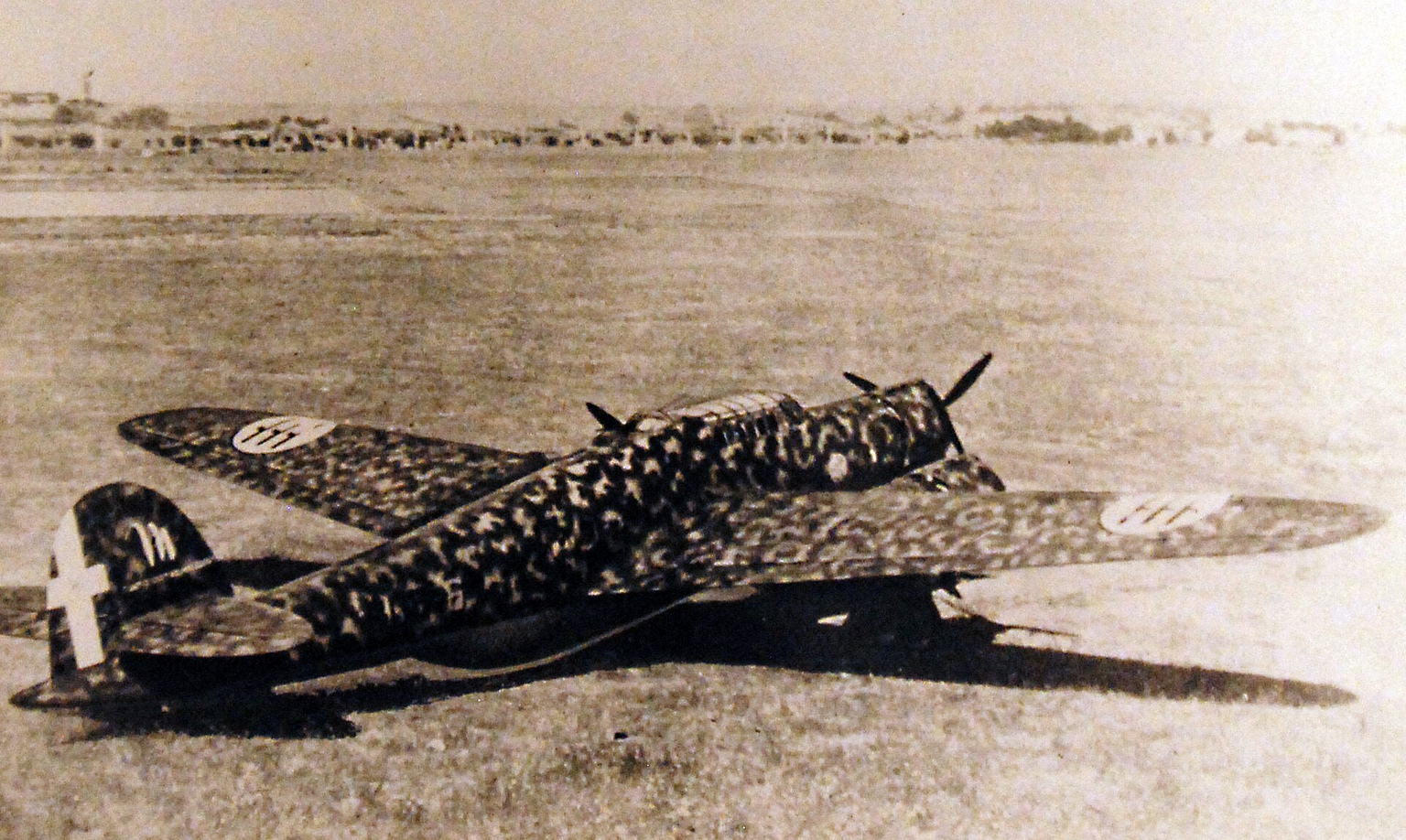
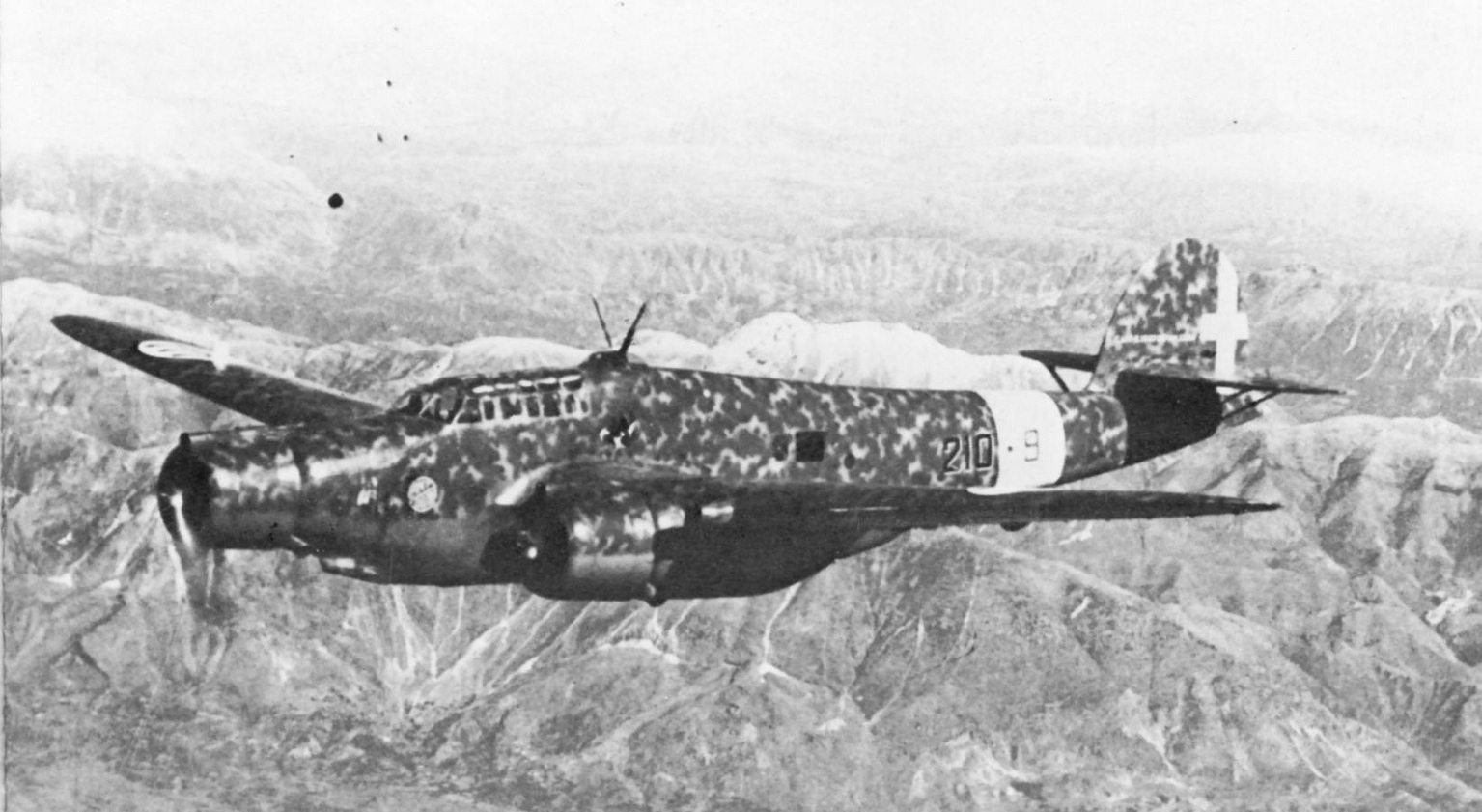
One of the quickest ways to date an Alcione photograph is to look at the tail. The original Z.1007 and the early Z.1007bis aircraft had a single vertical fin and rudder. Later Z.1007bis production switched to a twin-fin (twin-tail) arrangement, adopted to improve stability — particularly useful as a steadier bombing and gun platform.
Both configurations flew in front-line service simultaneously, so “single-tail” and “twin-tail” are not neat chronological markers of separate marks — they overlap within the bis series. It is a genuinely confusing point, and even careful references sometimes muddle it, so treat any single photograph with a little caution.
The move to a twin fin followed a logic common to bombers of the era: a twin tail can give the rear gunner a clearer field of fire and can improve directional stability, both useful in a bombing aircraft. It also changes the aircraft’s silhouette dramatically, which is why the two versions can look almost like different types at a glance. If you are trying to identify an Alcione in a wartime photograph, the tail is the first thing to check — followed by the shape of the ventral gondola and the engine cowlings.
The CANT Z.1007 Alcione’s war: Malta, the desert, the Balkans and the Eastern Front
From Italy’s entry into the war in June 1940 to the armistice of 1943 and beyond, the Alcione fought across almost every theatre the Regia Aeronautica touched — and paid a steady price for its wooden airframe and light defences.
The Alcione’s war began over the central Mediterranean, where the great strategic prize was Malta. From Sicilian bases, Z.1007bis units flew repeated raids against the island’s airfields, harbours and the convoys that kept it fighting. These were dangerous missions: Malta’s Hurricanes and, later, Spitfires exacted a toll, and the Alcione’s modest defensive battery meant that formation flying and fighter escort were essential to survival.
Across the water in North Africa, Alciones supported the see-saw desert campaigns, bombing British positions, ports and supply lines from Libyan fields. The aircraft’s range let it reach deep into Egypt, and some units flew notably long over-water missions — including attacks directed against the Gibraltar convoy route — that demonstrated the design’s aerodynamic efficiency even as the desert climate chewed through its timber.
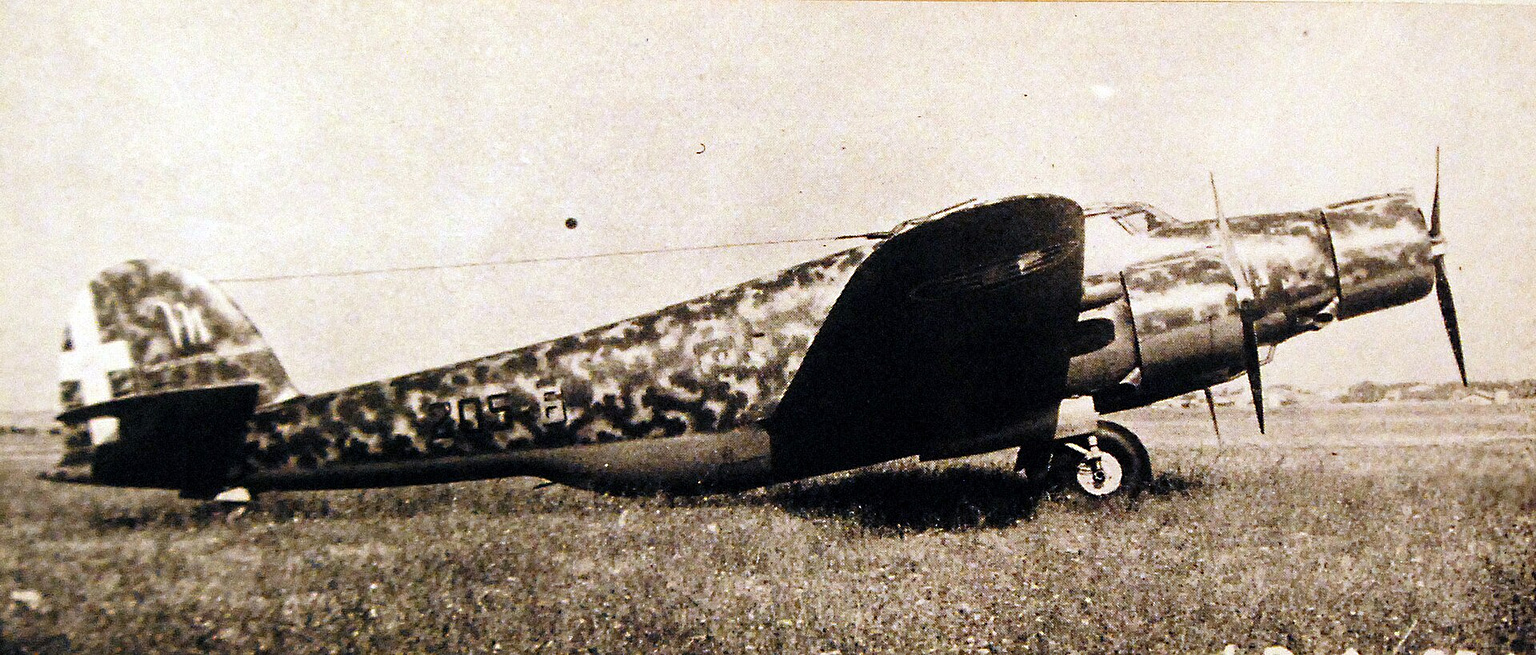
The rhythm of these operations was punishing. A typical anti-shipping or Malta mission meant hours over open water, often at the edge of fighter range, with the ever-present risk of an engine failure far from any friendly coast. Navigation over a featureless sea, in an era before modern aids, was itself a serious challenge, and the bombardier-navigator earned his place in the crew. When the enemy was found, the Alcione had to press its attack through anti-aircraft fire and fighters while relying on speed and formation for protection.
Italian bomber crews flew these missions with considerable courage, and the anti-shipping campaign in particular achieved real successes against Allied convoys — though the SM.79 torpedo bombers tend to get the credit. The Alcione contributed to a sustained effort that, for a time, made the central Mediterranean genuinely dangerous for Allied shipping. That it could not be decisive reflected the wider imbalance of the war rather than any failure of the aircraft or its crews.
The Alcione also served in the Balkans. It took part in the April 1941 invasion of Yugoslavia and in the long, bitter war against Greece, operating from Italian and Albanian bases. Further east, a small Italian expeditionary air contingent flew the type on the Eastern Front alongside German forces, where reconnaissance and bombing sorties over the southern Soviet Union added yet another climate — this time bitter cold — to the list of environments the wooden airframe had to endure.
This geographical spread is remarkable for an aircraft so often dismissed as a footnote. In the space of a few years the Alcione operated over the western Mediterranean toward Gibraltar, across the deserts of Libya and Egypt, through the mountains of Greece and the Balkans, and over the steppe of the Eastern Front. Few medium bombers of any nation saw such a range of theatres and climates, and the fact that the type held together across all of them — even imperfectly — says something for the fundamental soundness of Zappata’s design when it was kept in good order.
The Alcione also found a second career as a reconnaissance and transport aircraft. Its range and reasonable speed made it useful for long-distance photo-reconnaissance over the Mediterranean, and some sources even credit Italian aircraft of the type with reconnaissance flights in the general direction of the British Isles during the period of Italian participation alongside the Luftwaffe. As the bomber role became untenable, surviving airframes were increasingly used for the jobs that did not require flying into the teeth of Allied fighter defences.
By 1942–43 the Alcione was increasingly outclassed. Allied fighters were faster and more numerous, Allied bombers heavier, and Italy could not replace losses quickly enough. When the armistice came in September 1943, the surviving fleet fractured: some aircraft served the Allied-aligned Co-Belligerent Air Force, others the ANR of the Italian Social Republic in the north, and a few fell into German hands. None of these operators could keep an ageing wooden bomber viable for long, and by the end of the war the type had effectively vanished from front-line strength.
07The Alcione over Malta and the convoy war
The siege of Malta was the defining campaign of the central Mediterranean, and the Z.1007 was one of its regular visitors. Italian bombers struck the island’s three airfields, the Grand Harbour at Valletta and the naval facilities that made Malta such a thorn in Axis supply lines. When British convoys fought their way through — operations with names like Pedestal — Italian and German aircraft, the Alcione among them, attacked them relentlessly.
These operations showed the Alcione at both its best and its worst: fast and long-legged enough to reach and strike, but vulnerable enough that raids without adequate fighter cover could be mauled. The convoy war was ultimately a war of attrition that Italy, with its limited industrial base, could not win.
Malta’s survival was one of the decisive stories of the Mediterranean war. From the island, British aircraft, submarines and surface ships savaged the convoys carrying fuel and supplies to Axis forces in North Africa. Neutralising Malta was therefore a strategic necessity for the Axis, and the Italian bomber force — Alciones included — spent much of 1941 and 1942 trying to do exactly that. That they failed was not for want of effort; it reflected the island’s remarkable defences, the flow of Allied reinforcements, and the limits of the forces Italy and Germany could bring to bear.
For the Alcione crews, Malta meant a particular kind of ordeal: a relatively short flight from Sicily into concentrated anti-aircraft fire and a well-organised fighter defence, repeated again and again. Losses were steady, and the psychological strain of flying the same dangerous route on a schedule was considerable. It is easy, decades later, to reduce these operations to lines on a map; for the men in the wooden fuselages, each was a few hours in which speed and altitude were the only real protection between them and a very capable enemy.
08After the 1943 armistice: Co-Belligerent Air Force and ANR
Italy’s surrender in September 1943 divided its armed forces. Aircraft and crews in the south and the Allied-occupied areas often continued to fly under the Italian Co-Belligerent Air Force, now fighting on the Allied side. In the German-occupied north, the Aeronautica Nazionale Repubblicana (ANR) of Mussolini’s Italian Social Republic operated whatever it could keep serviceable.
Surviving Alciones ended up on both sides of this divide, and some passed through Luftwaffe hands. For a wooden aircraft already worn by years of Mediterranean service, this fragmented, under-resourced final chapter was effectively the end. Attrition, obsolescence and the simple decay of the airframes finished what the enemy had started.
The armistice split is one of the more poignant aspects of the Italian air war. Crews who had trained and fought together suddenly found themselves potentially on opposite sides, flying the same aircraft type under different flags. For the Alcione specifically, it meant that the last examples were worked hard by organisations that had neither the spare parts nor the industrial backing to sustain them. That any flew at all into 1944 is a testament to the ingenuity of Italian ground crews rather than to the health of the fleet.
By this point the Alcione had also been largely overtaken in its intended role. The bomber war over Italy in 1943–45 was dominated by Allied heavy bombers operating in numbers the Regia Aeronautica had never been able to match, and by fighters against which a lightly armed wooden trimotor stood little chance. The surviving Alciones were increasingly relegated to secondary duties — transport, liaison, training and reconnaissance — where their range and docile handling still had value even as their days as front-line bombers ended. It was a quiet, undramatic finish for an aircraft that had once ranged across the whole Mediterranean.
CANT Z.1007 Alcione full specifications and cost data
Figures below are drawn from standard references for the Z.1007bis, the most numerous variant. Wartime performance figures are nominal: weathered wooden airframes and heavy operational loads routinely fell short of the book. Where different reputable sources disagree — and for Italian wartime aircraft they frequently do — we have given the most commonly cited value and flagged the uncertainty rather than pretending to a false precision.
| Tipo | Three-engine (trimotor) medium bomber |
|---|---|
| Origin | Italy · CANT (CRDA), Monfalcone / Trieste |
| Designer | Filippo Zappata |
| First flight | March 1937 (prototype) |
| Multitud | 5 (two pilots, flight engineer, radio operator, bombardier-navigator) |
| Longitud | ≈ 18.35 m (60 ft 2 in) |
| Envergadura | ≈ 24.8 m (81 ft 4 in) |
| Altura | ≈ 5.2 m (17 ft) |
| Área del ala | ≈ 70 m² (753 sq ft) |
| Construction | All-wood: wooden wings and fuselage, plywood skinning |
| Tail | Single fin (early) or twin fin (later Z.1007bis) |
| Number built | ≈ 560 total (figures vary; some sources ≈ 660) |
| Engines (Z.1007bis) | 3 × Piaggio P.XI RC.40 radial, ≈ 1,000 hp each |
|---|---|
| Engines (early Z.1007) | 3 × Isotta-Fraschini Asso XI inline, ≈ 830 hp each |
| Velocidad máxima | ≈ 458 km/h (285 mph) — nominal |
| Rango | ≈ 1,795 km (1,115 mi) with bomb load |
| Techo de servicio | ≈ 7,500 m (24,600 ft) |
| Bomb load | ≈ 1,200 kg internal (up to ≈ 2,200 kg combined); or torpedoes |
| Defensive armament | 2 × 12.7 mm + 2 × 7.7 mm Breda-SAFAT machine guns |
| Main variants | Z.1007, Z.1007bis (most numerous), Z.1007ter |
| Primary operator | Regia Aeronautica (later ANR and Co-Belligerent Air Force) |
| Surviving examples | None — no complete airframe exists |
| Unit cost | Not reliably recorded (wartime Italy) |
| Cost per flight hour | Not applicable — no surviving or airworthy example |
Sources differ on production totals, dimensions and loaded performance; where they conflict we have given the most commonly cited figure and flagged it. No complete Z.1007 survives, so no restored-airframe measurements exist to settle the discrepancies.
09The CANT Z.1007 Alcione’s cost: why there is no honest price tag
There is no reliable unit-cost figure for the Z.1007. Wartime Italian aircraft costing was opaque, inflation and materials shortages distorted the numbers, and the surviving records are patchy. Any single lira-or-dollar figure you see quoted online should be treated with heavy scepticism.
The cost-per-flight-hour field on this page is therefore marked “not applicable.” Unlike the jets MiGFlug flies, there is no surviving, airworthy Alcione anywhere in the world — no aircraft to fuel, insure, maintain or fly — so an hourly operating cost simply does not exist. What we can say is that wood made the airframe cheap in scarce metal, and expensive in maintenance labour once the weather went to work on it.
It is a useful contrast with the warbirds and jets that can actually be flown today. A flyable historic aircraft has a very real, very large hourly cost — fuel, engine overhauls, insurance, spares, skilled maintenance — which is precisely why experiences like MiGFlug’s exist to share that cost across many enthusiasts. The Alcione sits at the opposite extreme: its “cost” today is purely historical, measured in the effort of the museums and archivists who keep its memory alive rather than in any figure on an operator’s balance sheet.
10Variants: Z.1007, Z.1007bis and Z.1007ter
Z.1007 — the original production version, powered by three Isotta-Fraschini Asso XI inline engines and fitted with a single tail fin. Relatively few were built before the design was improved.
Z.1007bis — the definitive and most numerous version, re-engined with three Piaggio P.XI radials, enlarged and strengthened. Built with both single-fin and, later, twin-fin (twin-tail) arrangements. This is the aircraft most people picture as the Alcione.
Z.1007ter — a later, less common variant with more powerful Piaggio P.XIX engines to restore performance as loads and equipment grew; only around 150 were produced.
Within these broad marks there were numerous sub-variants and field modifications: changes to armament, equipment for the torpedo-bomber role, revised defensive positions and the single- versus twin-fin tail already discussed. Production was spread across more than one manufacturer under licence, which — combined with wartime expediency — means that no two batches were quite identical. For the modeller or historian this is part of the aircraft’s appeal and part of its frustration: precise identification often comes down to details of the cowlings, gondola and tail rather than to a tidy variant label.
The progression from Asso inlines to Piaggio radials to the more powerful P.XIX also traces the central problem of the whole programme in miniature. Each step was an attempt to keep a fundamentally mid-1930s design competitive against a rapidly advancing threat. The improvements were real, but they were incremental, and they were always chasing a target that moved faster than Italian industry could follow.
11How the Alcione compares with the SM.79 and the BR.20
The three main Regia Aeronautica bombers make an instructive set. The SM.79 Sparviero was also a wooden trimotor, slightly earlier, and became legendary as a torpedo bomber. The Fiat BR.20 Cicogna was a twin-engine, all-metal design — more modern in structure but less numerous and, by many accounts, less pleasant to fly.
The Z.1007 slotted in as a clean, fast trimotor that shared the SM.79’s wooden vulnerability while offering broadly comparable bomb-carrying ability. None of the three could match the four-engine heavy bombers that Britain and the United States were fielding — a reflection less of Italian design talent than of Italy’s limited industrial capacity.
If you want a single sentence to remember the trio by: the BR.20 was the modern one, the SM.79 was the famous one, and the Z.1007 was the elegant one. All three were good enough to fight, none was good enough to win, and all three were ultimately overwhelmed less by superior enemy aircraft than by the simple arithmetic of production. Italy built its bombers in the hundreds; its enemies built theirs in the tens of thousands.
12Life aboard the Alcione: the five-man crew and their jobs
A Z.1007bis carried a crew of five, and the trimotor layout gave each of them a demanding job. Two pilots sat side by side, sharing the workload on the long over-water sorties that were the aircraft’s speciality; on a mission of many hours, having a second pair of hands was not a luxury. Behind and around them worked a flight engineer, a radio operator and a bombardier-navigator, the last of whom also manned a defensive gun position.
Those defensive positions were cramped and exposed. Italian bombers of the period rarely enjoyed the roomy, power-operated turrets that protected their Allied opposite numbers; instead, gunners hunched over hand-trained machine guns in a dorsal position and a ventral gondola. In the heat of the Mediterranean the wooden fuselage could become an oven; over Russia it offered little against the cold. Long missions in an unpressurised, lightly heated aircraft, with the constant drone of three radial engines, took a real physical toll on the men who flew it.
For all that, crews spoke well of the Alcione. It was stable, it handled pleasantly, and the redundancy of three engines was a genuine comfort over open water. The aircraft asked a lot of its people, but it also gave them a fighting chance of getting home — which, in the anti-shipping war, was not something every bomber could promise.
13Why the Alcione lost, and what that says about Italy’s air war
The Alcione’s decline was not really a story about the aircraft at all. It was a story about industry, strategy and time. Italy entered the war with a bomber that was competitive in 1940 and had no realistic way to replace it with something dramatically better before it became obsolete. The Z.1007ter and various improvements helped at the margins, but the fundamental leap — to fast, heavily armed, all-metal aircraft produced in enormous numbers — was beyond the country’s means.
Fuel shortages compounded the problem. Italy was chronically short of aviation fuel, which limited training, restricted operations and left aircraft grounded when they were most needed. A bomber force can only be as effective as the fuel, spares and trained crews behind it allow, and on every one of those measures Italy was stretched thin. The Alcione flew into this headwind for its entire operational life.
The result is a type that is easy to underrate. Judged only by outcomes, the Alcione looks like a failure. Judged by what it was asked to do — fight a modern war on a shoestring, in punishing climates, against better-resourced enemies — it looks a good deal more respectable. It was a capable aircraft trapped in an impossible strategic situation, and it is fairer to remember it that way.
There is also a broader lesson in the Alcione’s fate about the relationship between industry and air power. The Second World War in the air was won as much in factories and oil fields as in dogfights. The nations that could design, build, fuel and repair aircraft in overwhelming numbers prevailed; those that could not, however clever their individual designs, were ground down. Italy fielded some genuinely good aircraft and some genuinely gifted airmen, and it still lost the air war comprehensively, because it could never match the sheer productive weight of its enemies. The Alcione is a particularly clear window onto that reality.
14No survivors: why not a single Alcione remains
Of the roughly 560 aircraft built, not one complete example survives. This is unusually total. Even quite obscure metal aircraft of the period often left at least one survivor — a captured example, a museum piece, a wreck recovered decades later. The Alcione left effectively nothing.
The reasons are the same ones that dogged the aircraft in service. Wood does not survive neglect. Airframes that were shot down, scrapped or simply abandoned at war’s end were not the kind of thing anyone thought to preserve in 1945, and by the time interest in wartime aviation grew, the wooden structures had long since rotted, burned or been broken up. There were no long-term storage survivors quietly waiting in a dry hangar, because a wooden bomber left outdoors for a few years is not a restoration project — it is compost.
What remains are photographs, a scattering of relics and components, technical drawings, and the memories preserved in books and archives. For enthusiasts and modelmakers this makes the Alcione a slightly ghostly subject: a front-line aircraft of a major air force that you can study in every detail on paper yet never stand beside. It is one more way in which the choice of wood defined the aircraft — this time long after the last one flew.
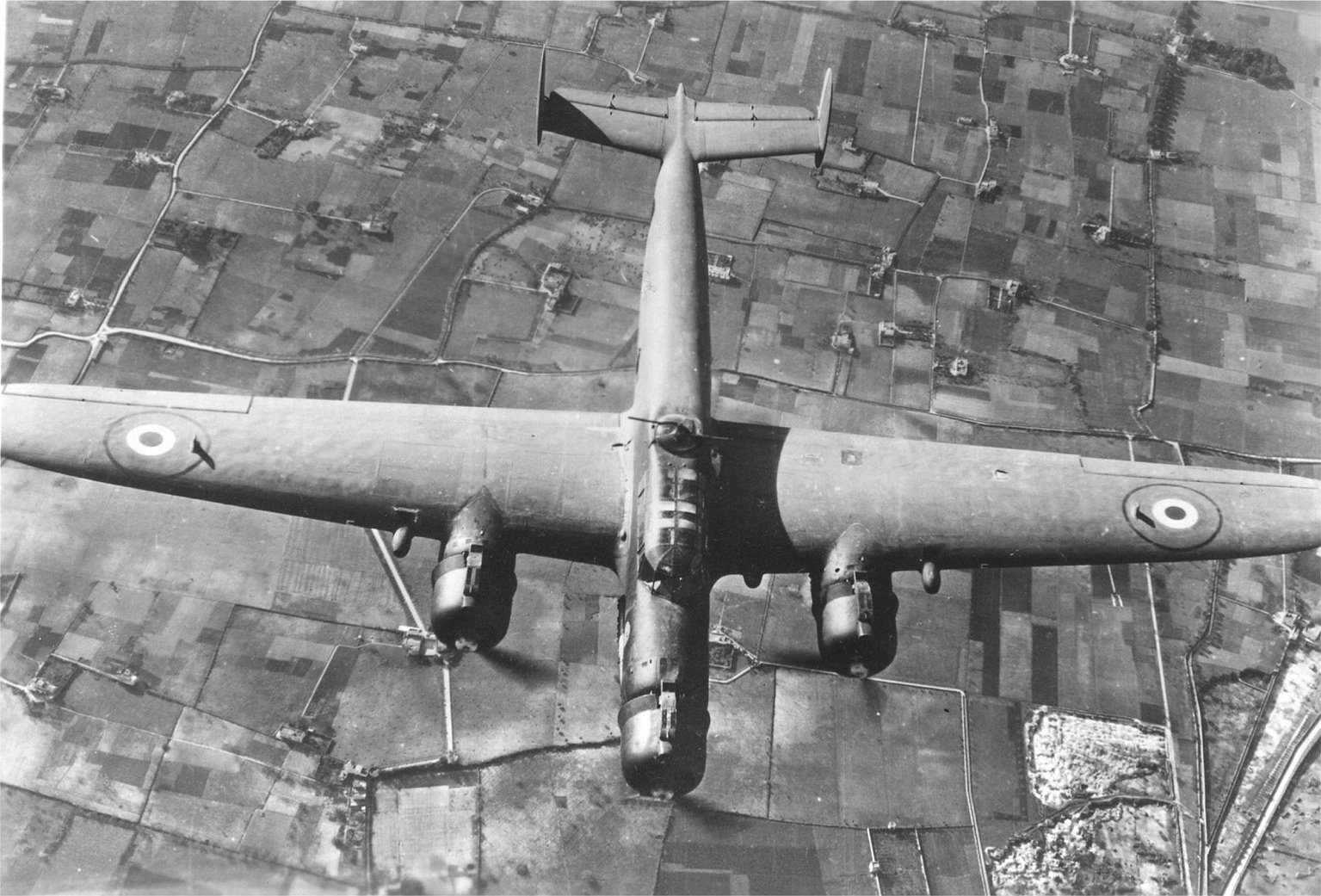
There is a small, appropriate irony in the fact that the best surviving records of the Alcione are often photographs taken by its enemies — the identified U.S. Navy images reproduced on this page among them. An aircraft that Italy built in the hundreds is now known largely through the lenses of the countries it fought against, and through the patient work of museums and archivists who have kept those images accessible. If you want to see a Z.1007, a screen or a printed page is the only place left to do it.
The CANT Z.1007 Alcione from drawing board to disappearance
Requirement. The Regia Aeronautica seeks a fast modern medium bomber; CANT and Zappata respond with the Z.1007 concept.
Design begins. Filippo Zappata draws a clean three-engine bomber for CANT, building on his earlier Z.506 experience.
First flight. The prototype takes to the air in March, powered by three Isotta-Fraschini Asso XI inline engines.
Into service. Early Z.1007 aircraft begin entering Regia Aeronautica units as the type is refined.
The bis arrives. The re-engined, enlarged Z.1007bis with Piaggio P.XI radials flies in July and becomes the definitive version.
War. Italy enters the Second World War in June; Alciones begin operations over the Mediterranean and Malta.
Balkans and beyond. The type takes part in the invasion of Yugoslavia and the war against Greece, and flies long-range Mediterranean raids.
Eastern Front. A small Italian expeditionary force operates the Alcione against the Soviet Union.
Outclassed. Allied fighters and heavier bombers increasingly overmatch the wooden trimotor; losses mount.
Armistice. Italy surrenders in September; surviving Alciones split between the Co-Belligerent Air Force, the ANR and German use.
Twilight. Worn, obsolete and hard to maintain, the fleet dwindles rapidly.
End of service. The type effectively disappears from front-line strength by war’s end.
Split service. Surviving aircraft serve the Co-Belligerent Air Force, the ANR and briefly German units before wearing out.
Scrapped and forgotten. The last airframes are broken up or left to decay; no effort is made to preserve a wooden bomber.
No survivors. Not a single complete Z.1007 remains; the wooden airframes did not last. Only photographs, drawings and a few relics survive.
Twelve things worth knowing about the CANT Z.1007 Alcione
Twelve short stories — swipe or use the arrows — that capture the character of Italy’s wooden kingfisher.
A bird called kingfisher
“Alcione” means kingfisher, drawn from the Greek myth of Alcyone and the calm “halcyon days.” CANT named its aircraft after birds — the Airone (heron) and Gabbiano (seagull) were siblings — a small poetic streak in a very serious business, and a fitting name for an aircraft that would spend its life over the sea.
Built like a boat
CANT was the aviation arm of CRDA, a Trieste shipbuilder. Its craftsmen knew wood intimately, which is part of why a wooden bomber felt natural — and why the joinery was often superb. The same maritime skills that produced fine hulls produced fine wooden airframes; the same material that suited a ship in the water suited a bomber far less well in the desert sun.
Fast when new
Clean lines and three radial engines made the fresh-from-the-factory Alcione genuinely quick for a medium bomber — around 458 km/h, competitive with its metal rivals in 1940. Italian designers were masters of aerodynamic elegance, and the Z.1007 was one of the prettiest bombers of its generation, a machine that looked fast standing still.
The desert’s revenge
Sun, heat, damp and salt air warped timber and weakened glue. An aircraft that flew beautifully in northern Italy could go out of true within months in Libya, throwing controls out of rig and, in the worst cases, weakening the structure itself. Ground crews fought a constant, losing battle against the weather.
One tail or two?
Early aircraft had a single fin; later Z.1007bis machines carried a twin tail for better stability and a clearer field of fire for the rear gunner. Both flew at once, which still trips up modelmakers and historians today — the tail is the first thing to check when identifying an Alcione in a photograph.
Long legs
With a range near 1,800 km, the Alcione flew some remarkably long over-water raids, including missions directed toward the Gibraltar convoy route — a showcase for its aerodynamic efficiency and a reminder that clean design can stretch modest engine power a very long way.
Malta, again and again
From Sicily, Alciones bombed Malta’s airfields and harbour and hunted the convoys that kept the island alive, flying through some of the most heavily defended airspace in the Mediterranean. Neutralising Malta was a strategic necessity the Axis never quite achieved.
The torpedo option
Like the SM.79, the Z.1007 could be adapted to carry torpedoes, joining Italy’s determined — and at times very effective — anti-shipping campaign. The over-water strike role suited the aircraft’s range and stability, even if the SM.79 took most of the glory.
Under-gunned
Two 12.7 mm and two 7.7 mm machine guns, no heavy power turrets. Against Hurricanes and Spitfires, the Alcione’s best defences were speed, altitude and tight formation flying. It was a weakness common to Italian bombers, and it cost crews dearly as the war went on.
Cold as well as heat
On the Eastern Front the same wooden airframe that hated Mediterranean damp now faced Russian frost. Few aircraft were asked to endure such a range of climates, and the timber structure suffered at both extremes — one more environment in which wood proved a demanding material.
A country divided
After the 1943 armistice the fleet split between the Allied-aligned Co-Belligerent Air Force and the ANR of the northern Social Republic — the same aircraft, flown by former comrades, now on opposite sides. It is one of the most poignant chapters in the Italian air war.
Vanished without a trace
No complete Z.1007 survives anywhere in the world. The wood that made it possible also ensured that, unlike many metal contemporaries, nothing was left to preserve. The Alcione exists today only in photographs, drawings and a few relics — a front-line bomber you can study but never stand beside.
CANT Z.1007 Alcione in photographs
Period photographs of the Alcione in Regia Aeronautica and post-armistice service — the only kind of image that exists, since no aircraft survives to be photographed today. All images are public domain, sourced from museum and archive collections via Wikimedia Commons; credits are given beneath each photograph. Watch for the tail: single- and twin-fin aircraft both appear below.
The CANT Z.1007 Alcione on film
A dedicated documentary on the design, service and fate of Italy’s wooden trimotor bomber — a good primer if you want to hear the story told rather than read it.
“The Kingfisher Gone to War — History of the CANT Z.1007 Alcione bomber” by the WWII history channel Look in The Past (uploaded January 2025, around 11,000 views). A niche subject with no mass-market coverage; this is among the most thorough dedicated treatments available.
Where the CANT Z.1007 Alcione flew
The Alcione was an Italian aircraft through and through, but it fought far from home. This map shows its origin, the wartime theatres where it saw service, and — tellingly — an empty “surviving airframes” category, because none remain. Toggle the categories and hover a country for detail. Note that the “theatres” category marks where the fighting took place, not the nationality of the crews: these were the skies the Regia Aeronautica’s Alciones flew and fought in. Some very small theatres, such as the island of Malta, are historically central but too small to render as a coloured country at this map scale — Malta’s siege is covered in detail in the text above.
The CANT Z.1007 Alcione in figures
Production totals, performance and loss figures for Italian wartime aircraft are inconsistent across sources; the numbers above are the most commonly cited and are rounded. Total production is variously given as roughly 560 or as many as around 660, and detailed loss records are incomplete. The one figure not in dispute is the last: no complete CANT Z.1007 survives anywhere in the world, which is why every image on this page is a wartime photograph rather than a shot of a preserved aircraft.
CANT Z.1007 Alcione: your questions answered
Can I fly in a CANT Z.1007 Alcione?
No — and not because it is difficult to arrange, but because it is impossible. Not a single complete CANT Z.1007 survives anywhere in the world; the all-wooden airframes did not outlast the war, and there is no airworthy or static example to fly in or even sit in. If it is the experience of flying a genuine military aircraft you are after, MiGFlug does offer that in real, flyable jets — see migflug.com/flights-prices for what is actually bookable today.
Why was the Z.1007 built out of wood?
Italy had limited supplies of aluminium and other light alloys, and its drive toward economic self-sufficiency (autarky) made metal scarcer still. Wood and skilled woodworkers were plentiful, and a well-built wooden aircraft could be light and aerodynamically clean. CANT, as the aircraft arm of a Trieste shipbuilder, was especially comfortable working in timber. The trade-off was durability: timber and glue suffered badly in the heat, damp and salt air of Mediterranean and desert service, warping and weakening the airframe and creating constant maintenance problems.
Did the wooden structure really cause serious problems?
Yes. This is the honest core of the Alcione’s story. When new, the wooden airframe was smooth, light and fast. But in service, exposed to sun, humidity and heat — and usually parked in the open — the timber warped and glued joints weakened. This threw controls out of rig, hurt serviceability and, in the worst cases, weakened the structure itself. Britain’s wooden Mosquito showed wood could work brilliantly; the Alcione showed how badly it could go when climate and maintenance conditions were against it.
What does “Alcione” mean?
It is Italian for “kingfisher.” CANT named several of its aircraft after birds, including the Z.506 Airone (heron).
How many engines did the Z.1007 have?
Three — it was a trimotor. The definitive Z.1007bis used three Piaggio P.XI radial engines of about 1,000 horsepower each; the earlier Z.1007 used three Isotta-Fraschini inline engines.
How fast was the CANT Z.1007 Alcione?
The Z.1007bis had a maximum speed of about 458 km/h (285 mph) when new — competitive for a 1940 medium bomber, though weathered airframes and heavy loads reduced this in service.
Was the Z.1007 a good bomber?
It was capable and reasonably accurate for its day, fast and long-legged, and one of the three main bombers of the Regia Aeronautica alongside the SM.79 and the BR.20. Crews generally liked flying it, and the three engines gave welcome redundancy over water. But its wooden structure warped and deteriorated in the field, its defensive armament was light, and Italy’s small industrial base meant it could never be produced or improved fast enough to keep pace with the war. A fair verdict is “a good aircraft, hampered by its material and its circumstances” — capable in 1940, outclassed by 1943 through no great fault of its own design.
Single tail or twin tail — which is correct?
Both. The original Z.1007 and early Z.1007bis had a single fin; later Z.1007bis production used a twin-tail arrangement for better stability. The two overlapped in service, so a single photograph is not a reliable guide to the mark.
How many were built, and do any survive?
Around 560 were built in total (some sources say roughly 660 — figures vary), the majority being the Z.1007bis. None survive today as complete aircraft; only photographs and a few relics remain.
How does the Z.1007 compare with the SM.79 and Fiat BR.20?
The SM.79 was also a wooden trimotor and is the most famous, especially as a torpedo bomber. The BR.20 was a twin-engine, all-metal design — more modern in construction but less numerous. The Z.1007 sat between them: clean and fast, but sharing the SM.79’s wooden vulnerability.
Where did the Z.1007 see combat?
Across the Mediterranean (including raids on Malta and attacks on convoys), North Africa, the Balkans and Greece, and on the Eastern Front against the Soviet Union. It also flew long-range and reconnaissance missions, including sorties directed toward the Gibraltar convoy route. After the 1943 armistice, survivors served both the Italian Co-Belligerent Air Force on the Allied side and the ANR of the Italian Social Republic in the north, with a few passing through German hands.
Who designed and built the CANT Z.1007 Alcione?
It was designed by Filippo Zappata for CANT — Cantieri Aeronautici e Navali Triestini — the aviation subsidiary of the Trieste shipbuilder CRDA, based at Monfalcone. Zappata was one of Italy’s most gifted aircraft designers and had previously created the Z.506 Airone floatplane.
Is there a CANT Z.1007 in any museum?
No complete aircraft survives in any museum anywhere in the world. Only photographs, technical drawings and a scattering of relics and components remain. This is a direct consequence of the all-wooden construction, which did not survive the war and the decades of neglect that followed.
What can I fly instead, if I want the experience of a real military aircraft?
Since no Alcione survives, the closest you can get to the feeling of flying a genuine military aircraft is to book a flight in one that is still airworthy. MiGFlug offers exactly that in real fighter and jet-trainer aircraft — see migflug.com/flights-prices. It is a very different aircraft and a very different era, but it is a real, bookable way to experience military flight rather than only reading about it.
Fly a real fighter jet with MiGFlug
The SM.79 lives only in museums now. But the thrill of a fast military aircraft is very much bookable today — from Cold War jets to warbird-era classics, flown with professional pilots.