
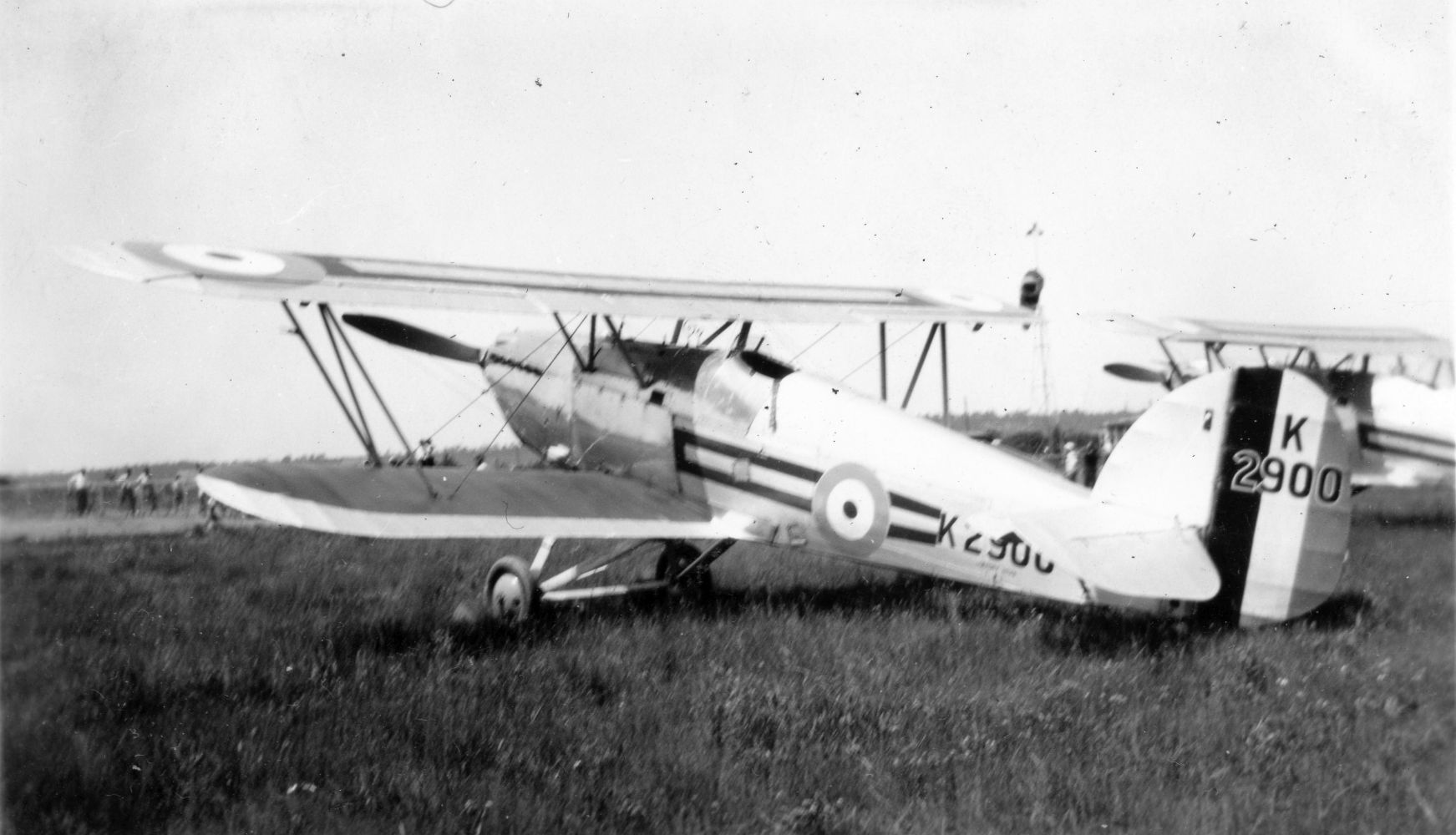
Hawker Fury
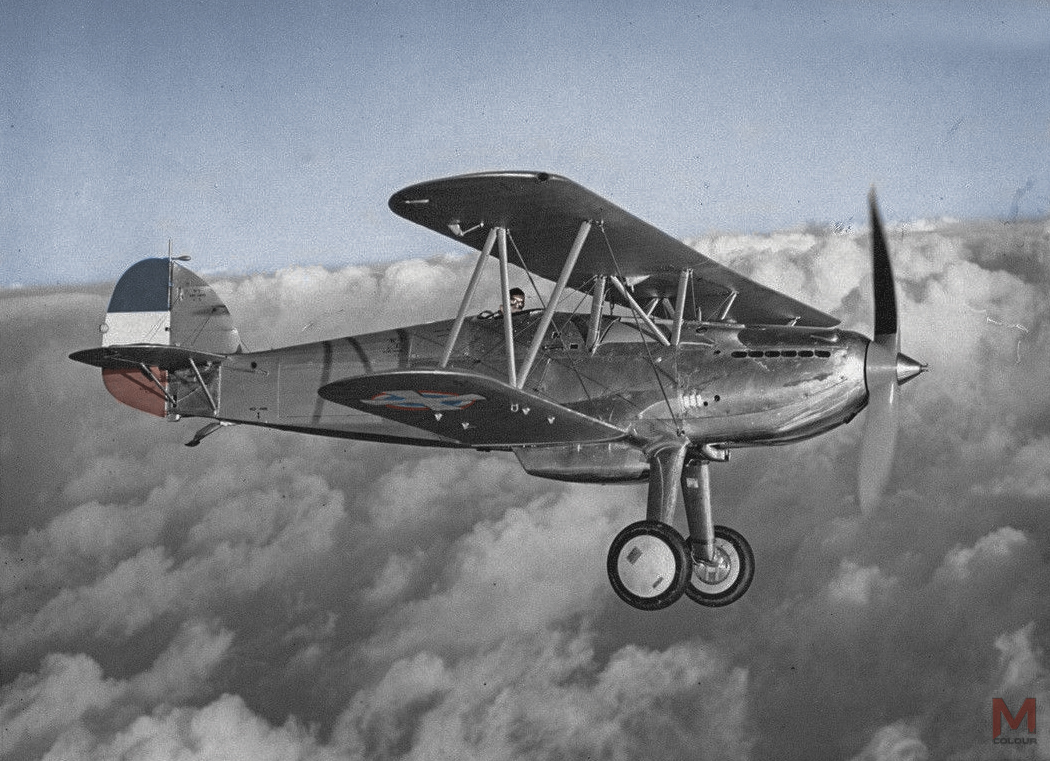
Sydney Camm’s silver interceptor — the first fighter the Royal Air Force ever flew faster than 200 mph in level flight, and one of the most beautiful biplanes ever built.
The Hawker Fury: the RAF’s first 200 mph fighter
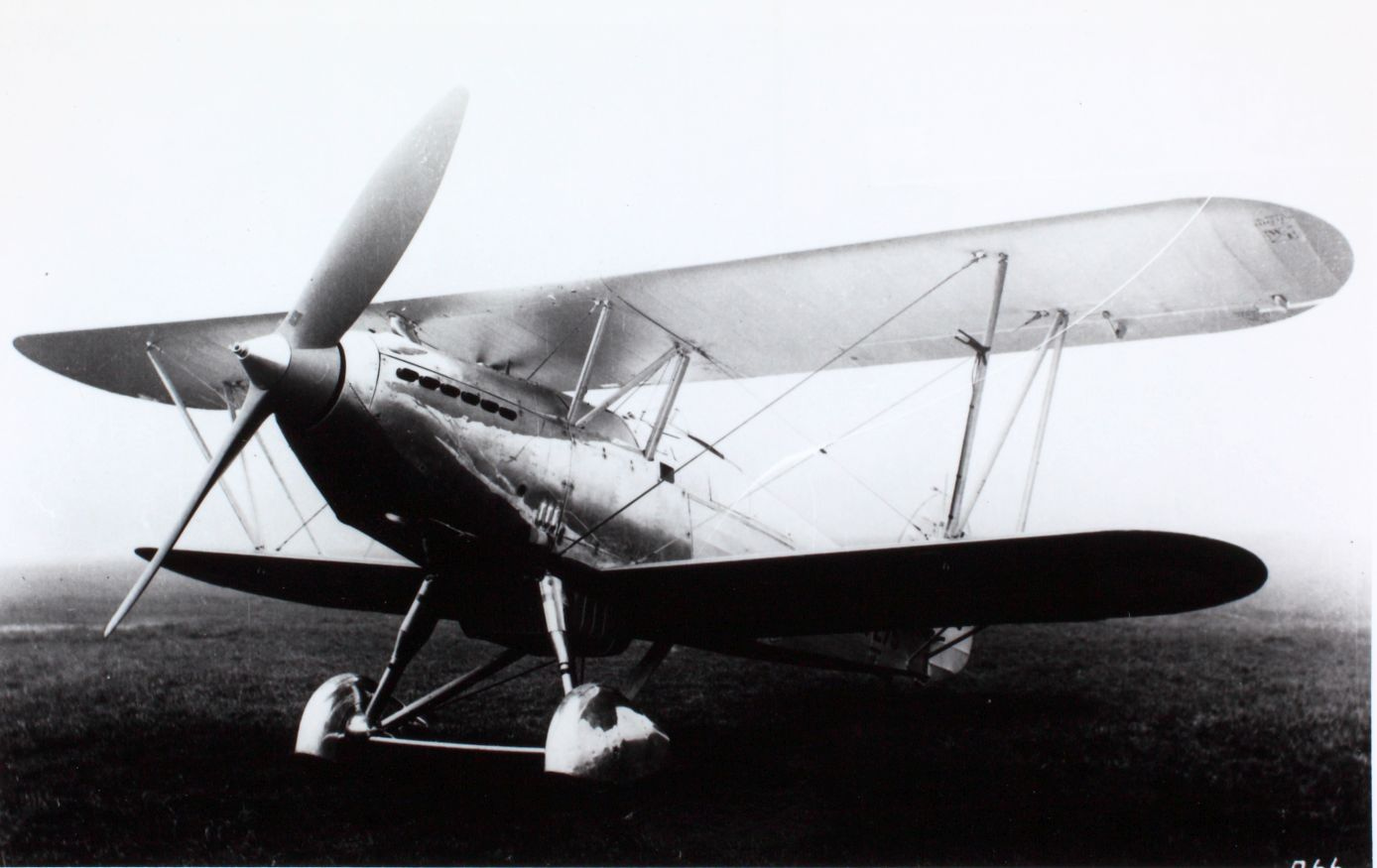
In the spring of 1931 the Royal Air Force took delivery of a fighter that looked, even then, like a piece of jewellery. The Hawker Fury was small, silver and impossibly clean — a single-bay biplane whose slim fuselage tapered back from a long, faired Rolls-Royce engine to a rakish fin. It was also the fastest thing in RAF service, and the first aeroplane the service had ever flown past 200 miles an hour in level flight. For a generation of young pilots, being posted to a Fury squadron was the closest thing the peacetime air force offered to a knighthood.
The Fury was the work of Sydney Camm, Hawker’s chief designer and one of the great figures in British aviation. Camm had already given the RAF the Hart light bomber, an aircraft so fast that many contemporary fighters struggled to catch it. The Fury grew from the same design family — a scaled, sharpened single-seat interceptor built around the compact, steam-cooled Rolls-Royce Kestrel V12. Where earlier British fighters had been draughty, strut-heavy machines that felt like relics of the Great War, the Fury felt modern: taut, responsive and blisteringly quick for 1931.
It never equipped the whole RAF. The Fury was expensive, and in the budget-starved 1930s the Air Ministry could afford it only in small numbers, reserving it for a handful of elite home-defence squadrons — most famously Nos. 1, 25 and 43. Those squadrons turned the aircraft into a national spectacle. At the Hendon air displays their pilots flew tied-together formation aerobatics, three Furies looping and rolling with lengths of cord strung between the wingtips, never breaking the line. To the crowds below, the Fury was the RAF at its most glamorous — proof that the interwar service, for all its budget cuts, could still produce something world-class.
The Fury also sold abroad. Hawker was one of the most successful aircraft exporters of the age, and versions of the Fury — often re-engined or subtly reworked to suit local requirements — reached Persia, Yugoslavia, Spain, Portugal, Norway and South Africa. Yugoslavia went further than any other customer, negotiating a licence and building Furies of its own. It was these export and licence machines, rather than the RAF’s own, that would take the Fury into the only real combat of its career, in the opening campaigns of the Second World War.
And yet the very qualities that made the Fury so admired — the delicacy, the hand-built refinement, the biplane layout — were being overtaken even as it entered service. Within a few years the monoplane revolution arrived, and Camm himself designed its instrument: the Hawker Hurricane. All-metal, cantilever-winged monoplanes with retractable undercarriages and batteries of eight guns made the two-gun biplane look like something from another era, because it was. By the outbreak of war the Fury had largely vanished from RAF front-line squadrons, though export examples fought on into the early war years, hopelessly outclassed but flown with great courage.
It is remembered now not as a war-winner but as something rarer — the high-water mark of the fighter biplane, and one of the most graceful aircraft the RAF ever operated. To walk around a preserved Fury today is to see a design at the exact moment before everything changed: the last, finest flowering of an idea that was about to be swept away, drawn by the same hand that would draw its replacement.
01Why the Hawker Fury mattered: the fighter that broke 200 mph for the RAF+
Speed is the through-line of the Fury story. When it entered service in 1931 it became the first RAF fighter capable of exceeding 200 mph (about 322 km/h) in level flight — a genuine milestone at a time when most front-line fighters were still labouring below that mark. The improved Fury II, with a more powerful Kestrel and refinements to the airframe, pushed the figure higher still, to roughly 223 mph (~360 km/h).
Those numbers look modest beside the 600 km/h monoplanes that would follow only a few years later, but in the early 1930s they represented the leading edge of what a fighter could do. The jump was not trivial: it meant a fighter could actually catch the fast light bombers of the day — including Hawker’s own Hart, which had embarrassed the RAF’s older fighters. A fighter that could not overhaul the bombers it was meant to intercept was little use, and the Fury solved that problem in style.
Just as importantly, the Fury delivered its speed with an easy, forgiving temperament that made it a superb aerobatic and gunnery mount. It was the aircraft that convinced a generation of RAF pilots — and the public — that the fighter had a future as something fast, clean and modern rather than a lumbering relic of 1918.
02The Hawker Fury and Sydney Camm: the designer who also gave the RAF the Hurricane+
The Fury is inseparable from Sydney Camm, the largely self-taught Hawker designer whose career shaped British fighters from the biplane era to the jet age. Camm’s genius lay in aerodynamic cleanliness and structural elegance, and the Fury shows it in every line: a carefully faired engine installation, a slim fuselage on a tubular metal frame, and a wing arrangement stripped of unnecessary drag.
Camm’s method was evolutionary and relentless. He refined the Hart bomber into the Fury, then refined the Fury itself from the Fury I into the faster Fury II, always chasing a cleaner airframe and a better power-to-drag ratio. The same instinct — take a sound design and sharpen it, year after year — would later produce the Hurricane, the Typhoon, the Tempest and, eventually, the Hunter jet.
The same mind that drew the Fury went on to design the Hawker Hurricane — the monoplane that, in far greater numbers, would carry the main weight of RAF Fighter Command through the Battle of Britain in 1940. The Hurricane even kept some of the Fury’s construction philosophy, with a fabric-covered rear fuselage over a metal frame. Seen that way, the Fury is a direct ancestor of the Hurricane: the last and finest expression of Camm’s biplane thinking, and the bridge to the monoplane fighters that replaced it.
03The Hawker Fury’s showmen: No. 25 and No. 43 Squadron and the tied-together aerobatics+
Because it equipped only a few squadrons, the Fury became a badge of prestige — and those squadrons made the most of it. At the annual RAF Display at Hendon, Fury pilots of Nos. 25 and 43 Squadrons performed synchronised formation aerobatics that became legendary, at times flying with their wingtips physically tied together by cord to prove the precision of their formation-keeping through loops and rolls.
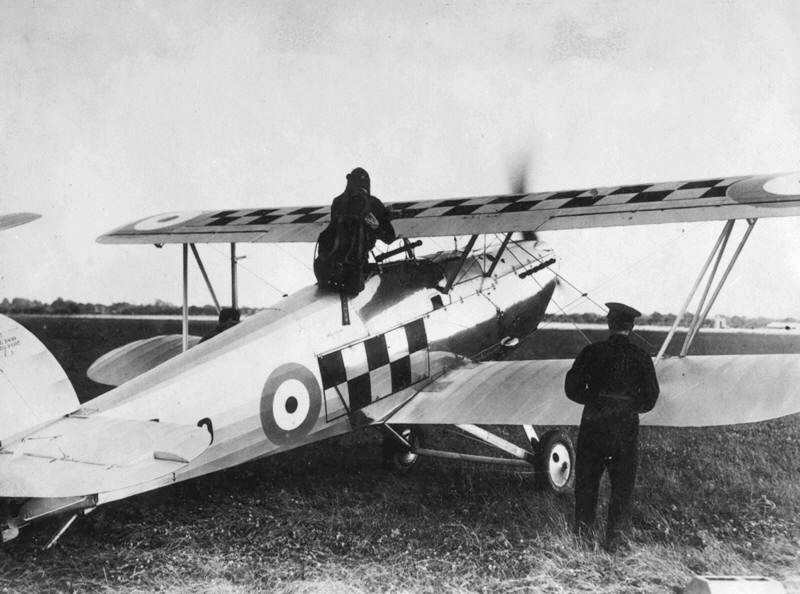
No. 43 Squadron, the “Fighting Cocks”, was the first to receive the Fury in 1931 and became closely identified with it, flying from Tangmere alongside No. 1 Squadron. Between them, those two Sussex-based units became the public face of RAF fighter aviation in the 1930s, their silver Furies with squadron chequers a fixture of newsreels and magazine covers.
This display flying was not mere spectacle. It advertised the professionalism of the peacetime RAF at a time when the service was fighting for funding, and it demonstrated a real operational skill — the tight, disciplined formation flying that the RAF would need in earnest a decade later. The Fury’s lightness and predictability made these routines possible; a heavier, twitchier aircraft could never have been trusted to fly wingtip-to-wingtip on a cord.
How the Hawker Fury was built
The Rolls-Royce Kestrel heart
The Fury was designed around the Rolls-Royce Kestrel, a compact 21.25-litre supercharged V12. Early Fury I aircraft used a Kestrel of roughly 525 hp; the Fury II adopted a more powerful version of around 640 hp. Its neat frontal area and pressurised cooling let Camm wrap the airframe tightly around the engine for minimum drag — the single most important reason the Fury was so fast.
Clean biplane aerodynamics
Rather than the wire-and-strut clutter of older fighters, the Fury used a tidy single-bay biplane wing, faired interplane struts and a streamlined, close-fitting undercarriage. The result was an aircraft that slipped through the air far more efficiently than its contemporaries — the reason it could reach 200-plus mph on relatively modest power where rivals could not.
Two guns and a gentleman’s cockpit
Armament was two synchronised .303 in (7.7 mm) Vickers machine guns firing through the propeller arc — standard for RAF fighters of the day, and a battery that would soon look badly inadequate. The open cockpit sat high behind the engine with an excellent view over the nose, and the controls were light and harmonised, making the Fury a favourite for both gunnery practice and display flying.
04The Hawker Fury I and Fury II: what changed between the marks+
The original Fury I entered service in 1931 with the Kestrel IIS. As monoplane rivals loomed, Hawker developed the Fury II, drawing on lessons from its High Speed Fury prototype: it fitted a more powerful Kestrel VI, a neater radiator, wheel spats and other aerodynamic tweaks. The Fury II was faster — around 223 mph against the Fury I’s roughly 207 mph — and climbed better, though at the cost of slightly reduced endurance because the higher-output engine drank more fuel.
The Fury II reached RAF squadrons from about 1936, by which point everyone knew it was a stopgap. It was, in effect, the last squeeze of performance out of a layout that had reached its limit; the future clearly belonged to the monoplane, and the Fury II was a way of keeping front-line squadrons current until the Hurricane arrived.
A number of experimental and export variants also appeared, some fitted with different Rolls-Royce or air-cooled radial engines for foreign customers, and some tested as engine and armament testbeds at home. Precise variant totals vary between sources, so the figures here should be treated as approximate.
05The Hawker Nimrod: the Fury’s naval cousin aboard Royal Navy carriers+
The Fleet Air Arm operated a closely related Hawker biplane fighter, the Hawker Nimrod. Developed in parallel and sharing much of the Fury’s look and Kestrel power, the Nimrod was navalised for carrier operations — strengthened, fitted with arrester gear, catapult points and flotation equipment, and adapted for the very different demands of flying from a pitching deck at sea. It served aboard Royal Navy carriers such as HMS Courageous and Glorious through the 1930s.
The two aircraft are often confused because they are so alike, but they are distinct types with different roles: the Fury a land-based RAF interceptor, the Nimrod a carrier fighter for the Navy. The Nimrod’s naval fittings made it a little heavier and slower, but the family resemblance is unmistakable — the same slim Hawker fuselage, the same Kestrel snarl, the same elegant single-bay wings.
Airworthy Nimrods survive today with UK warbird collections, and because genuine flying Furies are essentially non-existent, these Nimrods are the closest most people will ever come to seeing and hearing a Fury in the air. If you want to know what Camm’s silver interceptor was really like, a flying Nimrod is the answer.
06The Hawker Fury versus the monoplane: why an elegant fighter became obsolete+
The Fury was a masterpiece of a design philosophy that was about to end. Biplanes traded outright speed for lightness, manoeuvrability and short-field performance; by the mid-1930s, all-metal monoplanes with retractable undercarriages, enclosed cockpits and eight-gun batteries — the Hurricane and Spitfire — offered decisive advantages in speed, firepower and rate of climb.
The gap was brutal. A Hurricane was roughly 100 mph faster than a Fury and carried four times the guns; a Spitfire more so. Against such aircraft the Fury’s superb handling counted for almost nothing, because it could neither catch a modern fighter nor escape one, and its two rifle-calibre guns could not inflict decisive damage in the fleeting firing opportunities of fast combat.
The RAF withdrew the Fury from front-line home-defence service before the war. Where export Furies did meet modern aircraft in combat — over Yugoslavia in 1941, for instance — they were hopelessly outmatched by German fighters, and their crews’ courage could not offset the generational gap in the machines. The Fury’s obsolescence is one of the clearest illustrations of just how fast aircraft technology moved in the decade before 1939.
07The Hawker Fury’s structure: fabric, metal and the last of the wire-braced fighters+
Beneath its polished cowlings the Fury was built the Hawker way: a fuselage of bolted and rolled steel and duralumin tubing, faired to shape with wooden formers and stringers, then covered in fabric aft of the metal engine panels. The wings used metal spars with fabric covering, braced as a single-bay biplane cellule with streamlined interplane struts and flying wires.
This construction was light, easily repaired and well understood by 1930s ground crews — a Fury could be patched and rigged in the field with skills common across the RAF. It was also, by later standards, fragile and draggy: the bracing wires alone accounted for a meaningful slice of the aircraft’s total drag, and the fabric covering limited the speeds and loads the airframe could safely take.
The genius of the Fury was how much performance Camm extracted from this essentially conventional structure, purely through careful attention to drag. But the structure itself was a dead end. The stressed-skin, all-metal monocoque of the monoplane generation was stronger, cleaner and able to carry far higher loads — and once it arrived, the wire-braced biplane had nowhere left to go.
08Flying the Hawker Fury: what pilots said about Camm’s interceptor+
Almost everyone who flew the Fury loved it. The recurring words in pilots’ recollections are “light”, “responsive”, “delightful” and “beautifully balanced”. The controls were well harmonised, the aircraft went where it was pointed, and it recovered honestly from aerobatics — qualities that made it as forgiving to a novice as it was rewarding to an expert.
The high, open cockpit gave a superb view over the long nose, important for both formation flying and deflection gunnery. Visibility, handling and a strong rate of climb made the Fury an ideal platform on which the interwar RAF honed the fighter-pilot skills — tight formation, aerobatics, air-to-air gunnery — that it would need so badly in 1940.
There were drawbacks, of course. The open cockpit was bitterly cold at altitude, the two-gun armament was light, and endurance was modest. But as a flying machine, the Fury set a standard for sweetness of handling that pilots would still invoke years later when comparing it, not always favourably, with the heavier monoplanes that replaced it.
09The Hawker Fury and the RAF expansion scheme: a fighter caught between eras+
The Fury’s front-line career coincided with a turning point in British defence policy. Through the early 1930s the RAF was starved of money, and the Fury’s small production run reflected that austerity. From the mid-1930s, alarmed by German rearmament, Britain launched a series of expansion schemes that poured resources into the air force — but by then the priority was monoplanes, not more biplanes.
So the Fury found itself caught between eras: too expensive to buy in quantity when money was tight, and too obsolete to be worth buying once money was available. The expansion schemes that might, a few years earlier, have made the Fury a mass-produced fighter instead funded the Hurricane and Spitfire that replaced it.
This timing is central to understanding why so few Furies were built for the RAF despite the aircraft’s excellence. It was not that the Fury was disliked — quite the opposite — but that it happened to reach maturity in the narrow window between an air force that could not afford it and an air force that no longer needed it.
Hawker Fury specifications and cost
Figures below are representative of the Fury I and Fury II single-seat fighters. Interwar sources differ, so several values are approximate and flagged as estimates.
| Tipo | Single-seat biplane fighter / interceptor |
|---|---|
| Multitud | 1 |
| First flight | 1931 (production Fury I); prototype circa 1929–1930 |
| Designer / manufacturer | Sydney Camm / Hawker Aircraft, Kingston-upon-Thames, UK |
| Longitud | ~8.13 m (26 ft 8 in) |
| Envergadura | ~9.14 m (30 ft 0 in) |
| Altura | ~3.10 m (10 ft 2 in) |
| Área del ala | ~23.4 m² (~252 sq ft) approx. |
| Peso vacío | ~1,190 kg (~2,620 lb) approx. |
| Loaded weight | ~1,637 kg (~3,610 lb) approx. |
| Number built | ~260+ of all variants (figures vary) estimate |
| Motor | 1 × Rolls-Royce Kestrel supercharged V12 (Kestrel IIS on Fury I; Kestrel VI on Fury II) |
|---|---|
| Power | ~525 hp (Fury I) to ~640 hp (Fury II) approx. |
| Velocidad máxima | ~333 km/h (207 mph) Fury I; ~360 km/h (223 mph) Fury II approx. |
| Tasa de ascenso | Strong for its era; to ~3,000 m (10,000 ft) in roughly 4–5 minutes approx. |
| Techo de servicio | ~8,500 m (~28,000 ft) approx. |
| Rango | ~490 km (~305 mi) approx. |
| Armamento | 2 × synchronised .303 in (7.7 mm) Vickers machine guns |
| Historical significance | First RAF fighter to exceed 200 mph in level flight |
| Naval relative | Hawker Nimrod (Fleet Air Arm carrier fighter) |
| Unit cost | Not reliably recorded (interwar); relatively expensive, limiting production |
| Cost per flight hour | Not reliably recorded (interwar) |
10The Hawker Fury’s cost: why the RAF could only afford a few+
No dependable per-aircraft or per-flight-hour cost figures survive for the Fury in the way they do for modern jets, and the interwar Air Ministry did not publish operating economics in comparable terms. What the record makes clear is relative cost: the Fury was expensive compared with contemporaries such as the Bristol Bulldog, which is precisely why it was bought in small numbers and reserved for a few elite squadrons while cheaper types equipped the bulk of Fighter Command.
The expense came from the same qualities that made the Fury special — the careful fairing, the hand-fitted metalwork, the Rolls-Royce engine — none of which was cheap. A Bulldog was a sound, serviceable fighter that the RAF could buy by the hundred; a Fury was a thoroughbred the RAF could afford only by the dozen.
That scarcity is central to the Fury’s mystique. It was never a mass-produced workhorse; it was a hand-built thoroughbred, and the cost of that refinement helped ensure that only a few hundred were ever built for the RAF. We have therefore listed its cost rows as “not reliably recorded (interwar)” rather than invent precise figures.
11The Hawker Fury versus the Bristol Bulldog and Gloster Gauntlet: the RAF’s biplane fighters compared+
The Fury did not serve alone. Through the early and mid-1930s the RAF’s fighter force was a mix of biplanes, and the Fury sat at the top of the pyramid. The Bristol Bulldog was the numerical backbone — cheaper, tougher and adequate, but slower. The Gloster Gauntlet, which arrived a little later, was for a time actually the fastest fighter in RAF service, briefly overtaking the Fury I before the Fury II clawed some of the advantage back.
What set the Fury apart was not raw speed alone but the whole package: speed, handling and sheer beauty combined in a way that made it the aircraft every fighter pilot wanted. If the Bulldog and Gauntlet were the workhorses, the Fury was the showpiece — the aircraft the RAF put in front of the cameras and the crowds.
The line ran on into the Gloster Gladiator, the RAF’s last biplane fighter, before the monoplane swept the whole generation away. Together these types — Bulldog, Gauntlet, Fury, Gladiator — represent the final flowering of the fighter biplane, and the Fury is widely regarded as the most beautiful of them all.
Who flew the Hawker Fury
The Fury was overwhelmingly a British aircraft, but Hawker’s export success carried it to air forces across Europe, the Middle East and Africa — and it was these export machines, not the RAF’s, that saw the type’s only real combat.
United Kingdom — Royal Air Force
The RAF was the Fury’s principal operator, flying both the Fury I and Fury II with a small number of elite home-defence squadrons — Nos. 1, 25 and 43 chief among them — from 1931 until the type was withdrawn from front-line service shortly before the Second World War. The RAF’s Furies never fired a shot in anger, but they trained a generation of fighter pilots and became the public symbol of the interwar air force.
Persia (Iran)
The Imperial Iranian Air Force was an important early export customer, ordering Furies from the mid-1930s. Some Persian aircraft were fitted with air-cooled radial engines rather than the Rolls-Royce Kestrel, better suited to local operating and support conditions. These exports show how far Hawker’s commercial reach extended in the years before the type became obsolete.
Yugoslavia
The Kingdom of Yugoslavia was the Fury’s most committed foreign operator, importing aircraft and then negotiating a licence to build the type at home (through Ikarus and Zmaj), some with different engines. When Germany invaded in April 1941, Royal Yugoslav Air Force Furies were thrown into a hopeless defence against modern Luftwaffe fighters — the type’s most significant combat, and a doomed one.
South Africa
The South African Air Force operated Furies and, unusually, took them to war: SAAF Furies saw brief action in the East African Campaign against Italian forces in 1940, in a theatre where biplanes still had a fighting chance against similarly dated opposition. It was one of the very few instances of the Fury being used operationally in wartime.
Spain & Portugal
Both Iberian nations acquired small numbers of Furies in the 1930s. A handful reached Spain around the period of the Spanish Civil War, and Portugal operated a few in its military aviation service. Exact numbers and service details for these operators are sparse and vary between sources, so the figures given here are approximate.
Norway
Norway evaluated the Fury for its army aviation in the early 1930s, in very small numbers. Like several of the minor operators, the Norwegian connection is a footnote in the overall story, but it adds to the picture of a design that Hawker successfully marketed across a remarkably wide range of customers.
A note on numbers
Production and export totals for the Fury vary between reference works. Around 260 or more were built in total across all variants and customers, but the split between RAF, export and licence-built aircraft is reported inconsistently, and we have flagged these figures as estimates throughout.
The Hawker Fury: variants and deeper history
A closer look at the marks, the markings and the place the Fury holds in the long Hawker fighter dynasty. Production and variant figures vary between sources and are given as approximate.
| High Speed Fury (prototype) | Company development aircraft used to explore aerodynamic and engine improvements; led to the Fury II |
|---|---|
| Fury I | Initial RAF production version, Kestrel IIS, ~207 mph; in service from 1931 |
| Fury II | Improved RAF version, Kestrel VI, wheel spats, ~223 mph; from about 1936 |
| Export / Intermediate Furies | Variants for Persia (Iran), Yugoslavia, Spain, Portugal, Norway and South Africa, some with alternative engines details vary |
| Yugoslav licence-built | Furies built under licence in Yugoslavia (Ikarus / Zmaj), some re-engined approx. |
| Hawker Nimrod | Related navalised fighter for the Fleet Air Arm — a close cousin rather than a Fury variant proper |
12The High Speed Fury: the prototype that pointed to the Fury II+
Between the Fury I and Fury II, Hawker flew a company development aircraft usually known as the High Speed Fury. It was a testbed for the aerodynamic and engine refinements that Camm hoped would keep the design competitive: cleaner cooling arrangements, revised wings and more powerful Kestrel variants were all trialled on it.
The High Speed Fury was never a service type, but it was important as a bridge. The lessons it taught fed directly into the production Fury II, and more broadly into Hawker’s understanding of how to squeeze speed out of a biplane airframe — knowledge that had an obvious shelf life as the monoplane loomed, but which mattered a great deal in the mid-1930s.
It is a reminder that the Fury was not a static design but a continuously developed one, refined year by year in the classic Camm manner until the layout itself could give no more.
13Silver wings: the markings and colour schemes of the Hawker Fury+
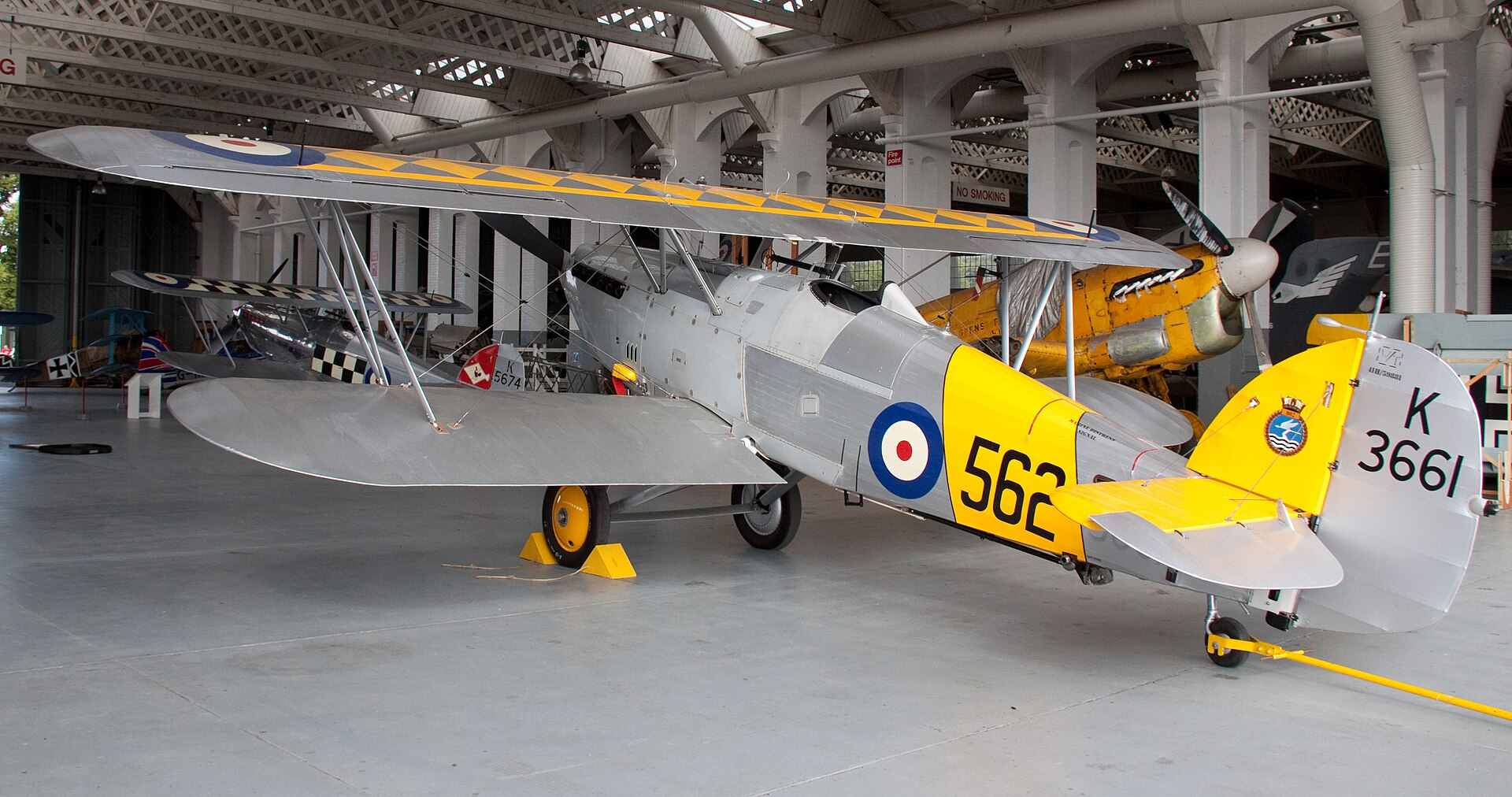
Much of the Fury’s visual glamour came from its finish. RAF Furies of the early and mid-1930s wore the classic scheme of the era: polished metal engine cowlings ahead of overall silver (aluminium-doped) fabric, set off by bright squadron markings. No. 43 Squadron’s black-and-white chequers and No. 1 Squadron’s red bars are among the best-remembered.
These flamboyant peacetime markings were part of a deliberate culture. The interwar RAF used colour and display to build esprit de corps and public support, and the Fury — fast, elegant and photogenic — was the perfect canvas. It is no coincidence that the aircraft features so heavily in the artwork and models that shape how the 1930s RAF is remembered.
As war approached, the silver-and-chequers era gave way to camouflage, and the Fury’s brief moment as a flying showpiece ended. But it is the silver Fury, not the camouflaged one, that lives in the public imagination.
14The Hendon RAF Displays: how the Hawker Fury became a national spectacle+
The annual RAF Display at Hendon was one of the great public events of interwar Britain, drawing vast crowds to watch the air force show off. Through the 1930s the Fury squadrons were among the stars of the show, and their synchronised aerobatics — including the celebrated tied-together formation flying — became a fixture that newspapers and newsreels covered eagerly.
For the RAF this was serious business dressed up as entertainment. The displays advertised the service’s professionalism, helped justify its budget and encouraged recruitment, all at a time when the future size and shape of the air force were politically contested. The Fury, as the most glamorous aircraft on the flight line, did more than its share of that work.
The Hendon displays ended in the late 1930s as rearmament and the approach of war changed priorities. But for a few summers the sight of silver Furies looping in tight formation over the crowds was one of the defining images of British air power.
15Fury versus Bf 109: the reality of the Yugoslav Furies in 1941+
The clearest measure of how far aircraft had moved in a decade came in April 1941, when Royal Yugoslav Air Force Furies found themselves facing the Luftwaffe. By then the Fury was a ten-year-old design confronting the Messerschmitt Bf 109, an all-metal monoplane roughly a hundred miles an hour faster, far better armed and vastly more capable in almost every respect.
There was no tactical answer to that gap. A Fury could out-turn a 109, but it could neither catch one nor run from one, and its two rifle-calibre guns were unlikely to bring down a modern fighter even when the pilot managed to bring them to bear. The Yugoslav Furies fought in the defence of their country regardless, and their pilots’ courage is not in question — but the result was a stark illustration of obsolescence.
It is worth remembering this reality alongside the Fury’s beauty. The aircraft was a masterpiece of its moment, but that moment had passed; by 1941 it was, through no fault of its own, hopelessly outclassed.
16From Hart to Hunter: the Hawker Fury’s place in a fighter dynasty+
The Fury sits near the start of one of the most remarkable design lineages in aviation. Under Sydney Camm, Hawker produced a continuous succession of front-line aircraft: the Hart bomber, the Fury and Nimrod biplane fighters, then the Hurricane, the Typhoon and Tempest of the Second World War, and finally the Hunter jet of the 1950s.
Seen in that sweep, the Fury is the biplane high point just before the monoplane transition — the aircraft in which Camm perfected one era’s ideas immediately before mastering the next. The through-line is a philosophy rather than a shape: relentless refinement, aerodynamic cleanliness and a preference for evolving proven designs over risky leaps.
That is why the Fury matters beyond its own service record. It is a key link in a chain of Hawker fighters that runs from the fabric biplanes of the 1920s to the swept-wing jets of the Cold War, almost all of them from the same designer.
17Restoring and replicating the Hawker Fury: why survivors are so rare+
Almost no original Furies survive, and the reasons are instructive. As an obsolete type by 1939, most were scrapped rather than preserved; the export and licence-built machines that saw combat were largely destroyed or lost. Preservation of interwar aircraft only became a serious pursuit long after the Fury had disappeared, by which point there was very little left to save.
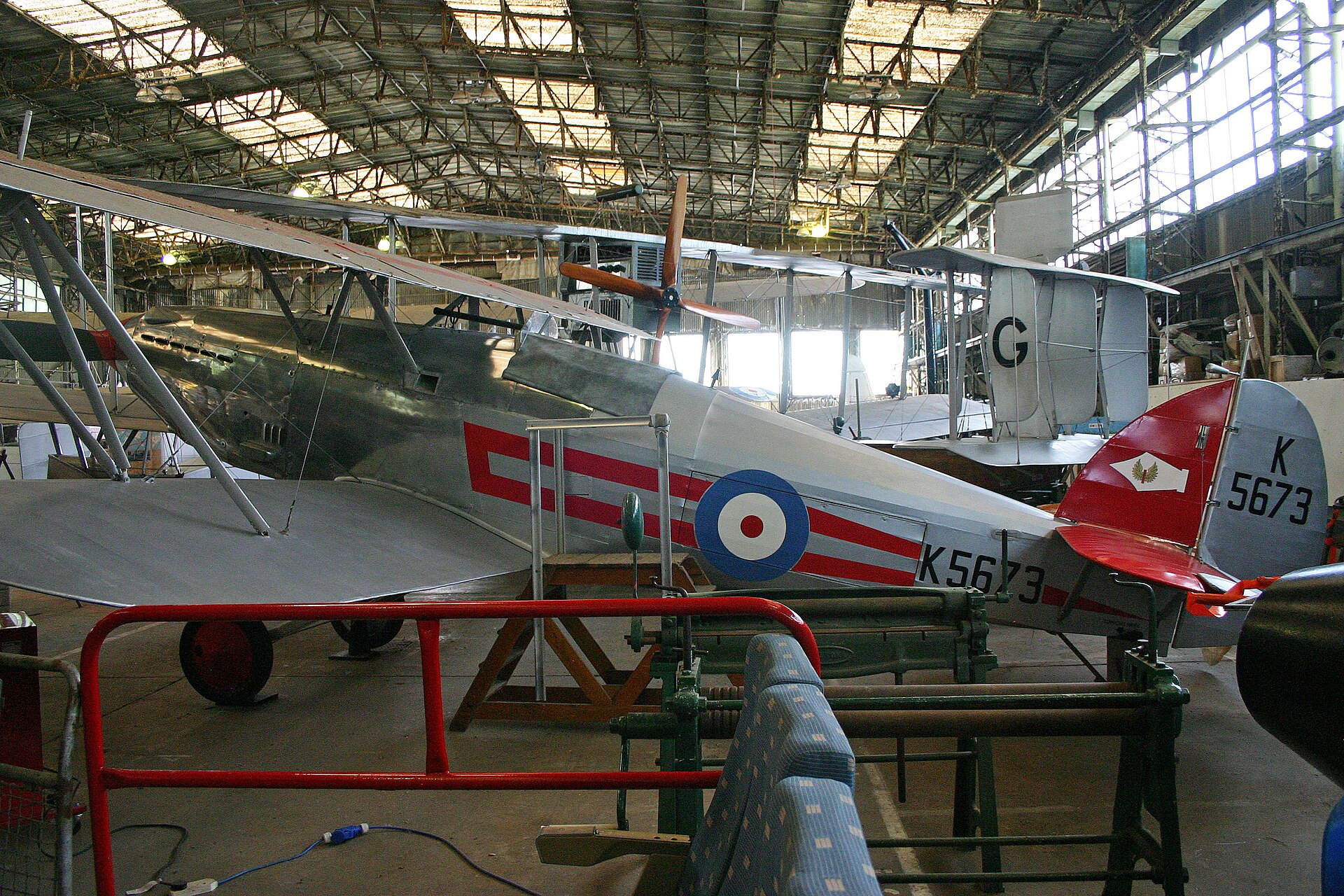
Recreating one is a formidable task. A Fury demands a Rolls-Royce Kestrel — itself a rare engine — plus the specialist skills of fabric covering, wire rigging and hand-fitted metalwork that few workshops still practise. The airworthy Fury I replica that has appeared at UK airshows represents years of exacting work, and the surviving airworthy Nimrods are similarly precious.
The upshot is that seeing a Fury, or its Nimrod cousin, in the air is a genuinely rare privilege. For most enthusiasts the aircraft lives on chiefly in museums, in photographs and in the memory of an age when the RAF flew silver biplanes for the sheer joy of it. Airworthy status changes over time, so always check with individual collections before travelling.
18Two guns in the age of eight: the Hawker Fury’s armament and gunnery+
The Fury carried two synchronised .303 in (7.7 mm) Vickers machine guns, mounted in the fuselage and firing through the propeller arc by means of interrupter gear. This was the standard fighter armament of the late 1920s and early 1930s, unchanged in principle since the Great War, and on the Fury it was entirely conventional.
It was also, within a few years, dangerously inadequate. Studies in the mid-1930s concluded that the higher speeds of modern combat gave a pilot only a fleeting firing opportunity — a second or two — and that two rifle-calibre guns simply could not put enough rounds into a target in that time to be decisive. The conclusion drove the RAF towards the eight-gun batteries of the Hurricane and Spitfire.
So the Fury’s two guns are a neat symbol of its position in history: a thoroughly modern airframe for 1931 married to an armament philosophy that was about to be swept away. As a gunnery trainer the Fury was superb; as a weapon of war against 1940-vintage aircraft, its firepower would have been almost useless.
19Where to see a Hawker Fury: museums and airshows today+
Because genuine Furies are so scarce, seeing one takes a little planning. The best opportunities are with British aviation museums and warbird collections, which between them hold preserved airframes, accurate replicas and the closely related Hawker Nimrod. UK institutions with strong interwar and Hawker holdings — among them the Royal Air Force Museum, the Fleet Air Arm Museum and collections associated with historic airfields — are the natural starting points.
For the sight of a Hawker biplane fighter actually flying, the airworthy Fury I replica and the surviving flying Nimrods are the ones to watch for on UK airshow bills. When they appear, they draw a crowd precisely because they are so rare — a chance to see and hear a machine that has otherwise vanished from the skies.
Exhibits, loans and airworthy status all change over time, so it is always worth checking a museum’s current displays or an airshow’s flying programme before making a special trip. The MiGFlug Aircraft Museum’s companion exhibits on the Gauntlet, Gladiator and Bulldog help put any Fury you do see into the wider context of the RAF’s biplane fighters.
20Biplane to monoplane: what the Hawker Fury generation taught the RAF+
It is easy to dismiss the Fury and its biplane contemporaries as a dead end, swept aside by the monoplane. But the RAF that won the Battle of Britain was in many ways forged in the biplane era, and the Fury squadrons were part of that forging. The tight formation flying, the aerobatic confidence, the gunnery practice and the professional culture of the fighter squadrons all matured on aircraft like the Fury.
The transition itself also taught hard lessons. The realisation that two guns were not enough, that enclosed cockpits and retractable undercarriages were worth their complexity, and that speed and firepower now mattered more than pure manoeuvrability — all of this was learned in the years the Fury served, and all of it shaped the monoplanes that replaced it.
So the Fury’s legacy is not only aesthetic. The aircraft, and the squadrons that flew it, formed a bridge between two eras of air fighting — training the men and shaping the doctrine that the RAF would rely on when the biplane’s graceful age gave way to the deadly business of 1940.
The Hawker Fury through the years
Thirteen stories about the Hawker Fury
Breaking the double-century
When the Fury I reached squadrons in 1931 it gave the RAF something it had never had before: a fighter that could hold more than 200 mph in level flight.
Leer más
The achievement was as much psychological as technical. It signalled that the fighter was no longer a lightly-armed leftover of the Great War but a fast, purposeful machine — and it set the expectation of speed that the monoplane generation would soon carry much further. Crucially, it also meant that RAF fighters could finally catch the fast light bombers of the day, including Hawker’s own Hart, which had made a mockery of the older fighters sent up to intercept it. A fighter that cannot overhaul its target is of little use, and the Fury was the aircraft that put that problem right.
Tied together over the crowd
At the Hendon displays, Fury pilots looped and rolled in tight formation with their wingtips lashed together by cord.
Leer más
It was a stunt, but a revealing one: only an aircraft as light and predictable as the Fury, flown by superbly trained pilots, could be trusted to hold formation so precisely that the cords never snapped through a full sequence of loops and rolls. The routines drew enormous crowds and became one of the defining images of the 1930s RAF. They were also a genuine demonstration of skill — the same disciplined formation flying the service would need in earnest less than a decade later, when the stakes were rather higher than a Saturday-afternoon display.
No. 43 Squadron’s pride
No. 43 Squadron — the “Fighting Cocks” — was the first to receive the Fury and became inseparable from it.
Leer más
For the squadron’s pilots, the silver Fury with its black-and-white chequered markings was a source of fierce pride. Flying from Tangmere in Sussex alongside No. 1 Squadron, the “Fighting Cocks” turned the Fury into a symbol of the RAF’s fighter arm at its most polished. The type’s association with these celebrated units helped make them among the most famous in the peacetime service, and the squadron’s chequers on a silver Fury remains one of the enduring images of interwar British aviation.
From Fury to Hurricane
The same designer, Sydney Camm, drew both the Fury and the Hurricane that replaced it.
Leer más
Camm carried the Fury’s obsession with clean lines into the monoplane age. The Hurricane kept a fabric-covered rear fuselage and much of Hawker’s construction philosophy, so in a real sense the Fury’s DNA flew on into the Battle of Britain. It is one of the neat ironies of the story that the man who made the most beautiful biplane fighter also designed the monoplane that rendered it obsolete — and that both aircraft, a generation apart, came from the same drawing office at Kingston-upon-Thames.
A jewel of an engine
The Rolls-Royce Kestrel that powered the Fury was the ancestor of the Merlin that would win fame in the Spitfire and Hurricane.
Leer más
Compact, supercharged and beautifully packaged, the Kestrel let Camm build a tight, low-drag airframe around it. The lessons Rolls-Royce learned with the Kestrel — in supercharging, cooling and construction — fed directly into the Merlin, the engine that would power the fighters of 1940. It is another quiet link between the Fury and the Battle of Britain: not just the same designer, but a direct line of engine development running from the silver biplane to the Spitfire.
Furies over Iran
The Imperial Iranian (Persian) Air Force was among the first export customers, operating Furies fitted with a variety of engines.
Leer más
Some Persian Furies were re-engined with air-cooled radials better suited to local conditions and support, giving them a subtly different look from their Kestrel-powered RAF cousins. Their service is a reminder of how far Hawker’s export business reached in the 1930s, long before the aircraft was obsolete — and of how a British interceptor designed for the grey skies of southern England ended up flying under the sun of the Middle East.
A last, hopeless stand
Royal Yugoslav Air Force Furies — some licence-built at home — went into action against the German invasion in April 1941.
Leer más
By then the Fury was a decade old and utterly outclassed by the Messerschmitt Bf 109. Yugoslav pilots flew it anyway, in a doomed defence of their country during the Axis invasion. It was one of the very few times the Fury met a first-rate modern fighter in combat, and the outcome underlined how completely the monoplane had changed air warfare. The courage of the crews could not close a gap of a hundred miles an hour and half a dozen guns; the Fury’s finest quality in that fight was the willingness of the men who flew it.
South African Furies at war
The South African Air Force took its Furies into the East African Campaign against Italian forces in 1940.
Leer más
Operating in a theatre where the opposition often flew biplanes too, the SAAF’s Furies had a brief, genuine combat career before more modern types took over. In the skies over the Horn of Africa the generational gap that doomed the Yugoslav Furies mattered less, because both sides were often flying aircraft of the same vintage. It was, in its modest way, the closest the Fury came to fighting on something like equal terms.
The Fury goes to sea
The Navy’s Hawker Nimrod was the Fury’s carrier-borne cousin, flying from Royal Navy decks through the 1930s.
Leer más
Strengthened for arrested landings and fitted with flotation gear and catapult points, the Nimrod looked almost identical to the Fury but did a very different job, operating from carriers such as HMS Courageous and Glorious. Because genuine flying Furies are effectively extinct, airworthy Nimrods today are the closest most people will come to seeing — and hearing — a member of the family fly. To watch a Nimrod loop overhead is to glimpse exactly what made the Fury so admired.
The most beautiful RAF biplane?
Ask enthusiasts to name the most elegant aircraft the RAF ever flew and the Fury is always in the conversation.
Leer más
Its proportions — the long nose, the neat single-bay wings, the polished metal cowlings against doped silver fabric — give it a purity of line that later, more capable fighters rarely matched. The Fury is admired as much as art as engineering, and it is no accident that it appears again and again in the paintings, models and memories that shaped how a generation pictured the RAF. Beauty is not a measurable specification, but in the Fury’s case it is a large part of the aircraft’s lasting fame.
Overtaken by its own maker
The Fury was made obsolete not by the enemy but by the pace of progress — including Hawker’s own Hurricane.
Leer más
Few front-line aircraft have been eclipsed so quickly. A pilot who joined a Fury squadron in the early 1930s could easily have flown Hurricanes or Spitfires by 1939, watching the fighter transform from open-cockpit biplane to eight-gun monoplane inside a single tour of duty. The Fury did not fail; it was simply overtaken by one of the fastest technological revolutions in aviation history, and by an aircraft from the very same design office that had created it.
Keeping the Fury alive
Original Furies are extraordinarily rare, but preserved airframes and accurate replicas keep the design in front of the public.
Leer más
A flying Fury I replica has appeared at UK airshows, and museum examples and the closely related airworthy Nimrods let modern audiences appreciate what made the type so special. Restoring or replicating a Fury is a formidable undertaking — the fabric, the rigging, the Kestrel engine and the hand-fitted metalwork all demand rare skills — which is part of why so few exist. Current airworthy status changes over time, so check with individual collections before travelling to see one fly.
One name, three aircraft
The Hawker Fury biplane is regularly confused with two completely unrelated aircraft that happen to share the word “Fury”.
Leer más
The Hawker Sea Fury is a large, powerful monoplane fighter from the end of the Second World War that later fought in Korea. The North American FJ Fury is an American jet of the late 1940s and 1950s, related to the F-86 Sabre. Neither has any connection to Camm’s 1930s biplane beyond the name. If you are reading about a fast piston monoplane or a swept-wing jet, you are not reading about the aircraft on this page.
Hawker Fury in photographs
The Hawker Fury on film
Genuine 1938 archival footage of RAF Hawker fighter biplanes, from the British Pathé archive — the authoritative source for interwar British newsreel film (archival clip, ~3,000 views). It captures the silver Hawker fighters of the late-1930s RAF in their element, and gives a sense of the elegance and presence that made the Fury family so admired.
Where the Hawker Fury flew
The Fury was a British aircraft through and through, but it also flew in the colours of several export and licence operators. Toggle the categories to see the aircraft’s origin, its RAF service, its export operators and where airframes survive today. Hover or tap a country for detail.
The Hawker Fury’s service in numbers
Hawker Fury: your questions answered
Can I fly in a Hawker Fury?
No. The Hawker Fury is a single-seat 1930s biplane, and only a tiny number of preserved and replica airframes survive — none of them offered as a passenger experience. There is no second seat to sit in, no way to book a flight in a Fury, and MiGFlug does not operate the type.
However, you can fly in a genuine ex-military jet today. MiGFlug arranges flights in aircraft such as the L-39 Albatros, the Hawker Hunter and even the MiG-29 — real fighters you sit in and fly. Explore the options at migflug.com/flights-prices.
Is the Hawker Fury the same as the Sea Fury?
No — and this is a common confusion. The Hawker Fury on this page is an interwar biplane fighter of the early 1930s. The Hawker Sea Fury is a completely different, much later aircraft: a large, powerful single-seat monoplane developed at the end of the Second World War for the Fleet Air Arm, which went on to serve into the Korean War. They share only the Hawker name and the word “Fury”.
How is it different from the North American FJ Fury?
Entirely. The North American FJ Fury was an American carrier-based jet fighter of the late 1940s and 1950s, closely related to the F-86 Sabre. It has no connection whatsoever to the British Hawker Fury biplane beyond coincidentally sharing the name “Fury”. Three different aircraft, three different countries and eras — one name.
Why was the Hawker Fury so important?
It was the first fighter the Royal Air Force flew faster than 200 mph in level flight, when it entered service in 1931. It set a new standard for speed and aerodynamic cleanliness in fighter design and, flown by elite squadrons, became the glamorous public face of the 1930s RAF. It also marked the peak of the fighter biplane just before the monoplane swept the type away.
Who designed the Hawker Fury?
Sydney Camm, Hawker’s chief designer, who developed it from the Hart bomber family. Camm went on to design the Hawker Hurricane, the monoplane fighter that replaced the Fury and carried much of the burden of the Battle of Britain in 1940 — making the Fury a direct ancestor, in design terms, of one of the RAF’s most important fighters.
What engine and guns did the Hawker Fury have?
It was powered by a single Rolls-Royce Kestrel supercharged V12 — around 525 hp in the Fury I and about 640 hp in the faster Fury II. Armament was two synchronised .303 in Vickers machine guns firing through the propeller. That two-gun battery was standard for the day but would soon be eclipsed by the eight-gun monoplanes that followed.
How fast was the Hawker Fury?
The Fury I reached about 333 km/h (207 mph) and the improved Fury II roughly 360 km/h (223 mph). Those figures made it the fastest fighter in RAF service when it appeared, though they were quickly overtaken: the monoplane fighters of the late 1930s were around 100 mph faster. Exact performance varies between sources, so these should be read as approximate.
Which countries operated the Hawker Fury?
Chiefly the RAF in Britain. Export and licence operators included Persia (Iran), Yugoslavia — which licence-built the type and flew it against the German invasion in April 1941 — Spain, Portugal, Norway and South Africa, whose Furies saw action in East Africa in 1940. Exact numbers vary between sources and are given here as estimates.
What is the Hawker Nimrod, and how is it related?
The Hawker Nimrod was the naval equivalent of the Fury — a closely related Hawker biplane fighter, navalised for carrier operations with the Fleet Air Arm in the 1930s. It shared the Fury’s Kestrel engine and elegant lines but was strengthened for deck landings. Airworthy Nimrods survive today and are the closest flying relatives of the Fury. (Do not confuse it with the much later Hawker Siddeley Nimrod maritime jet, which is unrelated.)
Are any Hawker Furies still flying?
Original airworthy Furies are extremely rare; the type mostly survives as museum examples and accurate replicas, with a Fury I replica having appeared at UK airshows. The closely related Hawker Nimrod survives in airworthy form with UK collections. Airworthy status changes over time, so check with individual collections before planning a visit to see one fly.
Why did the RAF build so few Hawker Furies?
Cost and timing. The Fury was expensive to build compared with contemporaries like the Bristol Bulldog, so in the budget-starved early 1930s the RAF could afford it only in small numbers for elite squadrons. By the time rearmament money became available in the later 1930s, the priority had shifted to modern monoplanes — so the Fury was never mass-produced.
Did the Hawker Fury see combat?
The RAF’s own Furies never fired a shot in anger, being withdrawn before the war. But export machines did: South African Air Force Furies fought in the East African Campaign in 1940, and Royal Yugoslav Air Force Furies went into action against the German invasion in April 1941, where they were hopelessly outclassed by modern Luftwaffe fighters.
What was the Hawker Fury made of?
Like most Hawker aircraft of the period, the Fury had a fuselage built from bolted and rolled steel and duralumin tubing, faired to shape and covered in fabric behind the metal engine panels. The single-bay biplane wings used metal spars with fabric covering, braced by streamlined struts and flying wires. It was light and easy to repair, but far more fragile and draggy than the all-metal, stressed-skin monoplanes that followed.
How does the Hawker Fury compare to the Gloster Gladiator?
Both were elegant RAF biplane fighters of the 1930s, but they belong to slightly different moments. The Fury was the fast, expensive interceptor of the early 1930s, reserved for a few elite squadrons. The Gloster Gladiator, which came a little later, was the RAF’s last biplane fighter — enclosed cockpit, four guns — and served more widely, including in early WWII actions. The Fury is generally remembered as the more beautiful of the two; the Gladiator as the one that actually fought a war.
The Fury is a rare museum piece — a single-seat 1930s biplane you can admire but never book a seat in. What you can do is fly in a genuine ex-military jet with MiGFlug, at the controls of a real fighter. Take the controls of a real ex-military jet with an experienced pilot. Several performance and production figures for the Hawker Fury vary between sources and are given here as approximate, interwar-era estimates. Where the record is unclear — notably operating costs and exact export numbers — we have flagged the figure rather than state a false precision. This page concerns the 1930s Hawker Fury biplane and should not be confused with the later Hawker Sea Fury monoplane or the unrelated North American FJ Fury jet.You can’t fly the Hawker Fury. These, you can.
Fighter Jet Flights
More from the Aircraft Museum
Gloster GauntletThe open-cockpit RAF biplane fighter that briefly became Fighter Command’s fastest, overlapping the Fury in service.Gloster GladiatorThe RAF’s last biplane fighter — the end of the line the Fury generation began.Bristol BulldogThe cheaper contemporary that equipped most of the RAF while the Fury went to a chosen few.Sources & further reading