
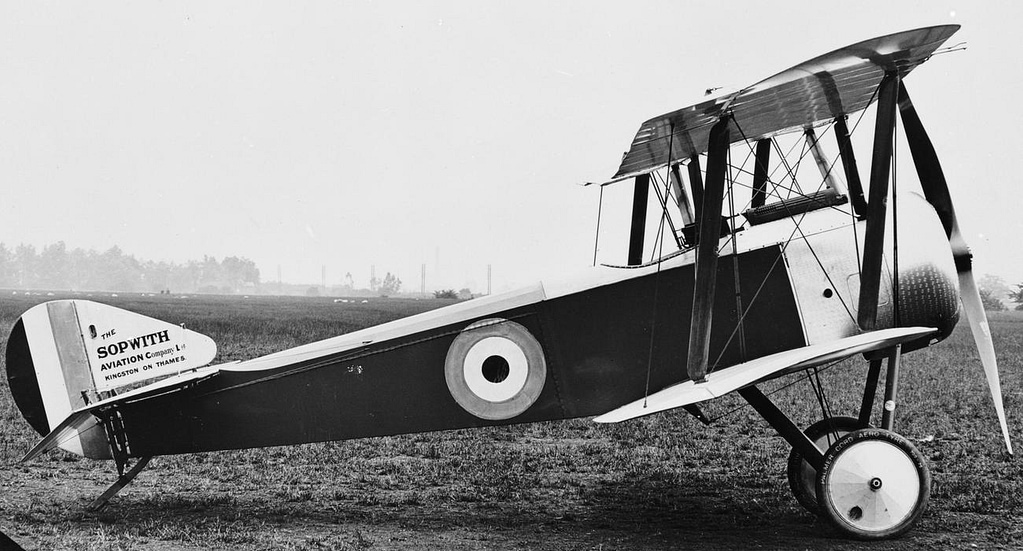
Sopwith Pup
The little British scout of 1916 that pilots adored: underpowered and lightly armed, yet so light on the controls and so high-flying that a good pilot could, as one ace put it, almost land it on a tennis court — and it went on to make aviation history at sea.
The Sopwith Pup’s story: the gentle little scout that won a war’s affection
Officially it was the Sopwith Scout. Almost nobody called it that. To the pilots and mechanics of the Royal Flying Corps and the Royal Naval Air Service it was the Pup — a fond, unofficial nickname born because the trim little single-seater looked like the small offspring of Sopwith’s two-seat 1½ Strutter that came before it. The name stuck so firmly that the Air Board is said to have disliked it, and it began a Sopwith tradition of animal names that would run through the Camel, the Snipe, the Dolphin and the Salamander.
Designed by Sopwith’s chief draughtsman Herbert Smith and first flown in early 1916, the Pup was a fabric-covered wooden biplane of almost perfect proportions. It had equal-span wings, ailerons on both upper and lower planes, and a cut-out in the trailing edge of the top wing so the pilot could see upward. It weighed almost nothing — empty, around 787 lb (357 kg) — and that lightness was the whole point. With only a modest 80-horsepower rotary engine, the Pup could never be fast. But a feather-light wing loading gave it two priceless gifts: it climbed and held altitude better than heavier machines, and it handled with a sweetness that pilots wrote home about.
It reached the Western Front in the autumn of 1916 with both the RFC and the RNAS, and for a few golden months it was genuinely competitive. Naval Pup squadrons scored heavily over the Somme and Flanders through the winter of 1916–17; one RNAS squadron claimed around twenty victories before the year was out. German airmen took the little scout seriously. The Pup’s single synchronised Vickers gun was a light punch by 1917 standards, but in a turning fight its manoeuvrability and ceiling let a skilled pilot dictate terms.
That golden spell did not last. Honesty demands it be said plainly: by the spring and summer of 1917 the Pup was outclassed. New German fighters — the Albatros D.III and D.V with their more powerful in-line engines and twin machine guns — simply had more speed and more firepower. The Pup could still out-turn them, but it could no longer catch them, run from them, or match their weight of fire. Sopwith’s own answer, the Triplane and then the immortal Camel, took over the front-line fight, and the Pup was steadily withdrawn.
It did not retire quietly. Pups became the favourite mounts of Home Defence flights guarding Britain against Zeppelins and Gotha bombers, and thousands of new pilots learned to fly on them at training schools, where the type’s forgiving manners made it beloved all over again. And out at sea, the Pup was about to write one of the most important — and most poignant — chapters in the history of naval aviation.
To understand the Pup, it helps to understand the moment that made it. In 1915 and early 1916 the “Fokker Scourge” had shown what a single synchronised machine gun firing through the propeller could do, and every air arm scrambled for a true single-seat fighter to answer it. The Sopwith Aviation Company at Kingston upon Thames had already built the two-seat 1½ Strutter — itself a landmark, with a synchronised gun and airbrakes. The Pup was, in effect, that concept distilled down to one seat and one gun: smaller, lighter, cleaner, and built around agility rather than brute force. It was the right aeroplane at exactly the right time, and it arrived just as the great air battles over the Somme were reaching their height.
Both British air services flew it, and the distinction matters to the history. The Royal Flying Corps, the army’s air arm, and the Royal Naval Air Service, the navy’s, each operated Pup squadrons over the Western Front, often side by side. It was the naval squadrons — No. 3, No. 8 and No. 9 (Naval) among them — that made some of the type’s most striking scores, and it was the RNAS that would take the Pup to sea. When the two services merged to form the Royal Air Force on 1 April 1918, the Pup was already yielding the front line to its own descendants.
Those descendants are part of the Pup’s story too. Herbert Smith’s team followed it with the Sopwith Triplane — whose three narrow wings gave an astonishing rate of climb — and then with the Sopwith Camel, the hump-backed, twin-Vickers killer that would be credited with more air-to-air victories than any other British fighter of the war. The Camel was faster and far more heavily armed, but it was also vicious to fly, its concentrated masses and engine torque killing many trainees. The gentle Pup, by contrast, was the aeroplane on which those pilots first learned they could trust an aeroplane at all. In a real sense the Pup trained the men who flew the Camel into legend.
01
The Sopwith Pup’s name: why the “Scout” became the “Pup”
+
The aircraft’s official designation was the Sopwith Scout (the works type number 9901 is also seen in records). The affectionate name “Pup” arose in service because the new single-seater looked like a scaled-down child of the earlier two-seat Sopwith 1½ Strutter — as if the big machine had produced a pup. The nickname was never official and, by some accounts, was actively disliked by the authorities as undignified. It proved unstoppable anyway, and it set the pattern for later Sopwith animal names.
The naming matters for anyone researching the type: contemporary official documents, contracts and museum records may list it as “Scout” or by type number, while pilots’ logbooks, letters and virtually all popular history call it the Pup. Both refer to the same aeroplane.
02
The Sopwith Pup in combat: a brilliant 1916, an outclassed 1917
+
The Pup’s front-line effectiveness has to be told in two halves. In late 1916 and early 1917 it was one of the best fighters over the Western Front. Its light wing loading gave it a superb rate of climb and a high ceiling for its day, and its gentle handling let good pilots exploit both. RNAS and RFC Pup units scored well and earned the respect of their opponents; Manfred von Richthofen is reported to have remarked, after meeting one in the air, that he could see the enemy machine was superior to his own in that fight.
But the margins were thin, and German engine and armament development moved fast. By mid-1917 the Albatros D.III and D.V outran and out-gunned the Pup, whose single Vickers and modest power left it unable to force a decision against a careful enemy. It was withdrawn from the main fighting front over the course of 1917. This is not a failure of the design so much as the brutal pace of wartime aeronautical progress: a first-class fighter of 1916 was simply an old one by 1918.
03
The Sopwith Pup at sea: Dunning, HMS Furious and the first carrier landing
+
The Pup’s lasting place in history was won not in a dogfight but on a ship’s deck. The Royal Naval Air Service used the light, slow-landing Pup for a series of pioneering shipborne experiments: aircraft were flown off short platforms built over the gun turrets of cruisers and battleships, and off towed lighters, to give the fleet its own fighter cover against Zeppelins.
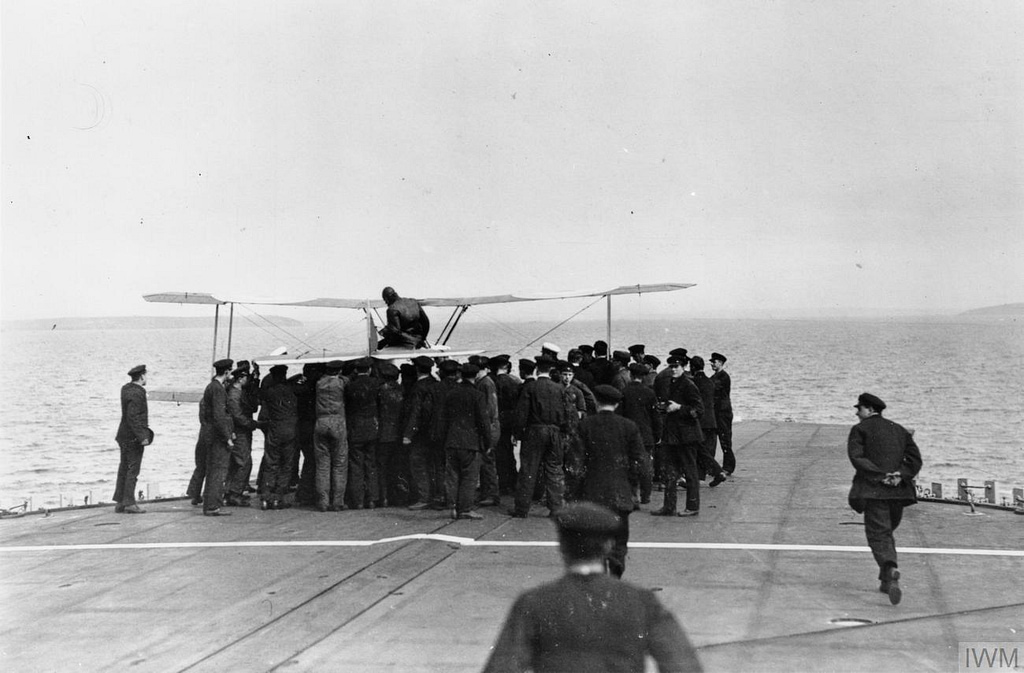
On 2 August 1917, Squadron Commander Edwin Harris Dunning flew a Pup around the superstructure of the carrier HMS Furious and side-slipped down onto her forward flying-off deck while the ship steamed into wind — the first time any aircraft had been landed on a moving ship. Deck crew grabbed rope toggles fitted to the airframe to drag it down. It was a landmark moment in the birth of the aircraft carrier.
The story ends in tragedy, and it should be told honestly. Dunning was determined to prove the technique was repeatable. On 7 August 1917, on a further attempt, his engine choked at the critical moment, the Pup was blown over the side, and Dunning was drowned before he could be rescued. He was 25. His sacrifice directly informed the Royal Navy’s conclusion that landing on a ship’s forward deck, past the funnel and superstructure, was too dangerous — and pushed development toward the full-length flush flight deck that defines the aircraft carrier to this day.
How the Sopwith Pup was built: lightness as a weapon
The Pup’s genius was restraint. Where later fighters chased power and firepower, the Pup chased balance — and for a season that balance made it the finest-handling scout in the sky.
A feather-light wooden biplane
Wire-braced spruce and ash structure, fabric covered, with equal-span single-bay wings and ailerons on all four wingtips. Empty weight was only about 787 lb (357 kg). The very low wing loading is what gave the Pup its climb, its ceiling and its famously gentle stall.
A modest rotary heart
Most Pups used the 80 hp Le Rhône 9C rotary; Clerget and Gnome rotaries appeared on other batches, and Home Defence machines later took the 100 hp Gnome Monosoupape. The whole engine spun with the propeller — light, but with strong gyroscopic effects a pilot had to master.
One gun, carefully synchronised
A single .303 in Vickers machine gun fired forward through the propeller arc using a synchronising gear. It was light by 1917 standards, but reliable. A few aircraft trialled an over-wing Lewis gun or Le Prieur anti-balloon rockets on the interplane struts.
04
The Sopwith Pup’s handling: why pilots loved it so much
+
Almost every pilot who flew the Pup came away enchanted. The combination of light weight, generous wing area and well-harmonised controls made it responsive without being twitchy, and forgiving near the stall — a rare and precious quality in an era of unforgiving rotary-engined fighters. Its ability to hold height and keep manoeuvring where heavier machines mushed and sank made it feel, to a good pilot, almost unbeatable in a turning fight.
That reputation is why the Pup was so treasured as a trainer and Home Defence machine even after it left the front line: an aeroplane that flattered the novice and delighted the expert. Modern pilots of the surviving and replica Pups echo the same praise a century on.
05
The Sopwith Pup’s shipborne variants: skids, platforms and lighters
+
Naval Pups were adapted in several ways for work at sea. Some carried a skid undercarriage in place of wheels for deck and platform operations; many flew from short wooden flying-off platforms erected over the gun turrets of cruisers and capital ships, turning almost any warship into a fighter carrier. Others were launched from lighters towed at speed behind destroyers. Flotation bags and other survival aids were trialled for ditching. These experiments — low-tech, brave and often improvised — laid the practical groundwork for carrier aviation.
06
The Sopwith Pup’s variants: from Le Rhône scout to naval and Home Defence machines
+
Although the Pup looks like a single, unchanging shape, it was fielded in a family of subtly different forms. The standard land fighter carried the 80 hp Le Rhône 9C, while other production batches used the 80 hp Clerget or Gnome rotaries; supply, not preference, often decided which engine a given aircraft received. Home Defence Pups were re-engined with the more powerful 100 hp Gnome Monosoupape to claw for the altitude needed to reach raiders, at some cost in reliability and endurance.
Naval Pups formed a distinct sub-family: some had a skid undercarriage for platform and deck work, some carried flotation gear, and many were fitted with the toggles and quick-release arrangements needed for shipboard handling. There were also experimental and second-line uses — anti-balloon aircraft carrying Le Prieur rockets on the interplane struts, and machines fitted with an over-wing Lewis gun. The two-seat civil Sopwith Dove of the early 1920s was a direct post-war derivative of the Pup, and — as the Shuttleworth Collection’s airworthy aircraft shows — a Dove could later be rebuilt back into Pup configuration.
07
The Sopwith Pup versus the Sopwith Camel: gentleness against ferocity
+
The two most famous Sopwith fighters make a revealing pair. The Pup came first: light, forgiving, one gun, modest power, and beloved for its manners. The Camel followed: heavier, faster, armed with twin synchronised Vickers guns, and built around a concentration of engine, guns, pilot and fuel that gave it a savage turn to the right — and a reputation for killing careless or inexperienced pilots.
In the hands of an expert the Camel was the deadlier weapon, and it is credited with more victories than any other British fighter of the war. But the Pup was the better teacher and the sweeter aeroplane, and many pilots who flew both remembered the Pup with the greater affection. The progression from Pup to Triplane to Camel is a compact lesson in how quickly the demands of air fighting escalated between 1916 and 1918: each aircraft traded a little more of the Pup’s gentleness for a little more lethality.
08
The Sopwith Pup’s operating costs: what a 1916 scout is worth today
+
The original unit cost of a Sopwith Pup is not reliably recorded in the sources we would cite, and wartime accounting, inflation and different makers make any single 1916 figure meaningless. We have therefore left the historic purchase price marked as not reliably recorded rather than invent one.
What can be said, clearly flagged as an estimate, is the modern cost of ownership: building a new airworthy Sopwith Pup reproduction to museum standard is widely estimated to cost on the order of several hundred thousand pounds — roughly £250,000 to £400,000 or more depending on engine, fit and finish — before the considerable running and insurance costs of operating a fragile, rotary-engined antique. Original airframes are effectively priceless and are not sold.
09
The Sopwith Pup’s legacy: how a little scout shaped the aircraft carrier
+
The Pup’s most enduring monument is not on the Western Front but at sea. Its slow, controllable approach made it the ideal test-bed for the very first attempts to fly aircraft from ships, and Dunning’s landing on HMS Furious in August 1917 proved — at the cost of his life a few days later — both that it could be done and that doing it over a ship’s superstructure was lethally dangerous. That hard lesson pushed the Royal Navy toward the flush, full-length flight deck: Furious herself was rebuilt, and the world’s first true flush-deck carrier, HMS Argus, followed in 1918.
Every carrier landing since — every arrestor wire, every angled deck, every naval jet trapping aboard a supercarrier — descends from those improvised experiments with a fragile little wooden biplane. It is a remarkable legacy for an aircraft that was already obsolete as a fighter when it made history.
Sopwith Pup specifications: dimensions, performance and cost
Figures are for a representative 80 hp Le Rhône production Pup. Several values are contested between sources and are flagged; performance varied with engine, load and individual airframe.
| Multitud | 1 (pilot) |
|---|---|
| Longitud | 19 ft 3¾ in / 5.89 m |
| Envergadura | 26 ft 6 in / 8.08 m |
| Altura | ~9 ft 5 in / ~2.87 m |
| Área del ala | ~254 sq ft / ~23.6 m² |
| Peso vacío | ~787 lb / ~357 kg |
| Loaded weight | ~1,225 lb / ~556 kg |
| Configuration | Single-bay biplane, fabric over wood |
| Motor | 80 hp Le Rhône 9C rotary (typical) |
|---|---|
| Max speed | ~111 mph / ~180 km/h at sea level (est.) |
| Techo de servicio | ~17,500 ft / ~5,300 m (contested; some sources ~15,000 ft / 4,600 m) |
| Endurance | ~3 hours |
| Armamento | 1 × synchronised .303 in Vickers gun |
| Number built | ~1,770 (all makers) (varies by source) |
| Unit cost (1916) | Not reliably recorded |
| Cost per flight hour | Not applicable (historic) — modern replica upkeep very high (est.) |
Contested figures are hedged deliberately. Service ceiling in particular is quoted anywhere from about 15,000 ft to 17,500 ft depending on engine and source; production totals commonly given as ~1,770 (Sopwith, Standard Motor Co., Whitehead Aircraft and William Beardmore between them) also vary between references. Where sources disagree we have shown the common figure and flagged the range rather than pick a false precision.
The Sopwith Pup’s timeline: from Kingston workshop to carrier deck
The prototype Sopwith Scout — soon universally the “Pup” — first flies. Herbert Smith’s design is an immediate delight to test pilots.
The Pup enters front-line service with RNAS and RFC squadrons on the Western Front, quickly proving competitive against German fighters.
Naval and army Pup squadrons score heavily over the Somme and Flanders. German airmen, Richthofen among them, note the little scout’s quality.
Newer Albatros D.III and D.V fighters outclass the Pup in speed and firepower; it begins to be withdrawn from the main front.
Sqn Cdr E. H. Dunning lands a Pup on the moving deck of HMS Furious — the first landing of an aircraft on a ship under way.
Dunning is killed attempting to repeat the feat when his engine chokes and the Pup goes over the side. The tragedy reshapes carrier design.
Pups serve on with Home Defence flights against Zeppelins and Gothas and, in large numbers, as much-loved trainers.
Withdrawn from service as the war ends. Only a handful pass to the civil register; a few reach Australia, the USA, Greece, the Netherlands and Russia.
Original and restored Pups survive in British museums, and airworthy examples and accurate replicas still fly at airshows such as Shuttleworth.
Sopwith Pup stories: the people, flights and moments behind the machine
A pup of the Strutter
The name caught on because the trim single-seater looked like the offspring of Sopwith’s two-seat 1½ Strutter. The authorities reportedly thought it undignified. The pilots didn’t care — and the name outlived everyone.
“Superior to ours”
Manfred von Richthofen is reported to have admitted, after tangling with a Pup, that he could see at once the enemy machine was better than his own in that fight — high praise from the war’s most famous fighter pilot.
Land it on a tennis court
The great RFC ace James McCudden is remembered for saying that in manoeuvrability the Pup was the equal of any German machine, and that a practised pilot could almost put it down on a tennis court. It is the most quoted line about the type — and the most affectionate.
The naval scoring run
RNAS Pup squadrons on the Western Front ran up impressive scores through the winter of 1916–17, one unit claiming around twenty victories before the year’s end — proof the light scout could fight as well as charm.
Dunning’s landing
Squadron Commander Edwin Dunning side-slipped a Pup onto the forward deck of HMS Furious while she steamed into wind, deck crew grabbing toggles to haul it down. No aircraft had ever landed on a moving ship before.
The price of a first
Five days later Dunning tried again to prove the technique. His engine choked, the Pup was blown over the side, and he drowned before rescue. He was 25. His death changed how navies thought about landing aircraft at sea.
A fighter on every warship
Pups flew off short wooden platforms built over cruiser and battleship gun turrets, giving the fleet its own airborne defence against Zeppelins without a purpose-built carrier — ingenuity born of necessity.
Launched off the water’s edge
Some naval Pups were flown off lighters towed at speed behind destroyers, a hair-raising technique that extended fighter cover far out over the North Sea.
Guarding Britain’s night sky
As the Pup left the front, Home Defence flights used it against Zeppelins and Gotha bombers over England — though even with a 100 hp engine it struggled for the height and range to reliably catch the raiders.
The trainer everyone loved
Thousands of new pilots learned their trade on the Pup, whose forgiving manners made it the favourite of instructor and pupil alike. For many wartime aviators the Pup was simply the nicest aeroplane they ever flew.
An ace’s first victories
The Australian ace Robert “Rick” Little flew a naval Pup in the winter of 1916–17 and scored some of his earliest victories on the type before going on to become one of the highest-scoring Australian pilots of the war.
Still flying a century on
A precious few original-era Pups survive in British museums, and airworthy examples and faithful replicas still delight crowds at Shuttleworth and other airshows — the gentle scout’s charm undimmed.
Sopwith Pup photographs: period images and preserved aircraft
Click any image to enlarge. All photographs are public domain or Creative Commons; credits and licences are shown with each.
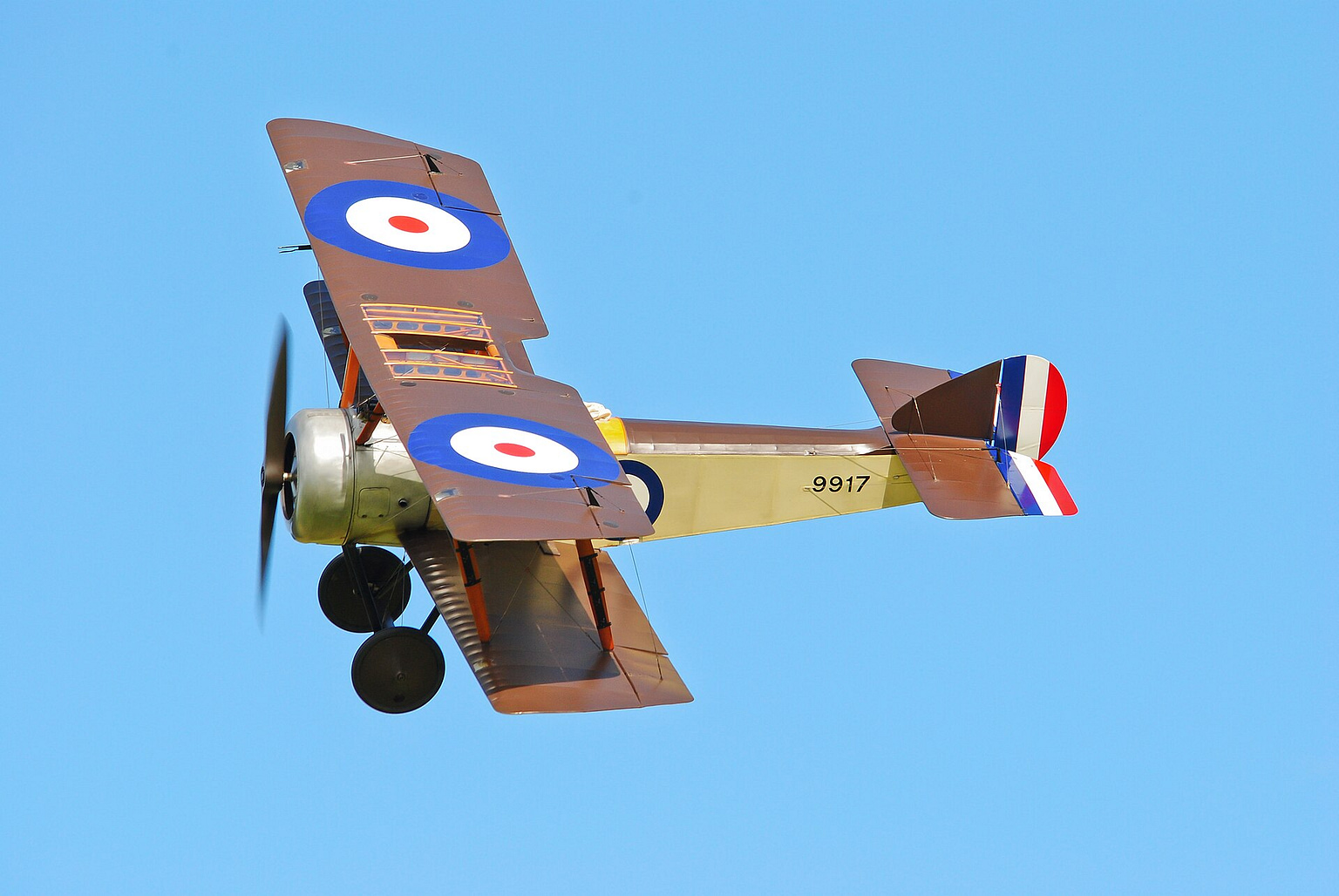
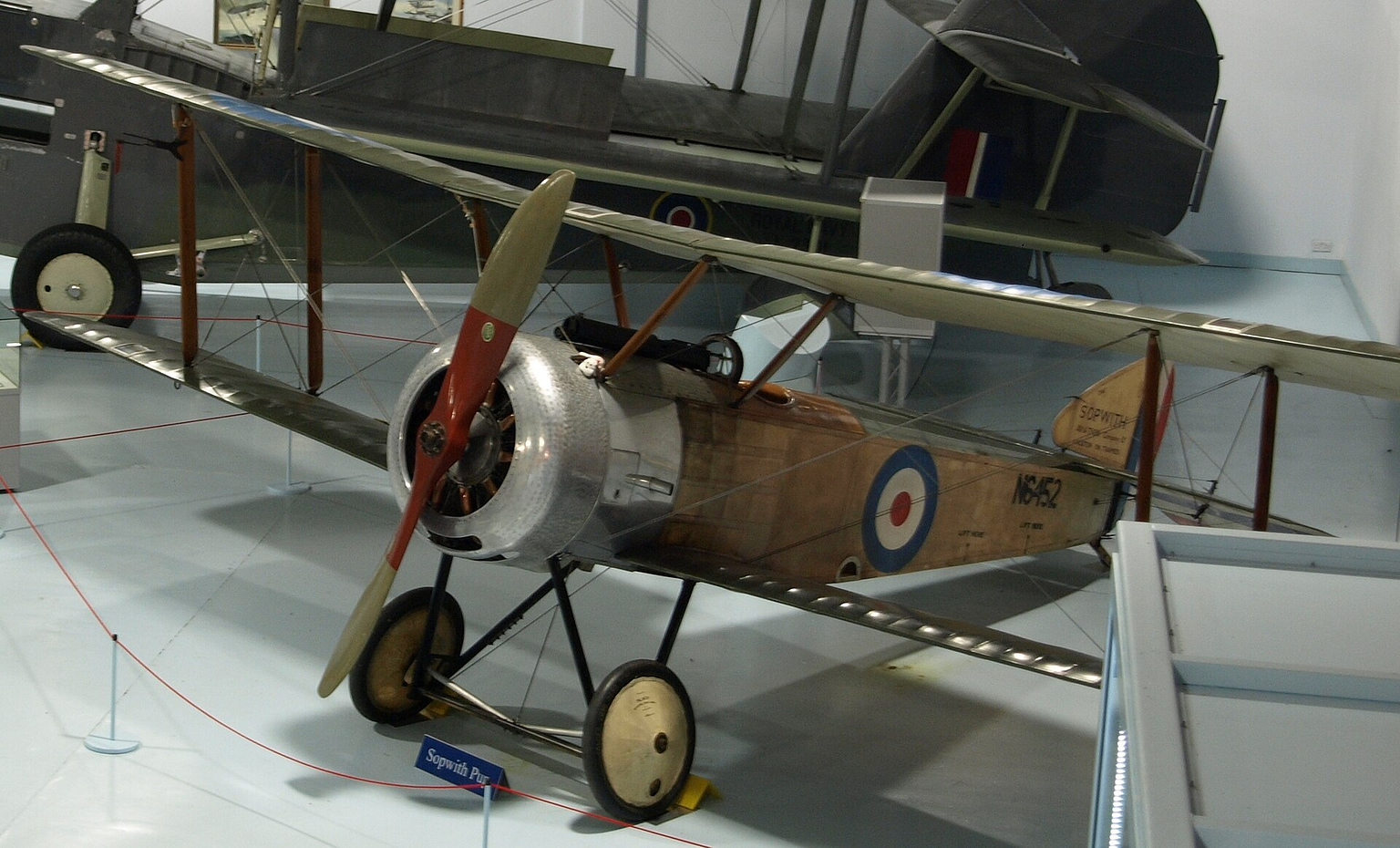
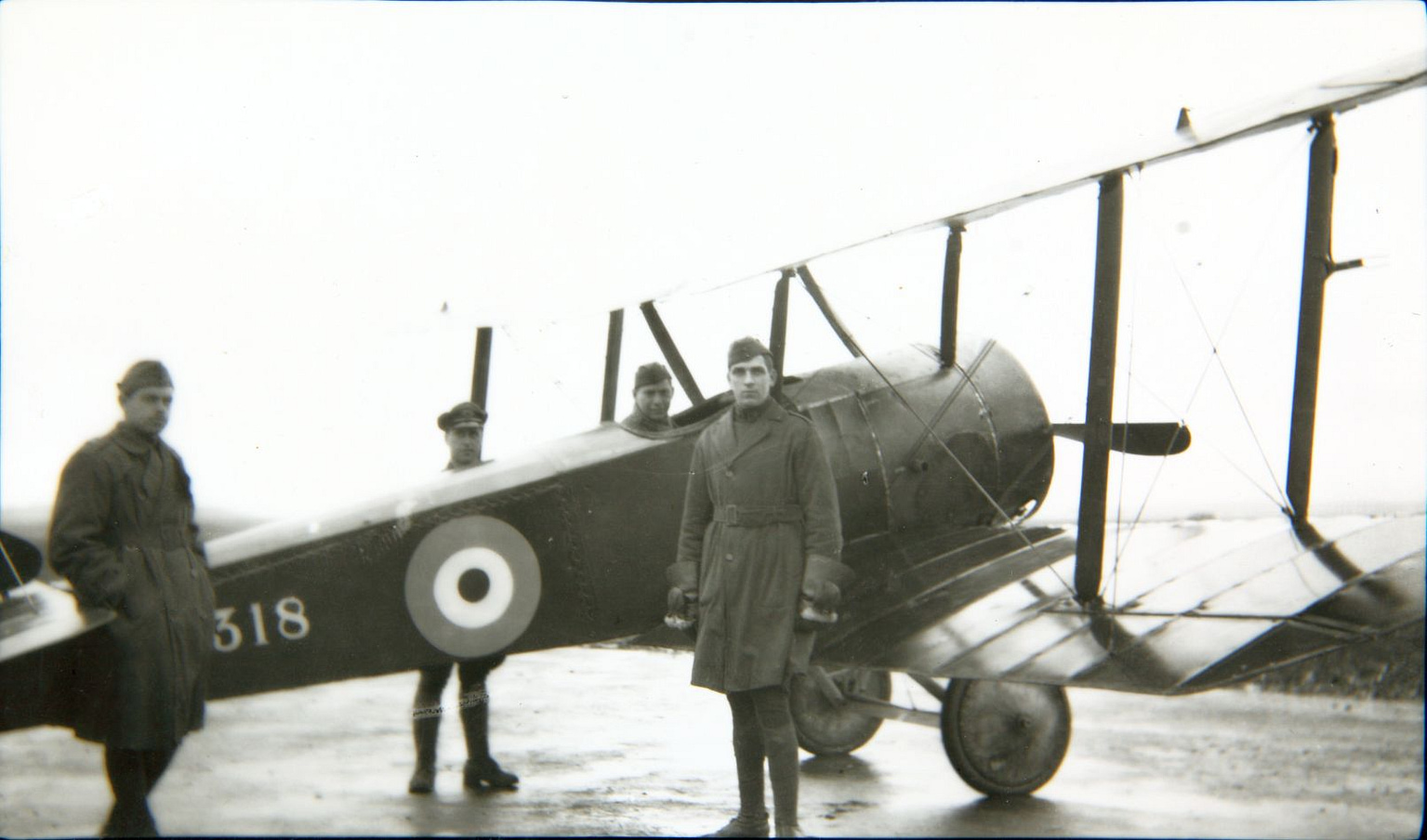
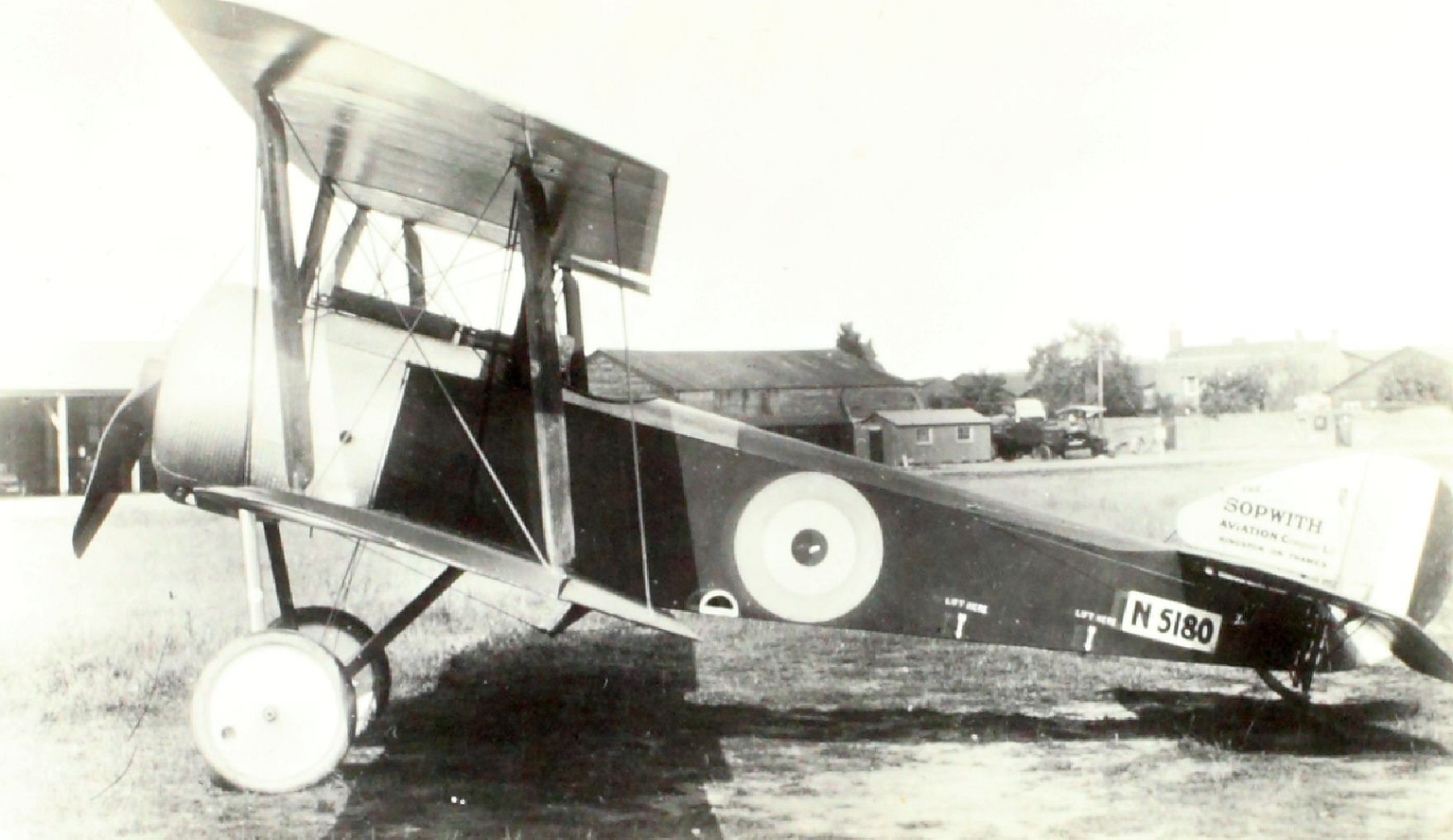
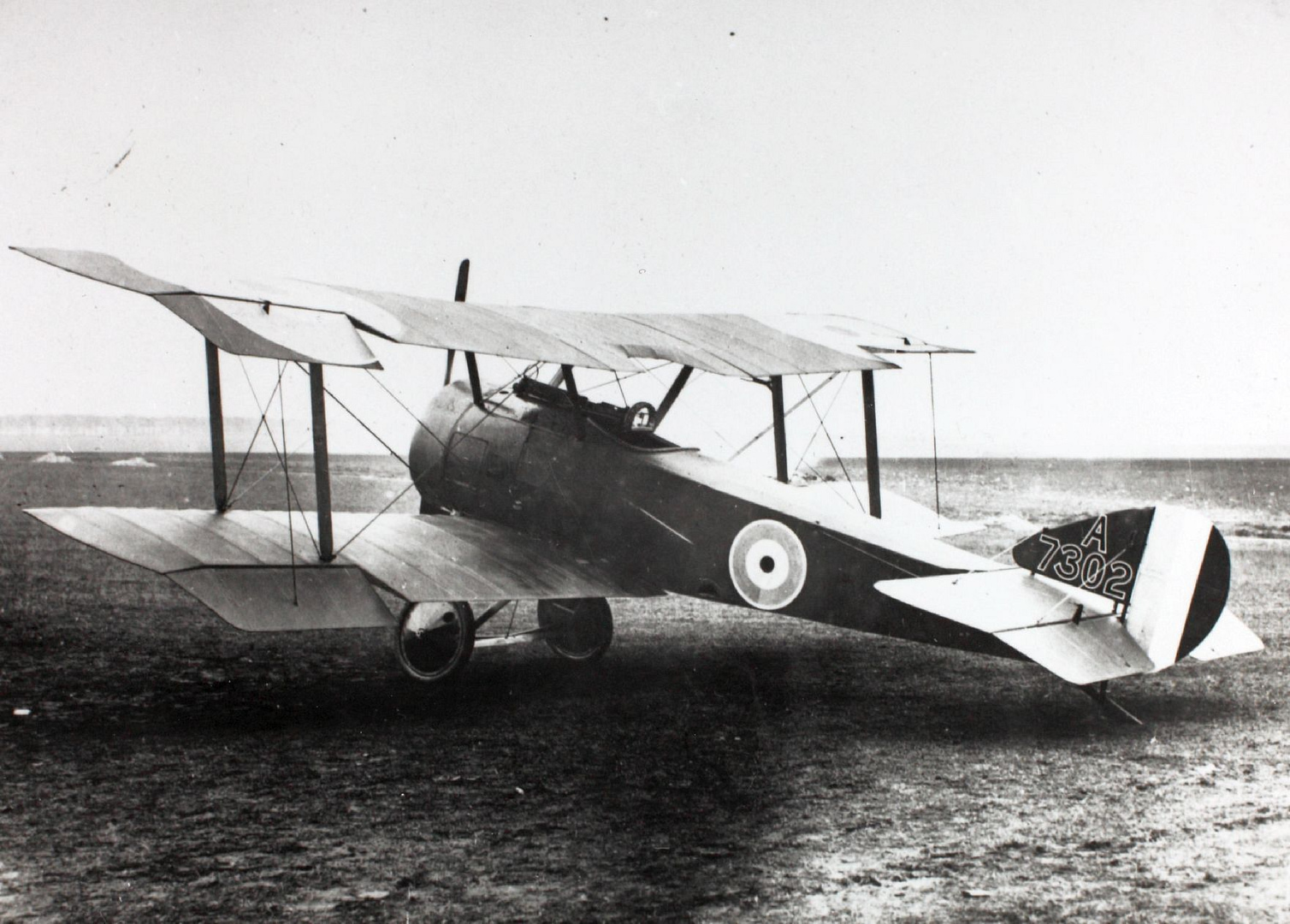
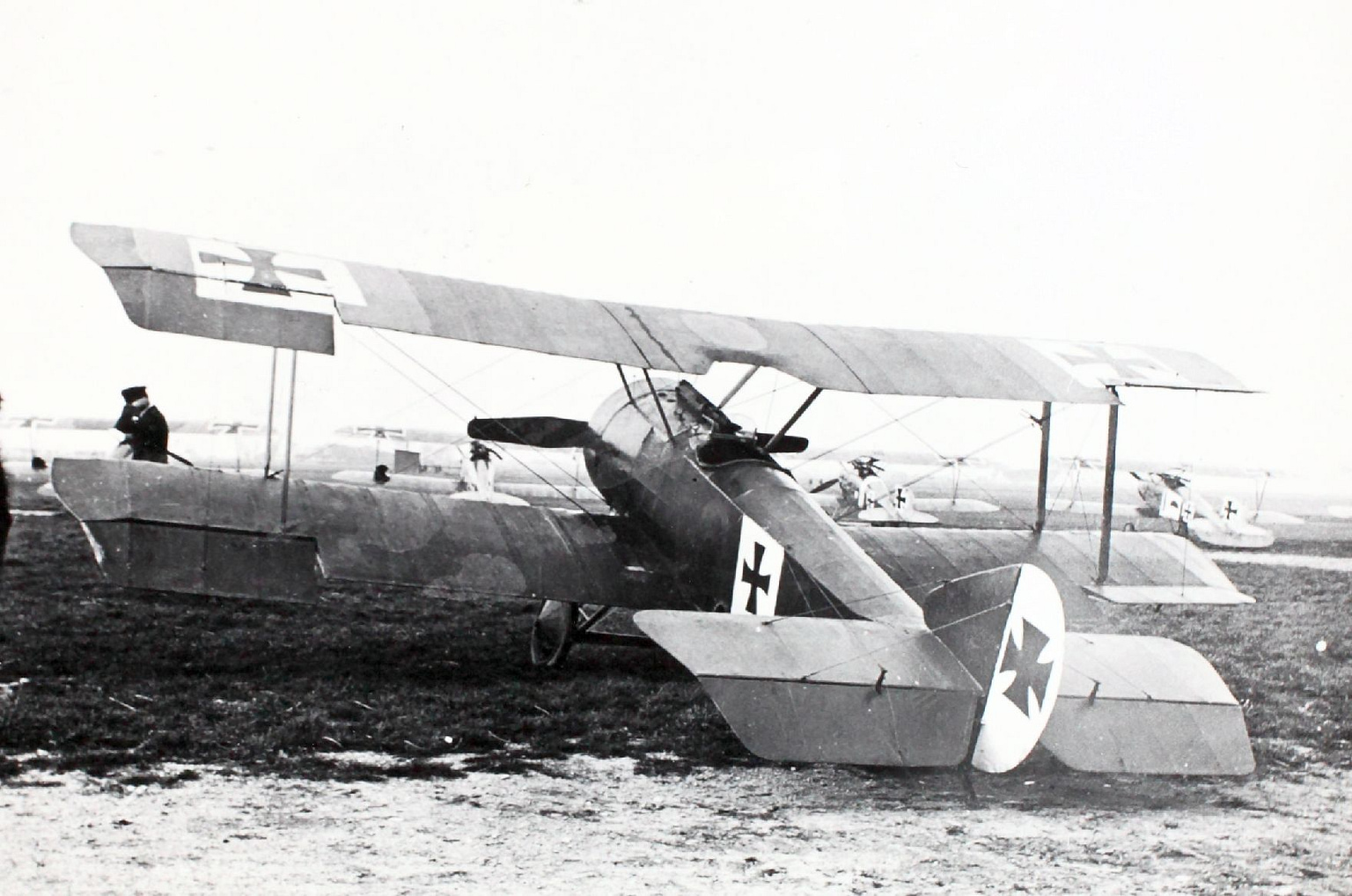
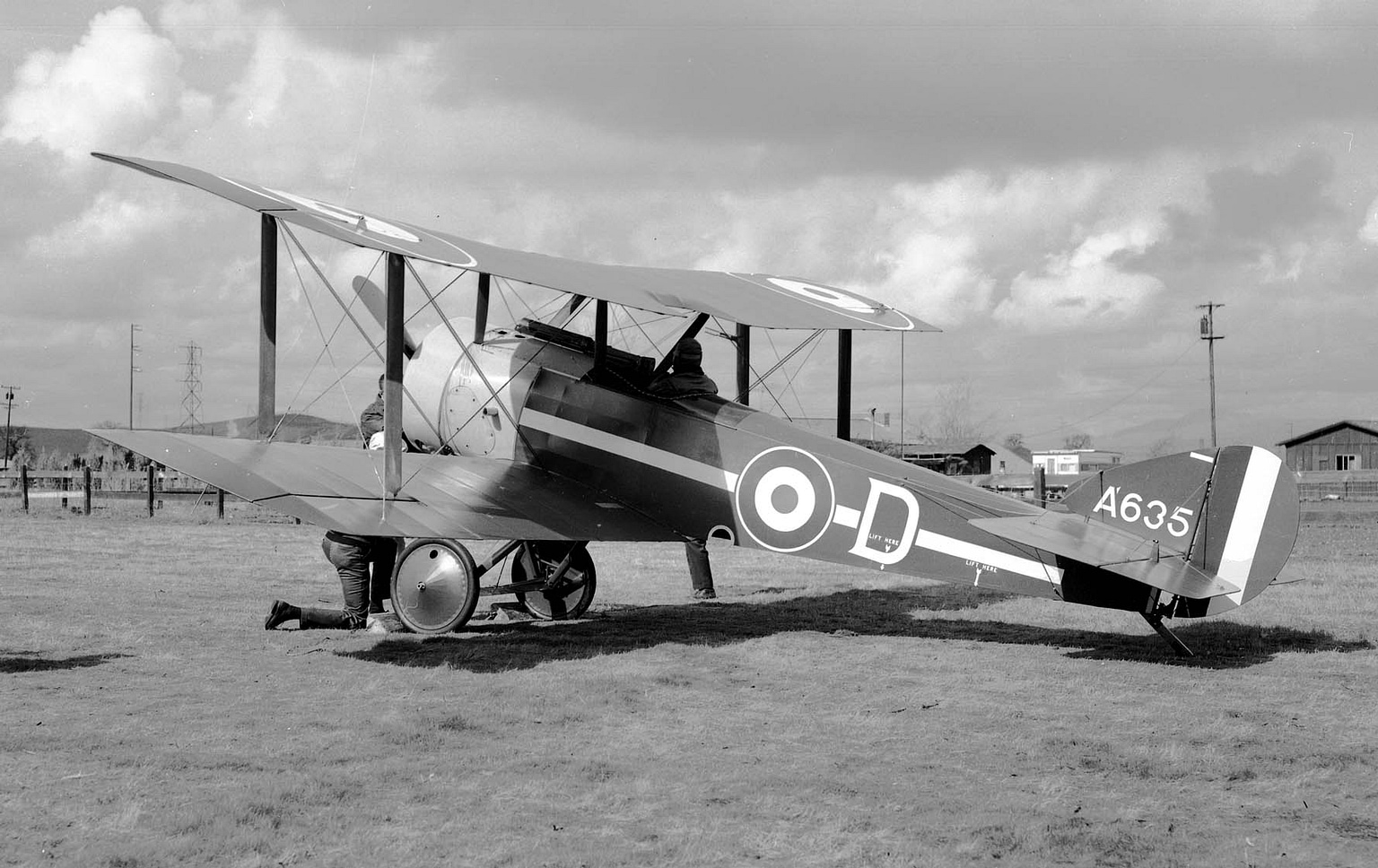
The Sopwith Pup in the air: a preserved scout flying today
There is no better way to understand why pilots loved the Pup than to watch one fly. This film follows the Shuttleworth Collection’s Sopwith Pup — a century-old design still displaying with the light, graceful poise that made its reputation.
Video: “Sopwith Pup — The Shuttleworth Collection” by the High Flight channel on YouTube.
Where the Sopwith Pup flew: origin, fronts, naval pioneering and survivors
A British aircraft through and through, the Pup’s world map is small but historic: designed and built in England, fought over the Western Front and defended British skies, pioneered flying from ships, and today survives in a handful of countries as museum pieces and airworthy replicas. Toggle the categories to explore.
The Sopwith Pup by the numbers: service, scores and standing
The Pup’s “record” is best understood as a story of quality and timing rather than raw statistics: a genuinely superior fighter in late 1916, outclassed within a year by more powerful German machines, and immortalised less by its kill tally than by its handling and its pioneering role at sea.
Sopwith Pup: frequently asked questions
Can I fly in a Sopwith Pup?
Not as a passenger, and not with MiGFlug — the Sopwith Pup is a single-seat fighter with no room for a second person, and MiGFlug does not offer flights in one. Genuine original-era Pups live in museums, while a small number of airworthy examples and faithful replicas fly at airshows such as the Shuttleworth Collection in England, where you can watch one display. If what you want is the real feeling of flying a historic military aircraft yourself, you can do that today: MiGFlug arranges flights in genuine warbirds and jet fighters around the world. See migflug.com/flights-prices for what is currently available.
Why was it called the Pup if that wasn’t its real name?
Its official name was the Sopwith Scout. Crews nicknamed it the “Pup” because it looked like a smaller offspring of the earlier two-seat Sopwith 1½ Strutter. The nickname was unofficial — reportedly even disliked by the authorities — but it stuck completely and started Sopwith’s tradition of animal names.
Was the Sopwith Pup a good fighter?
Yes and no, and the honest answer is “for a while.” In late 1916 and early 1917 it was one of the best fighters over the Western Front, thanks to its superb manoeuvrability, good ceiling and beautiful handling. But it was always underpowered and lightly armed, and by mid-1917 newer German fighters like the Albatros D.III and D.V outclassed it in speed and firepower, so it was moved to Home Defence and training duties.
What happened with the Pup and HMS Furious?
On 2 August 1917, Squadron Commander Edwin Harris Dunning landed a Pup on the moving deck of the carrier HMS Furious — the first time an aircraft had ever been landed on a ship under way. Tragically, on 7 August he was killed attempting to repeat the feat when his engine choked and the aircraft went over the side. His pioneering work, and his death, directly shaped the development of the modern aircraft carrier.
How many Sopwith Pups were built?
Commonly cited as around 1,770 aircraft, built by Sopwith, the Standard Motor Company, Whitehead Aircraft and William Beardmore. The exact totals vary between sources, so the figure is best treated as approximate.
What engine and armament did it have?
Most Pups used an 80 hp Le Rhône rotary engine, though Clerget and Gnome rotaries were fitted to some batches and Home Defence machines used a 100 hp Gnome Monosoupape. Armament was a single synchronised .303 in Vickers machine gun firing through the propeller; a few aircraft experimented with an over-wing Lewis gun or Le Prieur anti-balloon rockets.
Are there any original Sopwith Pups left?
Yes, a small number. The Royal Air Force Museum holds a restored Pup (N5182, rebuilt with a majority of original or period components), the Fleet Air Arm Museum preserves one in naval markings, and the Shuttleworth Collection flies an airworthy example — itself an original-era airframe (a civil Sopwith Dove rebuilt to Pup configuration). Alongside these, several accurate airworthy replicas fly. Complete, untouched originals are extremely rare.
How fast was the Sopwith Pup?
Around 111 mph (about 180 km/h) at sea level for the standard 80 hp version — modest even in 1916. Speed was never the Pup’s strength; its advantages were climb, ceiling and agility. Exact figures vary with engine and source.
Who designed and built the Sopwith Pup?
It was designed by Herbert Smith, chief draughtsman of the Sopwith Aviation Company at Kingston upon Thames, and first flew in early 1916. Production was shared between Sopwith and three sub-contractors — the Standard Motor Company, Whitehead Aircraft and William Beardmore — who between them built the great majority of the roughly 1,770 aircraft.
What was the Sopwith Pup made of?
Like most aircraft of its day, the Pup was a wire-braced wooden structure — spruce and ash — covered in doped fabric, with a fabric-covered plywood forward fuselage around the rotary engine. This light, simple construction is exactly what gave it such a low weight and such gentle handling, but it also makes surviving original airframes fragile and precious.
Where can I see a Sopwith Pup today?
In the United Kingdom, the Royal Air Force Museum and the Fleet Air Arm Museum both display preserved Pups, and the Shuttleworth Collection in Bedfordshire flies an airworthy example at its air displays. Reproductions can be seen at museums abroad, including The Museum of Flight in Seattle, and airworthy replicas — such as those built by The Vintage Aviator in New Zealand — appear at airshows. Always check a museum’s website before travelling, as aircraft move and airworthy examples only fly in suitable conditions.
Fly a real fighter yourself
The Sopwith Pup belongs to the museums now. But the thrill it gave its pilots — a real military aircraft answering your hands — is something you can still have. MiGFlug arranges flights in genuine jet fighters and warbirds, from the L-39 jet to the mighty MiG-29 at the edge of space.
Explore more First World War fighters
Sopwith Pup: sources & further reading
- Royal Air Force MuseumCollection record and history for Sopwith Pup N5182 (G-APUP), including its restoration and service with the RNAS.
- Fleet Air Arm Museum (Royal Navy)Preserved Sopwith Pup and the RNAS story of early shipborne and carrier aviation.
- The Shuttleworth CollectionTechnical data and history of its airworthy Sopwith Pup (G-EBKY), including the Dove-to-Pup rebuild.
- Imperial War MuseumsPhotographs of the Pup in service and of Dunning’s landing on HMS Furious, 2 August 1917.
- The Vintage Aviator LtdDetailed development and service history of the Sopwith Pup, and construction of airworthy reproductions.
- The Museum of Flight, SeattleSopwith Pup reproduction and interpretive history of the type.
- San Diego Air & Space Museum archivePeriod photographs of Sopwith Pups in wartime service.
- J. M. Bruce, British Aeroplanes 1914–1918 and Sopwith monographsStandard scholarly reference for Sopwith Pup design, variants and production figures.