
Combat record
N1K Shiden-Kai — Combat Record
WWII · Japan · First flight 1942 · Retired · Combat-proven: air-to-air
The story behind the numbers
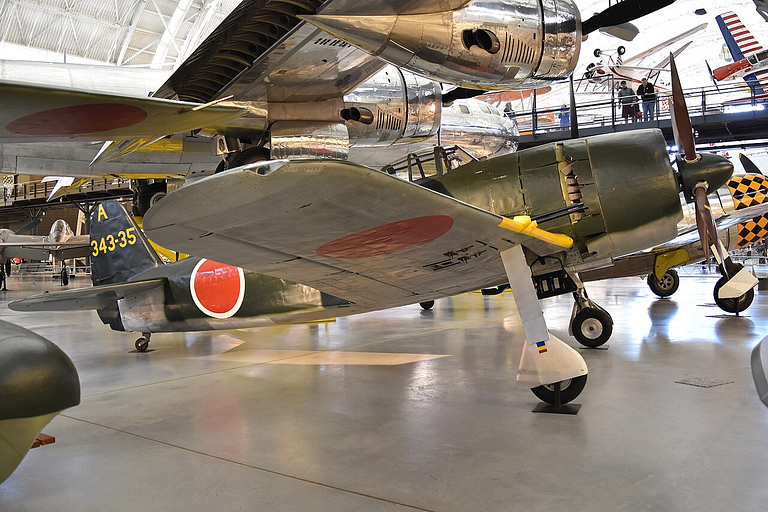
The George was the fighter American naval aviators respected most in the war’s last year: a land-based Navy interceptor with four 20 mm cannon, automatic combat flaps that tightened its turn mid-fight, and performance close to a Hellcat’s with agility beyond it. The elite 343rd Kokutai, assembled by Minoru Genda from surviving veterans, flew it in Japan’s last organised air battles.
On 19 March 1945 over Kure, 343rd Shiden-Kais met US Navy sweeps in the largest dogfight of the home-islands campaign and gave as good as they got — a shock after a year of one-sided slaughter. Too few, too late, and plagued by its mid-war engine, the type’s hundred-odd victories are a footnote with an outsized reputation.
Campaign by campaign
| Years | Campaign | Operator | Victories | A2A losses | What happened |
|---|---|---|---|---|---|
| 1944–45 | Philippines / Japan | Japan (IJN) | ~40 | ~50 | The Shiden’s automatic combat flaps impressed everyone who met them. |
| 1945 | Home Islands | Japan (343rd Kokutai) | ~60 (170 claimed) | ~74 | Genda’s Blade — the last unit that could bloody a Hellcat sweep. |
Go deeper