
| Quick Facts | |
|---|---|
| Leading Killer | VFR flight into IMC (instrument meteorological conditions) |
| Fatality Rate | ~72% of VFR-into-IMC accidents are fatal |
| Average Survival Time | 178 seconds — under 3 minutes from cloud entry to loss of control |
| Root Cause | Spatial disorientation after losing the visual horizon |
| Most Vulnerable | Low-hour private pilots without instrument rating |

One hundred and seventy-eight seconds. That’s the average time a non-instrument-rated pilot survives after flying into clouds. Less than three minutes from the moment the horizon vanishes to the moment the aircraft hits the ground. It is the most predictable, most preventable, and most lethal scenario in general aviation — and it keeps happening.
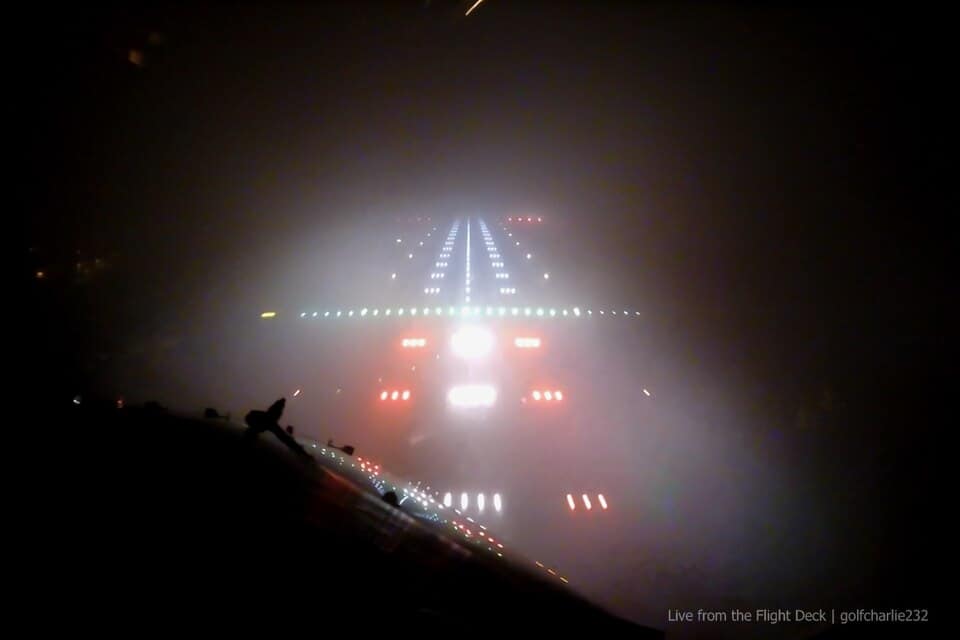
The sequence is almost always the same. A private pilot takes off in marginal weather, or encounters deteriorating conditions en route. The ceiling drops. The visibility shrinks. The pilot presses on, convinced the weather will improve or that the destination is just a few miles ahead. Then the clouds swallow the aircraft, the horizon disappears, and the pilot’s inner ear begins lying to the brain.
What happens next is spatial disorientation — and it kills with brutal efficiency.
Your Body Will Betray You
Human beings were not designed to fly. Our balance system — the vestibular apparatus in the inner ear — evolved for walking on flat ground at low speed. It works brilliantly for that purpose. It fails catastrophically in three-dimensional flight without visual reference.
When a pilot can see the horizon, the eyes override the inner ear. The eyes tell the truth. But in a cloud, there is no horizon. The inner ear takes over — and it lies. A gentle, sustained turn feels like straight-and-level flight. A gradual descent feels like climbing. The brain constructs a model of the aircraft’s attitude that has nothing to do with reality, and the pilot’s control inputs reflect that false model.
The classic scenario: the pilot enters a cloud in level flight. Without noticing, the aircraft begins a gentle bank. The turn tightens. The nose drops to maintain the sensation of level flight. The airspeed increases. Within seconds, the aircraft is in a spiral dive — descending at thousands of feet per minute, accelerating past redline, with the pilot pulling back on the controls because the inner ear says the aircraft is climbing. The wings fail, or the aircraft hits terrain. It happens in under three minutes.
The Decision Chain
No pilot wakes up and decides to fly into a cloud. The accident is the product of a chain of decisions, each individually reasonable, that collectively lead to disaster. The chain typically starts hours before takeoff.
The weather briefing shows marginal VFR — ceilings at 2,000 feet, visibility 5 miles, with a chance of deterioration. The pilot decides to go. After all, it’s legal. The first link in the chain is forged. En route, the ceiling drops to 1,500 feet. The pilot descends to stay below the clouds. Second link. A ridge ahead forces a choice: climb into the clouds or divert. The destination is 20 miles away. The pilot descends further, skimming below a lowering ceiling at 800 feet. Third link.

Then a valley fills with fog. The clouds reach the ground. There is nowhere to go but into them. The fourth link is the last one. The pilot is inside a cloud, at low altitude, with no instrument training, no instrument approach available, and 178 seconds to live.
Why Training Isn’t Enough
Every private pilot receives some instrument training during initial certification — the ability to fly basic manoeuvres on instruments under a hood in the training aircraft. It’s designed to give the pilot enough skill to make a 180-degree turn and escape if they inadvertently enter IMC. In theory, it works.
In practice, the skill is perishable. A pilot who practised hood work six months ago during training may not be able to execute a clean 180-degree turn under the stress, surprise and sensory confusion of actual IMC entry. The vestibular illusions are more powerful than the training anticipated. The scan breaks down. The pilot fixates on one instrument and ignores the others. The aircraft departs controlled flight before the recovery is complete.
Instrument-rated pilots train specifically to fly in clouds — they practise the scan, the procedures, and the mental discipline required to trust instruments over sensations. They do it regularly. That’s the difference. Not talent. Not courage. Currency.
Breaking the Chain
The fix is brutally simple and brutally hard. It’s a single word: no. No to the marginal weather. No to pressing on when the ceiling drops. No to the voice in your head that says the destination is close enough to make it. The chain only kills if every link holds. Break one, and the accident doesn’t happen.
Set personal minimums that are higher than legal minimums. VFR legal is 1,000 feet and 3 miles in controlled airspace — but legal and safe are not the same thing. A new private pilot has no business flying in 1,000-foot ceilings. Set 3,000 feet and 5 miles as a starting point and tighten from there only with experience and recurrent training.
Get an instrument rating. It’s not just for people who want to fly in clouds — it’s for people who want to survive if they accidentally end up in one. The training rewires how you process spatial information in the cockpit. It’s the single most valuable upgrade a private pilot can make to their survival odds.
And if the weather is bad, stay on the ground. The sky will be there tomorrow. The 178-second clock doesn’t care how important your destination is.
Sources: AOPA Air Safety Institute, FAA, BoldMethod, Aviation Safety Magazine



 English
0 Comments