
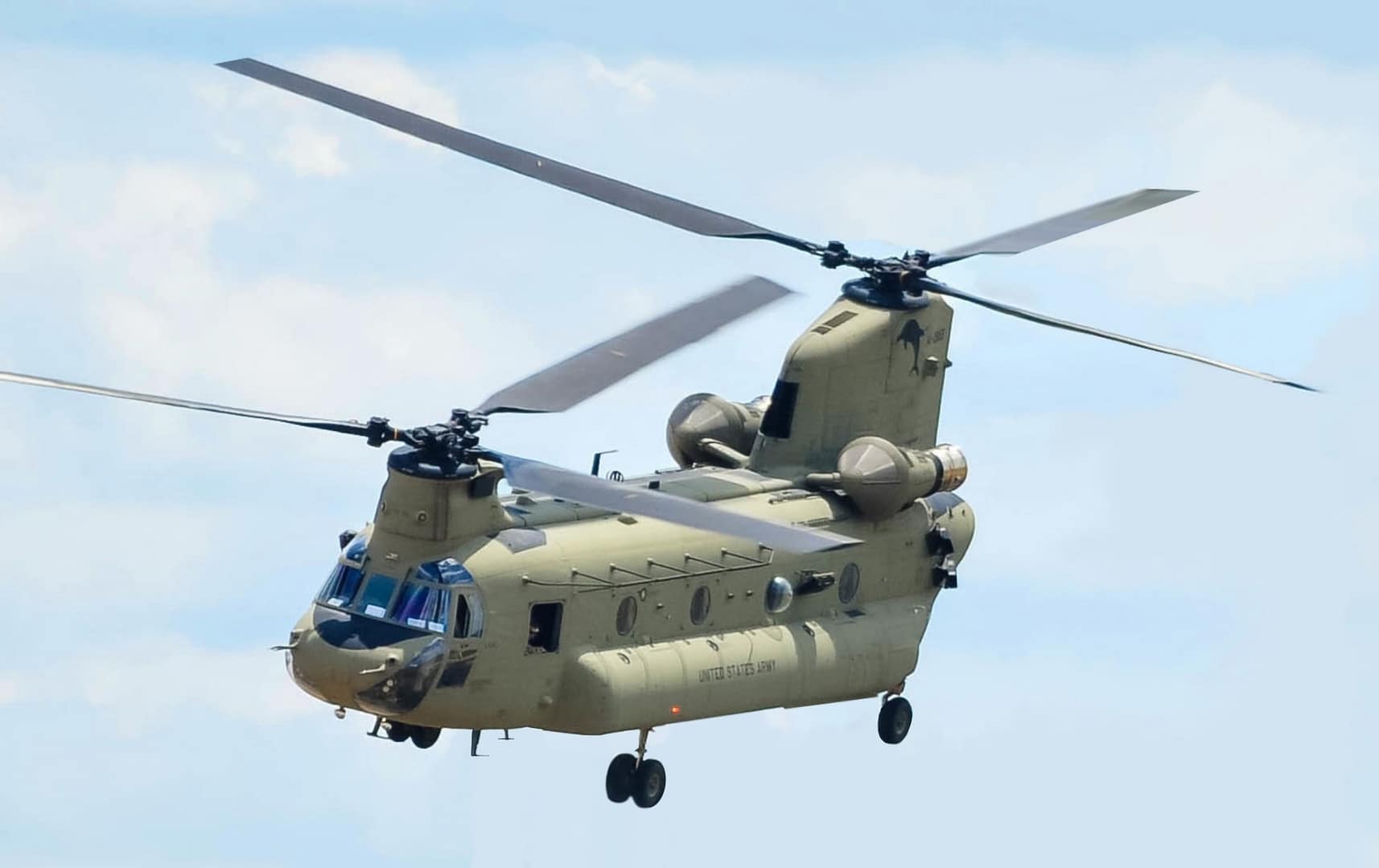
The 160th Special Operations Aviation Regiment — the famous Night Stalkers — wants to give its MH-47G Chinooks a job they have never had before: aerial refuelling tanker. Documents disclosed this month confirm the regiment is studying the modifications that would let a Chinook refuel other rotary-wing aircraft in flight, giving Special Operations Command an organic helicopter tanker capability the US has not maintained since the Vietnam-era HH-3 Jolly Greens.
The implications are significant. Right now, every long-range Special Ops rotary-wing mission depends on tankers borrowed from Air Force Special Operations Command — primarily MC-130J Commando IIs. The MC-130 fleet is small, ageing, and overcommitted. An MH-47 that can refuel its own flight is a force-protection multiplier for every classified mission package this side of the Pacific.
Quick Facts
Operator: 160th Special Operations Aviation Regiment (Night Stalkers)
Platform: Boeing MH-47G Block II Chinook
Concept: Helicopter-to-helicopter aerial refuelling pods
Current arrangement: Reliance on USAF MC-130J fixed-wing tankers
Comparable past system: Vietnam-era HH-3 “Jolly Green” tankers
Why an Organic Tanker Capability Matters
Long-range Special Ops helicopter missions are an exercise in fuel accounting. Modern Black Hawks and Chinooks burn through their internal tanks in under three hours. Combat radius without external assistance is short. Every metre of range beyond the immediate forward operating base requires a tanker, and the tanker has to be there at the right time, at the right altitude, in airspace cleared by the right authority.
When that tanker is a USAF fixed-wing asset, every mission requires inter-service coordination. When that tanker is a sister MH-47, the planning footprint collapses dramatically. The 160th could plan, brief and execute long-range missions with only the people, aircraft and fuel it brings to the fight.
The Technical Picture
The proposed approach involves installing reinforced internal fuel cells in the cargo bay and adding a hose-and-drogue refuelling pod that could be deployed through the ramp or aft sponsons. The receiver side is already in place: every MH-47G is equipped with a retractable refuelling probe on the right side of the cockpit. Pilots in the regiment are already qualified on aerial refuelling.
The MH-47 is well-suited to the role. The Chinook’s twin-engine layout has surplus power, and the cabin is large enough to accommodate substantial extra fuel without compromising the troop or cargo lift mission. The aircraft can hold 4,000-5,000 additional pounds of fuel.
A Vietnam-Era Echo
The US has done helicopter-to-helicopter refuelling before. In the Vietnam War, HH-3 Jolly Greens were modified with drogue pods to refuel other Jolly Greens during long-range rescue missions over North Vietnam. The capability lapsed in the 1970s as fixed-wing tanker capacity grew, but the operational concept is well understood.
If the 160th’s study leads to a programme of record, Night Stalkers crews could be refuelling each other within 24 months. For a regiment whose entire reason for existing is going farther and staying longer than anyone else, that capability is the missing piece.
Sources: The War Zone, US Army Special Operations Command briefing materials.


 English
0 Comments