
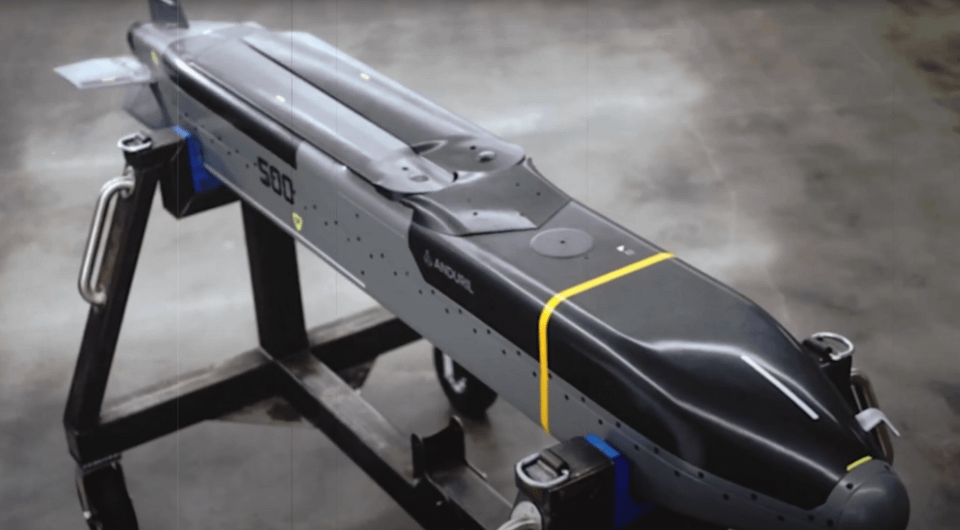
The Pentagon is done talking about the missile gap — it is buying its way out. In a move that would have been unthinkable five years ago, the Department of Defense has signed framework agreements with four contractors to procure more than 10,000 low-cost cruise missiles over three years, launching the Low-Cost Containerized Missiles (LCCM) program. The scale is staggering: Anduril alone will deliver at least 3,000 Barracuda-500M rounds to the U.S. Army, while Leidos will supply another 3,000 based on its AGM-190A Small Cruise Missile architecture. CoAspire and Zone 5 round out the vendor pool.
The program is a direct response to the stockpile crisis exposed by Operation Midnight Hammer, the June 2025 strikes on Iran’s nuclear facilities. That campaign burned through precision munitions at a rate that alarmed Pentagon planners — and Iran was not even a peer adversary. A Pacific conflict against China would consume missiles at multiples of that rate, from a stockpile that is already inadequate.
Quick Facts
- Four contractors selected: Anduril, CoAspire, Leidos, and Zone 5
- Anduril to deliver 3,000+ Barracuda-500M cruise missiles to the U.S. Army (1,000/year minimum)
- Leidos to deliver 3,000 missiles based on the AGM-190A Small Cruise Missile design
- Barracuda-500M range: 500+ nautical miles (926 km), speed up to 500 knots, unit cost ~$200,000-$216,000
- Each containerized launcher (standard 20-foot ISO container) holds up to 16 rounds
- Test missile procurement begins June 2026; production deliveries start 2027; full-rate by 2030
The Barracuda: A Cruise Missile for the Container Age
Anduril’s Barracuda-500M is the centerpiece of the LCCM program, and its design philosophy represents a clean break from Cold War-era missile economics. At roughly $200,000 to $216,000 per round, it costs a fraction of a Tomahawk. It fires from a standard 20-foot ISO shipping container — the same kind that crosses oceans on cargo ships every day — requiring no dedicated launch infrastructure. Each container holds up to 16 missiles, and the entire system can be deployed on a flatbed truck, a cargo vessel, or hidden in a warehouse.
The missile itself is a turbojet-powered, autonomous weapon with a range exceeding 500 nautical miles and a top speed of roughly 500 knots. It carries a 100-pound warhead. A solid rocket motor boosts it out of the container before the jet engine takes over, wings deploy, and the weapon navigates autonomously to its target. The Barracuda-500M can withstand up to 5 g-forces, giving it meaningful terminal maneuverability against defended targets.
Leidos and the AGM-190A Connection
Leidos’s contribution runs through a different lineage. The company’s LCCM offering descends from the AGM-190A Small Cruise Missile, but the containerized variant is approximately twice the size of its air-launched ancestor. Leidos has committed to an initial 3,000 rounds, with full system design, development, and testing leading to production beginning in 2027.
The remaining two vendors — CoAspire and Zone 5 — are newer entrants whose specific missile designs have received less public attention, but their inclusion signals the Pentagon’s deliberate strategy to build industrial redundancy. If one vendor’s production line stumbles, three others can pick up the slack. It is a lesson learned from the defense-industrial bottlenecks that plagued ammunition supply to Ukraine.
Why 10,000 Missiles — and Why Now
The arithmetic is brutal. War-game after war-game has shown that a conflict in the Western Pacific would exhaust U.S. long-range missile stocks within the first two weeks. Precision-guided munitions that took months to build would be consumed in days. The Iran strikes made the theoretical terrifyingly real: the Air Force has already contracted Boeing to replenish the GBU-57 MOPs used against Fordow, and cruise missile inventories took a similar hit.
The LCCM program addresses this through sheer volume and unit economics. At $200,000 per round, a Barracuda-500M costs roughly one-eighth of a Tomahawk and can be manufactured at rates that legacy missile programs cannot approach. Anduril is ramping to “single-digit thousands” of Barracuda-500s per year by late 2026 from its new 5-million-square-foot facility in Columbus, Ohio. That is not a missile factory — it is a missile foundry.
Containers as Strategy
The containerized launch concept is as revolutionary as the missile itself. A 20-foot ISO container is invisible in a world that moves 800 million of them annually. Park it on a Pacific atoll, stack it on a cargo ship, or tuck it behind a treeline in the Philippines — the enemy has to find and destroy a box indistinguishable from every other box on Earth. Distributed, concealed, and expendable, containerized launchers transform the targeting problem for any adversary.
The assessment phase, which includes the purchase of test missiles from all four contractors, is set to begin this month. Production deliveries will start in the first half of 2027, with full operational capability expected by 2030. In the meantime, every container that rolls off an assembly line brings the Pentagon one step closer to a stockpile that can absorb the first shock of a major conflict — and keep firing.
Sources: Breaking Defense, The War Zone, Military Times, DefenseScoop

 English
0 Comments