

Quick Facts
Programme: Autonomous Collaborative Platform (ACP) / CCA propulsion
Medium-thrust contracts: GE Aerospace (GE426) and Rolls-Royce
GE426 thrust: 4,000–6,000 lbs (scalable to 8,000–9,000 lbs)
Increment 2 contracts: Beehive Industries, Honeywell, Pratt & Whitney, GE + Kratos (GEK1500)
GEK1500 contract value: $12.4M
Authority: Other Transaction Authority via Propulsion Consortium Initiative 2.0
Two Tiers, Six Competitors
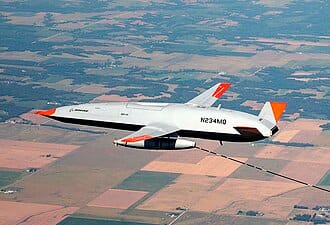
The Air Force is pursuing CCA propulsion on two parallel tracks. The medium-thrust class — designed for the larger, more capable drones like the Anduril Fury and General Atomics YFQ-42 Dark Merlin — requires engines in the 4,000 to 9,000-pound thrust range. GE Aerospace won a contract on 19 May to advance its GE426 turbofan through preliminary design review. Rolls-Royce received a parallel award under the same solicitation. Both contracts were issued as firm-fixed-price awards through Other Transaction Authority. The smaller Increment 2 class — intended for cheaper, more expendable drones — has four competitors. In February 2026, the Air Force awarded engine development contracts to Beehive Industries, Honeywell, Pratt & Whitney, and a joint team of GE Aerospace and Kratos. The GE-Kratos team is developing the GEK1500, a 1,500-pound-thrust engine, under a $12.4 million contract.Why It Matters
The CCA programme is the largest autonomous aircraft procurement in history. The Air Force plans to buy over 1,000 collaborative combat aircraft across multiple increments. Every single one needs an engine. The multi-vendor strategy ensures that no single engine failure or production bottleneck can ground the entire fleet — a lesson learned from the F-35’s long dependency on a single Pratt & Whitney F135 powerplant. The medium-thrust engines are particularly important. They determine how far CCAs can fly, how fast they can manoeuvre, and how much payload they can carry. A drone that can generate 9,000 pounds of thrust is a fundamentally different weapon than one limited to 4,000. GE’s decision to design the GE426 as scalable across that range suggests the Air Force has not yet decided exactly what it wants its CCAs to do — and wants options.“The GE426 is designed to generate between 4,000 and 9,000 pounds of thrust for the medium-thrust class of CCA and Autonomous Collaborative Platforms.”
GE Aerospace — Contract announcement, May 2026

 English
0 Comments