
✈ Quick Facts
- Mission: Operation Grand Slam — overflight of Soviet Union from Pakistan to Norway
- Date: May 1, 1960
- Aircraft: Lockheed U-2C, Article 360
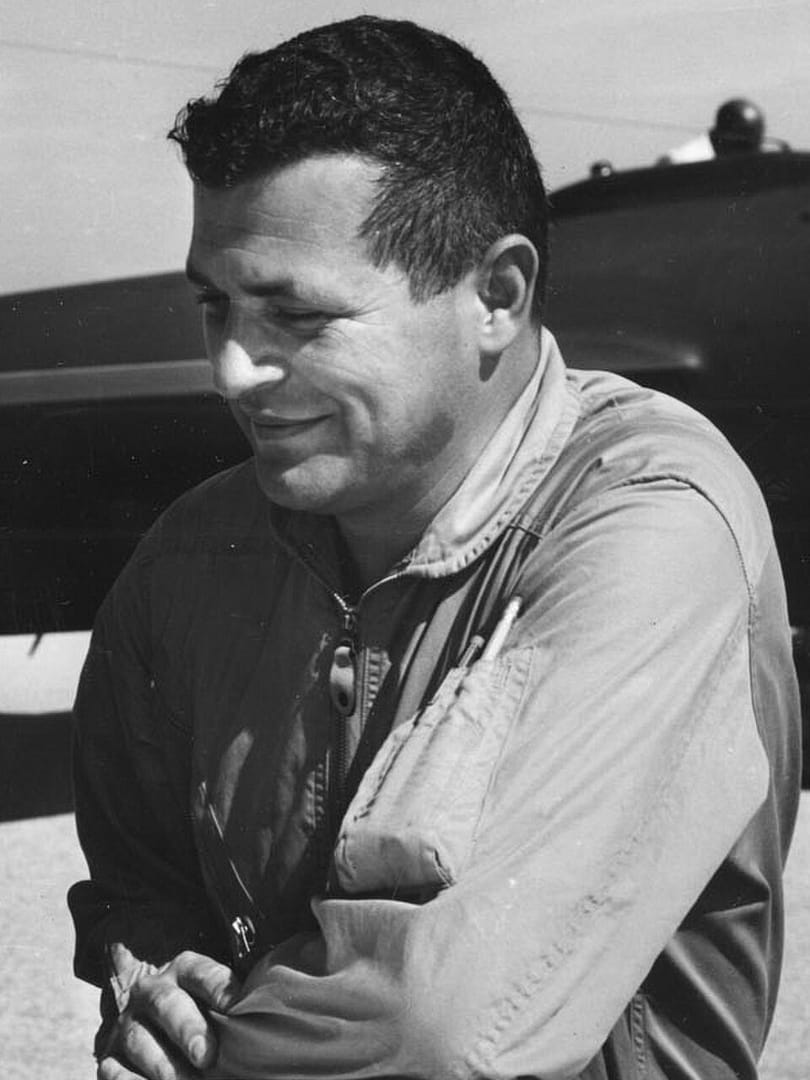
- Pilot: Francis Gary Powers (CIA contract pilot)
- Shootdown location: Near Sverdlovsk (Yekaterinburg), USSR
- Altitude at shootdown: ~70,500 feet (21,500 m)
- Missile: S-75 Dvina (SA-2 Guideline) — salvo of 14 missiles fired
- Captured: Powers ejected and was captured alive
- Trial: Convicted of espionage, sentenced to 10 years
- Released: February 10, 1962 — exchanged for Soviet spy Rudolf Abel on Glienicke Bridge, Berlin
The Untouchable Airplane
The Lockheed U-2 was designed by Kelly Johnson’s Skunk Works for a single purpose: fly higher than anything the Soviets could reach. At 70,000 feet — more than 13 miles above the Earth — the U-2 operated above the service ceiling of every Soviet interceptor and, initially, above the reach of Soviet surface-to-air missiles. The aircraft carried a camera system capable of resolving objects as small as 2.5 feet from altitude. President Eisenhower authorized U-2 overflights of the Soviet Union beginning in July 1956. The flights were extraordinarily productive. CIA analysts used U-2 photography to map Soviet airfields, missile sites, submarine bases, and nuclear facilities. The intelligence was invaluable — and it was obtained by routinely violating Soviet sovereignty at a time when such a provocation could have triggered war. The Soviets knew the U-2 was there. Their radar tracked it on every overflight. But their MiG-19 interceptors could not reach 70,000 feet, and their early surface-to-air missiles lacked the altitude capability to engage it. The U-2 flew with impunity — which bred complacency.May Day, 1960
Powers’ mission — Operation Grand Slam — was the deepest and most ambitious U-2 overflight yet planned. The route crossed the Soviet Union from south to north, passing over the Tyuratam missile test center (the Soviet space launch facility, later known as Baikonur), Chelyabinsk, Sverdlovsk, Kirov, and Plesetsk before exiting Soviet airspace over Murmansk. Powers took off from Peshawar at 6:26 a.m. local time. The flight proceeded normally until he was over the Sverdlovsk area. At approximately 70,500 feet, a newly deployed S-75 Dvina battery — the missile system NATO designated SA-2 Guideline — fired a salvo of 14 missiles at the aircraft. At least one missile detonated close enough to damage the U-2. The aircraft became uncontrollable. Powers attempted to activate the self-destruct mechanism but was unable to reach the switches as the aircraft tumbled. He manually released the canopy, separated from the aircraft, and parachuted to the ground. He was captured almost immediately by Soviet citizens. The S-75 salvo was not entirely successful in a tactical sense — one of the missiles also hit a Soviet MiG-19 that had been scrambled to intercept Powers, killing the Soviet pilot, Senior Lieutenant Sergei Safronov. This friendly-fire incident was covered up by the Soviet government for decades.The Lie That Collapsed
When the Soviets announced that they had shot down an American aircraft, the Eisenhower administration activated its cover story: the U-2 was a NASA weather research aircraft that had gone off course from a flight in Turkey. The pilot had reported oxygen difficulties and may have strayed into Soviet airspace accidentally. Khrushchev had set a trap. He initially announced only that a plane had been shot down, without revealing that the pilot had survived or that the wreckage — including the camera, exposed film, and intelligence equipment — had been recovered largely intact. The American cover story was issued. Then Khrushchev revealed everything: the surviving pilot, the spy camera, the photographs of Soviet military installations, and the poison-tipped suicide needle that Powers had been issued but chose not to use. The humiliation was total. Eisenhower was forced to admit that the United States had been conducting systematic aerial espionage over the Soviet Union. The Paris Summit — scheduled for May 16, where Eisenhower and Khrushchev were to discuss arms control and Berlin — collapsed before it began. Khrushchev demanded an apology that Eisenhower refused to give.“The United States has been caught with its hand in the cookie jar.”
— Senator J. William Fulbright, chairman of the Senate Foreign Relations Committee, May 1960
 English
0 Comments