
Date March 27, 1999
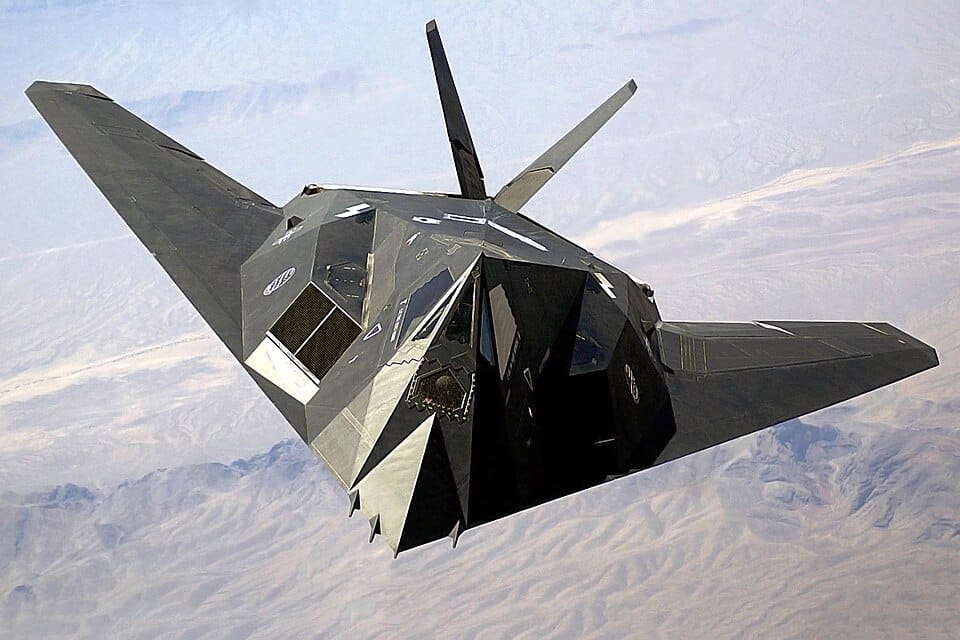
Aircraft Lockheed F-117A Nighthawk (serial 82-0806, callsign “Vega 31”)
Pilot Lt. Col. Dale Zelko, USAF
Weapon Isayev S-125 Neva/Pechora (NATO: SA-3 Goa) surface-to-air missile
Fired By 3rd Battery, 250th Air Defence Missile Brigade, Army of Yugoslavia
Commander Colonel Zoltán Dani
Location Near Budanovci, 32 km west of Belgrade, Serbia
Outcome Pilot ejected safely, rescued by USAF Combat Search and Rescue 8 hours later
Significance Only stealth aircraft ever shot down in combat

The missile that shouldn’t have worked hit the aircraft that couldn’t be seen. On the night of March 27, 1999, a Serbian SA-3 battery commanded by Colonel Zoltán Dani locked onto an F-117A Nighthawk — the most advanced stealth aircraft in the world — and fired two missiles. One found its target. The “invisible” jet broke apart over the Serbian countryside, and the myth of absolute stealth died in a fireball 32 kilometres west of Belgrade.
The SA-3 Goa was designed in the late 1950s. The F-117 was designed to defeat systems a generation more advanced. What happened over Serbia that night wasn’t a failure of technology. It was a triumph of tactics, patience, and a Serbian officer who studied his enemy’s weaknesses more carefully than anyone thought possible.
It remains the only time a stealth aircraft has been shot down in combat. The story of how it happened reveals as much about the limits of technology as it does about the ingenuity of the people trying to beat it.
The Man Who Saw the Invisible
Colonel Zoltán Dani was not a typical air defence commander. He was an innovator who understood that his ageing SA-3 system couldn’t compete with American technology head-on. So he changed the rules. Dani modified his radar to operate on longer wavelengths and at lower frequencies — outside the optimised stealth range of the F-117’s radar-absorbing coatings. The Nighthawk’s faceted design was engineered to scatter X-band radar energy, the frequency used by most Western air defence systems. Dani’s modifications pushed his detection capability into frequency bands where the F-117’s stealth was less effective.
He also kept his radar switched off. This was the crucial discipline that kept his battery alive. NATO’s Suppression of Enemy Air Defences (SEAD) campaign, led by F-16CJ Wild Weasels firing HARM anti-radiation missiles, was devastatingly effective against any radar that transmitted for more than a few seconds. Dani kept his emitters silent, relying on passive detection, visual spotters, and intelligence from the Yugoslav command network to estimate when and where American aircraft would appear.
When he did switch on his radar, it was for the minimum possible time — seconds, not minutes. He tracked, locked, and fired in a window so brief that the HARM missiles had no time to home in on his position. After firing, he relocated. Within minutes, his battery was gone from the launch site. NATO strike aircraft arriving to hit his position found empty fields.
The Open Bomb Bay Door
The F-117’s stealth depends on keeping its shape “clean” — no external stores, no open panels, no disruptions to the carefully calculated faceted surfaces that redirect radar energy. But the aircraft has to drop bombs, and to do that, it has to open its bomb bay doors. For several seconds during a weapons release, the F-117’s radar cross-section increases dramatically. The open doors, the weapons pylons, and the cavity of the bay itself create radar reflections that the stealth design is supposed to eliminate.
Dani knew this. He knew the F-117s flew predictable routes to their targets — American operational planners, confident in stealth, had not varied the ingress paths as much as they should have. Dani positioned his battery along a known flight corridor and waited for the moment the bomb bay doors opened. His radar operators caught the brief spike in radar return. It was enough. Two SA-3 missiles launched. One struck “Vega 31” on the left wing, shearing it from the aircraft.
Lieutenant Colonel Dale Zelko, the pilot, ejected into the Serbian night. He landed in a ploughed field, activated his survival radio, and spent the next eight hours evading Serbian search parties before a USAF Combat Search and Rescue team extracted him by helicopter. He was the only pilot lost by the F-117 in its entire operational career — and he survived.

The Lessons That Changed Everything
The shootdown of Vega 31 sent shockwaves through Western military planning. Stealth was not a cloak of invisibility. It was a reduction in detectability — a statistical advantage that made you harder to find, not impossible. Against a competent, adaptive adversary willing to innovate with old equipment, stealth alone was not enough.
The Air Force immediately changed its tactics. F-117 missions began using varied ingress routes, electronic warfare escort, and SEAD suppression timed to coincide with weapon release. The complacency that had crept into stealth operations — the belief that radar invisibility meant invulnerability — was shattered overnight.
In a strange postscript, Dale Zelko and Zoltán Dani met years later and became friends. The pilot who was shot down and the commander who shot him down discovered they shared a mutual respect rooted in professional excellence. Dani gave Zelko a piece of the missile that hit his aircraft. Zelko gave Dani a flight helmet. Two warriors on opposite sides of a war, connected by a night when a 1950s missile proved that the most advanced stealth aircraft in the world was not, after all, untouchable.
Sources: USAF Historical Studies Office, “F-117 Stealth Fighter Units of Operation Allied Force” by Warren Thompson, Aviation Museum of Belgrade, BBC interviews with Zelko and Dani
Related Questions
Has a stealth aircraft ever been shot down?
Yes, once. On 27 March 1999, a Lockheed F-117A Nighthawk was shot down over Serbia during NATO's air campaign, the only stealth aircraft ever downed in combat. A Serbian SA-3 missile battery commanded by Colonel Zoltan Dani hit it near Budanovci, west of Belgrade. The pilot, Lt. Col. Dale Zelko, ejected and was rescued hours later.
What shot down the F-117 in 1999?
An Isayev S-125 Neva/Pechora missile, known to NATO as the SA-3 Goa, shot down the F-117 over Serbia in 1999. The system dated from the late 1950s, generations older than the stealth jet it destroyed. Serbian crews modified it to detect the Nighthawk in radar bands where its stealth was less effective.
Who was the pilot of the F-117 shot down over Serbia?
Lt. Col. Dale Zelko of the US Air Force was flying the F-117A, callsign "Vega 31," when it was shot down over Serbia on 27 March 1999. He ejected safely and was rescued by US combat search-and-rescue forces about eight hours later. He later met the Serbian commander who downed him, Zoltan Dani, and the two became friends.
What is the F-117 Nighthawk?
The Lockheed F-117 Nighthawk was the world's first operational stealth aircraft, an angular, faceted attack jet designed to scatter radar energy away from enemy transmitters. Built in secret by Lockheed's Skunk Works, it entered service in the early 1980s. Its faceted shape was optimised to defeat the X-band radar used by most Western and Soviet air-defence systems.
Who was Zoltan Dani?
Colonel Zoltan Dani commanded the Serbian SA-3 missile battery that shot down an F-117 in 1999. An innovator, he modified his ageing radar to detect stealth aircraft and kept his emitters switched off for all but a few seconds at a time to avoid NATO's anti-radiation missiles. He relocated constantly, keeping his unit alive throughout the campaign.
How was a stealth jet detected by an old missile system?
The F-117 was detected through tactics, not superior technology. Colonel Dani's crew tuned their radar to lower frequency bands where the jet's stealth was weaker, kept the radar silent to avoid NATO's anti-radiation missiles, and switched on only briefly to lock and fire. Patience and discipline beat the world's most advanced stealth aircraft, a lesson echoed in modern stealth operations.
0 Comments