
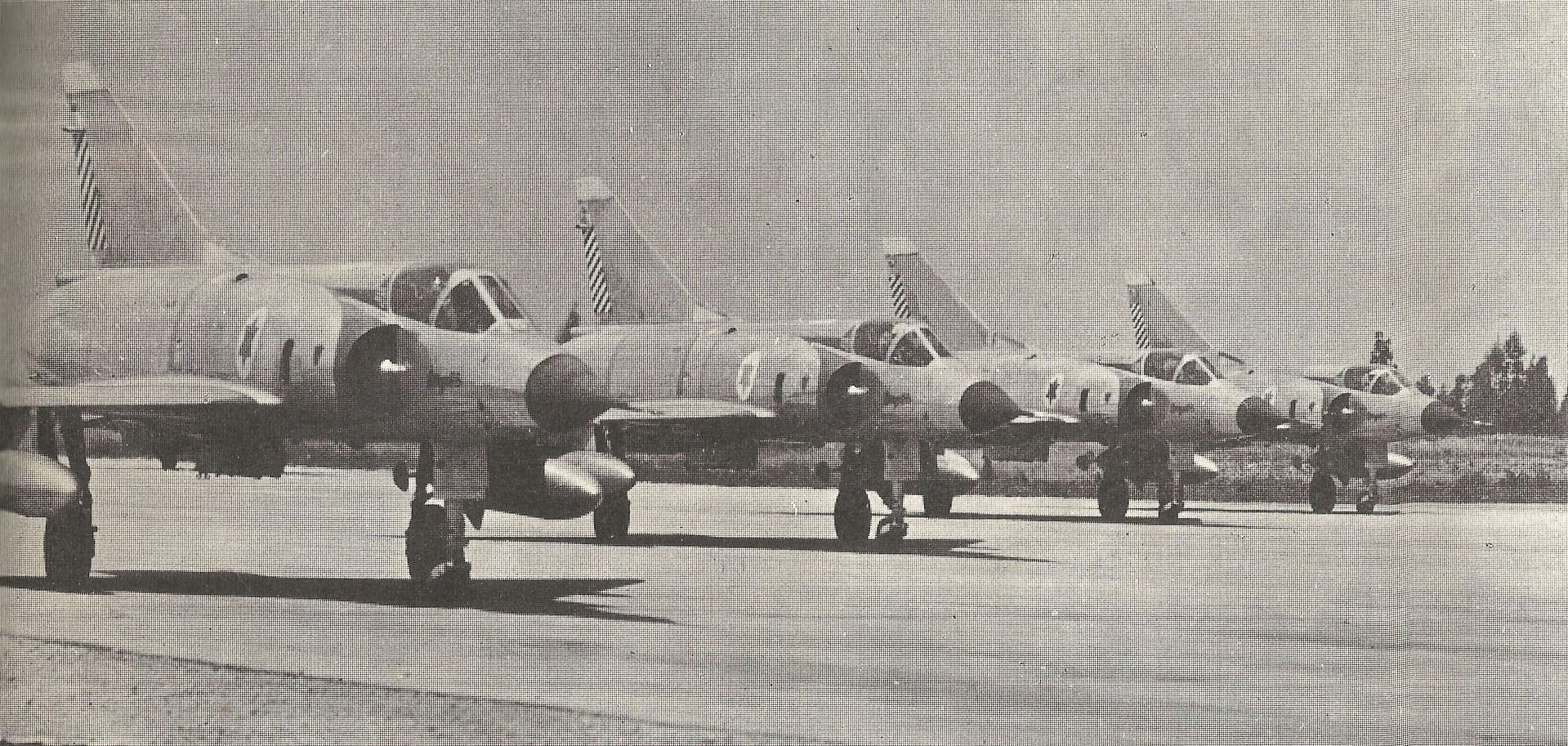
Before the Rafale, before the Mirage 2000, before the Mirage F1 — there was the Mirage III. Dassault’s first supersonic fighter was a revelation when it entered service in 1961: a sleek, tailless delta that could break Mach 2, carry a nuclear bomb, and outfight anything the Soviet Union had in production. It was sold to over 20 countries, used in combat on three continents, and built Dassault’s reputation as one of the world’s great fighter manufacturers.
The Mirage III was France’s answer to a simple question: could a relatively small country, still recovering from the devastation of World War II and the humiliation of colonial wars, build a world-class supersonic fighter? The answer was an emphatic yes — and the proof would be written in the skies over the Sinai, the Falklands, and the Indo-Pakistani border.
✈ Quick Facts
- First flight: November 17, 1956 (Mirage III-001 prototype)
- Entered service: 1961 (Armée de l’Air)
- Final retirement: 2012 (Pakistan — last military operator)
- Engine: SNECMA Atar 09C (later 09K-50)
- Max speed: Mach 2.2 (2,350 km/h)
- Total built: 1,422+ (all variants including Mirage 5 and license-built versions)
- Operators: 20+ countries including France, Israel, Australia, Switzerland, South Africa, Pakistan, Argentina
- Combat history: Six-Day War, Yom Kippur War, Indo-Pakistani War, Falklands War, South African Border War, Cenepa War
- Key innovation: Tailless delta wing — no horizontal stabilizer, simple, rugged, and fast
The Suez Connection
The Mirage III’s origin traces directly to the Suez Crisis of 1956. France’s experience in that conflict — and its reliance on older, subsonic fighters — convinced the French military that it needed a Mach 2 interceptor, and it needed one fast. Marcel Dassault’s company, which had been building the subsonic Mystère and Super Mystère, proposed a tailless delta-wing design that prioritized speed and climb rate above all else.
The delta wing was the key. By eliminating the horizontal tail, Dassault reduced drag and structural weight, allowing the Mirage III to reach Mach 2 with a single engine. The trade-off was poor low-speed handling and high landing speeds — but for an interceptor designed to climb fast and kill bombers, that was an acceptable price.
“The Mirage III was the right jet at the right time. Fast, simple, relatively cheap, and deadly in the right hands. It made Dassault — and it made France a serious player in the fighter export market.”
French aviation historian
Six-Day War: The Legend Is Born
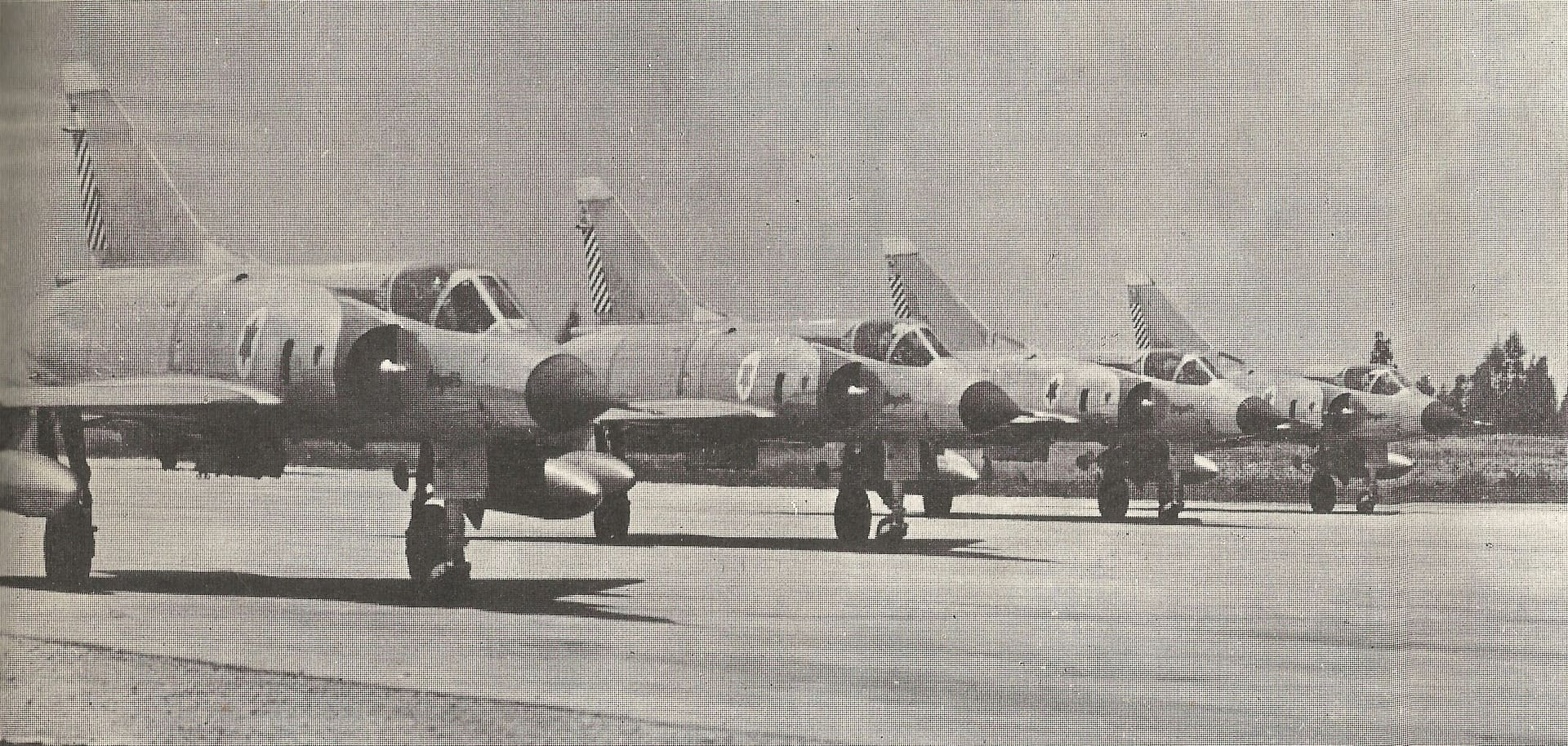
Israel’s devastating preemptive strike on June 5, 1967 put the Mirage III on the world stage. Israeli Mirage IIICJs destroyed the majority of Egypt’s air force on the ground in the opening hours, then turned to air-to-air combat. Over the six days of fighting, Israeli Mirages shot down dozens of Arab aircraft — Egyptian MiG-21s, Syrian MiG-17s and MiG-21s, Jordanian Hawker Hunters — while suffering minimal losses in air combat.
The Mirage’s air-to-air record in Israeli hands was extraordinary. Israeli pilots exploited the delta’s high-speed energy retention, using vertical maneuvers to dominate opponents. The Mirage III became synonymous with Israeli air superiority, and orders flooded into Dassault from countries around the world.
Falklands: Mirage vs. Sea Harrier
In 1982, Argentine Mirage IIIEAs faced British Sea Harriers over the Falkland Islands — one of the most asymmetric air combat matchups of the jet age. The Mirage was faster and had better radar, but the Sea Harrier had the AIM-9L Sidewinder and the ability to use vectored thrust in combat. The Argentine Mirages, operating at extreme range from mainland bases, had minimal time over the combat zone and couldn’t exploit their speed advantage.
Two Mirages were shot down by Sea Harriers; one was lost to friendly fire. The Falklands demonstrated the Mirage III’s core limitation: it was an interceptor being asked to do fighter escort at the edge of its range, against an opponent perfectly suited to the fight.

The Swiss Mirage — and MiGFlug Flights
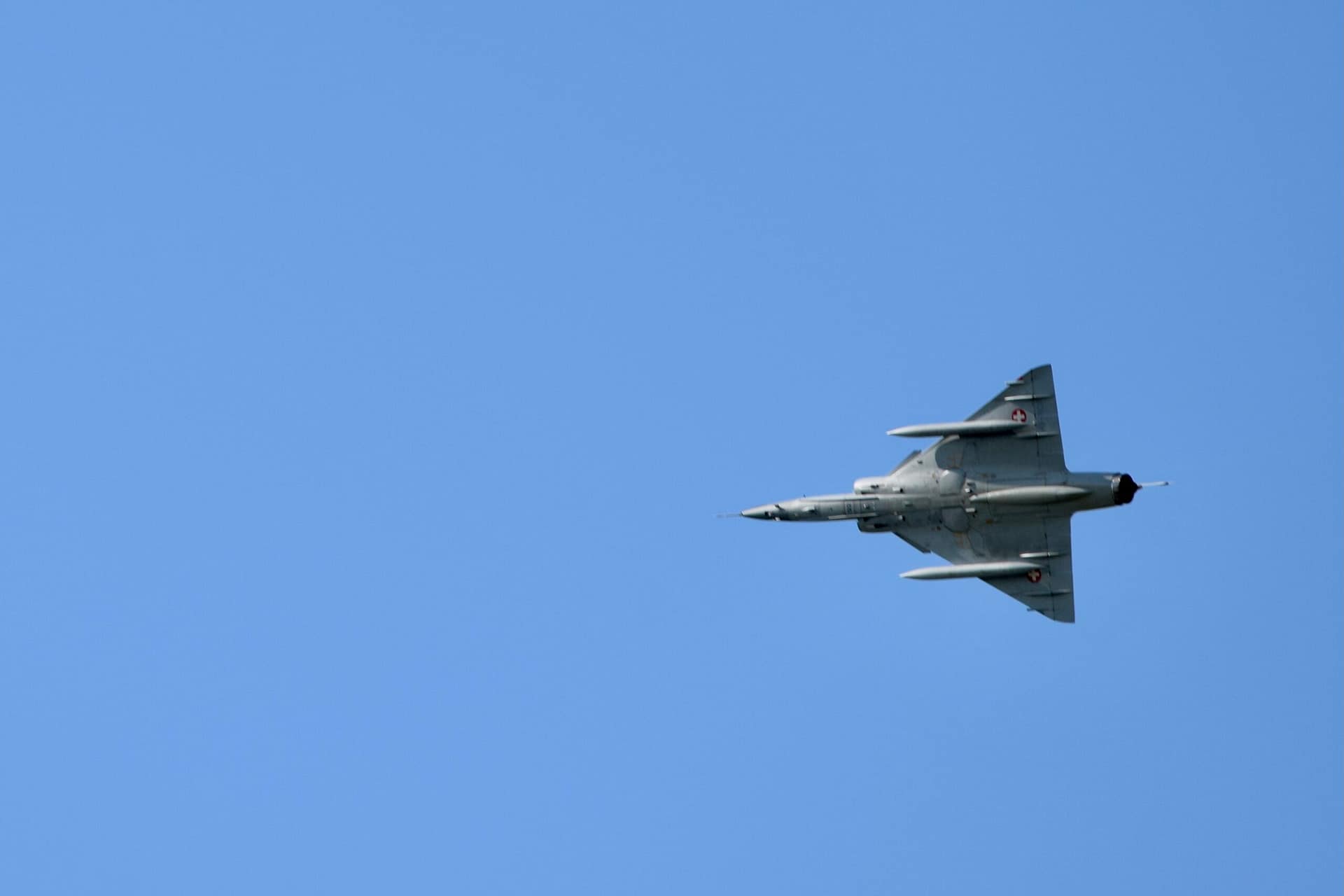
Switzerland was one of the Mirage III’s most dedicated operators, flying the type from the 1960s through the late 1990s in the alpine air defense role. After the Swiss Air Force retired its Mirages, one aircraft — J-2012, registered as HB-RDF — was acquired privately and kept in flying condition. MiGFlug organized Mirage III flights in Switzerland, giving civilians the extraordinary experience of flying in a genuine Mach 2 delta fighter over the Swiss Alps. It remains one of the most memorable experiences MiGFlug ever offered.
“Flying the Mirage III over the Swiss Alps was unlike anything else. The delta wing, the raw engine power, the way it accelerated — you understood immediately why this jet changed everything for Dassault and for France.”
MiGFlug Mirage III flight experience
Legacy
The Mirage III’s production run — over 1,400 aircraft including all variants — made it one of the most commercially successful European fighters ever built. Its tailless delta layout directly influenced every subsequent Dassault fighter: the Mirage F1 (which abandoned the delta, then returned to it), the Mirage 2000, and ultimately the Rafale. More than 20 air forces operated the type, and Pakistan didn’t retire its last Mirage IIIs until 2012 — more than half a century after the prototype first flew.
Sources: Dassault Aviation, Israeli Air Force Museum, Swiss Air Force, “Mirage III/5/50 in Action” (Squadron/Signal Publications), The Aviationist, Air & Cosmos archive
 English
0 Comments