

Related: Warthog's Last War: A-10s Deploy Before Retirement
| Aircraft | Fairchild Republic A-10C Thunderbolt II ("Warthog") |
| New Capability | Probe Refueling Adapter — converts the A-10's boom receptacle to accept probe-and-drogue refueling |
| First Successful Test | April 2, 2026 — A-10 refueled from a C-130 drogue basket |
| Why It Matters | Dramatically expands refueling options in theatre — A-10s can now take fuel from HC-130 tankers, not just KC-135s and KC-46s |
| Installation | Field-configurable by flight-line personnel in hours — no depot-level maintenance required |
| Developed By | ARCWERX (Air National Guard/Reserve innovation hub) with Luke Air Force Base fabrication support |

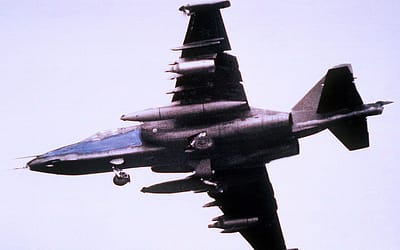
On April 2, an A-10C Thunderbolt II plugged into an HC-130's drogue basket and took on fuel — something the Warthog has never been able to do in its five decades of service. A newly developed Probe Refueling Adapter, fitted into the A-10's existing boom receptacle on the nose, converted the aircraft from a boom-only refueler to a probe-and-drogue customer in a matter of hours.
It sounds simple. It changes everything about how the A-10 operates in combat.
The Problem It Solves
The A-10 was designed in the 1970s to refuel exclusively via the flying boom system — the method used by KC-135 Stratotankers and KC-46 Pegasus aircraft, where a rigid telescoping tube extends from the tanker into a receptacle on the receiver. It works beautifully when large tankers are available. In the thick of a combat deployment, they often are not.
HC-130 Combat King aircraft, operated by Air Force Special Operations Command and rescue wings, use the hose-and-drogue system instead — a flexible hose with a basket on the end that the receiving aircraft must fly into. Until now, the A-10 could not use this system. If no boom-equipped tanker was available, the Warthog could not refuel.
In a theatre like the Persian Gulf, where tanker scheduling is already stretched to breaking point and every KC-135 sortie is being fought over by F-15Es, F-35s, B-1Bs, and every other boom-receiver in the inventory, that limitation was becoming an operational bottleneck.

Wartime Innovation at Speed
The adapter was developed in response to an urgent combatant command requirement — military shorthand for "we need this yesterday." ARCWERX, the innovation hub run jointly by the Air National Guard and Air Force Reserve, handled the rapid contract acquisition. Luke Air Force Base in Arizona fabricated the supporting hardware. The entire project moved from concept to first flight in a timeline that would be unrecognisable to the Pentagon's normal procurement process.
The beauty of the design is its simplicity. The adapter fits into the existing air refueling receptacle on the A-10's nose. Flight-line maintenance crews can install or remove it in hours using standard tools — no depot work, no structural modifications, no new wiring. A squadron can configure some jets for boom refueling and others for probe-and-drogue depending on the day's tanker availability.
Old Dog, Last Trick
The timing carries a certain poetry. Idaho and Michigan Air National Guard A-10 units deployed to the Middle East in what everyone acknowledges is the Warthog's final war. The airframe is officially headed for retirement, its replacement by the F-35 a matter of when, not if. And yet here it is — 50 years after its first flight — gaining a capability that makes it more flexible and more survivable in combat than it has ever been.
For the A-10 community, the probe adapter is more than a piece of hardware. It is proof that the jet still earns its place on the ramp — not through political lobbying or congressional protection, but through operational results. The Warthog has always been the aircraft that does more with less. In its final deployment, it is still finding new ways to prove that.
Sources: The Aviationist, AATC Public Affairs, Air & Space Forces Magazine
Related Questions
What is the A-10 Thunderbolt II?
The A-10 Thunderbolt II is a US Air Force close air support jet, nicknamed the "Warthog," designed around its enormous GAU-8 Avenger 30mm cannon. Entering service in the 1970s, it is built to fly low and slow over the battlefield, absorb damage and protect ground troops. Roughly 50 years on, it remains in front-line use.
Why is the A-10 called the Warthog?
The A-10 earned the nickname "Warthog," often shortened to "Hog," because of its blunt, ungainly appearance and aggressive ground-attack mission. The name became a badge of honour among pilots and ground troops who valued the aircraft's toughness and its devastating cannon over sleek looks.
What is probe-and-drogue aerial refueling?
Probe-and-drogue is one of two main aerial refuelling methods: the tanker trails a flexible hose with a basket-shaped "drogue," and the receiving aircraft flies a fixed probe into it. It differs from the rigid "flying boom" the US Air Force traditionally uses, as explained in this guide to how aerial refueling works.
What is the difference between boom and probe-and-drogue refueling?
With the flying boom, an operator on the tanker steers a rigid telescoping tube into a receptacle on the receiving jet, allowing high fuel-transfer rates. With probe-and-drogue, the receiver pilot flies a probe into a trailing basket. A new adapter lets the A-10 use both systems; the two methods are compared in detail in this look at boom versus probe-and-drogue refueling.
Is the A-10 Warthog being retired?
The US Air Force has long sought to retire the A-10 to free up funds for newer aircraft, and the fleet is being wound down. However, its close air support value has repeatedly earned it reprieves, a saga covered in the story of how the Warthog kept dodging retirement. New upgrades like probe-and-drogue refuelling reflect its continued front-line use.
Which tankers can refuel the A-10?
Traditionally the A-10 took fuel only from boom-equipped tankers such as the KC-135 and KC-46. A new field-installable Probe Refueling Adapter, first tested successfully in April 2026, lets the Warthog also receive fuel from probe-and-drogue tankers like the HC-130, greatly expanding its options in theatre.
0 Comments