
Quick Facts
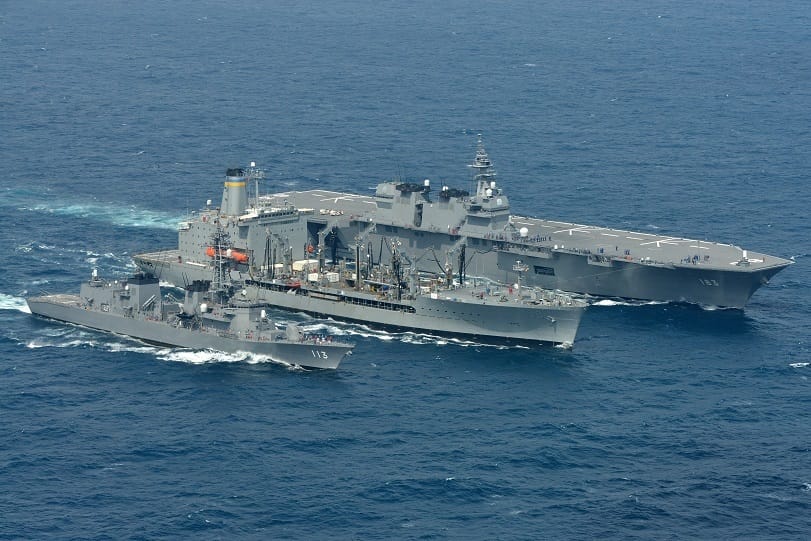
- Ship: JS Izumo (DDH-183), Izumo-class helicopter destroyer
- Modification: Phase 2 — rectangular bow, heat-resistant deck coating
- Purpose: F-35B STOVL fighter operations
- Entered dry dock: November 1, 2024
- Expected completion: March 2028 (JFY 2027)
- Sister ship: JS Kaga (also undergoing conversion)
- F-35B fleet: 42 aircraft planned (operated by JASDF)
Une métamorphose calculée
The new rectangular flight deck eliminates the tapered bow that characterised Izumo’s original helicopter-carrier profile. According to the JMSDF, this modification suppresses airflow turbulence around the bow and improves the safety of F-35B flight operations — a polite way of saying the old design created dangerous crosswinds for a jet hovering at low speed during vertical landings. The flight deck has been extended laterally to create a flat, unobstructed rectangle. Combined with the heat-resistant coating applied during Phase 1 modifications in 2022 — necessary to withstand the F-35B’s downward-pointing exhaust during vertical landings — Izumo now resembles a light carrier far more than the helicopter destroyer Japan’s pacifist constitution once demanded.
The Ghost of Kido Butai
Japan has not operated fixed-wing aircraft from a carrier since the Second World War, when the Kido Butai — the Imperial Navy’s carrier strike force — projected power across the Pacific from Pearl Harbor to Midway. The political and constitutional sensitivities of rebuilding carrier aviation explain why Japan’s defence establishment has laboured to describe the Izumo conversion in the most benign terms possible. Officially, the ships remain “multi-purpose operation destroyers.” They are classified as DDH — helicopter destroyers. The F-35Bs will technically belong to the Japan Air Self-Defense Force, not the JMSDF, creating an unusual arrangement where one service’s aircraft operate from another service’s ships. But nomenclature cannot disguise capability. When Izumo deploys with F-35Bs embarked, it will be a light aircraft carrier in all but name — capable of air defence, maritime strike, and power projection across the western Pacific.Two Carriers, 42 Fighters
Japan’s sister ship JS Kaga is undergoing the same conversion. Together, the two ships will embark aircraft from a planned fleet of 42 F-35Bs — a substantial air wing by any standard. British carrier HMS Queen Elizabeth typically deploys with 12 to 24 F-35Bs; Italy’s Cavour carries around 10. The Izumo class displaces 27,000 tonnes at full load — larger than many countries’ dedicated aircraft carriers. With the rectangular deck, reinforced structure, and integrated combat systems, these ships represent a new class of capability for the JMSDF and a significant addition to the allied order of battle in the Indo-Pacific.
Un signal stratégique
The conversion timeline — completion by March 2028 — aligns with Japan’s broader military transformation. Tokyo has committed to doubling defence spending to 2 percent of GDP, acquiring long-range cruise missiles, and developing counter-strike capabilities that would have been unthinkable a decade ago. Izumo’s new bow is the most visible symbol of that shift. For Japan’s neighbours, it is a reminder that the maritime balance of power in the western Pacific is changing — one rectangular flight deck at a time.Sources: Naval News, The Aviationist, Janes, JMSDF

 English
0 Comments