The Air Force just admitted what critics have been saying for years: the B-21 Raider is not coming fast enough. In its latest budget submission, the service revealed plans to spend nearly $1.7 billion over the next five years modernising the B-1B Lancer and B-2 Spirit — two bombers it had previously planned to retire before the B-21 reached full operational capability.
The reversal is a quiet acknowledgment that America’s bomber fleet cannot afford a gap. With Operation Epic Fury consuming conventional strike capacity at rates not seen since Vietnam, every bomber that can carry precision munitions is suddenly indispensable.
Quick Facts
Investment: ~$1.7 billion over five years (FY2027–2031)
B-1B Lancer: Extended through at least 2037; structural and avionics upgrades
B-2 Spirit: Extended beyond original retirement date; stealth coating and systems modernisation
B-21 Raider: Production ramping, but not fast enough to replace both fleets on original timeline
Current bomber fleet: ~45 B-1Bs, 19 B-2s, growing number of B-21s
The Bone Gets a Lifeline
The B-1B Lancer — universally known as “the Bone” — has been the Air Force’s workhorse heavy bomber since the 1980s. Designed as a nuclear penetrator during the Cold War, it was later converted to a purely conventional role and has seen continuous combat service from Desert Storm through Afghanistan, Syria, and now the Iran campaign.
A B-2 Spirit stealth bomber — the Air Force now plans to fly the type through at least 2037 while B-21 production ramps up. Wikimedia Commons
But the Bone is tired. Decades of high-G combat sorties have stressed its variable-geometry wing structures beyond original design limits. Several airframes have been grounded for structural cracks, and the fleet has shrunk from 100 aircraft to roughly 45 operational jets. The Air Force had planned to begin retiring B-1Bs as B-21 Raiders entered service, drawing the fleet down to zero by the mid-2030s.
That plan is now dead. The $1.7 billion investment includes structural reinforcement for the B-1B’s wing carry-through structure, upgraded defensive electronics to survive modern air defence environments, and new software for its targeting pods. The goal: keep the Bone combat-ready through at least 2037.
The Spirit Stays Invisible
The B-2 Spirit is a different story. Where the B-1B is a brute-force bomber designed for volume — it can carry 75,000 pounds of ordnance — the B-2 is a precision scalpel. Only 21 were ever built. One crashed in 2008 at Andersen Air Force Base in Guam, leaving 20 airframes, of which 19 are typically available.
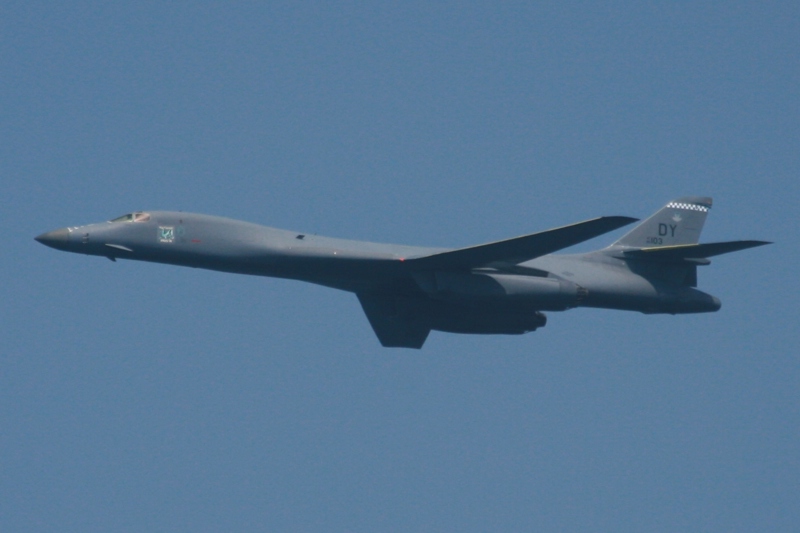
A B-1B Lancer — the “Bone” will receive modernisation funding to keep it combat-ready through 2037. Wikimedia Commons
The B-2’s stealth coating requires extraordinary maintenance — each aircraft spends roughly 50 hours in maintenance for every hour of flight time. The radar-absorbent materials must be reapplied and inspected constantly, and the airframes need structural work at their low-observable joints and edges.
The modernisation funds will address both problems: updated stealth coatings that require less maintenance downtime, and structural life extensions to keep the airframes safe through the late 2030s. The B-2 will also receive new communications systems to improve its ability to operate in GPS-denied and jammed environments — a lesson driven home by Epic Fury, where Iranian electronic warfare proved more capable than expected.
Why the B-21 Cannot Do It Alone — Yet
The B-21 Raider is supposed to be the answer to everything. Northrop Grumman recently announced a $2.5 billion investment in new production facilities to accelerate delivery. But “accelerate” in defence procurement still means years, not months.
The Air Force needs at least 100 B-21s to fully replace the B-1B and B-2 fleets. Current production rates suggest that number will not be reached before the mid-to-late 2030s at the earliest. In the meantime, the US faces a strategic bomber fleet that must cover commitments from the Middle East to the Indo-Pacific — and 45 aging Lancers plus 19 fragile Spirits are all that fill the gap.
The $1.7 billion is not a vote of confidence in old technology. It is an insurance policy against the reality that new technology always arrives later than promised. The Air Force would rather spend the money and not need the bombers than retire them and discover — mid-crisis — that it does.
Sources: Air & Space Forces Magazine, Defense News, Breaking Defense
From the fjords of northern Norway to the sun-baked runways of southern Spain, NATO is conducting the largest air exercise in Alliance history. Ramstein Flag 2026, which began on 8 June and runs through 19 June, has assembled more than 200 aircraft from 18 nations...
The numbers arrived in Brussels like a cold shower. US fighter jets allocated to NATO: cut from 150 to 100. KC-46 aerial refuelling tankers: all eight withdrawn. Maritime patrol aircraft: slashed from 26 to 15. One carrier strike group, one cruise-missile submarine,...
Forget everything you think you know about how military drones get made. Lockheed Martin's legendary Skunk Works division — the outfit that gave us the U-2, the SR-71 Blackbird, and the F-117 Nighthawk — just showed off an unmanned aircraft that was designed,...




 English
0 Comments