
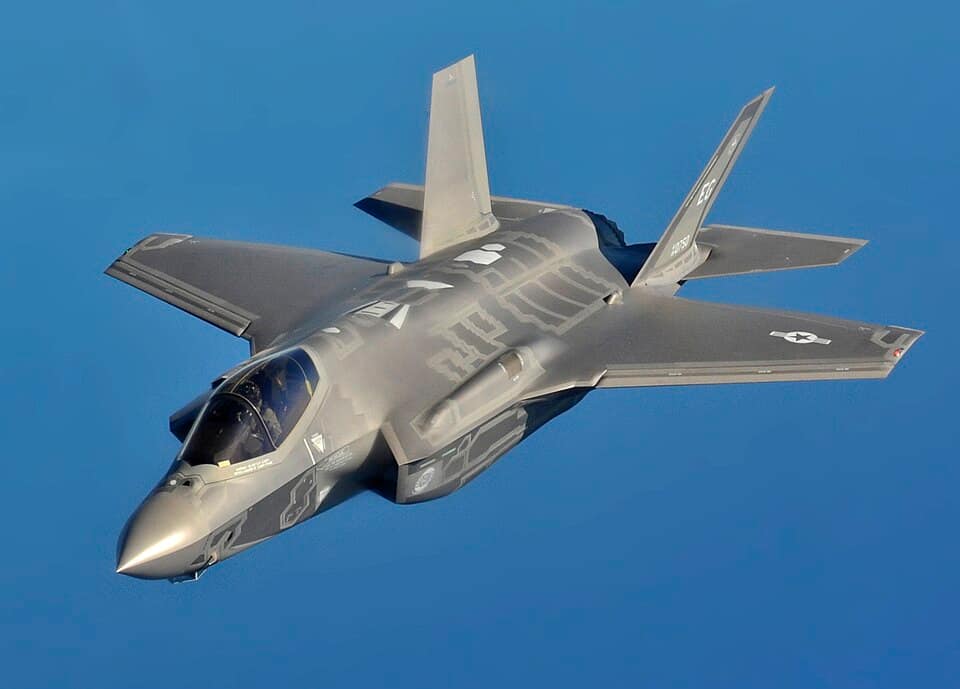
Starting this summer, if you want to learn to fly an F-35, an F-16, or pilot an MQ-9 for the United States Air Force, you’ll be trained by Air Combat Command — not Air Education and Training Command. It’s a big reorganization, and the reasoning is straightforward: let the people who fight the wars train the people who will fight the next one.
Beginning summer 2026, ACC will absorb formal training units (FTUs) for the F-35 Lightning II, F-16 Fighting Falcon, and MQ-9 Reaper from AETC at seven installations across the country. The move transfers operational oversight of the most combat-relevant training pipelines to the command that actually owns and deploys those aircraft in combat. The logic is hard to argue with — ACC commanders live with the readiness outcomes every day. Now they’ll also own the training that produces those outcomes.
AETC isn’t being sidelined — far from it. The command will refocus on what it arguably does best: building foundational airmen. Basic military training, undergraduate pilot training, basic flight screening, the early-career education that turns civilians into aviators. AETC will own the pipeline before ACC’s door. The reorganization is a division of labor, not a demotion.
Quick Facts
- Effective: Summer 2026
- Transfer: Air Education and Training Command (AETC) to Air Combat Command (ACC)
- Aircraft affected: F-35 Lightning II, F-16 Fighting Falcon, MQ-9 Reaper
- Installations: Seven bases across the U.S.
- ACC mission: Formal training units (FTUs) for combat aircraft
- AETC refocus: Foundational skills — UPT, BMT, basic flight screening
- Rationale: Operational expertise drives readiness improvements
Why This Makes Sense
The formal training unit concept isn’t new — FTUs have existed for decades as the bridge between initial pilot qualification and operational squadron assignment. A pilot who graduates undergraduate pilot training can fly an aircraft. An FTU teaches them to fly it in combat: the tactics, the threat sets, the weapons employment, the integration with other platforms. It’s the difference between knowing how to drive and knowing how to race.
The argument for keeping FTUs under AETC has always been about standardization and throughput — AETC is a training machine, optimized for producing qualified airmen at scale and on schedule. But the argument against it is equally compelling: AETC, by its nature, isn’t the command flying combat missions over the Pacific or the Middle East. ACC is. The command’s operational units live with the consequences of FTU graduates every day. They know exactly what skills the schoolhouse is producing — and what gaps are showing up on real missions.
Giving ACC ownership of F-35, F-16, and MQ-9 FTUs means those gaps get fixed faster. When an ACC wing identifies a training deficiency — a tactic being taught incorrectly, a threat system being underemphasized — they’ll have direct authority to update the curriculum, not just file a request with a separate major command and wait six months for a response.

Seven Installations, Major Infrastructure
Seven installations are affected by the transition. While the Air Force has not publicly confirmed the complete list, the FTU basing structure for these three platforms points to a number of major training hubs. Luke Air Force Base in Arizona is the world’s largest F-35 and F-16 training base — whatever happens there will define the shape of the transition. Holloman AFB in New Mexico hosts F-16 training. Hill AFB in Utah and Eglin AFB in Florida have both been central to F-35 FTU operations. The MQ-9 pipeline runs primarily through Creech AFB in Nevada.
The logistics of transitioning FTU ownership between major commands are not trivial. Personnel, contracts, budgets, maintenance pipelines, simulator support — all of it follows the aircraft under the new organizational authority. This is a multi-year administrative project with a summer 2026 start date. That date marks the organizational authority transfer; the full integration of systems and processes will take considerably longer.
What won’t take long is the cultural shift. ACC squadrons already know exactly what they want from their incoming pilots. The ability to steer FTU curriculum directly — rather than through an inter-command memo — will start producing results in months, not years.

The MQ-9 Dimension
The inclusion of the MQ-9 Reaper deserves specific attention. Remotely piloted aircraft represent a fundamentally different training challenge — the ‘pilot’ never physically climbs into the aircraft, and the operational tempo of MQ-9 units has been relentless for over fifteen years. Creech AFB’s MQ-9 units have run near-continuous combat operations since the early 2010s, with crews rotating through ground control stations around the clock.
That operational intensity has created a unique readiness culture and a unique set of training demands. What constitutes ‘ready’ for an MQ-9 crew executing full-motion video analysis over a contested environment is different from routine ISR support. ACC, which owns the operational MQ-9 wings, has a far clearer picture of those distinctions than a command whose primary orientation is initial qualification training.

What AETC Gains
It would be a mistake to read this reorganization as a loss for AETC. The command has been stretched across an enormous portfolio — from basic military training through advanced combat qualification. Releasing the FTUs for the Air Force’s most operationally demanding platforms frees AETC to concentrate resources and leadership attention on the foundational end of the pipeline, where the demand is equally pressing.
The USAF pilot shortage has been a persistent headline for years. The foundational training pipeline — undergraduate pilot training, basic flight screening, the early-career education that produces aviators qualified to enter any FTU — is where AETC can make the most meaningful contribution. Getting more pilots through UPT faster, to a higher standard, matters more than who manages the FTU after graduation.
The reorganization is, in the end, an exercise in organizational common sense: put ownership where expertise lives. ACC knows what combat-ready looks like because it flies combat every day. That knowledge should drive the training that produces the next generation of combat aviators. Starting summer 2026, it will.
Sources: U.S. Air Force, Air & Space Forces Magazine, Defense News, Aviation Week & Space Technology

 English
0 Comments