
On the morning of January 2, 1967, a formation of aircraft appeared on North Vietnamese radar screens approaching Hanoi from the west. To the radar operators at Phuc Yen and Gia Lam airfields, the electronic signatures looked familiar: F-105 Thunderchiefs, the heavily-laden bomb trucks that had been pounding North Vietnamese infrastructure for months as part of Operation Rolling Thunder. Standard procedure called for MiG-21 interceptors to scramble, climb to altitude, and slash through the bomber formations from above before the American escort fighters could react.
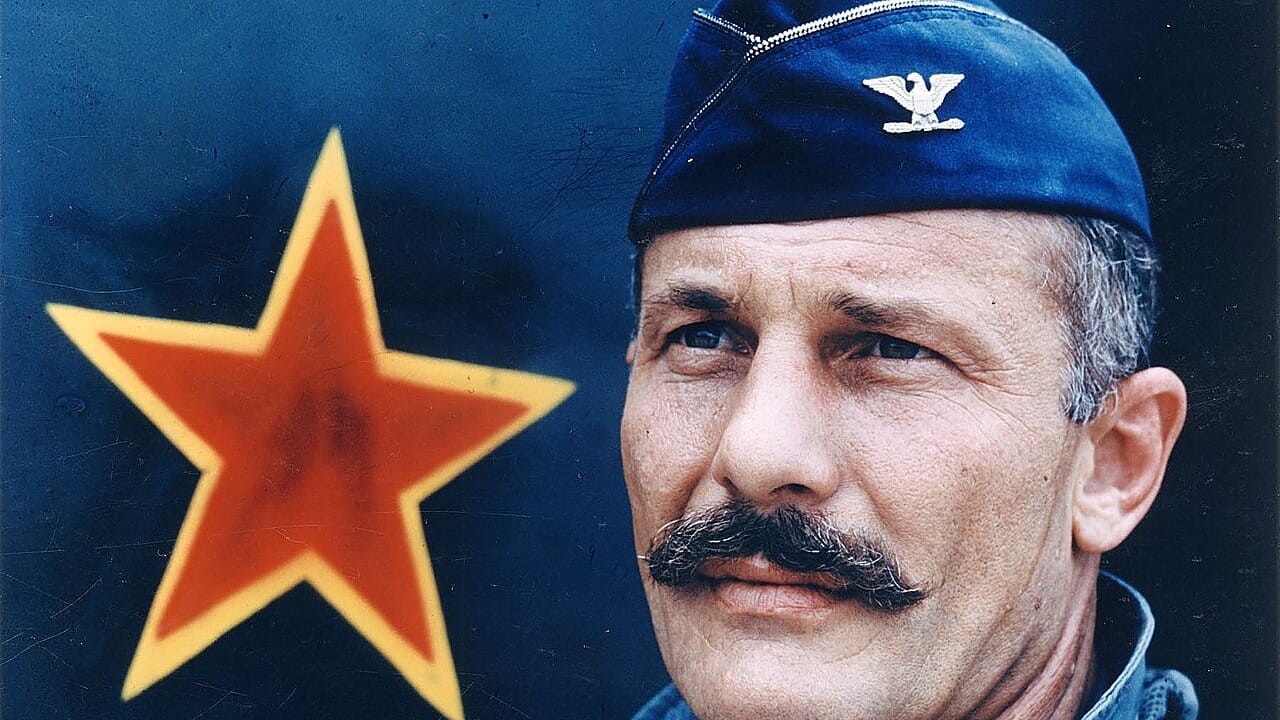
The MiGs launched. They climbed through the overcast. They dove on the incoming formation. And they discovered, far too late, that they had been tricked. Those were not F-105 Thunderchiefs below them. They were F-4C Phantoms, the most capable air-superiority fighters in the American arsenal, flown by some of the best combat pilots in Southeast Asia. The entire mission had been a trap, conceived and commanded by Colonel Robin Olds, a cigar-chomping World War II ace with a handlebar mustache and a deep personal grudge against the North Vietnamese MiG force.
What followed was the most lopsided air combat victory of the entire Vietnam War.
Quick Facts
Operation: Bolo
Date: January 2, 1967
Commander: Colonel Robin Olds, 8th Tactical Fighter Wing
U.S. aircraft: F-4C Phantom II
VPAF aircraft: MiG-21PF (Fishbed-D)
Result: 7 MiG-21s destroyed, 0 U.S. losses
Duration: Approximately 12 minutes of air combat
The MiG Problem
By late 1966, the American air campaign over North Vietnam had a serious problem. North Vietnamese MiG-21 interceptors, flown by increasingly skilled pilots and guided by a sophisticated Soviet-built ground control intercept radar network, were taking a mounting toll on American strike aircraft. The MiG-21, a lightweight, delta-winged interceptor capable of Mach 2, was perfectly suited for hit-and-run attacks against bomb-laden F-105s. The North Vietnamese pilots would wait until the Thunderchiefs were committed to their bombing runs, heavy with ordnance and unable to maneuver, then attack from above and behind at supersonic speed. They would fire their missiles, slash through the formation, and dive away before the American escort fighters could respond.
The rules of engagement made the problem worse. American pilots were forbidden from attacking North Vietnamese airfields directly. They could not shoot at MiGs on the ground. They could not strike the radar stations that controlled the intercepts. They were, in effect, being asked to fight a defensive air war against an enemy that held every tactical advantage. By December 1966, the VPAF's MiG-21 force had shot down several F-105s and forced dozens of strike missions to jettison their bombs prematurely. Morale among American aircrews was suffering.

Robin Olds Has an Idea
Colonel Robin Olds was not a typical wing commander. A graduate of West Point, a former college football star, and a World War II ace with 12 aerial victories in P-38 Lightnings and P-51 Mustangs over Europe, Olds was a fighter pilot to his core. He had taken command of the 8th Tactical Fighter Wing at Ubon Royal Thai Air Force Base in September 1966, and he was furious about the MiG situation. His pilots were flying combat missions every day, and they were being picked off by an enemy they were not allowed to fight on equal terms.
Olds' plan was elegant in its simplicity. If the MiGs would only come up to fight when they thought they were attacking vulnerable F-105 bombers, then give them F-105 bombers to attack, except they would not be F-105s. They would be F-4C Phantoms, configured to mimic Thunderchiefs on radar. The Phantoms would fly the exact same routes, at the same speeds, at the same altitudes, using the same radio call signs and electronic countermeasures pods that the F-105 strike packages used. When the MiGs scrambled to intercept, they would find themselves facing fighters instead of bombers.

Setting the Trap
Planning Operation Bolo required meticulous attention to detail. The F-4C Phantoms had to be electronically indistinguishable from F-105D Thunderchiefs. Olds' team studied the radar signatures, flight profiles, radio procedures, and ECM pod configurations of actual Rolling Thunder strike missions and replicated every element. The Phantoms would carry QRC-160 jamming pods, the same equipment used by the F-105s. They would fly in the same formation patterns, at the same airspeeds, along the same ingress routes. Even the radio chatter would mimic a standard F-105 strike package.
The deception went further. Olds scheduled the mission for a day when weather conditions would force the MiGs to rely on their GCI radar controllers rather than visual identification. Overcast skies meant the North Vietnamese pilots would not be able to see what type of aircraft they were attacking until they were already committed to their intercept runs. By the time they realized the incoming formation was composed of Phantoms, not Thunderchiefs, they would be within missile range and unable to disengage.
Twelve Minutes Over Hanoi
On the morning of January 2, 1967, Olds led a force of F-4C Phantoms from the 8th TFW out of Ubon, supported by additional Phantom flights from the 366th TFW. The formation approached North Vietnam from the west, following the standard Rolling Thunder ingress route toward Hanoi. As planned, the weather was overcast, with cloud bases around 7,000 feet and tops above 20,000. The North Vietnamese GCI controllers tracked the incoming formation, identified it as a Thunderchief strike package, and ordered their MiG-21s at Phuc Yen to scramble.
The MiGs climbed through the clouds and vectored toward the American formation. When they broke through the overcast, they expected to find lumbering, bomb-heavy Thunderchiefs ripe for a slashing attack. Instead, they found F-4C Phantoms, already maneuvering to engage, with no bomb load and a full complement of AIM-7 Sparrow and AIM-9 Sidewinder missiles. The engagement that followed lasted approximately twelve minutes.
The first kill of the day went to Olds' wingman, First Lieutenant Ralph Wetterhahn, who downed a MiG-21 with an AIM-7 Sparrow after Olds' own missiles failed to guide. Minutes later, Olds got his kill, locking an AIM-9 Sidewinder onto a MiG-21 that was attempting to reverse its turn. The missile tracked true and the MiG exploded. Within minutes, Phantoms across the formation were engaging MiGs in a swirling dogfight above the clouds. One by one, the MiG-21s fell. By the time the surviving North Vietnamese pilots dove back through the overcast and fled to their bases, seven MiG-21s had been destroyed. Not a single American aircraft was lost.

The Aftermath
Operation Bolo's impact was immediate and devastating. In twelve minutes, Olds and his pilots had destroyed nearly half of North Vietnam's operational MiG-21 force. The VPAF did not launch another significant MiG-21 intercept mission for weeks. American strike pilots reported a dramatic reduction in MiG attacks over the following months. The psychological effect was equally significant: the North Vietnamese could no longer be certain that any incoming formation was what it appeared to be on radar.
For Robin Olds, Operation Bolo was the defining mission of his career. He would fly a total of 152 combat missions in Vietnam, shooting down four MiGs personally. He deliberately avoided a fifth kill, which would have made him an ace again, because he knew the Air Force would pull him from combat and send him on a publicity tour. He returned to the United States in 1967 as one of the most celebrated fighter pilots of the Vietnam era, a status he maintained for the rest of his life.
Why Bolo Still Matters
Operation Bolo remains one of the most studied air combat engagements in military history. It demonstrated that deception, careful planning, and aggressive execution could overcome even significant tactical disadvantages. Olds had taken the enemy's own tactics, their reliance on GCI control, their preference for hit-and-run attacks against vulnerable targets, and turned those tactics against them. The MiG pilots did exactly what they had been trained to do. The problem was that everything they thought they knew about their target was wrong.
The lessons of Operation Bolo continue to influence air combat doctrine today. The importance of electronic deception, the value of studying an adversary's tactics in detail before planning a counter-operation, and the principle that a fighter pilot must always be prepared to meet something unexpected: all of these concepts trace their modern application, at least in part, to twelve minutes over Hanoi on a cloudy morning in January 1967.
Sources: "Fighter Pilot: The Memoirs of Legendary Ace Robin Olds" by Robin Olds, Christina Olds & Ed Rasimus (2010), USAF Historical Studies Office, "Clashes: Air Combat Over North Vietnam 1965-1972" by Marshall Michel III (1997), Smithsonian National Air and Space Museum archives.
Related Questions
What was Operation Bolo?
Operation Bolo was a U.S. Air Force fighter ambush over North Vietnam on 2 January 1967, devised by Colonel Robin Olds. F-4 Phantoms disguised their profile to mimic bomb-laden F-105s, luring North Vietnamese MiG-21s into a trap. Seven MiG-21s were destroyed with no U.S. losses.
Who was Robin Olds?
Robin Olds was a U.S. Air Force colonel and World War II ace who commanded the 8th Tactical Fighter Wing during the Vietnam War. He planned and led Operation Bolo in January 1967, one of the most successful air-combat actions of the war.
How did Operation Bolo trick the North Vietnamese?
Olds had his F-4 Phantoms fly the routes, altitudes and electronic signatures of F-105 Thunderchief bombers. North Vietnamese radar operators scrambled MiG-21s expecting easy bomber targets, only to find themselves facing agile fighters waiting to ambush them.
What was the result of Operation Bolo?
In roughly twelve minutes of combat on 2 January 1967, U.S. F-4 Phantoms shot down seven North Vietnamese MiG-21s without losing a single aircraft. It was a lopsided victory that wiped out a significant portion of North Vietnam's MiG-21 force.
What aircraft fought in Operation Bolo?
The U.S. flew F-4C Phantom IIs disguised as F-105 Thunderchiefs, while the Vietnam People's Air Force scrambled MiG-21 interceptors. The Phantoms' element of surprise and superior positioning gave the Americans a decisive edge in the engagement.
0 Comments