
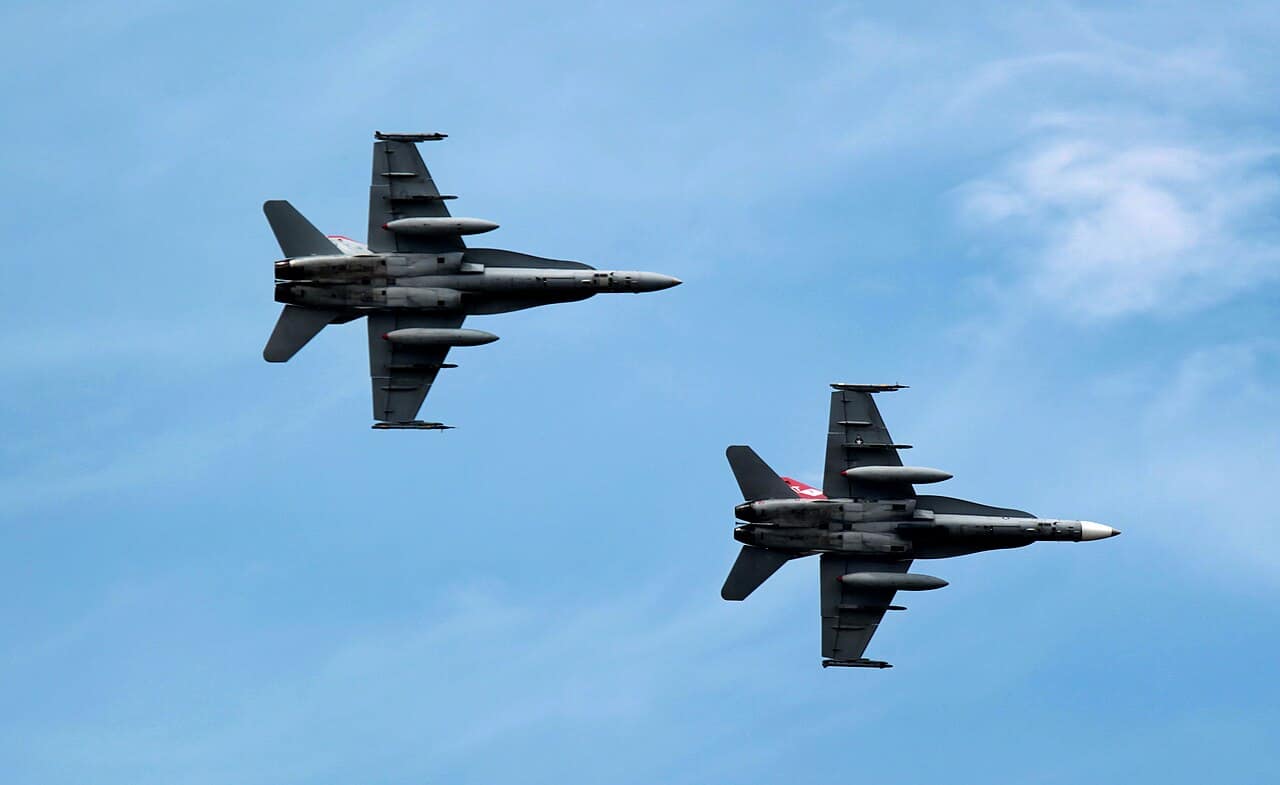
The United States Marine Corps has flown the F/A-18 Hornet since 1983. Every Marine fighter pilot of the last four decades trained on it. The Corps used it over Iraq, over Afghanistan, over the Balkans. It was the only Marine fighter to fly from a U.S. Navy supercarrier in regular squadron rotation. And on the deck of every Marine Expeditionary Unit’s flagship from the Gulf to the Pacific, a four-jet Hornet detachment was the visible expression of Marine air power.
That is now ending. The Marine Corps has confirmed it will retire the remaining legacy F/A-18C and F/A-18D Hornets entirely over the next two years, completing a transition to an all-F-35 force that began a decade ago. After 43 years on Marine flight lines, the Hornet is going home.
| Service | United States Marine Corps (USMC) |
| Aircraft retiring | McDonnell Douglas F/A-18C / F/A-18D Hornet (legacy, not Super Hornet) |
| Years in USMC service | 1983 – 2026/27 (≈ 43 years) |
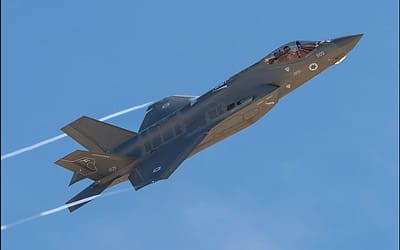
| Replacement | F-35B (STOVL) and F-35C (CATOBAR) Lightning II |
| Estimated current legacy fleet | ≈ 60 aircraft, spread across VMFA-323 and select reserve units |
| Final retirement | Target — end of fiscal year 2027 |
A jet that defined a generation of Marine pilots
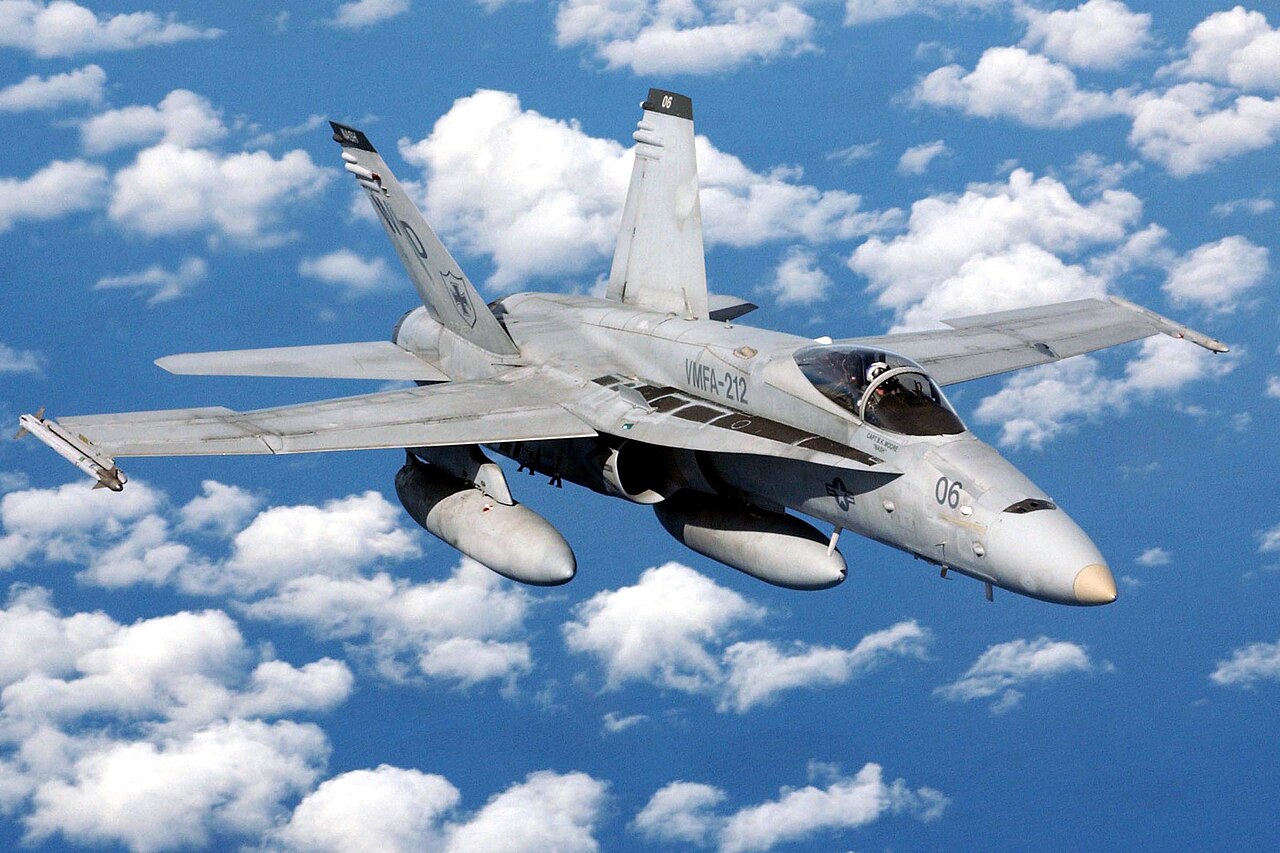
The legacy Hornet — a single-seat F/A-18C or two-seat F/A-18D — was, by the time the Marines retired the AV-8B Harrier in 2025, the only true fighter the Corps still flew apart from the F-35. Two engines, twin tails, a fly-by-wire flight control system that was forgiving to a fault, and a designed-in maintainability that allowed it to fly hard from ad-hoc forward bases. The Marines treated the Hornet as their tactical Swiss Army knife: close air support, deep strike, fighter sweep, electronic warfare suppression, all in one airframe.
It also flew its share of recent combat. Marine F/A-18Ds operated as forward air controller (airborne) FAC-A platforms over Afghanistan and Iraq. F/A-18Cs from VMFA-122 and VMFA-323 flew strike packages over Syria and the Iran air campaign of 2026. The aircraft was already meant to retire from the Iran operation — it ran one more deployment than planned because of where it suddenly found itself.
Why the legacy Hornet had to go
The reasons for retirement are the same reasons every Western air force eventually retires its 1980s fighters. The airframes have run out of fatigue life. The legacy Hornet’s wing centre-section, in particular, was never designed for the high-G airshow-grade maintenance load it actually accumulated over four decades. Each remaining airframe has been life-extended at least once. Some have been life-extended twice. The marginal cost of another extension exceeds the marginal cost of accelerating F-35 deliveries.
Operationally, the legacy Hornet also cannot perform two of the core missions the modern Marine Air-Ground Task Force assumes. It cannot survive in a contested air-defence environment without F-35B escort, and it cannot rapidly stand up from austere expeditionary bases the way the STOVL F-35B can. With Marine doctrine pivoting to distributed maritime operations against China, the Hornet’s niche has effectively closed.


What it leaves behind
Several legacy Hornets will be transferred to the U.S. Navy aggressor squadrons at Naval Air Station Fallon and Naval Air Station Key West, where they will continue flying for several years more as adversary aircraft — replicating Russian or Chinese fighters in red-air training. A small number will be transferred to civilian contracted-air services such as Top Aces or Draken International. And a handful, as always, will end up in museums.
But the Marine Corps fighter force from this point forward will be all-Lightning II. VMFA-323 — the “Death Rattlers” — will be the last operational F/A-18C squadron in Marine service. When VMFA-323 transitions to the F-35C in 2027, the legacy Hornet era ends.
Sources: Scramble, USMC Aviation Plan, USNI News.
 English
0 Comments