
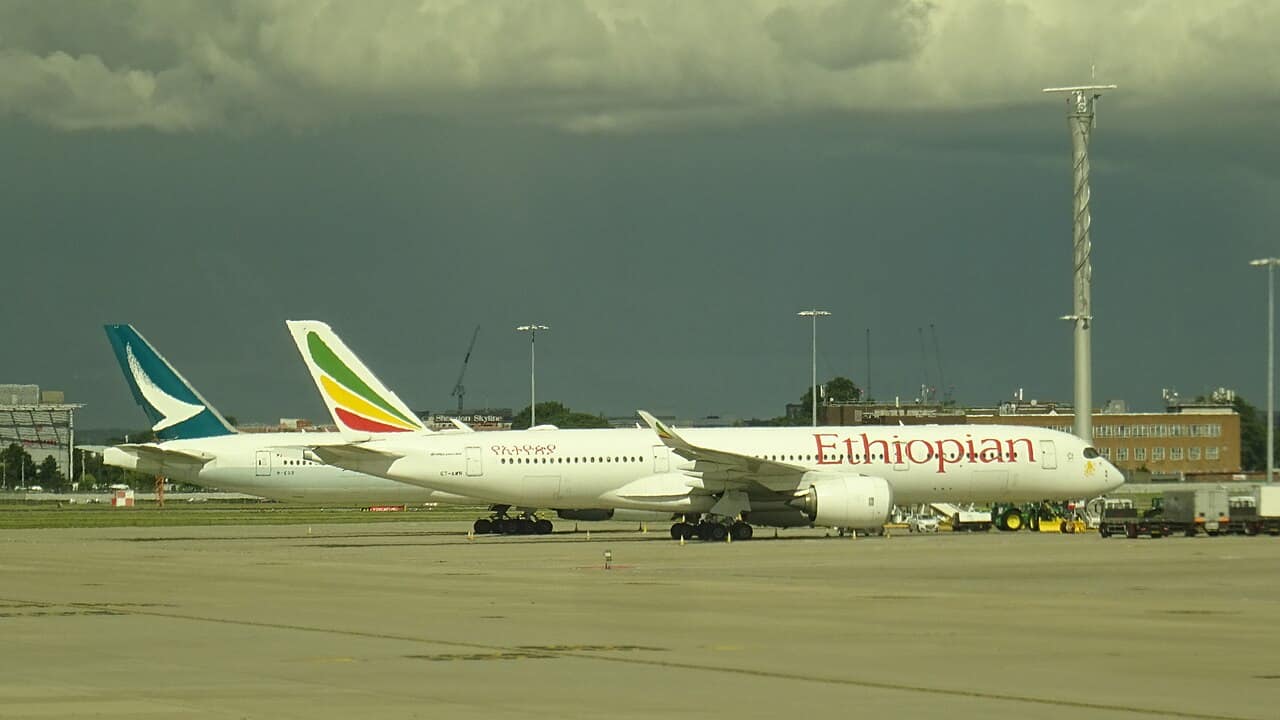
Most African airlines have spent the last decade trying to survive. Ethiopian Airlines has spent the last decade trying to outgrow every other airline on its continent — and then a few off it. The Addis Ababa-based carrier flies more international passengers than any other sub-Saharan airline. It is the largest cargo operator in Africa. Its main hub, Bole International, now handles more transit passengers than any other airport in sub-Saharan Africa. And in mid-May 2026, reports emerged that the airline is in early-stage talks with Airbus over a new order for widebody and regional jets — reportedly around six more A350s and some twenty A220s, which would be Ethiopian's first Airbus narrowbodies.
For a continent that aviation analysts have habitually written off, this is an extraordinary moment. Ethiopia is acting like the African answer to Singapore Airlines — and Toulouse, predictably, is paying close attention.
| Airline | Ethiopian Airlines (ET) |
| Hub | Addis Ababa Bole International Airport (ADD) |
| Talks | Early-stage negotiations with Airbus, May 2026 |
| Type discussed | Reportedly ≈ 6 additional A350s and ≈ 20 A220s — the latter would be Ethiopian's first |
| Current Airbus fleet | ≈ 17 A350-900s in service |
| Wider strategy | Doubling fleet to 271 aircraft by 2035 (Vision 2035 plan) |
An African airline acting like a flag carrier
Ethiopian Airlines' Vision 2035 plan is publicly stated and consistently delivered: 271 aircraft by 2035, against a current operational fleet of approximately 150. The airline has commitments for more than 30 Airbus A350s (a mix of -900s in service and -1000s on order), plus firm orders placed at the 2023 Dubai Airshow for 11 Boeing 787-9s and 20 737 MAX narrowbodies. A new round of widebody orders on top of that base would push Ethiopian into the same widebody fleet tier as Lufthansa or British Airways — astonishing for an airline operating from a country with a GDP per capita of roughly $1,000.
The economics work for one specific reason. Ethiopian is the connecting carrier of choice for the entire African continent. A passenger travelling from Lagos to Beijing, from Johannesburg to Mumbai, or from Luanda to Frankfurt almost certainly does it via Addis. The geography is good, the airline is professionally run, the costs are low, and the network is dense.

Why Airbus, not Boeing
Ethiopian has historically been a balanced operator, splitting fleet orders carefully between Airbus and Boeing. The current talks tilt the balance because of three constraints. First, Boeing's 787 production line is running at capacity and delivery slots before 2030 are largely allocated. Second, the 777X programme is years behind schedule and the 777-9 is not yet certified. Third, the Airbus A350-1000 — bigger, longer-legged, with better seat-mile economics on the long thin trunk routes Ethiopian wants to add — is in production and available.
Ethiopian has said it is evaluating multiple options to support its Vision 2035 growth across both manufacturers, and executives have not confirmed numbers or variants. But the practical question is which manufacturer can deliver, in numbers, in the next 36–48 months. The answer points strongly to Toulouse.


What it means for African aviation
Africa's aviation sector has spent decades fragmented, undercapitalised, and chronically loss-making. Most national carriers — South African Airways, Kenya Airways, Air Mauritius, Ghana International — have either collapsed at least once or are kept afloat by state support. Ethiopian is different. It has been consistently profitable, in dollar terms, for roughly two decades. It is IOSA-registered and maintains one of the strongest safety and training operations on the continent.
A successful widebody order in 2026 cements Ethiopian as the de facto African long-haul carrier of choice. The implications for Rwandair, Kenya Airways, and South African Airways — all of which compete on overlapping intercontinental routes — are not subtle. Africa's long-haul aviation market is consolidating around Addis Ababa. The next twelve months will tell us how much further that consolidation goes.
Sources: Scramble, Reuters, ch-aviation.
Related Questions
Is Ethiopian Airlines buying more Airbus aircraft?
In mid-May 2026, Ethiopian Airlines was reported to be in early-stage talks with Airbus over a new order — around six additional A350 widebodies and roughly twenty A220s. The A220s would be Ethiopian's first Airbus narrowbodies, deepening a fleet relationship alongside its existing Boeing aircraft.
Why is Ethiopian Airlines so successful?
Ethiopian Airlines flies more international passengers than any other sub-Saharan carrier and is Africa's largest cargo operator. Its Addis Ababa Bole hub handles more transit passengers than any other sub-Saharan airport. Disciplined management and an aggressive growth strategy have made it the continent's standout airline.
What is the Airbus A220?
The A220 is a fuel-efficient single-aisle jet originally designed by Bombardier as the C Series, before Airbus took over the programme in 2018. Praised for comfort and reliability, it has won steadily growing orders, including AirAsia's record 150-aircraft deal.
Where is Ethiopian Airlines based?
Ethiopian Airlines is headquartered in Addis Ababa, Ethiopia, and operates its main hub from Addis Ababa Bole International Airport. Bole has become the leading transit gateway in sub-Saharan Africa, funnelling passengers between Africa, Europe, the Middle East and Asia through the carrier's wide network.
What is the Airbus A350?
The A350 is Airbus's long-range, twin-engine widebody built largely from carbon-fibre composites for lower fuel burn. Airlines use it on intercontinental routes, and a freighter version, the A350F, is winning cargo orders such as Atlas Air's $7 billion deal.
How does Ethiopian Airlines compare to other African airlines?
While many African carriers have struggled to stay solvent, Ethiopian has expanded aggressively to become the continent's largest and most influential airline by international passengers and cargo. Analysts increasingly compare its hub-and-network model to successful Asian carriers rather than to its regional peers.


0 Comments