
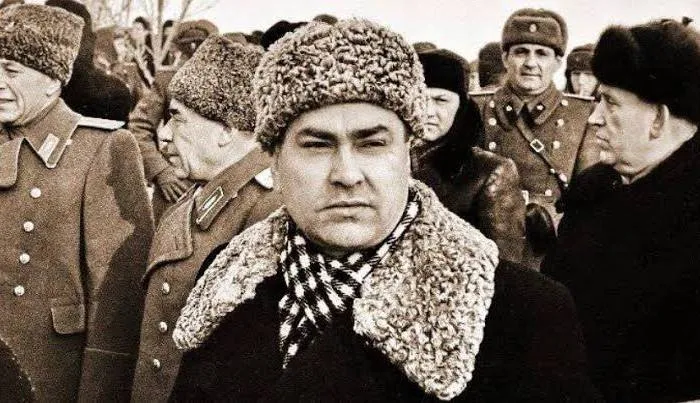
Shot Down Behind Enemy Lines
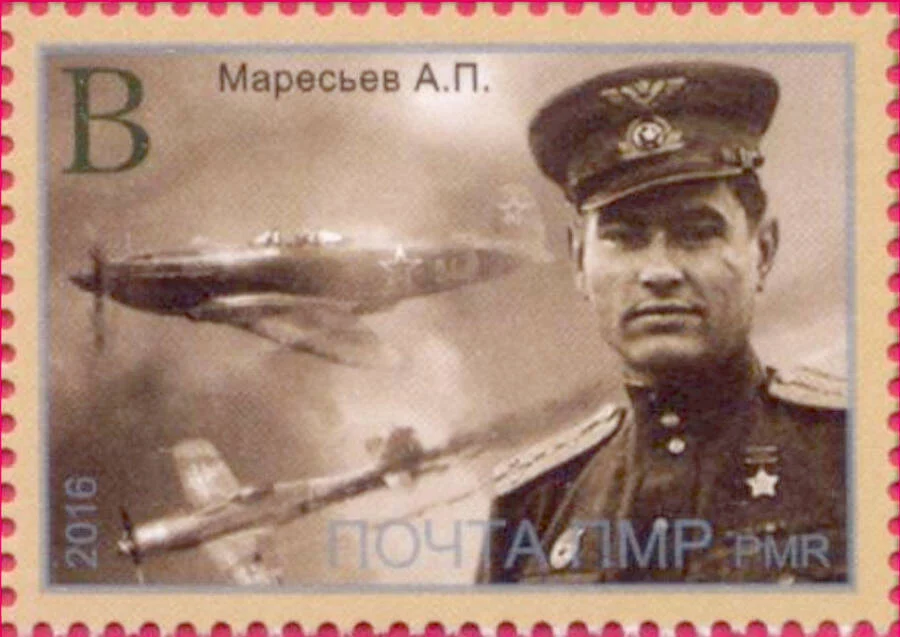
Aleksey Maresyev on a stamp of Transnistria
18 Days Crawling Through the Snow
Maresyev crawled. For 18 consecutive days, through deep snow, in temperatures well below freezing, dragging himself through the wilderness on shattered legs. He navigated by the sun during the day and the stars at night. He survived on whatever scraps of food he could scavenge from the frozen forest floor — berries, bark, ants and pine cones. (The hedgehog he catches bare-handed belongs to Boris Polevoy's novel about him, not to the documented record.) His legs swelled to twice their normal size. The tissue began to die. By 22 April he had reached the Valday district, roughly a hundred kilometres east of where he came down. By the time two village boys from Plav, Sasha Vikhrov and Sergey Malin, finally stumbled upon him — barely conscious, half-starved, frostbitten — gangrene had spread through both limbs. Military surgeons had no choice. Both legs were amputated below the knee. Most men would have accepted a medical discharge and considered themselves lucky to be alive. Maresyev refused.Learning to Walk — Then Dance — Then Fly
What happened next is arguably even more remarkable than the survival crawl itself. Fitted with crude prosthetic legs, Maresyev threw himself into months of agonizing rehabilitation. He learned to walk again. Then he learned to run. Then, in a move that left his doctors speechless, he learned to dance. The dancing wasn't vanity — it was strategy. Maresyev knew that to be cleared for combat flying again, he would need to pass a rigorous military medical board evaluation. The board would be looking for proof that his coordination, balance, and reflexes were still sharp enough to handle a high-performance fighter aircraft. So he practiced the foxtrot and the waltz, hour after hour, until he could glide across the dance floor without anyone noticing the prosthetics beneath his trousers. The plan worked. In June 1943 — barely fourteen months after losing both legs — Alexey Maresyev was officially cleared to fly combat missions again.Back at the Front: Flying on Prosthetic Legs
He returned to the front lines flying the Lavochkin La-5, one of the most demanding single-seat fighters in the Soviet arsenal. Operating a fighter aircraft requires constant, precise footwork on the rudder pedals — the kind of fine motor control most people assumed would be impossible without natural legs. Maresyev proved them wrong. On his very first mission back, he shot down two German Focke-Wulf Fw 190s. Over the course of the war, he flew 86 additional combat missions and claimed a total of 11 confirmed aerial victories — all on prosthetic legs, all requiring that precise, unforgiving footwork on the rudder pedals at speeds exceeding 600 km/h.A Story That Became a Legend

Aleksey Maresyev with prostethics
A Life Devoted to Those Who Came After
After the war, Maresyev didn't fade into retirement. He spent decades advocating for disabled veterans, working to ensure that those who had sacrificed their bodies in the war received the care and recognition they deserved. He remained active into old age, a living reminder of what the human spirit is capable of when pushed to the absolute edge. Alexey Maresyev passed away on 18 May 2001, at the age of 84. He outlived the Soviet Union, outlived most of the men he flew with, and outlived every expectation anyone had of what was possible after that crash in the Novgorod forest in the spring of 1942.Why This Story Still Matters
In aviation, we talk a lot about skill, training, and technology. We talk about aircraft performance and mission readiness. What we talk about less often is the rarest ingredient of all: the kind of will that simply refuses to accept what everyone around it has already accepted as inevitable. Maresyev didn't just survive — he came back. He didn't just come back — he excelled. In a single-seat fighter, at altitude, in combat, against skilled opponents, with prosthetic legs operating controls that demand feel and sensitivity and precision. And he did it after crawling through 18 days of frozen wilderness on those same shattered legs just to stay alive. The next time something seems impossible, it's worth remembering that a man with no legs once outflew enemy aces in a single-engine fighter at 600 km/h — and danced the waltz to earn the privilege. Some humans simply refuse to accept limits.Want to experience aviation history from the cockpit yourself? At MiGFlug, we offer the chance to fly in some of the most iconic military jets ever built — including Russian fighters with a direct lineage to the aircraft Maresyev flew. Explore our jet flight experiences here.
Related Questions
Who was Alexey Maresyev?
Alexey Maresyev was a Soviet fighter pilot of World War II who was shot down behind German lines in April 1942, lost both legs, and astonishingly returned to combat flying on prosthetic legs. His endurance made him one of the most celebrated heroes of the Soviet war effort.
What happened to Alexey Maresyev after he was shot down?
After his Yak-1 was downed over the forests of Novgorod Oblast, the badly injured Maresyev crawled east toward Soviet lines for 18 days through deep snow before villagers found him. Severe frostbite and gangrene meant both his legs had to be amputated.
Did Maresyev really fly again without legs?
Yes. After being fitted with prosthetic legs, Maresyev trained relentlessly to fly again and returned to frontline combat, reportedly scoring further aerial victories. His determination became legendary and inspired the popular Soviet book "The Story of a Real Man."
What aircraft did Maresyev fly?
Maresyev flew the Yakovlev Yak-1, an early Soviet single-engine fighter, when he was shot down in 1942. It was part of the broader Yak fighter family that became a backbone of Red Army aviation throughout the war.
How did Maresyev survive 18 days in the forest?
Stranded behind enemy lines in winter, Maresyev crawled and rolled eastward, eating bark, berries and whatever he could find, driven by the hope of reaching Soviet territory. Villagers eventually discovered him near death and brought help.
What other pilots survived against impossible odds?
Aviation history is full of near-miraculous survivals, from Maresyev's crawl to Israeli pilot Zivi Nedivi, who landed an F-15 with one wing. Such stories highlight the extremes of human endurance and skill in the air.


0 Comments