
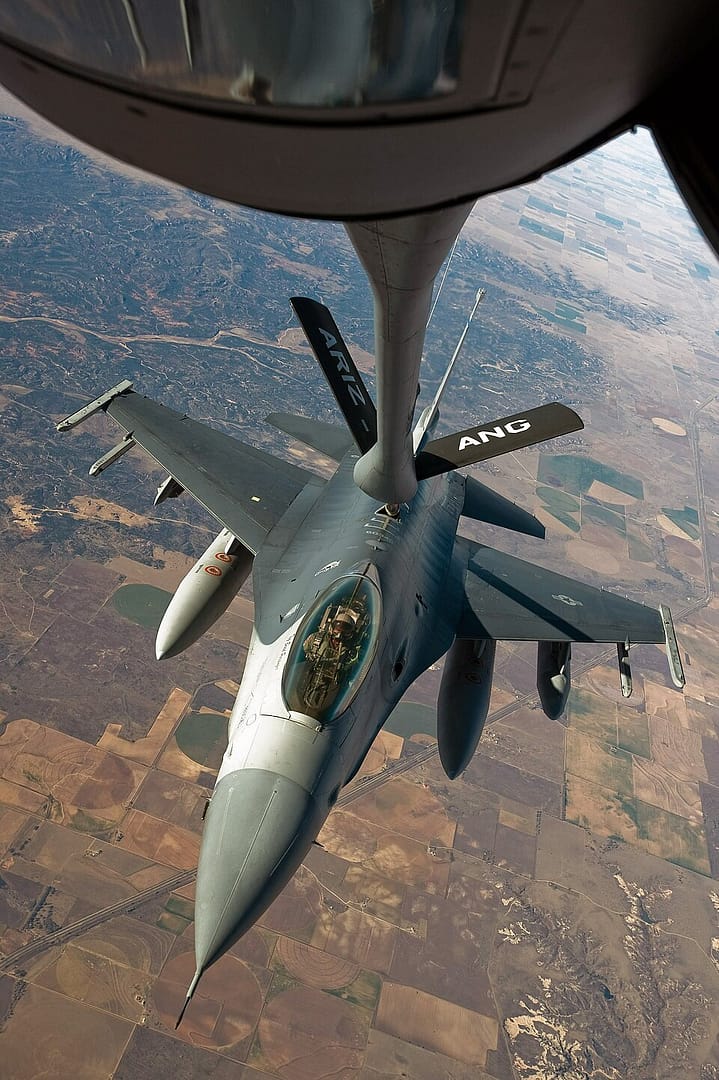
| Quick Facts | |
|---|---|
| Issue | Guard and Reserve fighter fleets are dangerously old |
| Primary Aircraft | F-16C/D Fighting Falcon, F-15C/D Eagle, A-10C Thunderbolt II |
| Average Age | Many airframes 35–45 years old |
| Guard/Reserve Share | ~40% of U.S. fighter capacity |
| Replacement Plan | Unclear — F-35 deliveries prioritise active duty |

The generals are talking publicly now. That’s how you know the problem has gotten serious. Guard and Reserve leaders have stepped in front of microphones to warn that their fighter fleets are ageing out — and nobody has a funded plan to replace them.
The numbers tell the story. The Air National Guard and Air Force Reserve fly approximately 40% of America’s total fighter capacity. These aren’t weekend warriors flying obsolete hand-me-downs for training. Guard and Reserve squadrons deploy overseas, sit alert for homeland defence, and fly the same combat missions as their active-duty counterparts. They do it in jets that first rolled off the production line when Ronald Reagan was president.
Some of these F-16s are 40 years old. The pilots strapping into them weren’t born when the aircraft were built.
The Fleet Nobody Talks About
When the Air Force discusses fighter recapitalisation, the conversation centres on the active-duty force: F-35 deliveries, the cancelled NGAD programme, the retirement of legacy platforms. The Guard and Reserve get mentioned in footnotes. But they fly roughly 700 fighters — F-16C/Ds, F-15C/Ds, A-10Cs and a handful of F-22s — that collectively represent an air force larger than most nations possess.
The problem isn’t just age. It’s structural fatigue, maintenance burden, and capability erosion. An F-16C Block 30 from 1987 has been upgraded with newer avionics and weapons, but its airframe has absorbed nearly four decades of flight loads. Metal fatigues. Structural inspections become more frequent and more expensive. Components that were once standard inventory become hard to source as manufacturers stop making them.
The result: aircraft spend more time in depot maintenance and less time flying. Mission-capable rates drop. Pilot training hours get cut because there aren’t enough flyable jets to go around. Readiness degrades in a slow, invisible slide that doesn’t make headlines until someone asks why a Guard unit couldn’t meet its deployment commitment.
The Replacement Gap
The F-35 was supposed to fix this. The Lightning II was designed to replace the F-16, F-15, A-10 and AV-8B across the Air Force, Navy and Marine Corps. But production realities mean F-35s go to active-duty squadrons first. The Guard and Reserve are at the back of the queue, and at current delivery rates, some units won’t see their first F-35s for another decade — by which point their current jets will be pushing 50 years of service.
There’s no bridge aircraft. The Air Force briefly considered buying new-build F-16Vs or F-15EXs as interim replacements for Guard units, but budget constraints have kept those proposals from gaining traction. The result is a planning vacuum: the old jets are wearing out, the new jets aren’t arriving fast enough, and nobody has funded the gap between the two.

Why It Matters Right Now
The timing of this warning is not accidental. The United States is conducting its largest air campaign since 2003 over Iran. Guard and Reserve units are part of that effort — they always are. F-16s from Guard squadrons fly combat air patrols, suppress enemy air defences, and provide close air support alongside active-duty wings. The operational demand on the force is real and immediate.
At the same time, homeland defence doesn’t stop because there’s a war overseas. Guard F-16s sit alert at bases across the continental United States, ready to intercept unidentified aircraft that enter restricted airspace. Every jet sent overseas is one fewer jet available for that mission. When the fleet is already too small and too old, the math stops working.
The Guard and Reserve leaders speaking publicly are making a simple argument: you can’t fly a 40% share of the nation’s fighter force on aircraft that are falling apart, with no replacement in sight, during a war. Something has to give. Either the budget finds money for new jets, or the missions get reduced, or the risk gets accepted. Right now, it’s the third option. And the generals are saying that’s not good enough.
Sources: Air & Space Forces Magazine

 English
0 Comments