
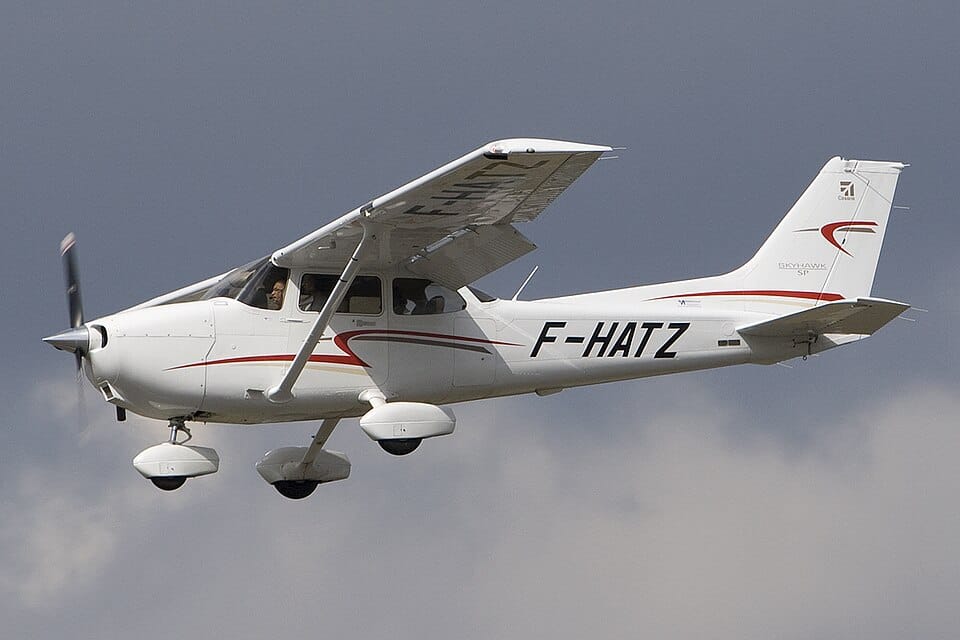
Your engine just quit. The propeller windmills to a stop. The cockpit gets eerily quiet except for the wind and the stall warning horn you’re about to hear if you don’t do something right now. Every student pilot knows the first move: pitch for best glide speed. But here’s the thing most flight instructors never fully explain — best glide isn’t always the right answer.
There’s another speed, rarely mentioned in most pilot operating handbooks, that could save your life in certain situations. It’s called minimum sink speed. The two sound similar. They are not. Choosing the wrong one in an emergency could be the difference between reaching a runway and landing in a forest.

Best Glide: Maximum Distance
Best glide speed — VG in pilot-speak — gives you the greatest horizontal distance for every foot of altitude you lose. Think of it as the most efficient angle downhill. In a Cessna 172, it’s roughly 65 knots. Fly faster, and you’re burning through altitude with excess drag. Fly slower, and induced drag from the wings working harder eats your energy just as fast.
This is the speed you want when there’s an airport three miles ahead and you need to stretch the glide to reach it. It gets you the farthest. Every mile counts, and VG is optimized to cover the most ground.
Most pilots memorize this number on day one and never think about it again. That’s fine — until the day they need the other number.
Minimum Sink: Maximum Time
Minimum sink speed is slower than best glide — typically 5 to 10 knots less. Instead of maximizing distance, it minimizes your rate of descent. You won’t glide as far, but you’ll stay in the air longer. More time means more time to troubleshoot, more time to find a landing spot, more time to make a radio call.
Here’s when minimum sink becomes the smarter choice: you’ve already got a field directly below you. You don’t need to stretch to a distant runway. What you need is time — time to set up the approach, time to assess the wind, time to configure for a power-off landing in a farmer’s pasture. Flying best glide in this scenario would actually carry you past the best option.
The catch? Most POHs don’t even list minimum sink speed. It’s calculated from the power-required curve — the point where the least amount of power is needed to maintain level flight. Pilots are expected to figure it out themselves, and most never do.
The Decision Tree
The real skill isn’t memorizing two numbers — it’s knowing which one the situation demands. Here’s the framework:
Fly best glide when: There’s a suitable landing area ahead that you need to reach. Terrain below is hostile — water, mountains, dense forest. You’re trying to maximize distance to a known safe option.
Fly minimum sink when: There’s a suitable landing area directly below or very close. You need time to troubleshoot (restart procedures, fuel selector check, carb heat). You’re at low altitude where every second of float matters.
There’s one critical safety note: minimum sink speed lives dangerously close to the stall. Entering a turn at minimum sink without adding speed can push you over the edge into a stall-spin — the deadliest scenario in general aviation. If you’re going to fly minimum sink, fly it in a straight line and add airspeed before any bank.
Know Your Numbers
Here’s what makes this frustrating for student pilots: you can spend 60 hours in a Cessna 172 and never once practice minimum sink. Your POH lists VG prominently. Minimum sink? Nowhere to be found. The FAA’s Airplane Flying Handbook barely mentions it. You’re on your own.
For a Cessna 172, minimum sink is roughly 56–58 knots. For a Piper Cherokee, it’s around 70 knots. For a Cirrus SR22, approximately 88 knots. These numbers aren’t gospel — they vary with weight, configuration, and altitude. But having a rough number in your head is infinitely better than having nothing.
Next time you’re up on a calm day, try it. Pull the power to idle at a safe altitude, set best glide, and note your descent rate. Then slow to minimum sink and compare. Feel the difference. The numbers on paper won’t save you — the muscle memory will.
Sources: Boldmethod, AOPA, FAA Safety Briefing, Aviation Safety Magazine



 English
0 Comments