

Quick Facts
- New Glenn NG-4 exploded during a static fire test at 9 p.m. EDT on May 28, 2026
- All seven BE-4 methane-fueled engines were firing when catastrophic failure occurred
- Launch Complex 36 is Blue Origin’s only orbital launch facility; there is no backup pad
- Amazon had 24 New Glenn launches under contract for its Project Kuiper constellation
- The previous NG-3 mission had suffered an in-flight upper stage anomaly just weeks earlier
- NASA recently contracted Blue Origin for multiple Artemis lunar missions including Blue Moon landers
The Explosion Sequence
Remote cameras captured the disaster in horrifying detail. The BE-4 engines, each producing roughly 550,000 pounds of thrust and burning liquid methane and liquid oxygen, appeared to ignite normally. Within moments, a flash erupted at the base of the rocket. The fuel-laden first stage detonated, sending a shockwave across the Cape and hurling debris hundreds of meters in every direction. The 188-foot first stage crumpled as the upper stage, still partially attached, tilted and fell into the inferno. The primary umbilical tower remained standing but video showed violent shaking that may indicate structural damage. The transporter erector, the massive gantry that raises the rocket into launch position, was obliterated. At least one lightning protection tower was destroyed, and the tank farm likely sustained catastrophic damage.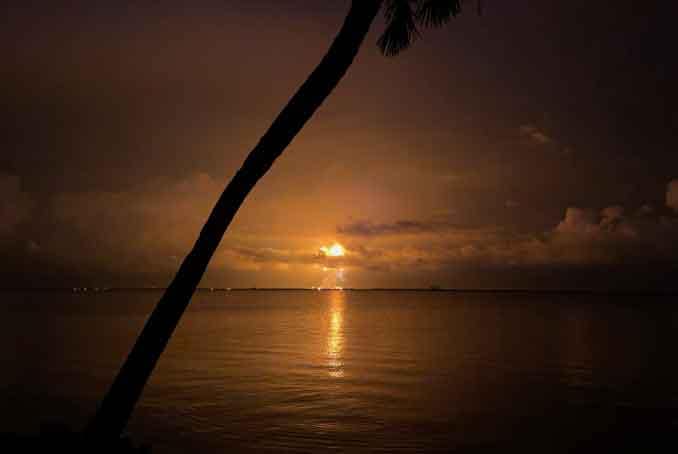
A Company Already on Shaky Ground
The timing could hardly have been worse. Blue Origin had just received FAA clearance on May 22 to resume New Glenn launches following the NG-3 upper stage anomaly, which stranded AST SpaceMobile’s BlueBird-7 satellite in the wrong orbit. The FAA investigation identified a cryogenic leak that froze a hydraulic line and caused a thrust anomaly during the second stage engine burn. Nine corrective actions were mandated. Now a far more devastating investigation lies ahead. Jeff Bezos acknowledged the severity in a post on social media, writing that it was a “very rough day” but that the company would rebuild and return to flying. The FAA confirmed that the static fire explosion fell outside the scope of its licensed launch activities.Impact on Amazon’s Kuiper and NASA’s Artemis
Amazon had contracted Blue Origin for 24 New Glenn launches to deploy its broadband satellite constellation, designed to compete with SpaceX’s Starlink. The NG-4 mission was to carry the first batch of 48 Kuiper satellites. The entire manifest is now suspended indefinitely. Launch Complex 36 is Blue Origin’s only orbital launch facility. There is no second pad, no alternate coast, and no bridge timeline. Industry sources suggest the pad may not be fully operational again for more than a year. If the issue traces back to the BE-4 engine, it could also affect United Launch Alliance’s Vulcan rocket, which uses the same powerplant for its first stage. NASA’s exposure is equally significant. Just three days before the explosion, NASA held an event announcing contract awards that heavily featured Blue Origin, including the use of New Glenn to deliver Blue Moon Mark 1 lunar landers carrying terrain vehicles to the lunar surface. The Blue Moon Mark 2 crewed lander is one of two vehicles selected for NASA’s Human Landing System program, alongside SpaceX’s Starship. NASA Administrator Jared Isaacman acknowledged the setback, stating that “spaceflight is unforgiving” and pledging to work with Blue Origin on a thorough investigation.Echoes of 2016, But Worse
The last comparable pad explosion at the Cape occurred in September 2016 when a SpaceX Falcon 9 detonated at Space Launch Complex 40 due to a helium tank rupture. SpaceX recovered relatively quickly because it had multiple launch pads. Blue Origin does not have that luxury. The Falcon 9 incident grounded SpaceX for roughly four months before launches resumed from other pads. It took over a year to restore SLC-40 itself. Blue Origin faces a potentially longer timeline with no alternative launch site available. For Jeff Bezos, who has invested more than $10 billion of his personal fortune into Blue Origin, the explosion is a devastating blow to a company that had only recently begun delivering on its long-delayed orbital ambitions. For Amazon, it means the Kuiper constellation timeline has been pushed further behind Starlink. And for NASA, it adds another variable to an Artemis program already managing a complex web of contractors and timelines. The investigation into the root cause is expected to take months. The rebuilding of LC-36 will take far longer. In the meantime, the Florida coast is one launch pad quieter.Sources: Spaceflight Now, Space.com, TechCrunch, The Conversation, CBS News, CNN, GeekWire

 English
0 Comments