
It shouldn’t be survivable. Two massive turbofan engines—the only things keeping a 600,000-pound aircraft aloft—both quit simultaneously at 40,000 feet. No thrust. No electrical power. Dead silent cockpit except for the wind screaming past the fuselage. It’s the scenario that keeps airline pilots awake.
Yet it’s happened. And the people at the controls—exhausted, terrified, probably running on adrenaline and 20 years of training muscle memory—have managed the impossible: glide an airliner back down to earth and land it.
The Gimli Glider: Metric Madness at 41,000 Feet
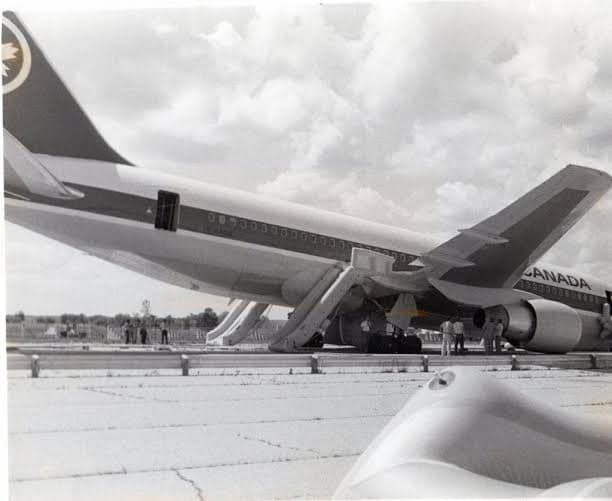
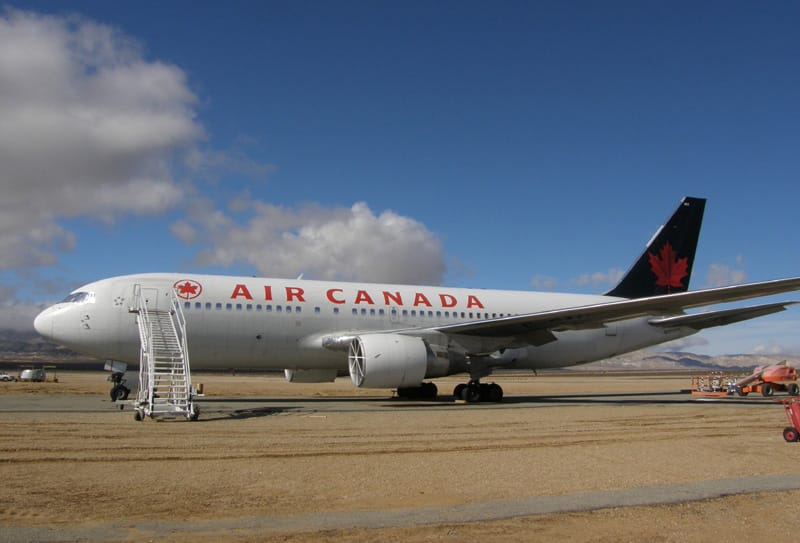
July 23, 1983. Air Canada Flight 143, a Boeing 767, is cruising over Ontario at 41,000 feet when the captain hears a muffled \”bong\”—the all-engines-out warning. No one in the cockpit had ever heard that sound before. A fuel-quantity sensor failed. A metric-to-imperial conversion mix-up during maintenance resulted in half the fuel being loaded. Simple arithmetic gone wrong. Catastrophic result.
Both engines died in quick succession. The 767 became 330 tons of unpowered aluminum. Captain Robert Pearson immediately realized they had a gliding chance. His best option: a former Canadian Air Force base at Gimli, Manitoba, 120 kilometers away, now converted to a motorsports park. It would be tight. It would be nerve-shredding. But it was there.
Pearson and his crew dropped 29,000 feet in 23 minutes of controlled descent. No engines. No hydraulic systems initially failing. Just aerodynamic control through raw skill. They landed on the racetrack with only minor injuries. The media called it the Gimli Glider. The physics said it was impossible. The pilots said, \”Hold my coffee.\”
When Volcanic Ash Kills All Four Engines
But the Gimli Glider wasn’t alone. On June 24, 1982, British Airways Flight 9—a Boeing 747 cruising at 37,000 feet near Jakarta—flew through an invisible cloud of volcanic ash ejected from Mount Galunggung. The ash was dry, impossible to see on radar, and catastrophically fine.
Engine 4 surged and flamed out. Engine 2 followed. Then 1 and 3, almost simultaneously. Four. Engines. Dead. A 747 with 248 passengers and 15 crew, now a glider with the aerodynamic profile of a flying barn.
But here’s where physics becomes mercy: as the 747 descended and exited the ash cloud, temperatures dropped. The molten ash that had clogged the engines hardened and broke loose. The engines, cooling and clearing, relighted. All four turbines roared back to life. The crew restarted three of them successfully and diverted to Jakarta. Everyone walked off. The incident entered the Guinness Book of Records as the longest engineless glide of a non-purpose-built aircraft.

The Physics of Powerless Flight
A Boeing 737 or Airbus A320 has a glide ratio of roughly 15:1. That means from 30,000 feet, properly configured and flown at the correct speed, it can cover approximately 100 kilometers before touching down. At 35,000 feet, you’re looking at 40 to 60 minutes of controlled descent—enough time to brief the cabin crew, declare an emergency, contact every airport within range, and mentally prepare for the landing.

The key is flying at \”best glide speed\”—the airspeed that maximizes distance covered per foot of altitude lost. Too fast and you bleed altitude quickly. Too slow and you sink without forward progress. It’s a narrow window, but it’s there. And modern aircraft trim and control surfaces allow pilots to hold that speed even without engine power, as long as hydraulic systems remain functional.
What the Crew Sees and Feels
The cabin goes quiet. Not peaceful quiet—a dead, eerie quiet where passengers suddenly become aware of every small sound. The aircraft doesn’t shake or rattle; it glides with an unsettling smoothness. Flight attendants move methodically through the aisles, speaking in low voices. Everyone knows something is wrong. Most don’t yet know how wrong.
In the cockpit, checklists become scripture. Restart procedures are attempted. Radio communications are measured and deliberate. The pilots are working through decades of training in seconds. Fear is managed through procedure. Panic is swallowed with coffee that tastes like copper.
And then, on the horizon, a runway appears. Close enough. Long enough. The 747 or 737 or A320 flares, touches down, and the passengers realize they’ve just lived through something that wasn’t supposed to be survivable. Pilots call it a day at the office. Passengers go home with a story that no one will believe until they check the news.
Sources: The Aviators Group, Simple Flying, HowStuffWorks

 English
0 Comments