
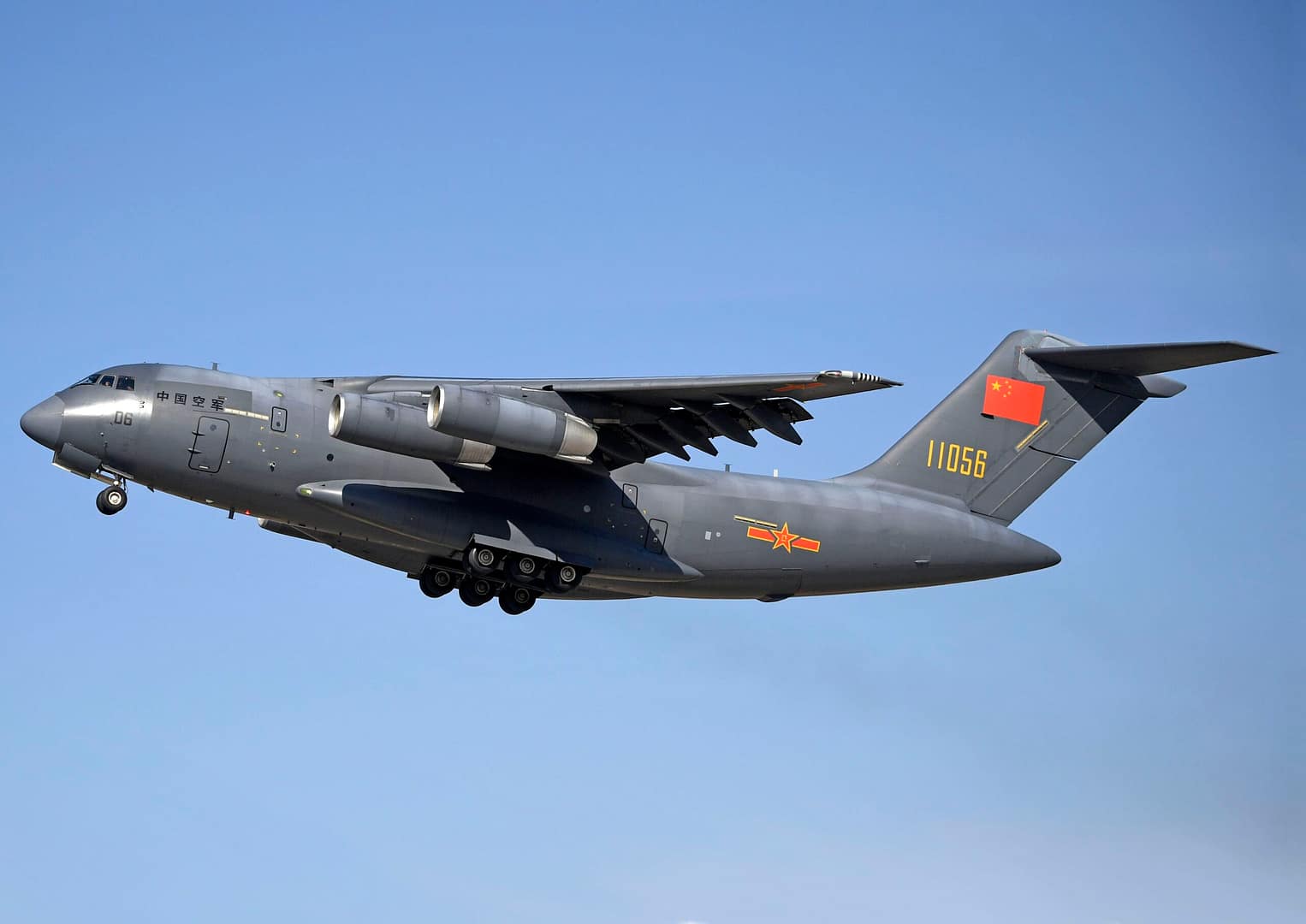
The infrared image is grainy. Two delta-winged shapes flank a much larger silhouette, and a thin line connects them — a refueling hose, suspended somewhere over the East China Sea. It is May 25, 2026, and a Republic of China Air Force F-16 has just locked its Sniper targeting pod onto something Taiwan’s military has never released before: a Chinese Y-20 air-to-air tanker, mid-refueling, with two J-16 fighters drinking from its drogues inside Taipei’s Air Defense Identification Zone.
Taipei’s Ministry of National Defense did not wait the usual 24 hours to publish the daily intrusion log. Within hours of the contact, the MND pushed out the IR capture, named the airframes, and confirmed that 21 PLA sorties had punched across the median line in concert with PLA Navy vessels — including a J-10, J-16, KJ-500 AEW&C package and the YY-20A/YU-20A tanker that made the whole thing possible.
This was a deliberate message. China has been operating tankers in the Taiwan Strait for years, but rarely has a foreign camera caught one fueling a combat package in the act. That single frame is a snapshot of the PLA Air Force’s coming-of-age moment — and of how much closer the next Strait crisis can now be fought.
Quick Facts
Date: 25 May 2026, 15:12 local time
Aircraft package: 21 PLA sorties — Y-20 tanker, J-16, J-10, KJ-500 AEW&C, plus UAVs and helicopters
Captured by: Taiwan RoCAF F-16 with Sniper Advanced Targeting Pod
Median-line crossings: 16 of 21 sorties
Response: RoCAF Combat Air Patrol, RoC Navy ships, coastal missile units
A picture the PLA did not want released
The Taiwanese Military News Agency posted the infrared capture from the F-16’s targeting pod on social media within hours. It shows a Y-20 in the centre, two J-16s flying tight formation on either wingtip, and a faintly visible hose feeding one of the fighters. The targeting-pod display interface that would normally identify the aircraft type and lock symbology has been edited out before release — a polite nod to operational security that still does not hide what the picture is.
Taiwan has released Sniper-pod captures of PLA aircraft only rarely: the first came in October 2024, when an F-16 photographed a carrier-borne J-15 during the Joint Sword exercises, followed by an image of a J-16 released in mid-May 2026. The reuse of the same disclosure playbook — high-resolution capture, fast public release, embargoed sensor metadata — suggests Taiwan now treats these intercepts as a strategic communication tool, not just a tactical log entry.
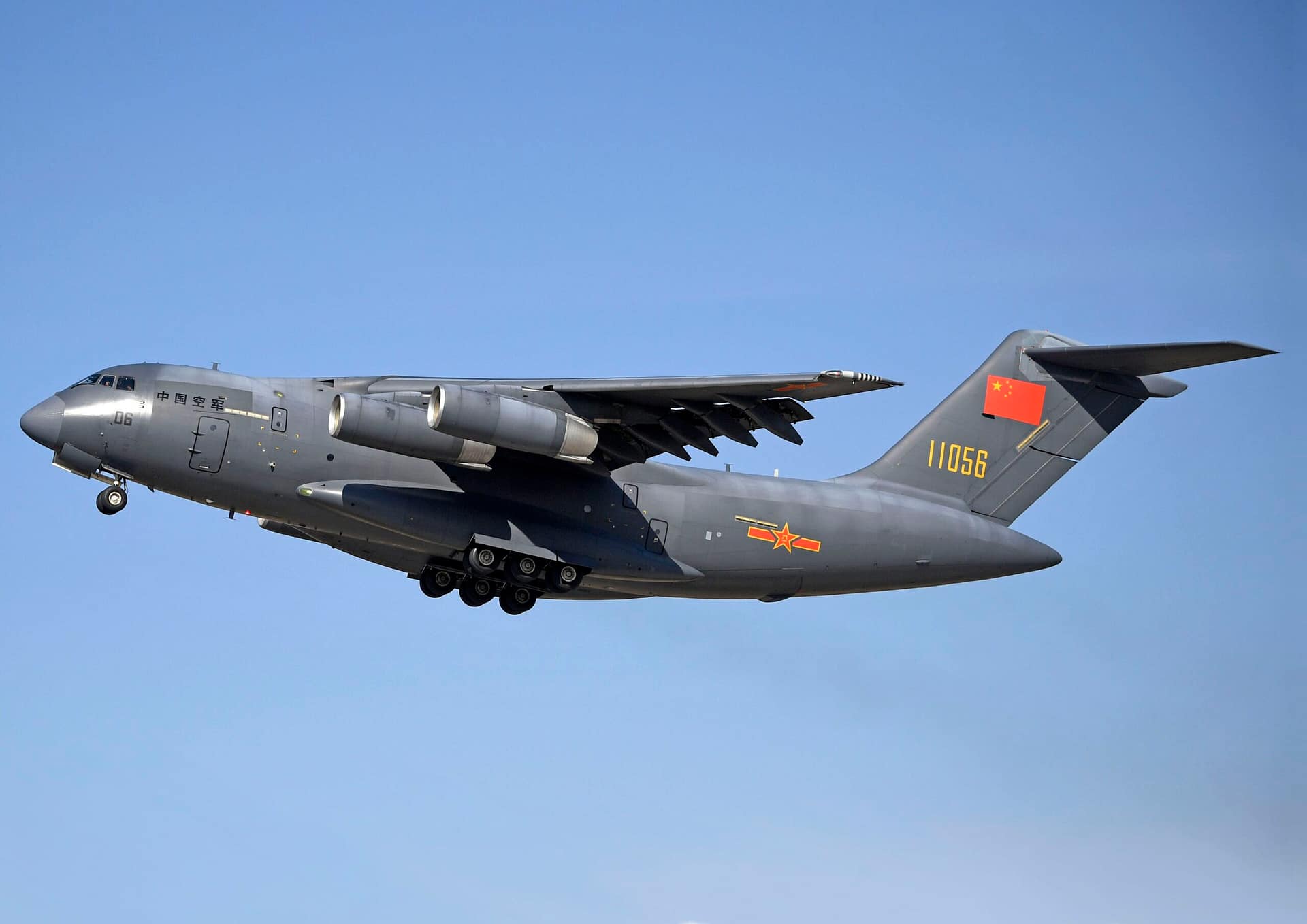
The Y-20 has been the missing piece in the PLA Air Force long-range puzzle for over a decade. The Xian-built strategic airlifter, comparable in size to the C-17, was always going to spawn tanker, AEW and ISR variants. The YY-20A/YU-20A is the refueling variant, fitted with under-wing hose-and-drogue pods. China’s most recent leap was the Y-20B, powered by the indigenous WS-20 turbofan — the variant that flew its first foreign deployment to South Korea in April 2026 to repatriate Korean War remains.
Why the tanker matters more than the fighter
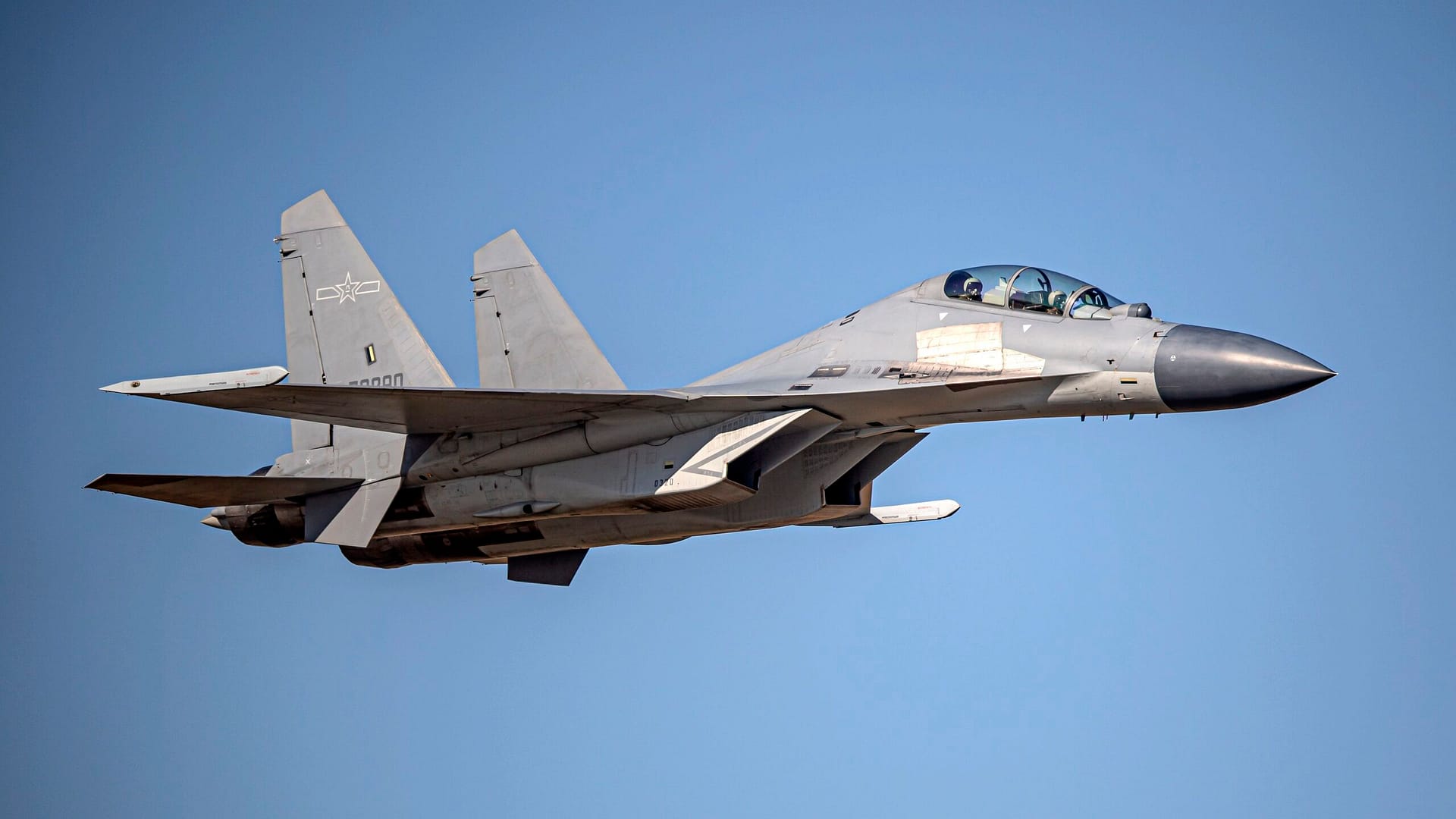
A J-16 inside Taiwan’s ADIZ is not, in itself, new. A J-16 with a full external load, refueled in the air by a strategic tanker before pressing on to a contested zone — that is what changes the threat envelope. With the Y-20 in the package, the PLAAF can sustain combat air patrols off Taiwan’s east coast, beyond the reach of the island’s coastal radar and short-cycle interceptors. It is the same logic that put US tankers over the Sea of Japan in the 1960s: range is the substrate of every air campaign.
Air power analysts such as RUSI’s Justin Bronk have long pointed to China’s tanker fleet, rather than its fighter inventory, as one of the most important indicators of PLAAF operational maturity. The visible appearance of a YY-20A actively passing fuel inside Taiwan’s ADIZ is the kind of milestone that retired tracker desks have been watching for.
The political timing
The intrusion came hot on the heels of the Trump–Xi summit in Beijing, where Xi reportedly warned Washington that continued US support for Taiwan would risk a superpower confrontation. Russia’s Vladimir Putin followed days later for his own bilateral with Xi.
Analysts read the 25 May package as the PLA’s way of signing the summit’s bottom line in the sky: Taiwan remains, in Beijing’s phrasing, an “uncompromisable goal” regardless of the diplomatic temperature. Crucially, China paused these flights between 27 February and 5 March 2026 — the opening days of the US-Iran war — to avoid the appearance of opportunism. The resumption tells a complementary story: the pause was a courtesy. The runway around Taiwan is open again.
An Air Defence Identification Zone is not sovereign airspace. It is a notional buffer that gives an air force time to identify and intercept inbound traffic before it crosses an internationally recognised border. But when 24 of 29 next-day sorties cross the median line, when those sorties include tankers, AEW and strike fighters operating as a single package, the buffer is doing exactly what it was designed to do: it is telling Taipei that the next contingency will not be a single aircraft probing a corner of the map. It will be a force.
Sources: The Aviationist, Taipei Times, Taiwan Ministry of National Defense, Taiwan Military News Agency.


 English
0 Comments