

Quick Facts
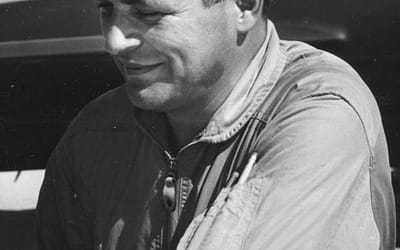
Name: Group Captain Sir Douglas Robert Steuart Bader, CBE, DSO & Bar, DFC & Bar
Born: February 21, 1910, London
Accident: December 14, 1931 — lost both legs in a low-altitude aerobatics crash
Return to flying: 1939 — recalled to active duty at the outbreak of WWII
Victories: 22 confirmed kills, 1 shared, 6 probable, 11 damaged
Captured: August 9, 1941 — shot down over France
POW camps: Colditz Castle, among others — attempted escape 3+ times
The Crash That Should Have Ended Everything
Bader was showing off. On a routine training flight at Woodley Airfield near Reading, he attempted a low-level slow roll in his Bristol Bulldog biplane — a manoeuvre he had been explicitly warned not to perform at low altitude. The left wingtip caught the ground. The aircraft cartwheeled and disintegrated.
Back in the Cockpit
When war broke out in September 1939, the RAF needed every pilot it could find. Bader got his chance. He was assigned to No. 19 Squadron, flying Spitfires, and quickly proved that his disability was irrelevant in the cockpit. If anything, it was an advantage: without legs to absorb blood flow during high-G manoeuvres, Bader could sustain tighter turns than pilots with functioning limbs. By the summer of 1940, Bader was commanding No. 242 Squadron — a demoralised Canadian unit that had been mauled during the Fall of France. He rebuilt it into one of the most aggressive fighter squadrons in the RAF, and led it through the Battle of Britain with a ferocity that became legendary.The Big Wing Controversy
Bader was not just a fighter pilot — he was a tactician with strong opinions. He championed the “Big Wing” concept: massing three to five squadrons together before engaging the Luftwaffe, rather than sending up individual squadrons piecemeal. The idea put him directly at odds with Air Vice-Marshal Keith Park, who controlled 11 Group defending London. The debate between Bader’s mass formations and Park’s rapid-response scrambles remains one of the great tactical arguments of the Battle of Britain. Modern historians generally side with Park — there was rarely enough time to assemble Big Wings before the bombers arrived — but Bader’s advocacy reflected a truth that would shape fighter doctrine for decades: concentration of force matters.Shot Down and Captured
On August 9, 1941, Bader was shot down over Le Touquet, France. He bailed out, leaving one of his prosthetic legs jammed in the cockpit. The Germans were astonished to capture a legless ace — and chivalrous enough to allow the RAF to drop a replacement leg by parachute during a bombing raid. That was their mistake. Bader immediately began planning escapes. He was moved from camp to camp, each time causing maximum disruption. Eventually, the Germans sent him to Colditz Castle — the “escape-proof” fortress reserved for the most troublesome Allied officers. His artificial legs were confiscated at night. He still tried to escape. Douglas Bader was liberated in April 1945. He led a victory flyover of 300 aircraft over London. He was knighted in 1976. He died in 1982, having spent fifty years proving that the word “impossible” was merely an opinion.Sources: “Reach for the Sky” by Paul Brickhill, RAF Museum, Imperial War Museum
 English
0 Comments