
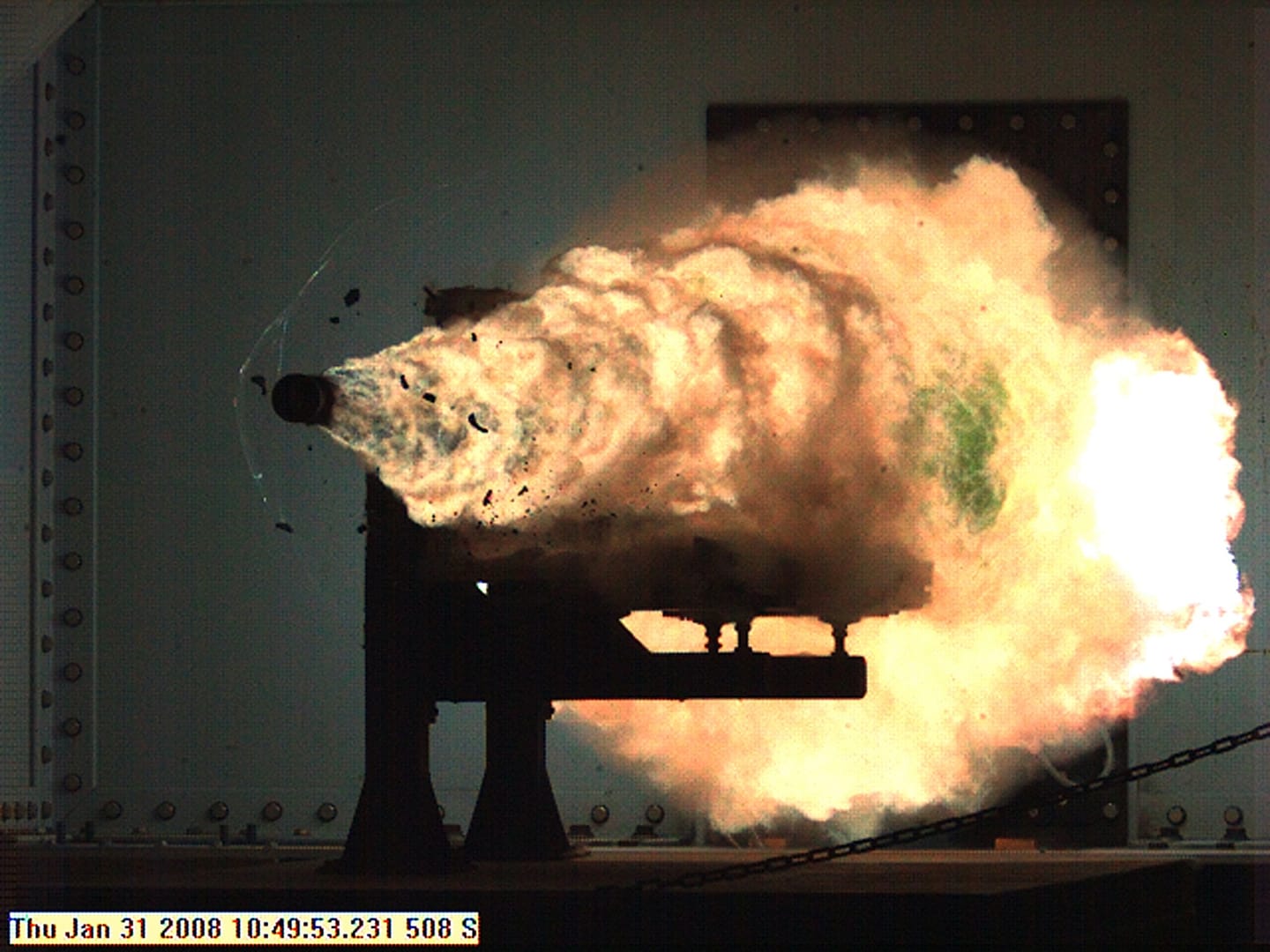
It needs no gunpowder, no explosive warhead, and no rocket motor. It simply uses electricity and magnetism to fling a chunk of metal at seven times the speed of sound, destroying its target through raw kinetic energy. For a while, the electromagnetic railgun looked like the future of naval gunnery. Then, in 2021, the U.S. Navy quietly killed it. Now it is clawing its way back.
Quick Facts
- Weapon: the electromagnetic railgun — it fires a slug with magnetic force, not gunpowder
- Speed: hypersonic, around Mach 7 (roughly 2.5 km/s); it destroys targets with kinetic energy alone
- US program: about $500 million over ~15 years (2005–2021), then paused
- Why it stalled: barrels wore out fast, the power demands were enormous, and hypersonic missiles offered an easier path
- The comeback: the US quietly resumed trials in 2025, while Japan and China press ahead
Fire Without Gunpowder
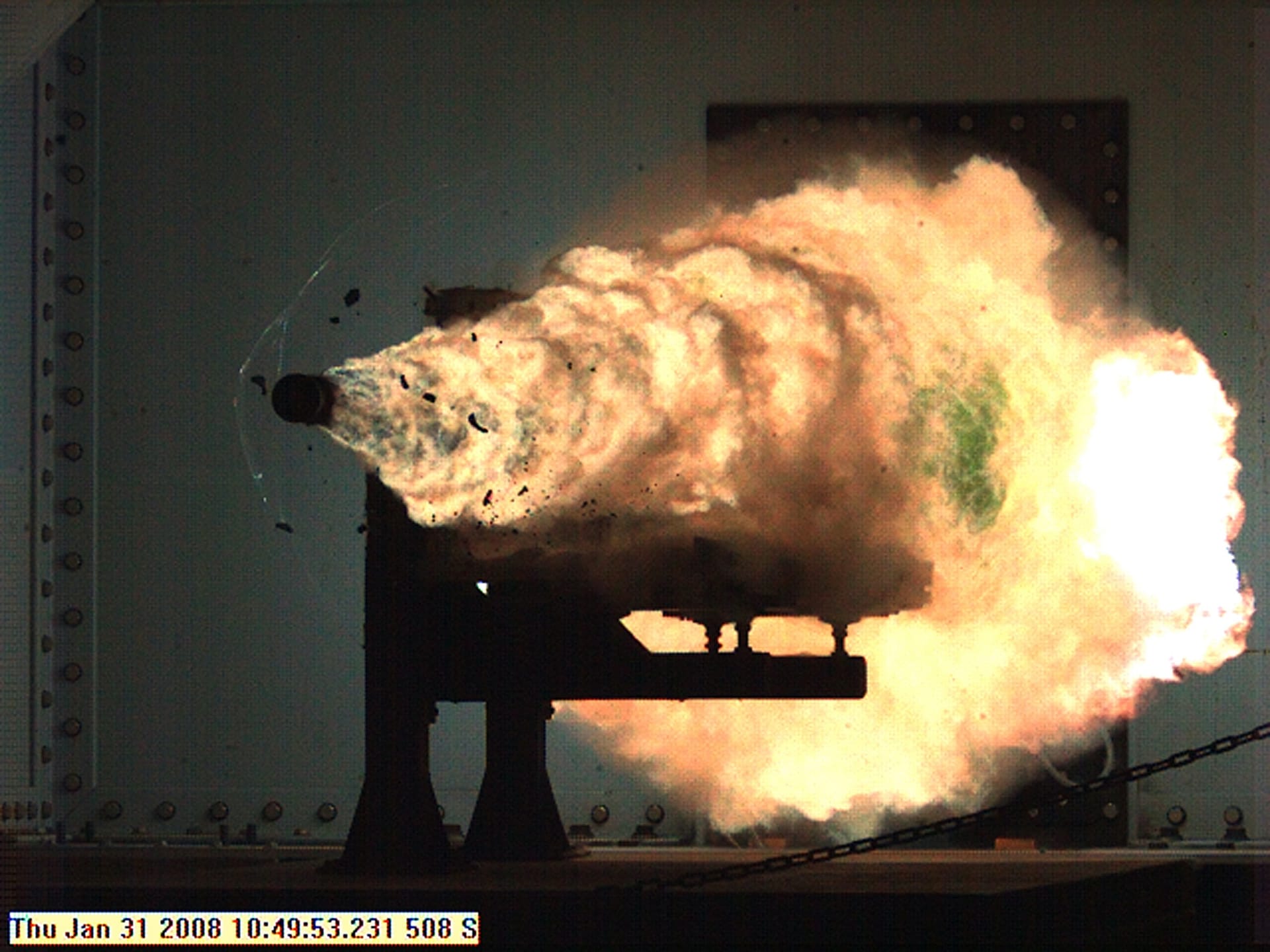
A railgun works on a beautifully simple principle. Run an enormous electric current down two parallel rails with a conductive projectile bridging them, and the resulting magnetic field generates a force — the Lorentz force — that hurls the projectile down the rails and out the muzzle. No chemical propellant is involved. In a record 2008 test at Dahlgren, the Navy’s gun fired at 10.64 megajoules of energy and a muzzle velocity of 2,520 metres per second — well beyond Mach 7. At those speeds a solid slug doesn’t need to explode; the impact alone is devastating.
Why the Navy Gave Up
The promise was a gun that could hit targets 100 nautical miles away with cheap, un-explosive rounds. The reality proved brutal. The same forces that accelerate the projectile chew up the rails, so barrels wore out after relatively few shots. The energy required to fire was so vast that almost no warship could supply it at a useful rate. And as the program dragged past a decade and half a billion dollars, hypersonic missiles emerged as a faster route to the same goal.
The Comeback
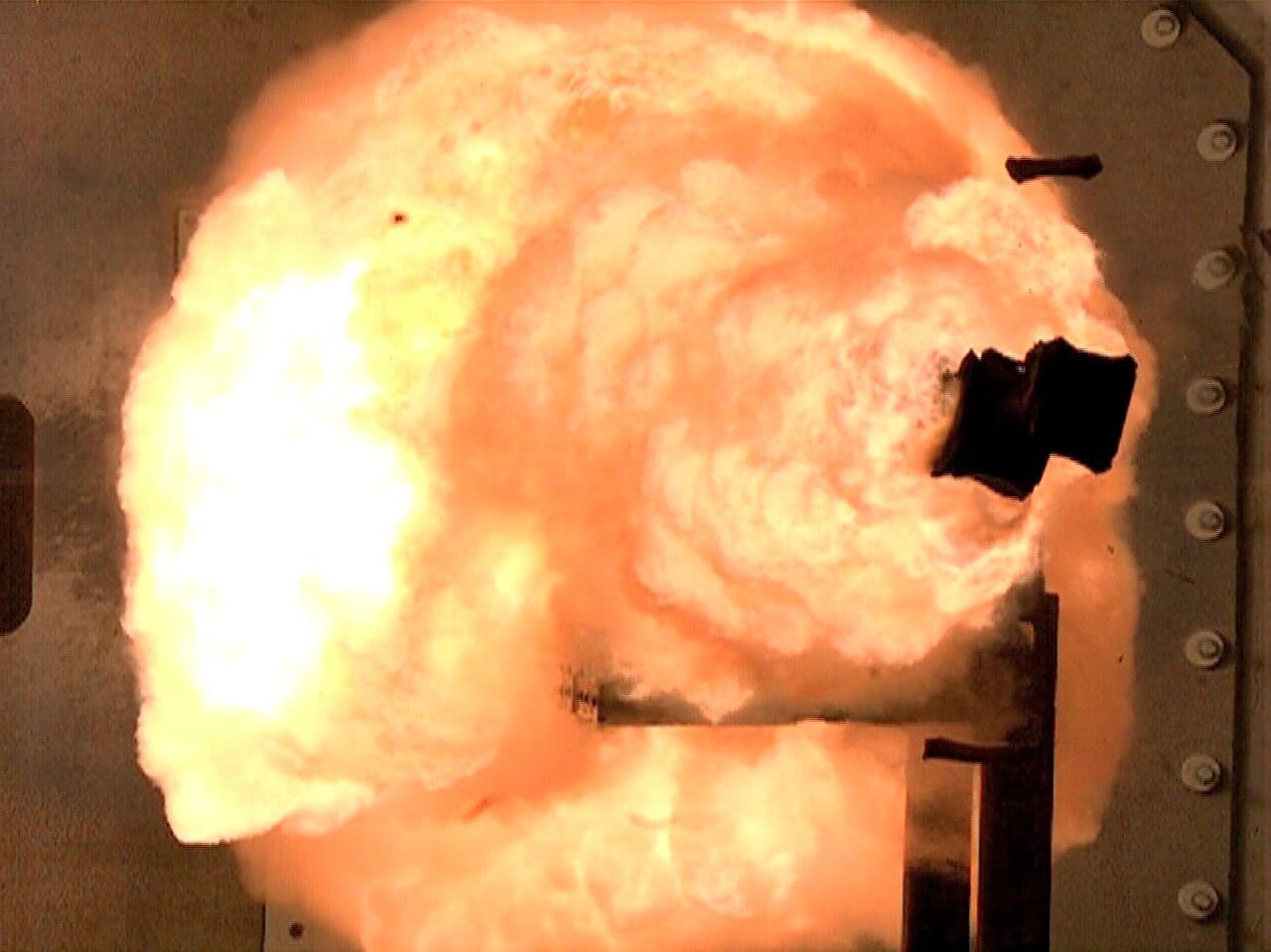
Reports of the railgun’s death may have been premature. The U.S. Navy has quietly resumed live-fire railgun research, with trials at White Sands Missile Range in 2025. Japan has gone further still, firing a railgun from a warship and refining it specifically to shoot down incoming hypersonic missiles. China, too, has been testing a shipborne railgun for years.
The logic driving the revival is simple economics: against a flood of expensive hypersonic missiles, a gun that fires cheap kinetic slugs — if the engineering can be tamed — is an attractive shield. The weapon that was too hard to build may yet get a second life.
Sources: U.S. Naval Surface Warfare Center; Office of Naval Research; 19FortyFive; Asia Times; Military.com.



 English
0 Comments