
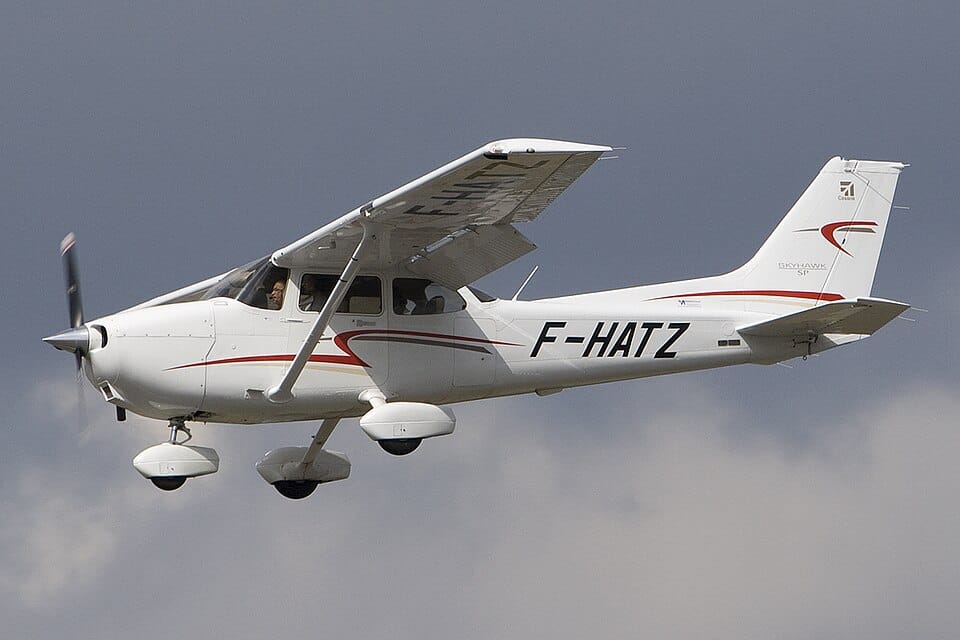
The engine goes silent. One moment you have 180 horsepower pulling you through the sky; the next, you have a very expensive glider and a finite amount of altitude to spend. Every pilot trains for this moment. Most learn the same mantra: pitch for best glide speed.
But here is the question almost nobody asks in the heat of the moment: should you actually be flying best glide — or minimum sink? They are not the same thing. They give you different things. And picking the wrong one could cost you the landing.
Let’s break it down.

Best Glide: Maximum Distance
Best glide speed — often listed in the Pilot’s Operating Handbook as VG — is the speed that gives you the greatest forward distance for every foot of altitude you lose. In a Cessna 172, that is roughly 65 knots. In a Piper Cherokee, about 73. It is the speed that maximises your glide ratio — the ratio of horizontal distance to vertical descent.
Think of it this way: if you are two miles from a runway and 3,000 feet up, best glide is the speed that gives you the best shot at reaching that runway. You are trading altitude for distance as efficiently as the aerodynamics of your wing will allow. Fly faster, and you burn through altitude with extra drag. Fly slower, and induced drag from a higher angle of attack eats into your range just as badly.
Best glide is the textbook answer for a reason. In most engine-failure scenarios, what you need most is range — distance to reach a suitable landing site. It is the speed your instructor drills into you, and for good reason.
Minimum Sink: Maximum Time
Minimum sink speed is different. It is the speed at which your rate of descent — measured in feet per minute — is at its lowest. You are not going as far forward, but you are coming down as slowly as possible. In most light aircraft, minimum sink speed is roughly 10–15% slower than best glide.
Why would you want time instead of distance? Several scenarios. You are directly above your landing site and need to lose altitude slowly while you set up your approach. You want to maximise the time available to troubleshoot the engine — run through the restart checklist, switch fuel tanks, check the mixture. Or you are over hostile terrain with no good landing options and need every extra second to communicate your position and prepare for a rough arrival.
Best glide gets you the farthest. Minimum sink keeps you up the longest. Same emergency — different priorities.
There is an important catch. Minimum sink speed is almost never published in the aircraft’s flight manual. You will find best glide speed on placards, in POH performance charts, and printed on the instrument panel. Minimum sink? You are on your own. It sits roughly at the bottom of the power-required curve — the point where the aircraft needs the least energy to sustain flight. For most trainers, it is somewhere around 55–60 knots, but the exact number varies with aircraft type and weight.

The Real-World Decision
In practice, here is how experienced pilots think about it. The moment the engine quits, pitch for best glide. This is the safest default — it keeps the aircraft in a stable, efficient glide while you assess the situation and pick a landing site. Best glide gives you options. Options keep you alive.
Once you have identified your field and you are confident you can reach it, you might slow to minimum sink speed to stretch your time aloft. This is particularly useful if you are high and close — you need time more than distance. Some pilots use minimum sink while running the restart checklist, then accelerate back to best glide once they have committed to a landing site.
But there is a critical safety warning. Minimum sink speed is closer to stall speed. If you are flying at minimum sink and enter a turn without adding speed, you are flirting with a stall — and a stall at low altitude during an engine-out emergency is how accidents become fatal. Best glide gives you a larger margin above stall, which is why it remains the safer default for most of the glide.
What Every Pilot Should Know
The General Aviation Joint Safety Committee has found that a significant number of fatal general aviation accidents could be prevented if pilots were better trained to fly at the correct glide speed during forced landings. The problem is not that pilots don’t know what best glide speed is — it is that under stress, they often fly too fast or too slow, wasting precious altitude.
Know your best glide speed cold. Have a rough idea of your minimum sink speed. Understand which one you need and when. And above all, practice. A power-off approach from altitude, landing on a chosen spot, should be a regular part of every pilot’s currency flying — not something attempted for the first time when the propeller stops turning for real.
The engine doesn’t care whether you trained for this moment. The aerodynamics don’t negotiate. But the pilot who knows the difference between best glide and minimum sink — and when to use each — has already won half the battle before the silence begins.
 English
0 Comments