
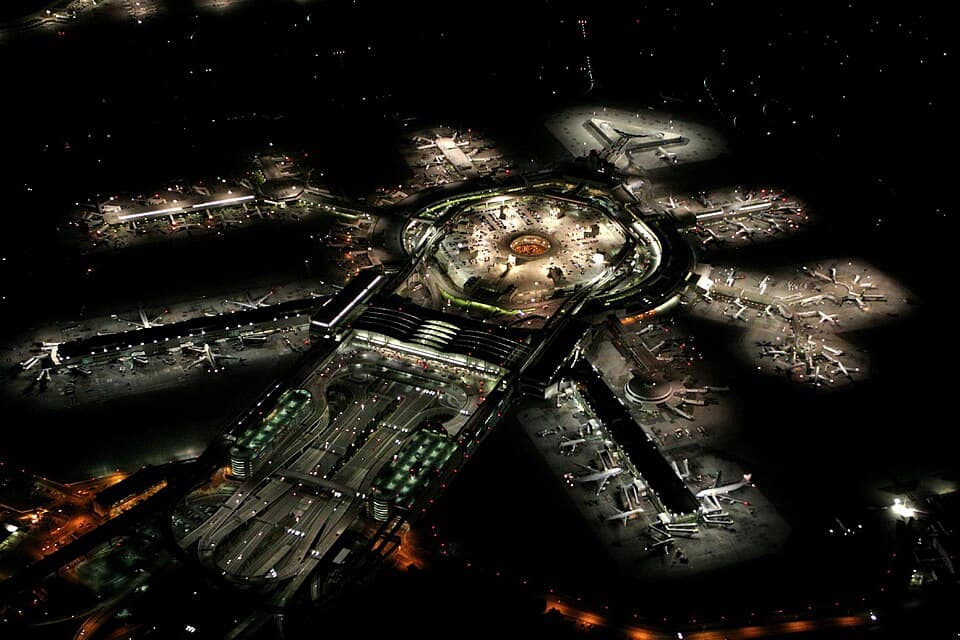
What Changed FAA permanently banned simultaneous side-by-side landings on parallel runways 28L and 28R
Runway Separation 750 feet — closer than any other major U.S. hub
Capacity Impact Arrival rate cut from 54 to 36 flights per hour (one-third reduction)
New Procedure Staggered approaches required — one aircraft offset from the other
Expected Delays ~25% of arriving flights delayed 30+ minutes
Duration Permanent — will continue even after ongoing runway repaving is complete

For decades, San Francisco International Airport ran one of the most demanding approach procedures in commercial aviation: two jets landing simultaneously on parallel runways separated by just 750 feet. Pilots threaded their aircraft down side by side, wingtip to wingtip in fog and rain, guided by instrument approaches that left almost no margin for error. It was hair-raising, efficient, and — as of this month — permanently banned.
The Federal Aviation Administration has killed SFO’s iconic side-by-side landings for good. The new rule requires staggered approaches, with one aircraft offset from the aircraft on the parallel runway. The change slashes arrival capacity by a third — from 54 flights per hour to 36 — and will make delays a fact of life at one of America’s busiest airports.
This is not a temporary measure. The prohibition will remain in place even after SFO finishes a six-month runway repaving project that has already taken two north-south runways out of service. The FAA has decided that the old way of doing things was too risky. Period.
750 Feet Apart
To understand why this matters, you need to understand SFO’s geometry. The airport’s two main east-west runways — 28L and 28R — are separated by just 750 feet. That is roughly the length of two football fields. At every other major U.S. hub with parallel runways, the gap is significantly wider, and simultaneous approaches are routine with comfortable margins.
At SFO, pilots executed what is known as a Precision Runway Monitor (PRM) approach — two aircraft flying tightly spaced instrument approaches while controllers watched on high-resolution radar, ready to break one off if it drifted toward the other. It worked. Thousands of times a day, for years. But the margin between “working” and “not working” was razor-thin.
The FAA’s decision follows a broader agency push to reduce runway incursion risk after the fatal American Airlines Flight 5342 crash in January 2025. That accident, at Washington Reagan, was not directly related to parallel approaches — but it focused intense scrutiny on every procedure where the margin for error was uncomfortably small. SFO’s 750-foot gap was always at the top of that list.
What Passengers Will Feel
The numbers are blunt. With arrival capacity cut from 54 to 36 flights per hour, the FAA expects roughly 25 percent of arriving flights to experience delays of at least 30 minutes. On busy days — summer travel peaks, holiday weekends, any afternoon with fog — the delays will stack. Airlines have already begun adjusting schedules.
The timing compounds the pain. SFO’s runway repaving project, which began in early April, takes the two north-south runways out of service for approximately six months. That forces all operations onto the east-west pair — the very runways now restricted to staggered approaches. It is a capacity squeeze on top of a capacity squeeze.
Delta, which had 139 cancellations on Easter Monday alone, is among the carriers already feeling the impact. American Airlines reported 582 delays the same day. Severe weather and TSA staffing shortfalls contributed, but the new SFO restrictions added fuel to the fire.
End of an Era
For pilots, SFO’s side-by-side approaches were a rite of passage — one of those procedures that separated a routine flight from a demanding one. Landing in San Francisco fog, precisely tracking a PRM approach with another jet visible in your peripheral vision 750 feet to the left, was the kind of thing you talked about at crew dinners.
For air traffic controllers, it was a high-wire act that demanded absolute precision. For passengers, it was invisible — unless you happened to glance out the window and see a 737 flying alongside you, close enough to read the registration number.
That era is over. The FAA has decided that safety demands it, and the decision is permanent. SFO will adapt, airlines will adjust schedules, and passengers will wait. But something distinctive about flying into San Francisco — something that made pilots sit up a little straighter on approach — has quietly disappeared.
Sources: KQED, Simple Flying, AvWeb, FAA

 English
0 Comments