
The wind sock is standing sideways. It looks aggressive, almost mocking. You’re on short final, and your knuckles are white on the yoke. The runway keeps sliding sideways no matter what you do with the controls. Your instructor—if you’re lucky enough to have one aboard—is quiet, watching. Your radio is full of other aircraft landing smoothly, confidently, like the wind isn’t even there.
Crosswind landings break something in student pilots that calm-air landings never touch. They’re the moment when flying stops being about following procedures and starts being about feeling the airplane. Most student pilots, on their first strong crosswind, make at least one of the same five mistakes. Knowing what they are—and how to fix them before they become habits—is the difference between a bumpy learning curve and a dangerous one.
Mistake 1: Not Checking the Wind Before You Even Enter the Pattern
This is the meta-mistake, the one that precedes everything else. You’re five miles out, approaching the airport, and you haven’t checked ATIS, haven’t looked at the wind sock, haven’t glanced at the automated weather. You descend into the pattern assuming conditions are like they were on your last landing twenty minutes ago.
The wind can shift fifteen degrees or five knots in twenty minutes. At a mountain airport, thermal updrafts can change wind direction in the space of a downwind leg. Coastal airports have sea breezes that turn on like a switch in the afternoon. You need current information before you commit to an approach.
Pull ATIS the moment you’re in radio range. If you’re flying into an uncontrolled field, look at the wind sock from two miles out, not from short final. A wind sock standing nearly horizontal tells you something—listen to it. A wind sock that’s drooping tells you the wind is light, which is a completely different problem. The wind is trying to communicate with you. Your job is to listen before you’re committed to landing.
Mistake 2: Crabbing All the Way to the Flare
You enter on a long final with a crosswind from the left. You correct by pointing the nose left, keeping the fuselage angled into the wind to keep the airplane tracking down the centerline. This is the crab—and it works beautifully. So you leave it alone.
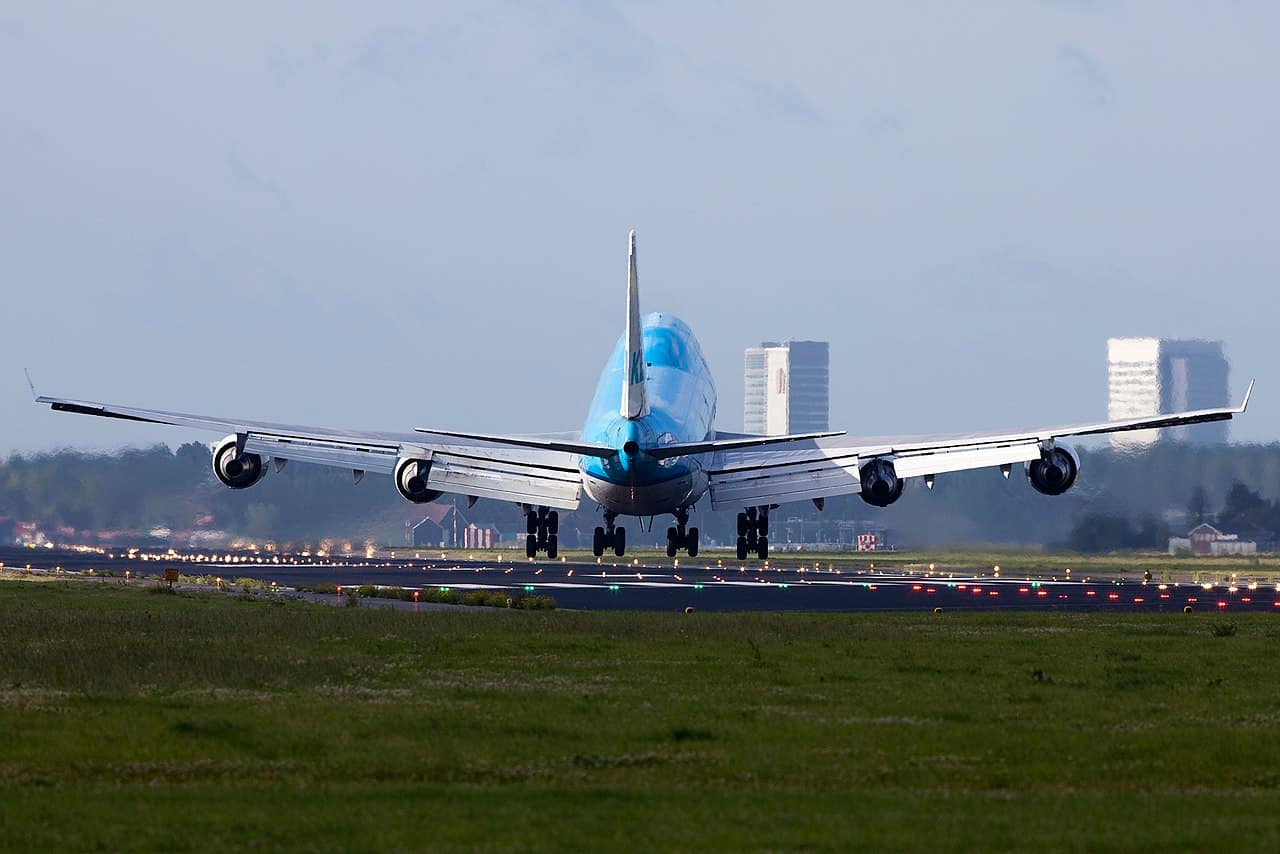
Down the runway you come, crabbed at fifteen degrees, and your instructor suddenly looks uncomfortable. Here’s why: a crab landing, where you touch down with the fuselage still angled to the wind, puts enormous side stress on the landing gear. The main wheels want to go one direction while the nose wheel wants to go another. Tires blow. Gear bends. Airframes crack. It’s not a smooth disaster—it’s catastrophic in the most inconvenient way.
The transition is everything. Somewhere between five hundred feet and the flare, you need to change from a crab to a sideslip. This means: keep the upwind wing low (use ailerons), and use the rudder to keep the nose straight down the runway. You’re no longer angling the entire airplane into the wind. You’re using aileron pressure to make the upwind wing bite the air and prevent drift, while the rudder handles pitch alignment. In the flare, you land on the upwind main wheel first, then the downwind main wheel. The nose wheel comes down last, straight and aligned.
Practice this transition on calm days first. Get a feel for how much aileron you need at different wind speeds. Build the muscle memory so that on a gusty day, your hands know what to do without your brain having to think it through.
Mistake 3: Stomping on the Rudder Like You’re Angry at It
You’re five hundred feet down final. The wind pushes. You correct with a hard rudder input. The nose swings right. Now you’re over-corrected, so you jam the opposite rudder. The airplane wallows back and forth like a drunk person, getting worse with every input. Your instructor is definitely uncomfortable now.
Crosswind corrections need to be smooth and progressive. Rudder and aileron aren’t on-off switches—they’re knobs that you adjust. Start with gentle pressure. Let the airplane respond. If the nose is still drifting, add more. If you over-correct, ease back out gradually. Never jab the rudder. Never make abrupt movements. Think of it as paint mixing: slow, deliberate, smooth.
The better approach: anticipate what the wind is going to do, and make small corrections before the airplane drifts rather than large corrections after it already has. If you see the nose starting to drift right, don’t wait for it to complete the drift. Move the rudder now, before it becomes a problem. Your instructor will sit in stunned silence—the good kind—when the airplane simply stays aligned with the runway.
Mistake 4: Fixating on the Centerline Numbers
Your eyes are locked on the runway numbers. You’re constantly comparing them to the airplane’s nose. Are they still centered? Did they move? Are they moving? Your vision narrows to a tunnel, and your corrections become reactive instead of proactive. This is exactly backwards.
Use peripheral vision for the numbers. Your main focus should be looking down the length of the runway, assessing the overall alignment. Peripheral vision catches drift. Centerline focus creates tunnel vision and makes you over-control. The runway isn’t moving—you are. Use the entire runway as a reference, not one specific spot.
Here’s a pro tip that changes everything: look at the midpoint of the runway, not the numbers. Look at the far end. Look at the wings’ relationship to the runway edges. When you expand your visual field, corrections become smaller, smoother, and more accurate. You’ll land straighter because you’re flying the whole runway, not trying to hit one dot.
Mistake 5: Going Around Too Late (Or Not Going Around at All)
You’re at two hundred feet. The approach is ugly. Wind is gusting. The alignment is off. You think, “I can fix this. I can salvage this landing.” Two hundred feet is not the time for salvage operations. Two hundred feet is the time to go around.
A go-around is always an option. Always. A go-around at five hundred feet is a smart call. A go-around at two hundred feet is a smart call. A go-around at fifty feet is a smart call. A go-around on short final when something doesn’t feel right is not failure—it’s good judgment. Every professional pilot, every military pilot, every experienced aviator will tell you the same thing: if it doesn’t look good on final, abort and try again.
The psychology of the approach works against you. You’ve committed mentally. You’ve descended. You’ve lined up. Walking away feels like defeat. But continuing a bad approach is ego talking. Go around. Climb out to fifteen hundred feet, slow down, reset, and try again. The runway isn’t going anywhere. Conditions might improve. Even if they don’t, you’ve bought yourself another chance to fly a better approach. That’s not failure. That’s professionalism.
“If the approach doesn’t feel right, go around. Your ego isn’t worth the risk.”
The Military Standard: Crosswinds in Combat Aircraft
Everything gets harder in fighter jets. A F/A-18 Super Hornet weighs thirty tons. Landing it on a pitching aircraft carrier deck in crosswind conditions means you’re fighting wind gusts of twenty knots while a ship beneath you is rolling and rising with the swells. Carrier pilots train for crosswind landings with hydraulic motion platforms that simulate deck movement. They practice the same crosswind fundamentals as student pilots in Cessnas—crab to sideslip transition, smooth rudder inputs, go-around decision-making—but at 150 knots with the penalty of water all around you.
At places like Sheppard Air Force Base in Texas, military student pilots train in some of the most brutal crosswind conditions in the country. The High Plains create their own weather patterns—you can have a fifteen-knot crosswind at three thousand feet that’s completely different from the surface wind. Sheppard is famous for training fighter pilots who can handle anything the world throws at them. The crosswind landings they master there transfer directly to any combat aircraft they’ll ever fly.
The Practical Fix: Build the Skill Methodically
Crosswind landings aren’t learned in one go. They’re built through repetition and deliberate practice. Ask your instructor to schedule training flights specifically for crosswind work. Start with five-knot crosswinds and work up. Fly the same airport on different days with different wind conditions. Get comfortable with the progression.
Practice the transition from crab to sideslip until it’s automatic. Trim the airplane properly before final approach—trimmed flight uses less rudder. Establish a descent rate that’s stable and sustainable. Use the radio to announce your position clearly; ATC and other pilots will understand you need a moment to sort things out.
And learn to recognize the difference between challenging and unsafe. A twelve-knot crosswind in a Cessna 172 is challenging. A twenty-five-knot gust crosswind is unsafe, and your airplane’s limit will be published in the POH. Check it. Know it. Respect it. The runway isn’t going anywhere.
The Landing That Works
A proper crosswind landing is poetry. You’re tracking straight down the runway with the upwind wing down just enough to kill the drift. The nose is aligned perfectly. Your control inputs are so small they’re barely visible to someone watching. The upwind main wheel touches first, smooth as silk. The downwind main wheel follows. The nose comes down. Centerline never wavered. That’s what crosswind mastery looks like.
It doesn’t happen on the first try. It shouldn’t. Crosswind landings are the place where flying transforms from memory work to real skill. Every mistake you make, every over-correction, every saved bad approach teaches you something your textbook never could.
Stop making the same mistakes every other student pilot makes. Learn the five, fix them deliberately, and you’ll be landing in crosswinds smoother than pilots who’ve had five thousand hours.


 English
0 Comments