
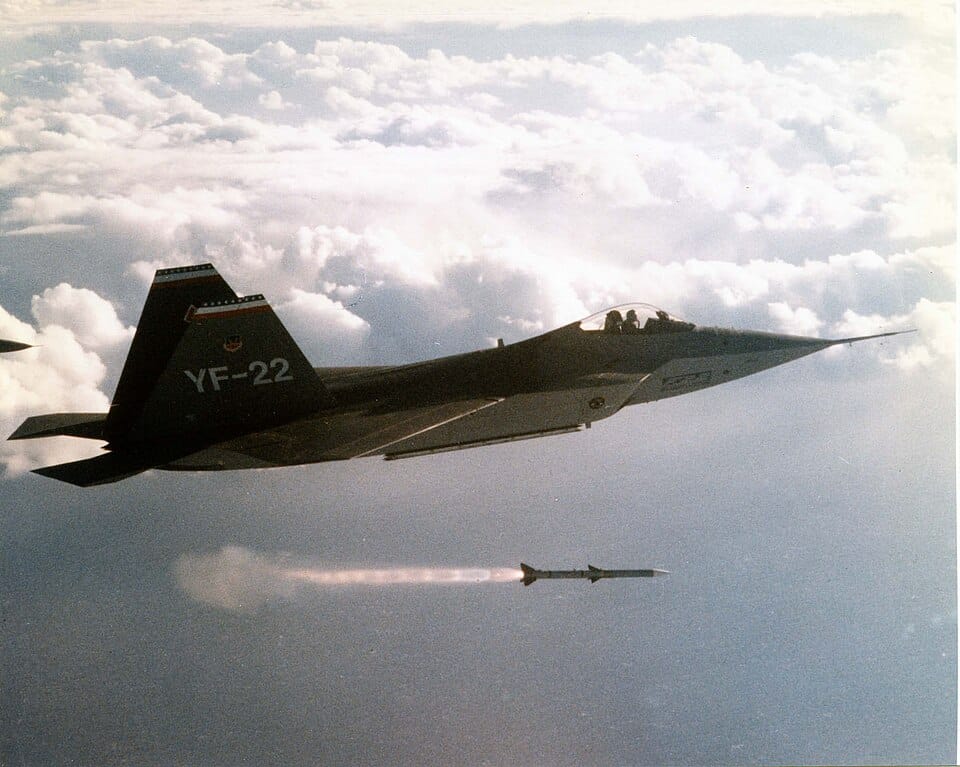
Fox One Semi-active radar-guided missile launch (e.g. AIM-7 Sparrow)
Fox Two Infrared/heat-seeking missile launch (e.g. AIM-9 Sidewinder)
Fox Three Active radar-guided missile launch (e.g. AIM-120 AMRAAM)
Origin NATO brevity code system (BREVITY publication)
Purpose Instant communication of weapon type to friendlies — affects everyone’s tactics
Also Used “Rifle” (air-to-ground missile), “Guns guns guns” (cannon fire), “Maddog” (AMRAAM without radar lock)
“Viper One, Fox Three, AMRAAM, north group, bullseye 270/45!” In the time it takes to read that sentence, a missile is already in the air, tracking at Mach 4, and every pilot on the frequency knows exactly what just happened: who launched, what they launched, what guidance it uses, and where the target is. That’s the point of brevity codes. Not to sound cool on the radio — though they do — but to compress life-or-death information into the fewest possible syllables.
The “Fox” calls are the most famous brevity codes in military aviation. Every fighter pilot movie features someone yelling “Fox Two!” before a missile streaks off the rail. But what the codes actually mean, why there are three of them, and why getting them wrong could get someone killed — that’s the part Hollywood never explains.
Fox One: The Guided Missile That Needs Help
“Fox One” announces the launch of a semi-active radar homing (SARH) missile. The classic example is the AIM-7 Sparrow. Semi-active means the missile doesn’t have its own radar transmitter. Instead, the launching aircraft illuminates the target with its radar beam, and the missile rides that reflected energy to the target — like shining a torch at someone while a dog chases the light.
The problem is obvious: the pilot must keep the radar locked on the target from launch until impact. If the pilot breaks the lock to evade a threat or manoeuvre defensively, the missile goes stupid and misses. This makes Fox One shots tactically constraining — you’re committed to pointing your nose at the enemy for the entire missile flight time, which could be 20–30 seconds at long range. In a dynamic fight with multiple threats, that’s an eternity.
The Sparrow was the workhorse beyond-visual-range missile of the Cold War era. It saw combat from Vietnam (where its early versions had a dismal kill rate) through the Gulf War (where improved models performed well). Today, semi-active missiles are largely obsolete in Western air forces, replaced by active-radar Fox Three weapons. But many air forces worldwide — including operators of older F-16s, MiG-29s, and F/A-18s — still carry SARH missiles, and “Fox One” is still called on frequencies around the world.
Fox Two: The Heat-Seeker
“Fox Two” means an infrared-guided missile is in the air. The AIM-9 Sidewinder is the iconic example — the most produced air-to-air missile in Western history, with over 200,000 built since 1956. Heat-seekers track the infrared radiation emitted by the target, typically the engine exhaust. They’re fire-and-forget: once launched, the pilot is free to manoeuvre. The missile does the work.
Early Sidewinders could only lock onto a target from behind, where the engine exhaust was hottest. Modern versions like the AIM-9X can lock from any angle — including head-on — and can be cued by the pilot’s helmet-mounted display. Look at a target, hear the growl of the seeker tone in your headset, press the button. The missile launches, pulls an impossibly tight turn, and tracks the target regardless of where it goes.
When a pilot calls “Fox Two,” everyone on frequency knows two things: the engagement is close (heat-seekers are short-range weapons), and the missile is autonomous. No radar lock is needed. No continued guidance is required. This makes Fox Two calls inherently more dangerous to the target and more liberating for the shooter. It’s also why you hear it in almost every dogfight ever depicted on screen — the close-range, visual-range fight is the most dramatic, and the Sidewinder is the weapon that ends it.
Fox Three: Fire and Forget at 50 Miles
“Fox Three” is the call that changed air combat. It announces the launch of an active radar homing missile — a weapon with its own onboard radar transmitter. The AIM-120 AMRAAM is the definitive example. The pilot provides initial targeting data and launches the missile toward the threat. For the first phase of flight, the missile navigates on inertial guidance, updated by data link from the launching aircraft. In the terminal phase, the AMRAAM switches on its own radar and guides itself to the target independently.
The tactical revolution is total. Unlike a Fox One shot, the pilot can turn away, defend against other threats, or re-engage a different target immediately after launch. The missile handles itself. A flight of four F-16s can each fire an AMRAAM at four separate targets simultaneously, then turn cold and leave 16 missiles converging on 16 targets from different angles. No one needs to stay pointed at the enemy. No one is tied to a single engagement.
The AMRAAM has been the dominant beyond-visual-range weapon in Western air forces since the 1990s. Its kill probability is classified but widely estimated as significantly higher than its predecessors. When a pilot hears “Fox Three” on the radio, they know the most lethal air-to-air missile in the NATO inventory is hunting. If they’re the target, they have seconds to react.
Beyond Fox: Other Calls That Matter
The Fox series covers air-to-air missiles, but fighter pilots have brevity codes for every weapon and situation. “Rifle” means an air-to-ground missile launch (Maverick, HARM). “Guns guns guns” — always said three times — announces the use of the internal cannon. “Maddog” means an AMRAAM fired without a radar lock, using its own seeker to find the first target it encounters (dangerous in a furball with friendlies). “Pitbull” means a previously launched AMRAAM has gone active — its own radar is now guiding it, and the target is in the terminal kill zone.
Every call compresses information. Every second saved on the radio is a second gained for decision-making. In a fight where closure rates exceed 1,000 mph, where missiles are in the air from multiple directions, and where the difference between a friendly and a bandit can be 10 miles and a transponder code, brevity isn’t a convenience. It’s survival. The Fox calls are how fighter pilots turn chaos into information — one word at a time.
Sources: NATO BREVITY Publication (ATP-62), USAF Weapons School, “Fighter Combat: Tactics and Maneuvering” by Robert L. Shaw, Raytheon Missiles & Defense

 English
0 Comments