

Doug White was having the worst week of his life. He, his wife Terri and their two daughters were flying home to Louisiana from Florida, where they had just buried his brother. It was Easter Sunday, 2009. White, a 56-year-old private pilot who had only ever flown small single-engine Cessnas, had recently bought a Beechcraft King Air and was sitting up front simply to watch and learn.
Less than ten minutes after takeoff, climbing over the Gulf, the professional at the controls — charter pilot Joe Cabuk — groaned, slumped, and died. In an instant, a family man with no time in a fast, complex twin was the only person aboard who could fly it.
He keyed the radio and declared an emergency. What followed was one of the great feel-good stories in modern aviation: a chain of calm voices, an instructor summoned by telephone, and one of the best landings of White’s life.
Quick Facts
| Date | Easter Sunday, 12 April 2009 |
| Passenger-pilot | Doug White, 56 — rated only on single-engine Cessna 172s (~150 hours) |
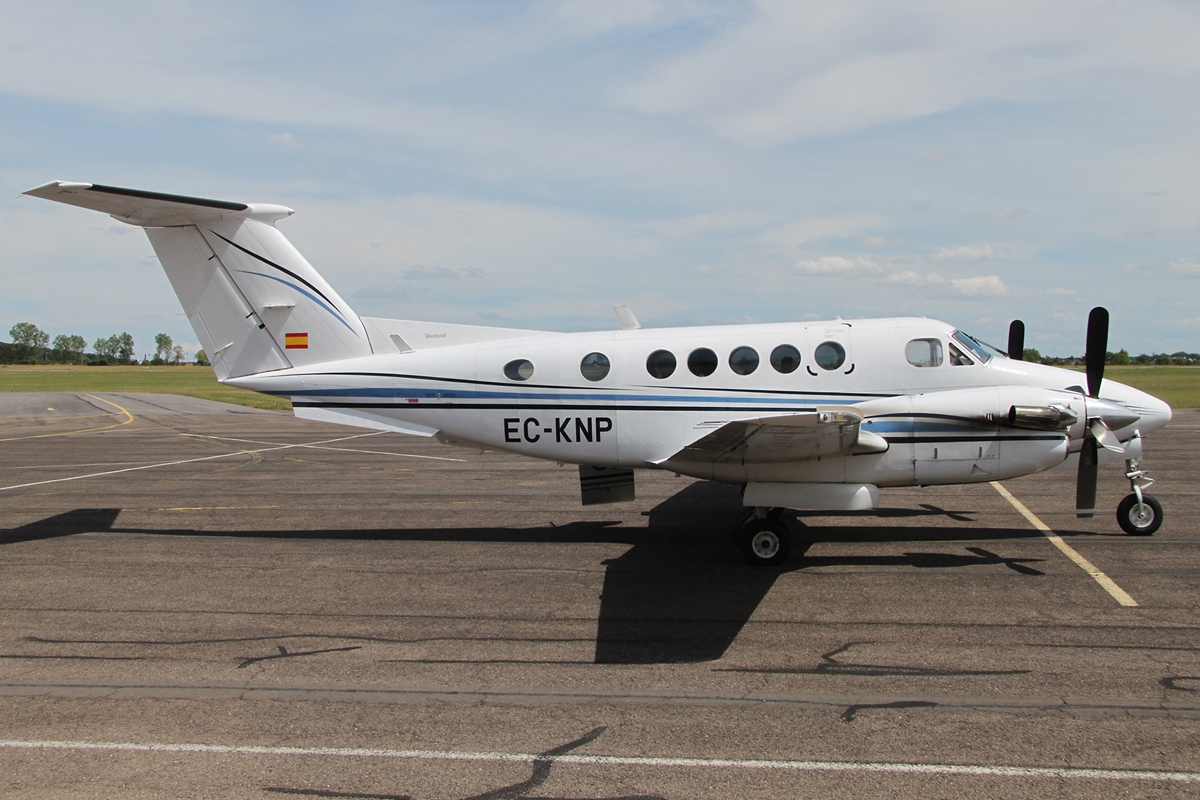
| Aircraft | Beechcraft King Air 200 twin-turboprop (N559DW), which he had just bought |
| Pilot who died | Joe Cabuk, a charter pilot and former Air Force aviator |
| Departure | Marco Island, Florida |
| Help | ATC controllers plus King Air instructor Kari Sorenson, patched in by phone |
| Landing | Southwest Florida International Airport, Fort Myers |
| Outcome | A safe landing; his wife and two daughters all survived |
A Family Flying Home From a Funeral
The Whites had chartered the twin-turboprop for the sad trip back after the funeral. Doug sat in the right seat purely as an enthusiast, listening to air traffic control and watching out the window. Cabuk had the aircraft on autopilot, finishing his climb checks, when everything changed.

The Pilot Collapses in Seconds
The King Air kept climbing past its set altitude. White pushed the transmit button and called Miami Center, declared an emergency, and asked for the one thing he knew he needed: a King Air pilot on the line. The gulf between a Cessna 172 and a King Air, he later said, is like going from a Volkswagen to a race car.
The actual air traffic control audio from the emergency.
Calm Voices and an Instructor on the Phone
A Miami controller, herself a pilot, coached White to disengage the autopilot and hand-fly. In Fort Myers, a controller telephoned a King Air-rated instructor he knew, Kari Sorenson, who relayed only the most critical steps — control positions, speeds, configuration — through the controllers to White as he raced along at more than 200 knots.

The Landing at Fort Myers
Guided toward Southwest Florida International’s long runway, White lowered the gear, got three green lights, added flaps, and kept his speed up as warned. Alarms and buzzers filled the cockpit, but he focused on airspeed and keeping the wings level. The touchdown was, in his words, a greaser — and then he had to be told over the radio how to shut the engines down.
A pilot’s breakdown of how the landing was flown.
Meeting His Co-Pilots
A year later White finally met the team that talked him down, at a controllers’ awards ceremony. “These people saved my family,” he said; the instructor marvelled that White had learned to fly the aeroplane in twenty minutes. The story later inspired a film, with Dennis Quaid playing the reluctant pilot who brought his family home.
Doug White tells the story himself.
Sources: Wikipedia (Doug White); AOPA (2009); CNN (2010). King Air photos show the same type, not the actual aircraft.


0 Comments