
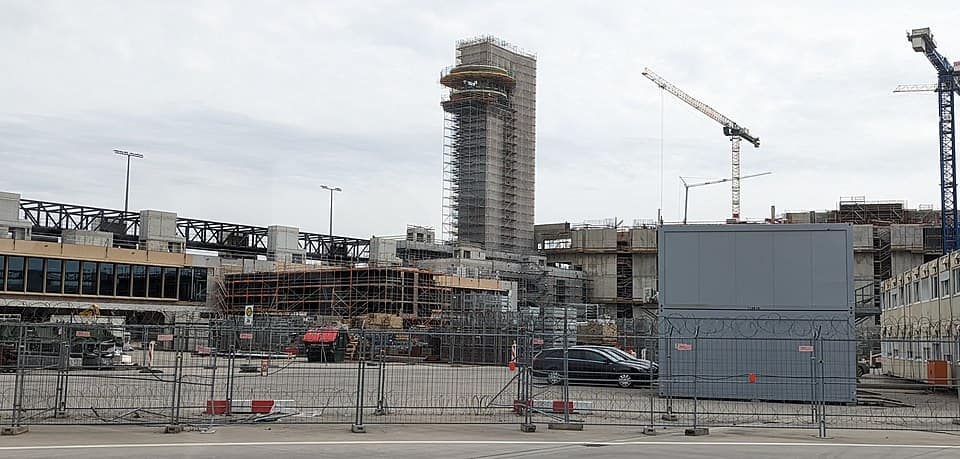
Facility Frankfurt Airport Terminal 3
Opens April 22, 2026
Cost Approximately €4 billion
Annual Capacity 19 million passengers
Airlines Relocating 57 airlines moving from Terminal 2
Connection 8-minute SkyLine train to Terminal 1
Builder Fraport AG
Distinction Largest privately funded airport infrastructure project in Europe

Four billion euros. Nineteen million passengers a year. Fifty-seven airlines packing up and moving house. Frankfurt Airport’s Terminal 3 opens on April 22, 2026, and it represents the single largest bet on European aviation growth in a generation.
The timing is deliberate. Fraport, the airport’s operator, started this project before the pandemic, pushed through the construction years when half the aviation industry wondered if passengers would ever come back, and is now delivering it into a market where Frankfurt is bursting at the seams. The old Terminal 2 was handling volumes it was never designed for. Terminal 3 doesn’t just add capacity — it transforms the airport into a true three-terminal hub that can compete with the Gulf mega-airports for connecting traffic.
The numbers are staggering. Europe’s largest privately funded infrastructure project, built without a single cent of taxpayer money. An 8-minute automated SkyLine train connection to Terminal 1. A phased airline migration that will move 57 carriers between May and June without disrupting operations. When the music stops, Frankfurt will have capacity for over 80 million passengers annually — putting it firmly in the conversation with Heathrow, Charles de Gaulle, and Istanbul.
Why Frankfurt — and Why Now
Frankfurt has always punched above its weight as an aviation hub. Germany’s financial capital sits at the geographic heart of Europe, making it the natural connecting point for traffic flowing between the Americas, the Middle East, Africa, and Asia. Lufthansa’s hub operation drives roughly 70% of the airport’s traffic, but the airline alliance model means Star Alliance partners funnel passengers through Frankfurt from every continent.
The problem was physical space. Terminal 1, opened in 1972, is a sprawling labyrinth that shows its age. Terminal 2, added in 1994, was designed as an overflow facility and never had the gate capacity for a true hub operation. Airlines were squeezed into suboptimal configurations, connection times were long, and passenger experience suffered. Terminal 3 fixes all of this with modern gate configurations, faster security processing, and direct airside connections that cut minimum connecting times significantly.
The competitive context matters. Dubai, Doha, and Istanbul have invested tens of billions in mega-hub infrastructure over the past decade, luring transit passengers away from traditional European hubs with newer facilities and shorter connection times. Frankfurt’s answer is Terminal 3 — a signal that Europe’s legacy hubs aren’t surrendering the connecting market without a fight.

The Passenger Experience
Terminal 3 is designed for the modern traveller who expects an airport to function like a well-run transit system, not a confusing shopping mall with gates attached. The layout prioritises intuitive wayfinding — you can see where you’re going from almost anywhere in the terminal. Security checkpoints use the latest CT scanner technology, eliminating the need to remove laptops and liquids from hand luggage. Boarding gates are arranged in a linear pier configuration that minimises walking distances.
For aviation enthusiasts, the design offers something else: views. The terminal’s architecture features extensive glazing that gives passengers clear sightlines to the apron and runways. In an era where many new terminals hide the aircraft behind frosted glass and retail concessions, Frankfurt chose to celebrate the thing that makes airports exciting — the planes.
When the first passengers walk through Terminal 3’s doors on April 22, they’ll be stepping into a facility that took over a decade to plan and build, cost more than most countries spend on their entire airport systems, and represents a profound act of confidence in the future of aviation. In a world still recovering from the deepest crisis the airline industry has ever faced, Frankfurt just built something extraordinary. And it’s about to open the doors.
Sources: Fraport AG, Frankfurt Airport, Aviation Week Network, Loyalty Lobby


 English
0 Comments