
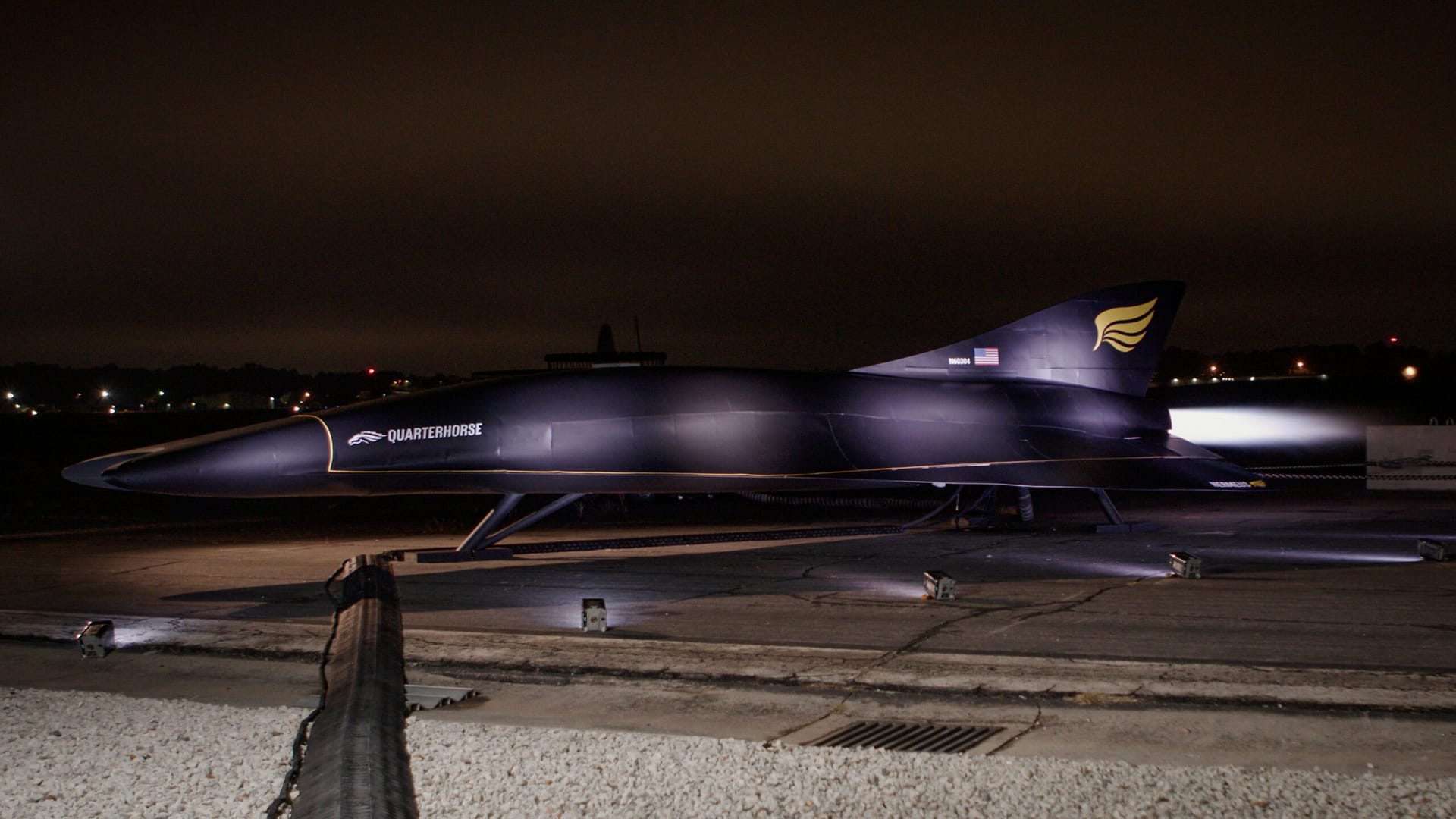
A startup with fewer employees than a regional Cracker Barrel just outran every other unmanned jet on the planet. On 26 May 2026, Hermeus’ Quarterhorse Mk 2.1 lit afterburner over New Mexico’s White Sands Missile Range, punched through the sound barrier and topped out at Mach 1.21 — roughly 922 mph.
It was the aircraft’s third test flight. Total. The whole “private startup, unmanned, supersonic” trifecta has never been pulled off before, and Hermeus did it in less time than most defense primes need to schedule a meeting about it.
And here’s the kicker that defense nerds keep chewing on: the engine bolted into the back of this thing is the same Pratt & Whitney F100 that lives inside an F-16. A literal off-the-shelf fighter motor, in a privately funded drone, hitting Mach 1+ at a commercial spaceport. The 2020s have officially gone weird.
Quick Facts
- Aircraft: Hermeus Quarterhorse Mk 2.1, unmanned, F-16-sized
- Top speed: Mach 1.21 (~922 mph / 1,484 km/h)
- Date: 26 May 2026, third test flight
- Location: Spaceport America, New Mexico — White Sands Missile Range airspace
- Engine: Pratt & Whitney F100 afterburning turbofan (same as the F-16)
- Record: First privately-developed unmanned supersonic jet, fastest unmanned aircraft flying today
From founding to Mach 1 faster than anyone in history
Hermeus was founded in 2018. That makes it the fastest company in aviation history to go from “we exist” to “we just went supersonic.” Quarterhorse Mk 2.1 cleared Mach 1 just 85 days after its maiden flight on 2 March 2026 — and exactly 364 days after the company’s very first aircraft, the Mk 1, made its debut at Edwards Air Force Base.
Less than a year. Two airframes. One sound barrier broken. For a company building a hypersonic future, the pace is starting to look indecent.
Spaceport America turned out to be the perfect address. Vast restricted airspace overhead, no commercial traffic, and a runway long enough that an F100-powered drone can stretch its legs without anybody calling Albuquerque ATC in a panic.
A startup with a fighter engine and a hypersonic chip on its shoulder
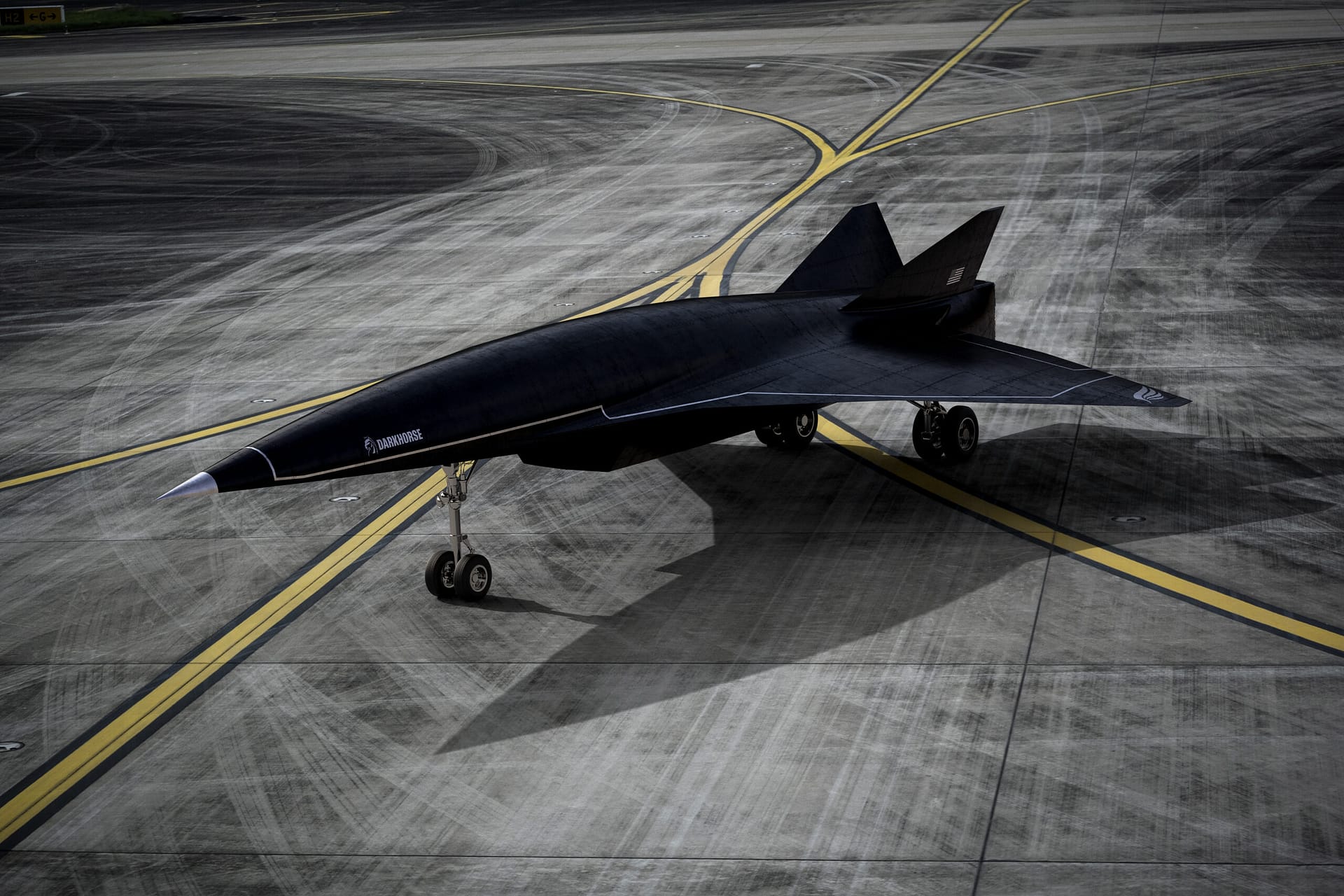
The Quarterhorse roadmap reads like a dare. Mk 2.1 was the appetizer. The Mk 2.2 is already being built. The Mk 2.3 is right behind it. Each iteration is meant to push deeper into the high-Mach envelope, and Hermeus is openly aiming for Mach 3 in 2027 and a hypersonic Mk 3 before 2030.
The whole program is structured the way SpaceX builds rockets — fly often, break things on purpose, learn faster than the procurement officers can write requirements documents. The Department of War is watching closely, which is why the Defense Innovation Unit just extended a $159 million contract to keep the test campaign moving.
Why this matters for the next decade of air combat
Unmanned supersonic isn’t a stunt. It’s the entry ticket for a whole new class of high-speed reconnaissance, strike and “loyal wingman” platforms that nobody — Russia, China, Europe — has fielded yet. Burn-cost expendable airframes that can outrun a Su-35 and don’t need a pilot life-support system change the math for every air war planner on the planet.
Quarterhorse is also the test mule for the propulsion technology Hermeus needs to build its eventual Halcyon hypersonic passenger jet — a Mach 5 successor to Concorde that the company says could shave New York–to–Paris down to about 90 minutes. That’s the dream. Mach 1.21 over White Sands is the down payment.
For now, the headline writes itself: a venture-backed drone with an F-16 engine just embarrassed every defense contractor’s PowerPoint timeline. The third test flight. Let that one sink in.
Sources: Hermeus Newsroom, FlightGlobal, Air Force Technology, New Atlas, Army Recognition.

 English
0 Comments