

In the summer of 1940, the head of RAF Fighter Command spent his evenings talking to dead people. Not metaphorically. Hugh Dowding, the man directing the air defence of Britain against the most powerful air force on Earth, sat in his quarters at Bentley Priory and held conversations with the ghosts of pilots his command had lost that day.
He believed his late wife Clarice came to him in the night. He believed in fairies — literally, the small-folk-in-the-woods kind. He believed in Theosophy, in psychic communication, in the existence of an afterlife where the dead remained close enough to consult.
He also built the most sophisticated air-defence system in human history, picked the Spitfire and the Hurricane against political opposition, and won the Battle of Britain. Then they fired him.
Quick Facts
Born: Hugh Caswall Tremenheere Dowding, 24 April 1882, Moffat, Scotland
RAF rank at Battle of Britain: Air Chief Marshal
Position: Air Officer Commanding-in-Chief, RAF Fighter Command
Key innovations: Dowding System (radar + ground-control intercept), backing Spitfire/Hurricane
Battle of Britain: July–October 1940; Luftwaffe defeated, Operation Sea Lion postponed indefinitely
Replaced: November 1940, against his wishes, by Sholto Douglas
Beliefs: Spiritualism, Theosophy, communication with the dead, existence of fairies
Died: 15 February 1970, age 87
The System That Won the Battle
By 1940 the German Luftwaffe had more aircraft than the RAF, better-trained pilots than the RAF, and a fighter — the Messerschmitt Bf 109E — that was at least the equal of anything Britain could put up. By every conventional metric the RAF should have lost.
What it had instead was Hugh Dowding’s air-defence system, a creation he had spent the late 1930s building against considerable bureaucratic opposition. The system worked like this: a chain of coastal radar stations detected incoming German formations. Observer Corps spotters confirmed and tracked them by sight. The information was filtered, plotted at Fighter Command HQ at Bentley Priory, and used to vector RAF fighter squadrons to intercept points in real time.

The result was that British pilots fought every engagement at the right altitude, at the right time, with the right number of aircraft. The Luftwaffe, by contrast, never quite understood why the RAF kept finding them. They knew about radar in theory. They did not understand how Dowding had wired it into an integrated command-and-control system that turned individual squadrons into a national air-defence machine.
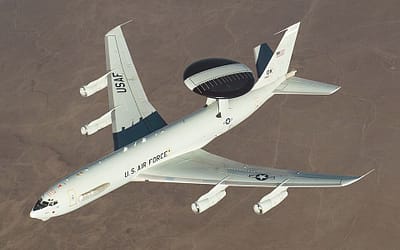
It is, in retrospect, the first modern air-defence network. Everything from NORAD to NATO’s integrated air-defence to Israel’s Iron Dome network descends in some form from what Dowding built between 1936 and 1940.
The Spitfire Was Almost Cancelled
Dowding’s other great contribution was the aircraft he insisted the RAF buy. In 1936, when the Air Ministry was tempted to back cheaper, older fighter designs, Dowding pushed hard for the all-metal monoplane fighters that would become the Spitfire and the Hurricane. Both designs were politically vulnerable. Both faced opposition from Air Ministry committees who thought biplanes were good enough.
Dowding got both into production. The Hurricane shot down more enemy aircraft in the Battle of Britain than every other British type combined. The Spitfire became the symbol of British air power for the rest of the century.
If Dowding had lost either argument — for the integrated air defence system, or for the modern monoplane fighter — Britain might have lost the Battle of Britain. There is no realistic version of the air-defence story that succeeds without him. And yet by November 1940 he was out of a job.

The Big Wing Argument That Cost Him Everything
The political mechanism by which Dowding was removed was the so-called Big Wing controversy. Two of his subordinate commanders — Trafford Leigh-Mallory at 12 Group, and the legless ace Douglas Bader — argued that RAF fighters should be assembled in mass formations (five squadrons together, the “Big Wing”) before being thrown at the German bomber streams. Dowding and his 11 Group commander Keith Park preferred to attack in smaller, faster pairs and quartets, getting hits on the Germans before they could form into defensive boxes.
Tactically, Park and Dowding were right. The Big Wing took too long to assemble, often missed the German formations entirely, and inflated its own kill claims to justify itself. But Leigh-Mallory and Bader had political allies — and they made enough noise that, in November 1940, with the battle effectively won, Dowding was abruptly removed from command and shuffled into administrative obscurity.

The Spiritualist Behind the Strategist
The most peculiar thing about Dowding, the man who built the most rational air-defence machine of his era, is how deeply unrational his private life was. After his wife Clarice died in 1920, Dowding remained alone for more than thirty years, remarrying only in 1951. By the late 1930s he was an active spiritualist who believed Clarice — and later, the pilots his command had lost — communicated with him from beyond death.
He wrote several books on spiritualism, Theosophy and the afterlife, beginning with Many Mansions in 1943. He gave lectures to spiritualist societies. He believed in fairies, literally; he attended events at which spiritualists discussed the photographic evidence (long since debunked) of the “Cottingley Fairies” of 1917. None of this was a sideline. It was central to who he was. The hours he spent at Bentley Priory directing the Battle of Britain were, by his own private account, sustained by nightly communion with the dead.
Modern military historians find this difficult. The man who saved Britain was a mystic. Both things are true at once. The Dowding System was the product of one of the sharpest analytical minds of the twentieth century. The Dowding personal life was a confluence of grief, esoteric religion, and Victorian-era occultism that would today have him quietly recommended to a chaplain.
What Britain Owes the Eccentric
Dowding lived until 1970. He never returned to operational command. The British establishment, having pushed him out at the moment of his greatest victory, gradually rehabilitated him in retirement. He was granted a peerage in 1943. His statue stands outside the RAF Church of St Clement Danes in London, looking up at the sky he had defended thirty years before.
The lesson of Hugh Dowding’s career is one that British military historians return to repeatedly: the people who win impossible wars are rarely the people the political system wants in charge afterwards. Dowding’s eccentricities — the radar obsession, the modernist fighter advocacy, the willingness to ignore senior officers, and yes, the fairies — were exactly the qualities that won the Battle of Britain. They were also exactly the qualities that made him an awkward fit for an Air Ministry that wanted comfortable, conventional leadership in peacetime.
It is a strange comfort to know that the most important air-defence network in history was built by a man who believed his late wife was advising him from the next world. And it should give pause to anyone who thinks military genius and quiet personal eccentricity are mutually exclusive. The Battle of Britain says otherwise.
Sources: RAF Museum online exhibitions; Imperial War Museums; Britannica; Warfare History Network; Spartacus Educational.
 English
0 Comments