
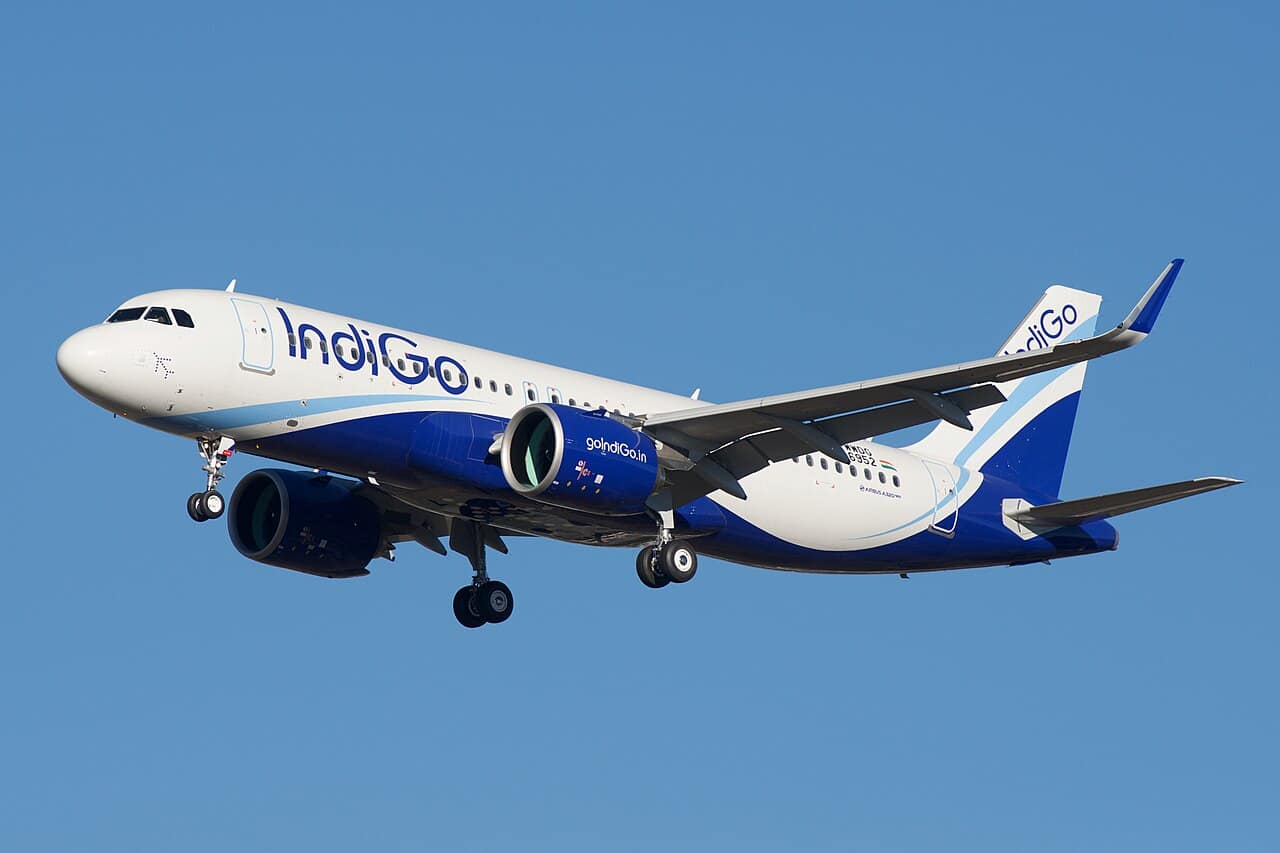
IndiGo Poaches the World’s Top Airline Boss
| QUICK FACTS |
|---|
| Airline: IndiGo (India’s Domestic Giant) | New CEO: Willie Walsh | Previous Role: IATA Director General | Career Arc: Aer Lingus → British Airways → IAG | Announcement: March 31, 2026 | Market Share: ~60% Indian domestic | Order Book: 1,000+ aircraft on order |
On March 31, 2026, IndiGo made a move that sent shockwaves through global aviation. The Indian carrier—already the world’s largest airline by orders and India’s domestic titan—just hired Willie Walsh as its new Chief Executive Officer.
Walsh wasn’t poached from obscurity. He was Director General of IATA, the International Air Transport Association. IATA is aviation’s governing nervous system—the lobby that shapes regulation, negotiates with governments, and speaks for 300+ airlines worldwide. Walsh had the industry’s most powerful seat outside a cockpit. IndiGo convinced him to leave it.
What does this mean? In two words: global domination. IndiGo is signaling that it’s done being regional. It wants to be a world airline. And it just hired the one man most qualified to make that happen.
The Willie Walsh Pedigree
Willie Walsh’s career is an aviation masterclass. He started as a line pilot at Aer Lingus in the 1980s, flying Boeing 737s and 767s. He was a cadet pilot. Actual wings. Actual stick-and-rudder experience before he ever sat in a boardroom.
That matters. Walsh doesn’t run airlines like a hotel mogul or a tech CEO. He understands dispatch. He understands crew dynamics. He knows what breaks at 3 AM and why it matters when it does.
He became CEO of Aer Lingus in 2001—Ireland’s national carrier, struggling through 9/11’s aftermath. He stabilized it. He expanded it. In 2005, British Airways recruited him as CEO. BA was wounded—expensive, bureaucratic, bleeding money. Walsh cut costs, modernized labor relations, and drove BA to profitability. He was unapologetic about it. Unions hated him. Investors loved him.

In 2011, Walsh created the International Airlines Group (IAG) by merging BA and Iberia. That was bold. Consolidating two legacy carriers across borders and labor regimes was considered impossible. Walsh did it. IAG became Europe’s largest airline by revenue.
Then he moved to IATA in 2021. He spent five years speaking for the global airline industry—negotiating with governments, battling regulators, managing the COVID-19 crisis alongside aviation leaders worldwide. He knows every transport minister, every aviation regulator, every competitor personally.
And now he’s taking the Indian market by storm.
IndiGo’s Moment
IndiGo controls roughly 60% of India’s domestic air travel market. It’s the world’s largest airline by aircraft on order—over 1,000 Airbus jets committed, the biggest order in commercial aviation history. Founded in 2006, it grew from zero to industry domination in two decades using a radically simple model: low fares, on-time performance, new aircraft, ruthless cost management.
But IndiGo has been domestic-focused. Yes, it operates some international routes to Southeast Asia and the Middle East. But it hasn’t projected global presence the way Emirates, Qatar, Lufthansa, or United do. It’s been the airline your Indian family takes to visit relatives. Not the airline that coordinates global routes, partners with international carriers, and serves as a hub for connecting travelers.
Enter Willie Walsh. His mandate is unmistakable: turn IndiGo from a domestic powerhouse into a global player. India’s middle class is exploding. The economy is diversifying. Indian executives need global connectivity. And IndiGo—flush with capital, dominated by dominant leadership, and backed by Berkshire Hathaway’s investment—can build that network.
“Willie Walsh doesn’t turnaround broken airlines. He transforms regional carriers into global competitors. IndiGo just hired the playbook.”
Military Aviation’s Hidden Crisis
Here’s where Walsh’s arrival ripples into military aviation: India’s air force is in the middle of the most ambitious modernization in its history. The Indian Air Force is inducting 36 Rafale fighters, developing its own AMCA stealth fighter, and investing billions in military aviation infrastructure.
But there’s a problem. Military pilots. India doesn’t have enough of them. The IAF invests heavily in pilot training. Young officers spend years learning to fly advanced aircraft. And then commercial airlines—IndiGo, Air India, Vistara—offer them salaries three times what the military pays.
Pilots leave. Brain drain. The IAF loses combat-trained aviators right as it’s gearing up for modernization. This isn’t theoretical—it’s a documented crisis in Indian military aviation. Young pilots with 1,000+ hours on fighters are lured to commercial cockpits by $100,000+ annual salaries. The military offers prestige, patriotism, and $30,000 a year.
IndiGo, under Walsh, will expand aggressively. It will hire thousands of pilots. That pressure on the IAF will intensify. Walsh may not care about Indian military preparedness—that’s not his mandate—but the second and third-order effects will reshape India’s defense posture. Global military analysts will watch closely.
The Walsh Formula: Brutal Efficiency
Walsh is not a visionary. He’s a mechanic. He doesn’t redesign airlines. He optimizes them. At BA, he reduced cabin crew by 15% through attrition and technology. He renegotiated supplier contracts. He sold off non-core assets. BA went from bleeding cash to printing it.
IndiGo is already efficient. It’s not the bloated, bureaucratic legacy carrier that BA was. So what does Walsh do with a lean machine? He probably doesn’t slash costs further—there’s nowhere left to cut without destroying service quality. Instead, he scales what works.
He’ll expand the international network strategically. He’ll negotiate better relationships with global distribution partners. He’ll position IndiGo as a gateway for Indian travelers to connect worldwide while positioning IndiGo as a competitor for international passengers entering the Indian market. He’ll probably pursue code-share agreements with other global carriers, expanding IndiGo’s reach without expanding its fleet directly.
And he’ll do it with the same no-nonsense efficiency that characterized his tenure at BA and IAG. People will complain. Labor unions will organize. The media will scrutinize. Walsh won’t care. He cares about load factors, break-even points, and return on invested capital.
The Berkshire Hathaway Factor
IndiGo has a major shareholder that most airlines don’t: Berkshire Hathaway owns about 10% of IndiGo and sits on its board. Warren Buffett doesn’t invest in airlines lightly. He famously said the airline business historically destroys shareholder value. But he made an exception for IndiGo—a young, capital-efficient, growth-oriented airline in one of the world’s fastest-growing aviation markets.
Walsh knows Buffett’s playbook. Berkshire looks for companies with competitive advantages (called “moats”) that generate durable returns. IndiGo has that—it’s the dominant domestic carrier with the most efficient cost structure. Walsh’s job is to expand that moat globally without destroying what makes IndiGo profitable domestically.
Berkshire’s backing also provides capital. IndiGo can finance the aggressive expansion that international operations require. New routes, new aircraft deliveries, new facilities in hub cities. Berkshire will fund it if the returns justify the investment.
What Happens to IATA?
Walsh stepping down from IATA creates a vacuum. IATA needs a new Director General—someone who can navigate the post-COVID, carbon-obsessed, increasingly regulated aviation landscape. IATA lost a giant. But IATA directors are elected by member airlines. Guess who has enormous influence? The largest carriers. IndiGo’s new position under Walsh might actually give it more say in IATA governance than it had before, even with Walsh gone.
Walsh’s departure also signals confidence in IATA’s institutional strength. He’s not bailing out to save a sinking ship. He’s leaving because he sees bigger opportunity. That’s the mark of a leader who trusts the team he built.
What This Means for Global Aviation
IndiGo with Willie Walsh is a different animal from IndiGo without him. The airline doesn’t change its DNA. But its ambitions do. IndiGo will become a network airline—still efficient, still lean, still focused on on-time performance and low fares—but now reaching for Mumbai-to-London routes, Delhi-to-Los Angeles service, and connectivity that spans continents.
For passengers, that’s positive. More competition in international long-haul means lower fares. Indian travelers get a world-class carrier that understands their home market. International passengers discover an airline with military-grade operational discipline.
For global carriers already operating on thin margins, it’s threat. Lufthansa, United, Qatar—they now face a world-class competitor backed by Berkshire Hathaway’s capital and led by the airline industry’s most accomplished operator. The next decade of aviation will be shaped by how established carriers respond to IndiGo’s global expansion.
IndiGo just hired the man who created European aviation’s most powerful airline. What they build next will reshape global aviation.
 English
0 Comments