
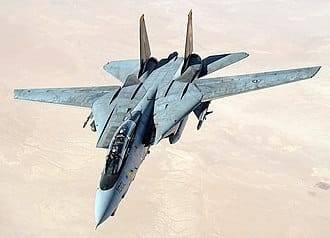
Quick Facts
Aircraft: Grumman F-14A Tomcat
Delivered to Iran: 79 of 80 ordered (1976–1979)
Missiles: 714 AIM-54 Phoenix ordered, only ~284 delivered before the revolution cut supply
Claimed kills: ~160 (IRIAF); ~130 per Tom Cooper’s research; ~55 independently confirmed
Losses: ~4 in air combat
Top ace: Maj. Jalil Zandi — 11 credited kills (highest-scoring F-14 pilot in history)
The Shah’s Cats
Shah Mohammad Reza Pahlavi wanted the best American fighter money could buy. In 1974, Iran ordered 80 F-14A Tomcats — the same aircraft the US Navy flew from its carrier decks — along with 714 AIM-54 Phoenix long-range missiles. By 1979, seventy-nine had been delivered. Iranian pilots trained at NAS Miramar. They were good. Some were exceptional. Then the revolution came. The Shah fled. The hostage crisis began. The United States severed all military ties with Iran overnight. Spare parts stopped. Technical advisors were expelled or imprisoned. Grumman’s contract evaporated. The Iranians were on their own with 79 of the most complex fighters in the world and no way to maintain them. They maintained them anyway.Persian Cats at War
When Iraq invaded in September 1980, the Iranian Air Force was in chaos — purges had decimated the officer corps and many pilots had fled. But the Tomcat squadrons at Isfahan and Shiraz still had flyable aircraft, experienced crews, and the AWG-9 radar: the most powerful airborne radar in any fighter on earth. It could track 24 targets simultaneously at ranges beyond 150 kilometres and guide six Phoenix missiles at once. Iraqi pilots quickly learned to fear it. The AWG-9’s radar signature was unmistakable, and the Phoenix missile’s 200-kilometre range meant that an Iraqi jet could be under attack before it even knew an F-14 was in the area. IRIAF Tomcats flew combat air patrols over Iranian cities, escorted strike packages, and hunted Iraqi bombers heading for oil facilities at Kharg Island. Aviation historian Tom Cooper, who spent years interviewing Iranian veterans and cross-referencing Iraqi records, documented some 130 claimed kills (independent analysts confirm around 55) against approximately 4 Tomcat losses in air combat — a staggering ratio that the US Navy’s own F-14s never had the chance to match.“It is impossible to tabulate how many air-to-air victories were scored by Iranian F-14s because air force records were repeatedly tampered with during and after the war for political, religious, or even personal reasons.”
Tom Cooper — Aviation historian, co-author of “Iranian F-14 Tomcat Units in Combat”
 English
0 Comments