
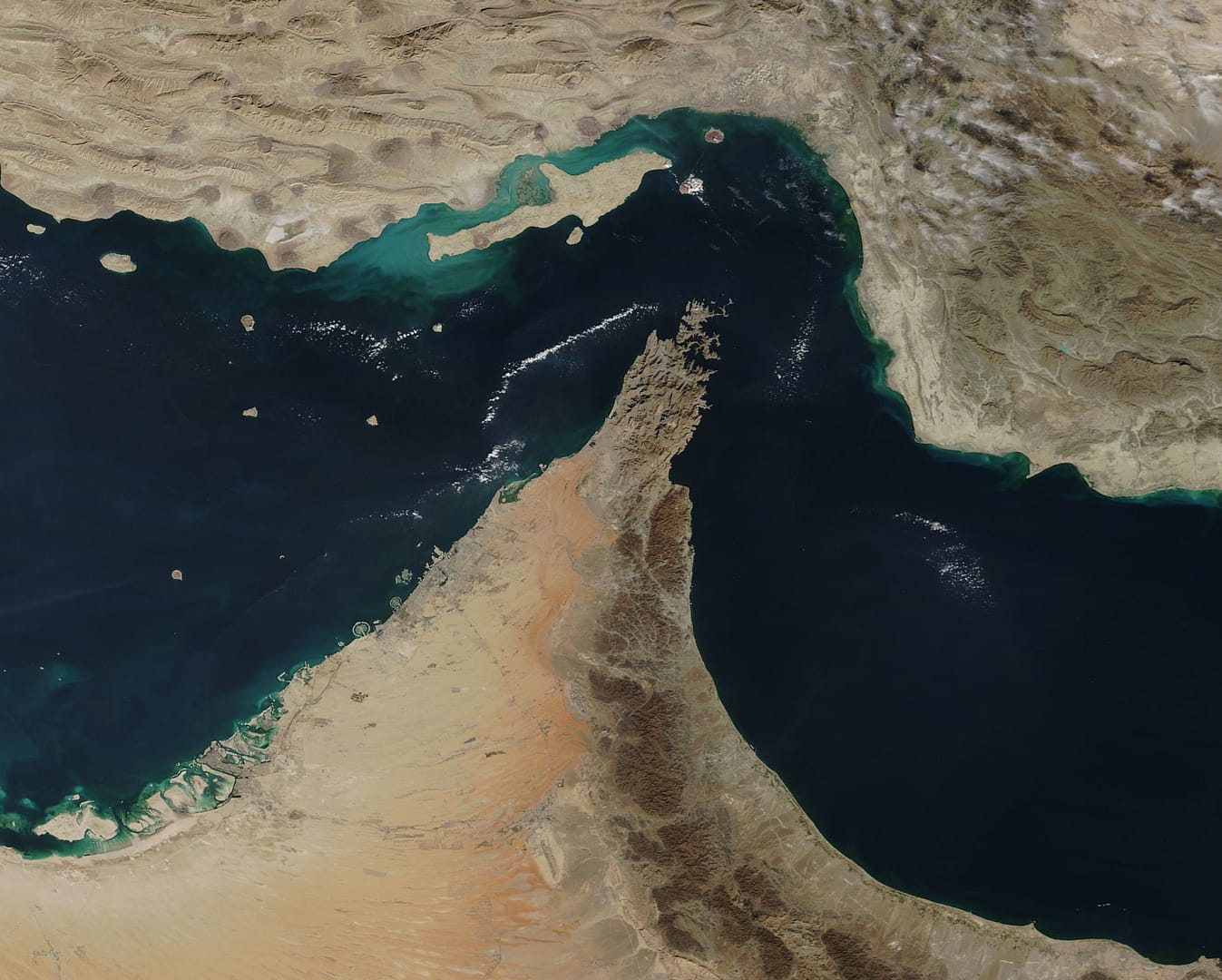
Iran has quietly created a new government agency for one purpose: to tax every ship that crosses the Strait of Hormuz. Tehran calls them “navigational service fees.” Five Gulf states call them illegal tolls. Either way, the world’s most important maritime chokepoint just got more expensive.
The Persian Gulf Strait Authority, announced and collecting by mid-May, requires permission from Tehran before vessels enter the strait. Permission costs money. Refusal could become a diplomatic incident — or worse.
Quick Facts
Created: May 2026, by decree of Iran’s Supreme National Security Council
Authority: Persian Gulf Strait Authority
What it charges for: “Navigational, environmental and security services”
Daily ship traffic: ~50 tankers, carrying 20% of the world’s oil
Formal opposition: Five Gulf states have notified the IMO
Fees, Not Tolls — Officially
Iran’s foreign ministry has been careful with the language. Speaking on state media on 25 May, spokesman Esmaeil Baghaei said Iran was not “imposing tolls” but rather collecting fees for “navigational services in addition to measures necessary to protect the environment of the Strait of Hormuz, the Persian Gulf and the Sea of Oman.”
The distinction matters under international law. Tolls on innocent passage would be illegal under the UN Convention on the Law of the Sea. Service fees, with documented services delivered, are not.
The problem: nobody is sure what services are actually being delivered. Tankers transiting Hormuz already pay for pilotage in Omani waters and use commercial navigation aids. Iran has not explained what new value is being added.
Five Gulf States Push Back
Within a week of the announcement, five Gulf Cooperation Council states filed a formal joint notification with the International Maritime Organisation in London. The message was uncompromising: Iran’s claim of authority over commercial transit through the strait is illegal, and shipping companies should not comply.
Shipping insurers are watching closely. War-risk premiums on Hormuz transits already spiked in March when the Iran war broke out. If insurers begin to treat Iranian fee collection as a soft form of coercion, the cost of moving oil through the strait — already representing about 20 per cent of global supply — will rise sharply.
A Strategic Lever, Not a Revenue Stream
The fees themselves are far from trivial — vessels have reportedly been charged up to $2 million per transit, with some payments settled in Chinese yuan. What matters is the precedent. Once Tehran is documented as authorising or denying transit on a per-ship basis, it has a powerful new instrument of pressure — applied without firing a shot, without seizing a vessel, and without breaching any explicit redline.
That is the real story. Iran is testing whether the world will let it formalise control over a chokepoint it has only ever menaced from a distance. As of late May, the answer is still being worked out — in IMO committees, in shipping company boardrooms, and in the wakes of every tanker that decides to pay, or not pay, before passing through.
Sources: NPR, The National, Euronews, Fortune, The War Zone.
 English
0 Comments