

The shepherd noticed the helicopters first. In a stretch of the western Iraqi desert so empty that locals call it “the silence” — 180 kilometres southwest of Najaf, where the dunes give way to dry lake beds and not much else — he heard rotor blades where no rotor blades should have been. Then gunfire. Then, days later, he was dead, his vehicle reportedly destroyed by an air strike that Iraqi officials traced back to the people he had just reported on.
That, according to a Wall Street Journal investigation published 9 May 2026, is how the world found out that Israel had built a clandestine military outpost deep inside Iraqi territory — and used it for months as a forward operating base for the air campaign that opened the US–Israel war against Iran.
The base sat at coordinates 31.66777°N, 42.44849°E – here on Google Maps. A graded 1.6-kilometre dirt airstrip, carved straight into a dry lake bed in the Himyar Valley, surrounded by tents, antenna masts and what satellite analysts later identified as fuel bladders and a small parking area for helicopters. Copernicus Sentinel-2 satellite imagery dated 8 March 2026 — open, free, available to anyone with a browser — shows it plainly.
A Base Hidden in Plain Sight
The Israeli installation was an extraordinary piece of military improvisation. It sat 600 kilometres west of Tehran, but only a short hop from the Iran–Iraq border — close enough to refuel a returning F-35I or recover a downed Adir pilot, far enough from any Iraqi army garrison that the chances of discovery were, on paper, minimal.
The strip itself was almost invisible from the air at low altitude. Cut into a wadi to break up its silhouette against the surrounding terrain, with no permanent buildings and no concrete, it could have been mistaken for a graded oil-exploration road by anyone not specifically looking for it. The clever choice of a dry lake bed — already flat, already drained, already grey — gave the runway a colour that matched the landscape on every commercial satellite pass.
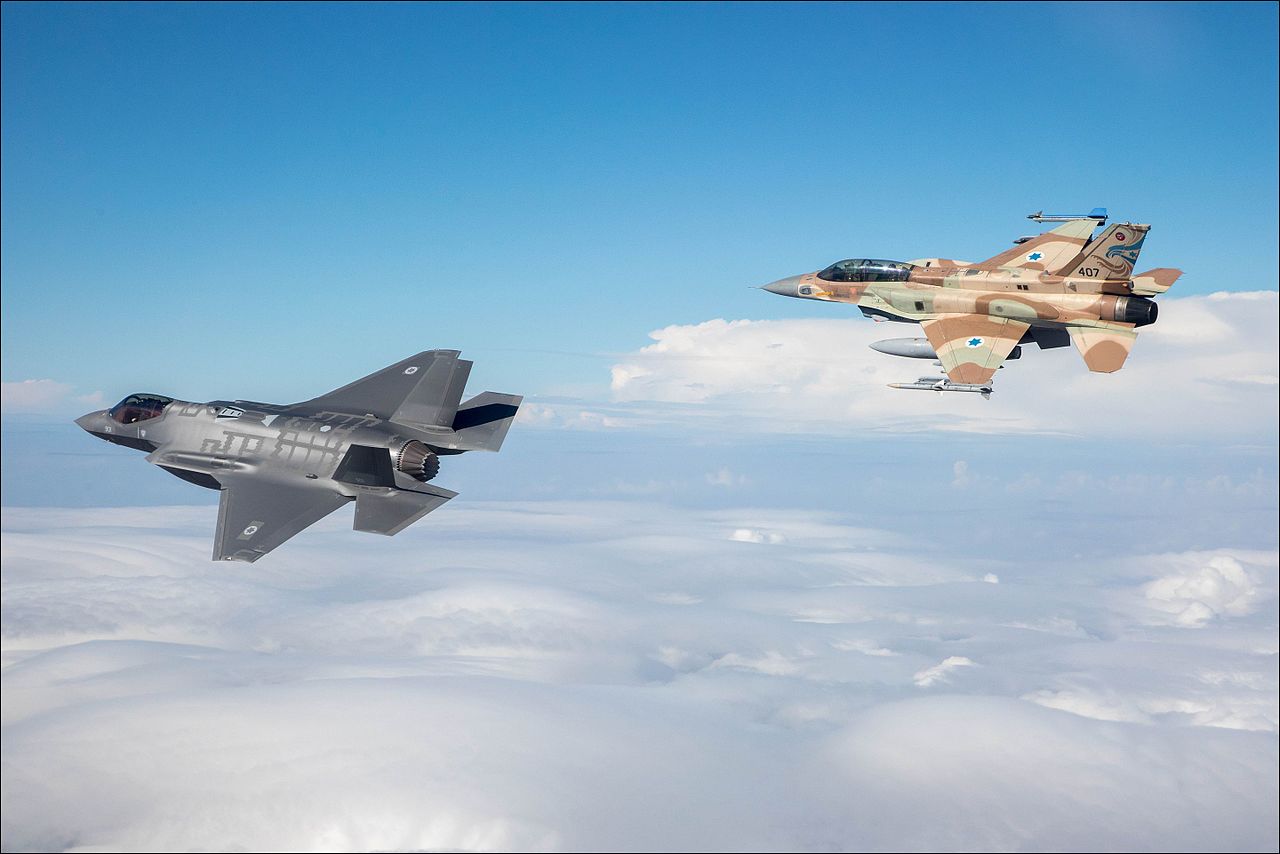
According to the Wall Street Journal, the post housed Israeli special-forces personnel and combat search-and-rescue teams. The CSAR component is the giveaway: you do not build a recovery base unless you are expecting aircraft to be shot down. The Israeli planning assumption appears to have been that some of its F-35I, F-15I and F-16I aircraft might be hit by Iranian air defences during the opening hours of Rising Lion — and that a downed pilot’s best chance of recovery lay not in the long flight back across Jordan and the Saudi peninsula, but in a 30-minute helicopter run to a hidden patch of Iraqi desert.
Sentinel-2 Doesn’t Lie
The European Space Agency’s Sentinel-2 satellites pass overhead every five days. They are not classified intelligence platforms. They feed open-source imagery into the Copernicus programme, which any analyst, journalist or curious teenager can browse for free. By late March, Iraqi open-source watchers were posting screenshots showing the graded airstrip on social media. By April, defence-OSINT accounts had geolocated it.

Iraq’s deputy commander of joint operations, Lieutenant-General Qais al-Muhammadawi, eventually had to confirm publicly that something had been wrong. Speaking to the state-run Iraqi News Agency on 8 May 2026, he said Baghdad had received reports of “individuals or movement” in the Najaf desert.
“A force of three regiments from the Karbala Operations Command was deployed to investigate,” he said. “The force came under heavy aerial fire, resulting in the death of one fighter and injuries to two others.” Later, he added, two counterterrorism regiments swept the area “and found nothing.” By the time Iraqi forces arrived, the Israelis were gone.
The Shepherd
Every retelling of this story keeps returning to the shepherd. Iraqi officials have not released his name. Al Jazeera’s Baghdad correspondent Mahmoud Abdelwahed, citing local sources, reported that he had been driving his flock through familiar grazing land when he saw the helicopters. He flagged it to local authorities. Within days, the Wall Street Journal account reports, his vehicle was struck — and he was killed — by what Iraqi investigators concluded was an Israeli air strike.
For an Israeli command staff that calculated that absolute secrecy was the difference between a successful air campaign and a downed pilot in Iranian custody, the logic was probably cold and clear. For the family of an Iraqi shepherd in the empty stretch of Anbar, it was a death so disproportionate that it has become the symbolic centre of the story.

How a Country Loses a Base on Its Own Soil
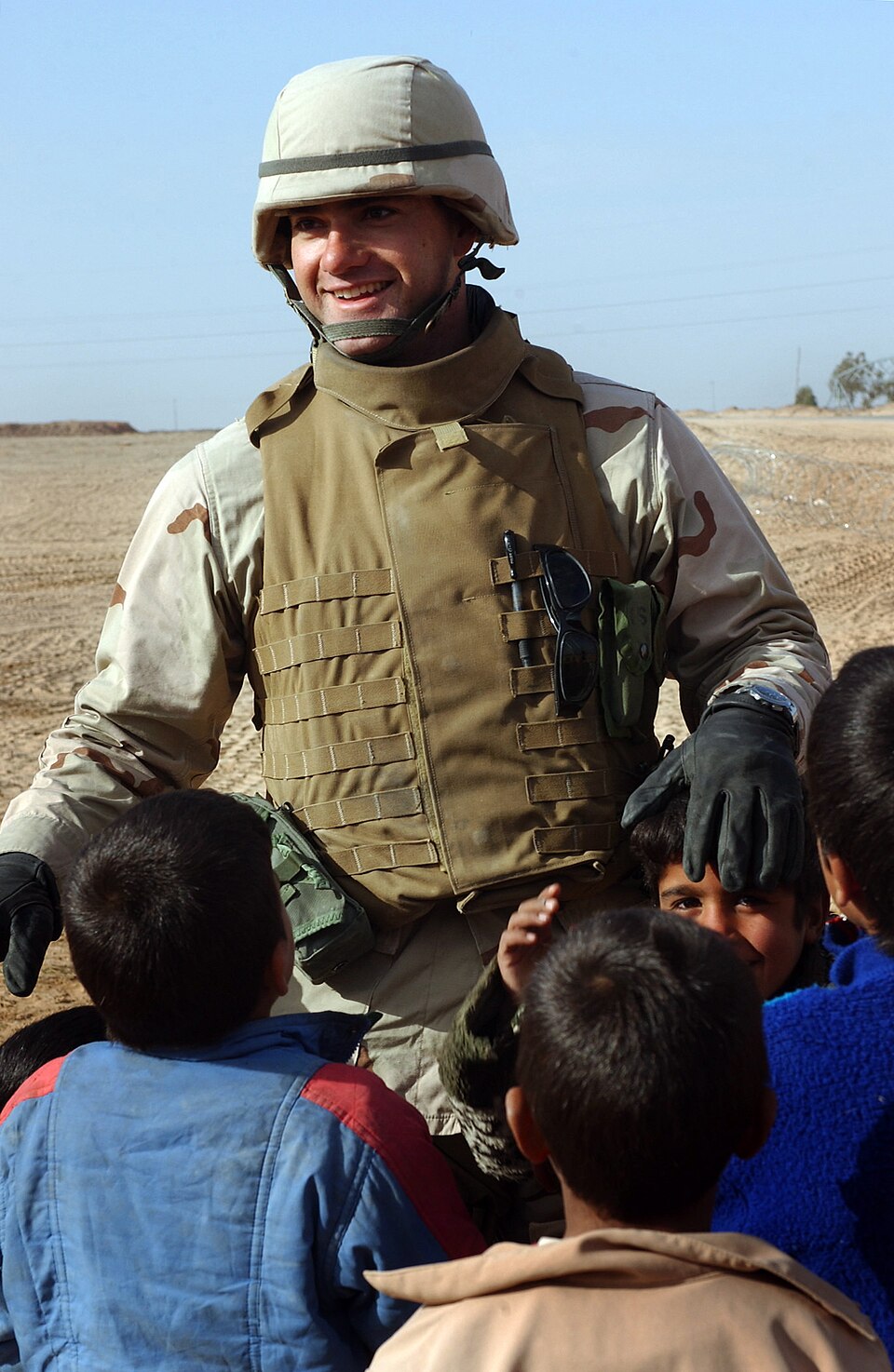
For Baghdad, the political damage is enormous. Iraq’s national line — repeated by every prime minister since the 2003 invasion — is that no foreign forces operate inside the country without explicit Iraqi government approval. The presence of an Israeli special-forces outpost, with American knowledge, on Iraqi sovereign territory blew that fiction up in public.
The Iraqi response has been a study in damage limitation. Al-Muhammadawi initially denied any agreement with any foreign force for any presence in the area. Then, separately, Baghdad lodged a formal protest with the United States about suspected covert activity — quietly, in late March, before the WSJ revealed the base. A senior Iraqi security official, speaking to the Turkish news agency Anadolu in May, again denied that an Israeli base had ever existed. On the same day, a Badr Organisation member of parliament was telling the Iraqi outlet Shafaq News that yes, there was a joint US–Israeli camp in western Iraq.
The contradictions add up to the only honest answer: Baghdad had no idea, then partial idea, then full knowledge — and never had the political capital, or the military capability, to stop any of it.
Why the WSJ Published Now
The most-asked question among Middle East analysts since 9 May has not been “did this base exist” — Sentinel-2 settled that question weeks ago — but “why did the US Government let it be revealed now?” Israeli analyst Yaakov Lappin, writing for i24News, called the WSJ piece “a deliberate strategic reveal” rather than a leak. The argument runs: with the air campaign over, with Iranian nuclear infrastructure visibly damaged, and with Tehran now negotiating a ceasefire, publicising the Iraq base sends a message. It says: we were inside your neighbourhood the whole time. We will be again.
That kind of strategic deterrence-by-disclosure has been an Israeli speciality at least since the 1981 Osirak raid. The new wrinkle is that it now requires American complicity, since the country whose sovereignty was being violated is one Washington nominally protects.
What the Base Tells Us About Modern Air Power
For aviation enthusiasts, the most important detail in this story is not the politics. It is the logistics. The Israeli Air Force is the smallest air force in the world to have launched a successful pre-emptive strike across multiple hostile borders in a single morning. It did so by accepting a degree of risk that almost no other air force would tolerate — flying single-engine F-35Is across more than 1,500 kilometres of contested airspace, with no friendly diversion airfield available for the return.
The Iraq base was the diversion airfield. Quietly, methodically, and at a price no Iraqi citizen ever consented to, the IAF built itself a safety net. The fact that it was found by a shepherd, not by any state intelligence agency, is the part that should keep a few people awake at night.
Video coverage of the secret Israeli base in the Iraqi desert — satellite analysis and reporting on what the WSJ revealed.
Sources: Wall Street Journal (Dion Nissenbaum and Benoit Faucon, 9 May 2026); Al Jazeera; The Times of Israel; Iraqi News Agency; Shafaq News; The New Arab; Sentinel Hub Copernicus archives; i24News analysis; Anadolu Agency.



 English
0 Comments