
Quick Facts
| Nationality | Spanish 🇪🇸 |
| Aerial Victories | 40 (highest ace, Spanish Civil War) |
| Aircraft Flown | Fiat CR.32, Bf 109B/C |
| Wars | Spanish Civil War (Nationalist) |
| Born / Died | 25 Apr 1904 – 4 Apr 1939 (age 34) |
| Unit | Grupo 2-G-3 |
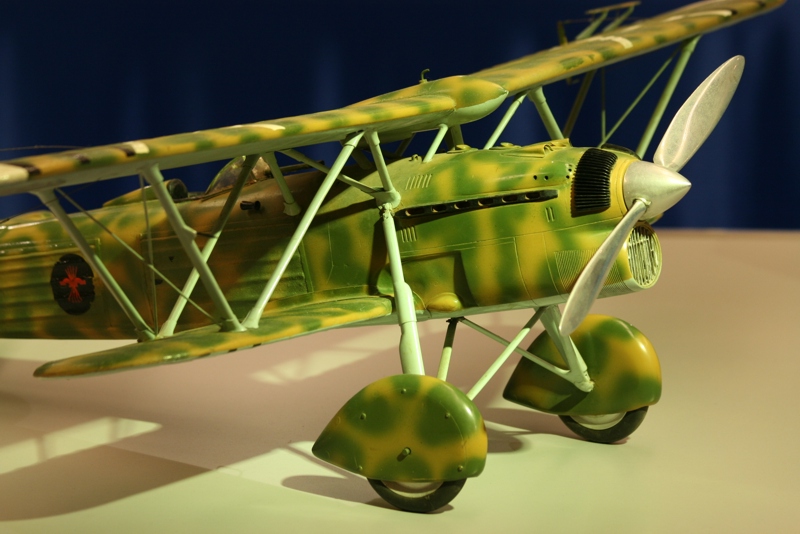
Most of the aces in this series fought in world wars that reshaped entire continents. Joaquín García Morato fought in a civil war that tore his own country apart — and became the most decorated pilot in Spanish history, flying with a ferocity and elegance that made him a legend in the skies above Spain.
Spain’s Finest Pilot
Born in 1904 in Logroño, Spain, Joaquín García Morato y Castaño was a career military pilot of exceptional talent who had already distinguished himself in colonial operations in Morocco before the Spanish Civil War began. When Francisco Franco’s Nationalist forces launched their rebellion in 1936, García Morato immediately aligned with the Nationalists and was soon at the heart of their air campaign.
He flew primarily the Fiat CR.32 — an Italian-built biplane that was fast, manoeuvrable, and utterly in its element in the turning dogfights of the Spanish Civil War. García Morato had an instinctive mastery of the biplane’s strengths: tight turns, sustained energy management, and the ability to exploit gaps in enemy formation flying. He developed tactics specifically suited to his aircraft that consistently outfoxed more numerically powerful Republican forces.

40 Confirmed Victories
García Morato finished the Spanish Civil War with 40 confirmed aerial victories — the highest total of any pilot on either side of the conflict, and the highest score achieved in any single theatre by a pilot flying only biplane fighters. He was awarded Spain’s highest military decorations multiple times, and his name became synonymous with aerial excellence throughout the Spanish military.
What made his achievement particularly remarkable was the nature of the opposition. Republican forces included experienced Soviet pilots flying the Polikarpov I-16 — a modern monoplane that was faster and more heavily armed than García Morato’s Fiat biplane. Yet he consistently defeated these opponents through superior positioning, aggression at the right moment, and an almost preternatural ability to read developing engagements before they unfolded.
A Tragic Postscript
The Spanish Civil War ended in March 1939 with Nationalist victory. García Morato was celebrated as the hero of the air campaign, promoted to Colonel, and appointed to lead the newly formed Spanish Air Force. On April 4, 1939 — just days after the war’s conclusion — he died in a crash while performing aerobatics in a captured Republican aircraft. He was 34 years old.
The irony is painful: Spain’s greatest ace survived three years of brutal civil war combat only to die in peacetime, showing off his skills in a victory display. A street in Madrid still bears his name. Spain’s air force has honoured him as a founding father.
The Ace of a Forgotten Theatre
The Spanish Civil War is often remembered as a testing ground for WWII weapons and tactics — the stage where the Luftwaffe’s Condor Legion rehearsed for bigger things. García Morato’s story is a reminder that the war had its own heroes entirely independent of what came next. He was not a rehearsal. He was the main event — Spain’s greatest aviator, who flew and died entirely for his own country’s sky.
“A fighter pilot must be as cold as steel and as swift as lightning.”
— Joaquín García Morato, Spanish Nationalist ace


 English
0 Comments