
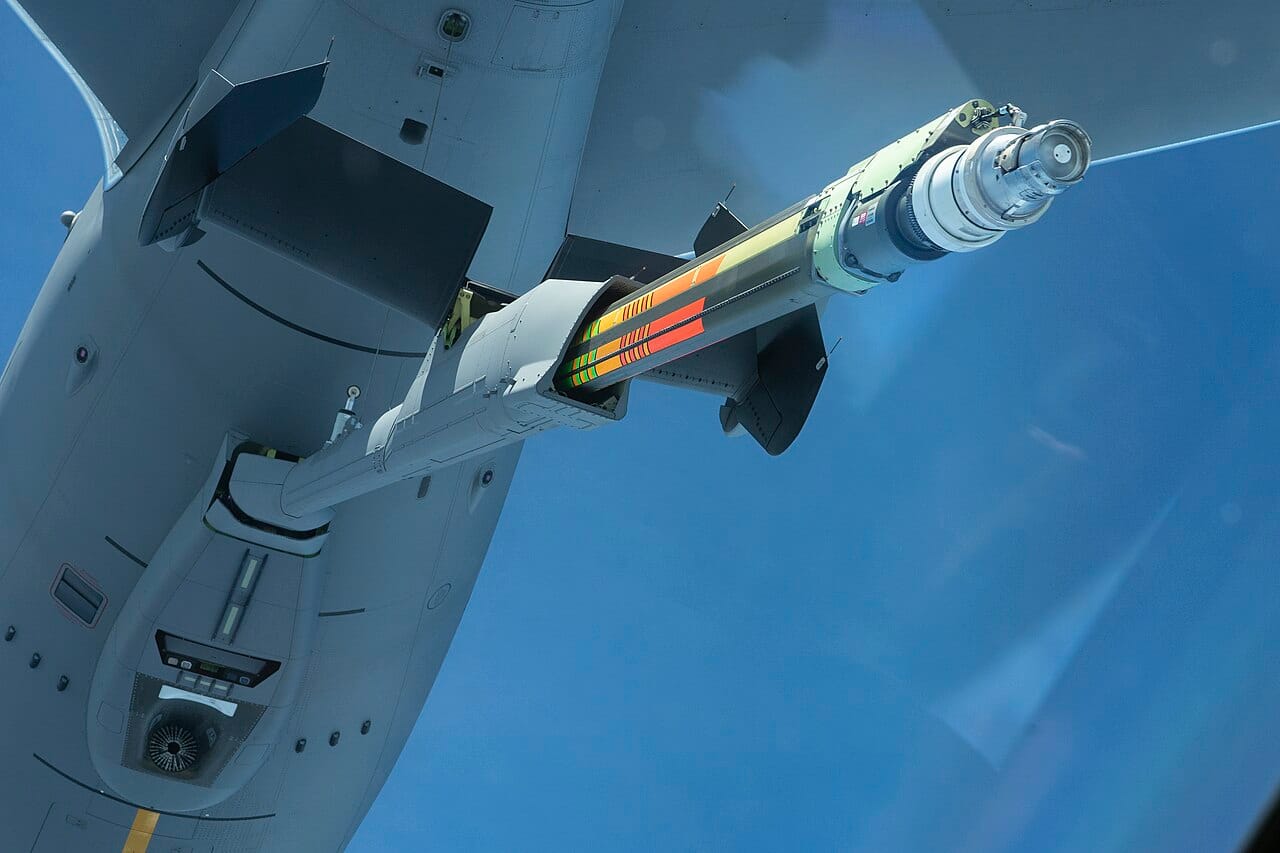
Somewhere on the seabed off the coast of Virginia lies a 15-metre telescoping arm worth about $10 million. It used to belong to a U.S. Air Force KC-46A Pegasus tanker. Then, in a few violent seconds over the Atlantic, it didn’t.
Well — almost. In the interest of accuracy: only one of the two booms a KC-46 has lost in flight actually ended up in the Atlantic. The other came down in a California national forest. But this Atlantic splash is unmistakably the second Pegasus boom to snap clean off in under a year — so the headline gets the spirit of the thing right.
An Air Force Accident Investigation Board report made public on 12 June 2026 has finally explained how the Pegasus came to drop this particular boom into the ocean while topping up an F-22 Raptor. The short version: a boom operator and a fighter pilot each made a mistake at the same moment — and a flaw the Air Force has known about for years did the rest.
QUICK FACTS
Aircraft: Boeing KC-46A Pegasus
Incident: Refueling boom separated in flight
Date: 8 July 2025, ~100 mi (160 km) off Virginia
Receiver: F-22A Raptor
Damage: ~$10 million (Class A mishap)
Report published: 12 June 2026 (USAF Accident Investigation Board)
A routine top-up that went very wrong
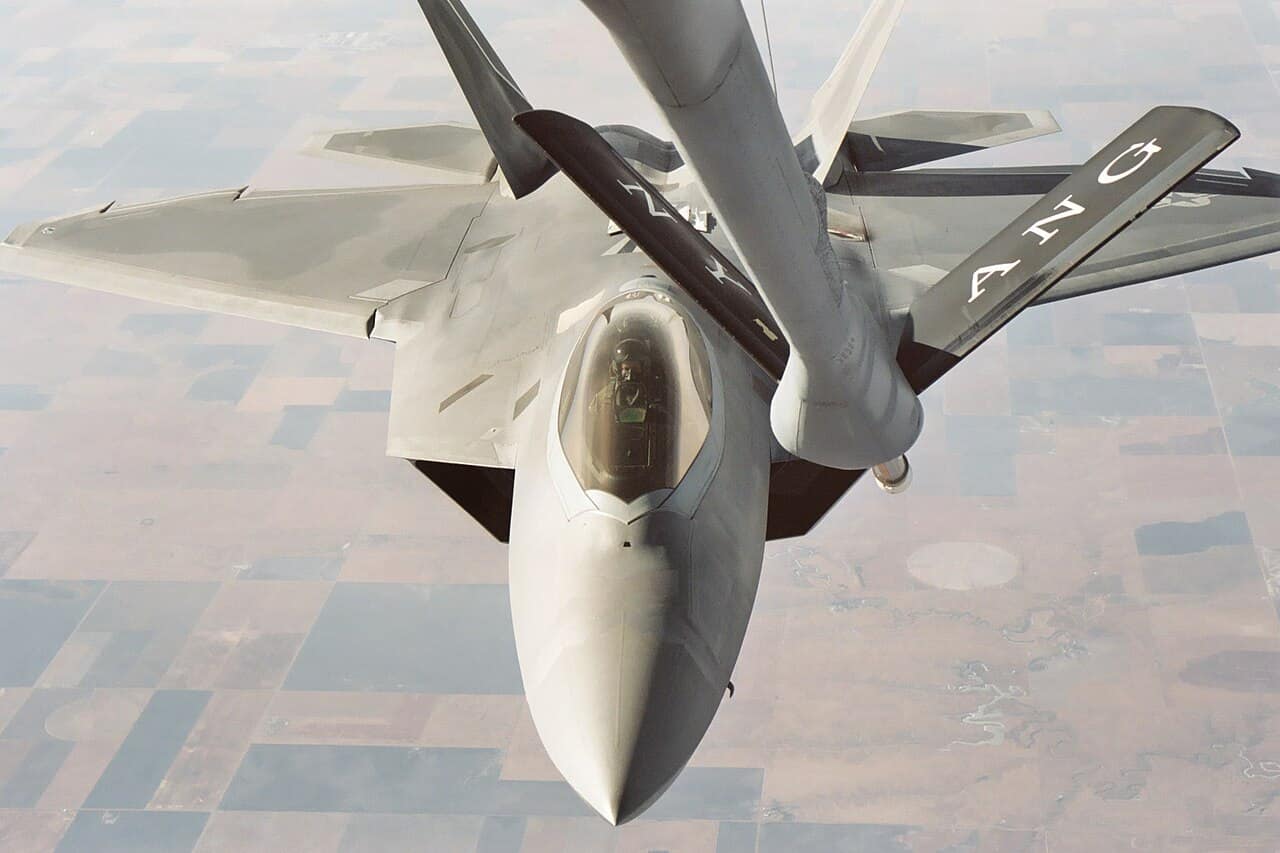
The mishap happened on 8 July 2025 during a training sortie roughly 100 miles off the Virginia coast, with the tanker servicing a flight of F-22 Raptors. Aerial refueling is the least glamorous, most relentless job in military aviation: without it, stealth fighters become short-legged point-defence interceptors. The KC-46 was built to do exactly this.
According to the report, the boom operator’s manual inputs to the refueling control stick left the boom “excessively out of trim.” When the nozzle stuck inside the Raptor’s receptacle — a phenomenon called nozzle binding — those inputs translated into a sudden, brutal load on the boom. The arm couldn’t take it.
The “stiff boom” the Air Force already knew about
The crew error did not happen in a vacuum. The board singled out the KC-46’s “stiff boom” — a long-documented deficiency in how the boom responds to control inputs — as a contributing factor. Technical guidance already warns operators that when a nozzle looks stuck, the first move is to neutralise the flight controls and avoid abrupt inputs.
There was a second human link in the chain. The board found the F-22 pilot failed to reduce power when the nozzle bound, which helped lock the connection and added to the strain. Two people, two small errors, one expensive splash.

Two booms, eleven months apart
And about that first boom. On 21 August 2024, a KC-46 refueling a pair of F-15Es near Vandenberg lost its boom when a stuck probe was wrenched with thousands of pounds of force — that arm fell into Los Padres National Forest in California, with damage tallied at more than $14 million. Same root cause, different terrain. The Atlantic only got the second one.
The KC-46 program has been a long, costly saga of fixes — from its troubled Remote Vision System to a string of category-one deficiencies. A boom that can shed itself under load is not a footnote; it is the whole point of the aircraft failing at the one task it exists to perform.
No one was hurt, and both tankers landed safely. But two booms lost in under a year on a fleet meant to be the backbone of American air power is the kind of statistic that gets noticed on Capitol Hill. The Pegasus keeps everything else airborne. It would help if it could keep hold of its own hardware.
Sources: U.S. Air Force Accident Investigation Board report; Air & Space Forces Magazine; Military Times; Task & Purpose; The War Zone
 English
0 Comments