
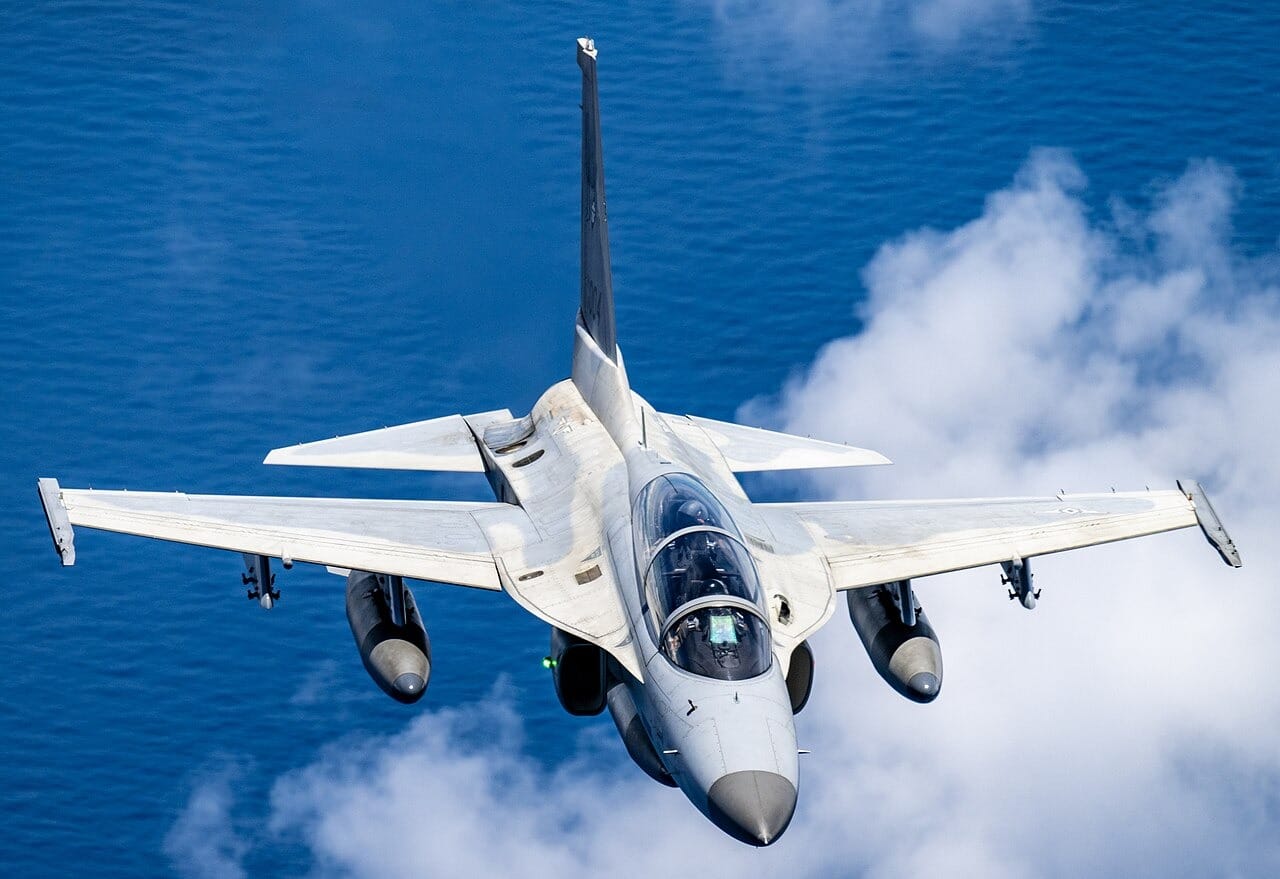
Two T-50i Golden Eagles arrived at Iswahjudi Air Base in East Java in early March, flown in pieces inside a Boeing 747 freighter and reassembled on the ground. Fuselage, wings, vertical tail, engine — each component traveled separately across more than 700 kilometers of road and air before the jets took shape again on Indonesian soil. It is a logistically complex way to receive an airplane, but for Indonesia’s Air Force, the delivery marks something bigger than two new jets.
It marks the beginning of the end for the T-50i as a trainer — and the start of a fascinating arms race between South Korea and Italy for Southeast Asia’s most important military aviation contract.
The Korean Incumbent
Indonesia has been flying T-50 variants since 2013, when the first batch of 16 aircraft entered service with the 15th Air Squadron. Three were lost to accidents over the years, and the latest delivery of two jets is part of a follow-on order for six additional aircraft signed in 2021. With 15 airframes now operational and more on the way, Indonesia operates one of the largest T-50 fleets outside South Korea itself.
The T-50i has served Indonesia well as an advanced trainer and light combat aircraft. Built by Korea Aerospace Industries, it is a capable supersonic jet derived from the same airframe that competes for the U.S. Navy’s own trainer replacement. Indonesian pilots have used it to bridge the gap between basic training and frontline F-16 operations.
But the T-50i’s days as a trainer appear numbered. Indonesia’s Air Force plans to transition the Korean jets into a dedicated light attack role, pairing them with the F-16 fleet and leveraging existing F-16 weapon stocks. The training mission is being handed to someone else.
The Italian Challenger
That someone is Leonardo. At the Singapore Airshow in February 2026, the Italian aerospace giant signed a Letter of Intent with Indonesia’s Ministry of Defence for the M-346F Block 20 — the fighter variant of what many consider the world’s most advanced jet trainer. The deal is designed to replace Indonesia’s aging fleet of BAE Hawk 109/209 aircraft, which have been flying training and light attack missions since the 1990s.
The M-346 brings something the T-50i cannot easily match: a fly-by-wire flight control system specifically designed to replicate the handling characteristics of fourth- and fifth-generation fighters. A student pilot in an M-346 can experience what it feels like to fly an F-35 or a Eurofighter without leaving the training environment. For a country that may eventually operate advanced Western fighters, that capability matters enormously.
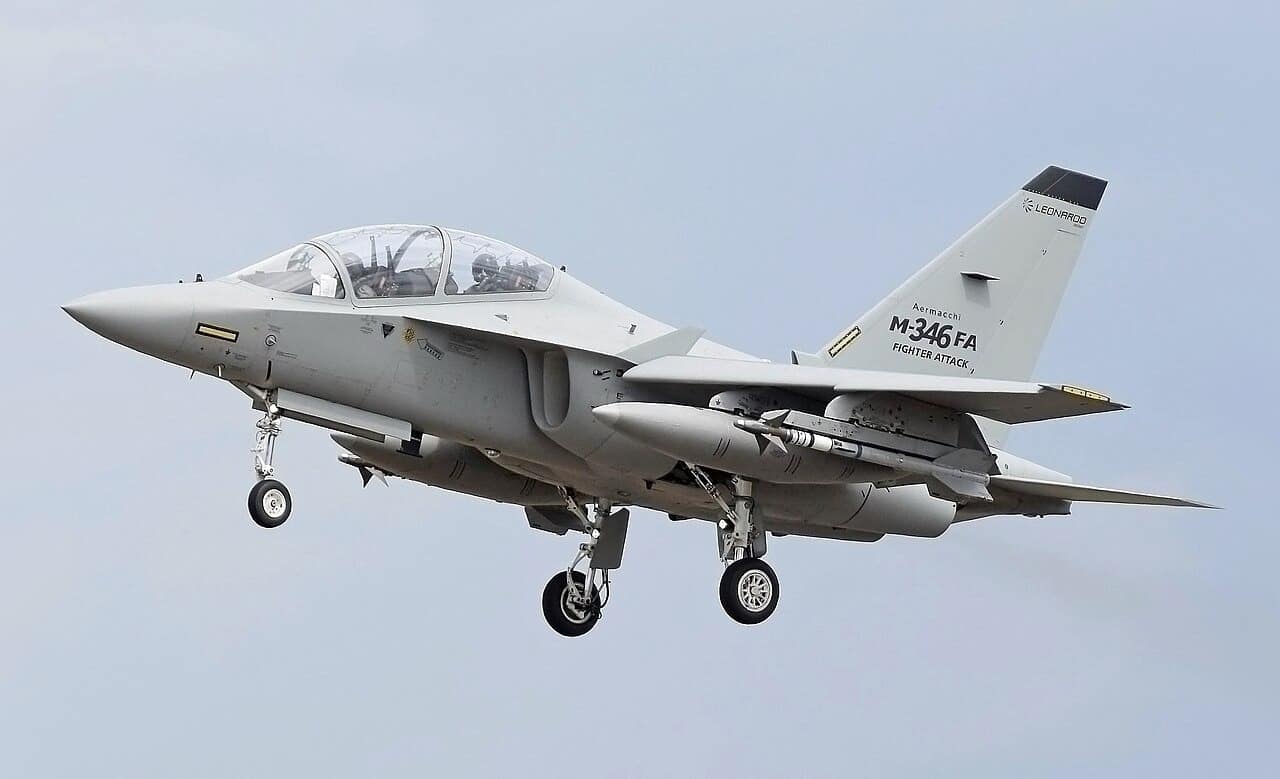
The Leonardo M-346 Master — Italy’s answer to the T-50 Golden Eagle in the Southeast Asian trainer market.
Leonardo’s offer also includes maintenance, overhaul, and training support localized within Indonesia — a critical sweetener for a government that prioritizes domestic defense industrial capacity.
Two Jets, Two Roles, One Air Force
What makes Indonesia’s situation unusual is that both jets will likely end up in the same air force, doing different jobs. The T-50i transitions to light attack. The M-346F takes over advanced training and potentially light combat duties of its own. It is not quite a winner-take-all competition — it is more like a realignment of roles that leaves both Seoul and Rome with a foothold in Jakarta.
But the broader implications ripple across the region. The Philippines, Malaysia, Thailand, and Vietnam are all modernizing their air forces. Whichever platform proves itself in Indonesian service becomes the reference case for the next round of Southeast Asian trainer contracts. Korea Aerospace Industries and Leonardo both know this. The T-50i delivery and the M-346 deal are not just about Indonesia — they are opening moves in a continental sales campaign.
In the world’s fastest-growing defense market, the trainer you fly today determines the fighter you buy tomorrow.
Sources: Alert 5, Defense News, Asian Military Review, Leonardo
 English
0 Comments