
Unit 588th Night Bomber Regiment, Soviet Air Forces
Nickname Nachthexen (“Night Witches”) — given by terrified German soldiers
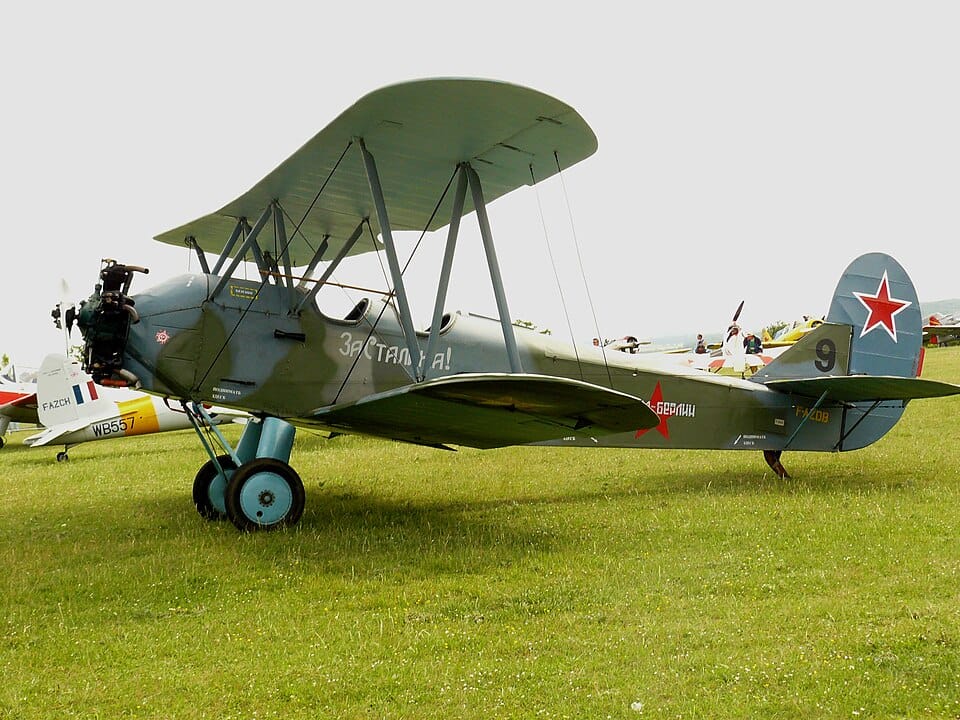
Aircraft Polikarpov Po-2 biplane (1920s design, wood and canvas)
Personnel All-female — pilots, navigators, mechanics, commanders
Combat Missions 30,000+ night bombing sorties (1942–1945)
Bombs Dropped ~23,000 tonnes
Losses 32 pilots killed in action
Honours 23 members awarded Hero of the Soviet Union — the highest military distinction

They cut their engines above the target. In the sudden silence, the only sound was wind through canvas wings — a faint whooshing that German soldiers said sounded like a broomstick sweeping the sky. Then the bombs fell. By the time the explosions lit up the ground, the biplane was already gone, swallowed by darkness. The Germans called them Nachthexen. Night Witches.
The 588th Night Bomber Regiment was an all-female Soviet unit that flew over 30,000 combat missions in aircraft that belonged in a museum. Their Polikarpov Po-2 biplanes were designed in 1928 as crop dusters and trainers — open cockpits, fabric-covered frames, a top speed slower than most cars on the autobahn. They had no armour, no radios, no parachutes (to save weight for one more bomb), and no gun sights. The pilots dropped their ordnance by hand, using a rudimentary wire-and-nail contraption to aim.
And they were devastating.
Born Out of Desperation
In October 1941, the Soviet Union was losing the war. The Wehrmacht had reached the outskirts of Moscow. Millions of soldiers were dead, captured, or encircled. In this crisis, Major Marina Raskova — a famous Soviet aviator known as the “Soviet Amelia Earhart” — petitioned Stalin directly to form three all-female air regiments. Women had been clamouring to fly combat since the invasion began. The men said no. Raskova went over their heads.
Stalin approved. Three regiments were formed: a fighter regiment, a dive-bomber regiment, and the 588th Night Bomber Regiment. The 588th was unique even among these: every role was filled by women. Pilots, navigators, ground crew, mechanics, armorers, commanders — all female, most of them between 17 and 26 years old. Many were university students who had learned to fly in Soviet civilian aviation clubs. Within months, they were flying combat missions against an enemy that had conquered most of continental Europe.
The regiment’s commander, Major Yevdokia Bershanskaya, led the unit from its formation in 1942 until the end of the war. Under her command, the 588th would become the most decorated female unit in Soviet military history — and one of the most effective night harassment squadrons on the Eastern Front.
The Art of Silent Bombing
The Po-2 was a liability in daylight. Any Luftwaffe fighter could catch it, outrun it, and shred its canvas skin with a single burst. So the 588th flew exclusively at night, in missions that would have been considered suicidal by any conventional military standard.
The tactic was elegant in its simplicity. The Po-2s flew in groups of three. Two aircraft would approach the target first, splitting apart to draw searchlights and anti-aircraft fire in opposite directions. While the gunners tracked the decoys, the third aircraft glided in with its engine cut, invisible and inaudible, releasing its bombs in the seconds before the Germans realised the real threat wasn’t where they were shooting.
Each aircraft carried only two bombs — the Po-2 couldn’t lift more. So the pilots flew multiple sorties per night: eight, ten, sometimes eighteen round trips between their airfield and the target. They would land, have their mechanics reload the bombs in five minutes, and take off again. By dawn, a single pilot might have dropped over a tonne of explosives on German positions — delivered two bombs at a time.
The psychological effect was immense. German soldiers never knew when the next silent attack would come. Sleep was impossible. Every night brought the whooshing sound of canvas wings and the crack of explosions in the darkness. The harassment was relentless, and it ground down German morale in a way that conventional bombing couldn’t match.
The Cost of Courage
Thirty-two Night Witches were killed in action over three years of continuous combat. The Po-2 offered no protection. A single tracer round could ignite the fabric-covered airframe, turning it into a flying torch. There were no ejection seats, no self-sealing fuel tanks, no armour plating. The only defence was darkness, skill, and nerve.
Twenty-three members of the regiment received the Hero of the Soviet Union medal — the highest military honour in the Soviet Armed Forces. For perspective, entire divisions of male soldiers on the Eastern Front produced fewer Heroes. The women of the 588th earned their recognition in the most dangerous aircraft, flying the most hazardous missions, night after night, for three years.
They flew their last missions in May 1945, bombing German positions during the Battle of Berlin. When the war ended, the Soviet military disbanded the regiment and told its members to go home. Most returned to civilian life without fanfare. Their story, suppressed during the Cold War and overlooked in Western histories, has only gained the recognition it deserves in recent decades. The Night Witches flew biplanes made of canvas and courage into the teeth of the most powerful military machine in history — and they never stopped coming.
Sources: “Night Witches: The Untold Story of Soviet Women in Combat” by Bruce Myles, Russian Aviation Museum archives, Smithsonian Air & Space Magazine
 English
0 Comments