
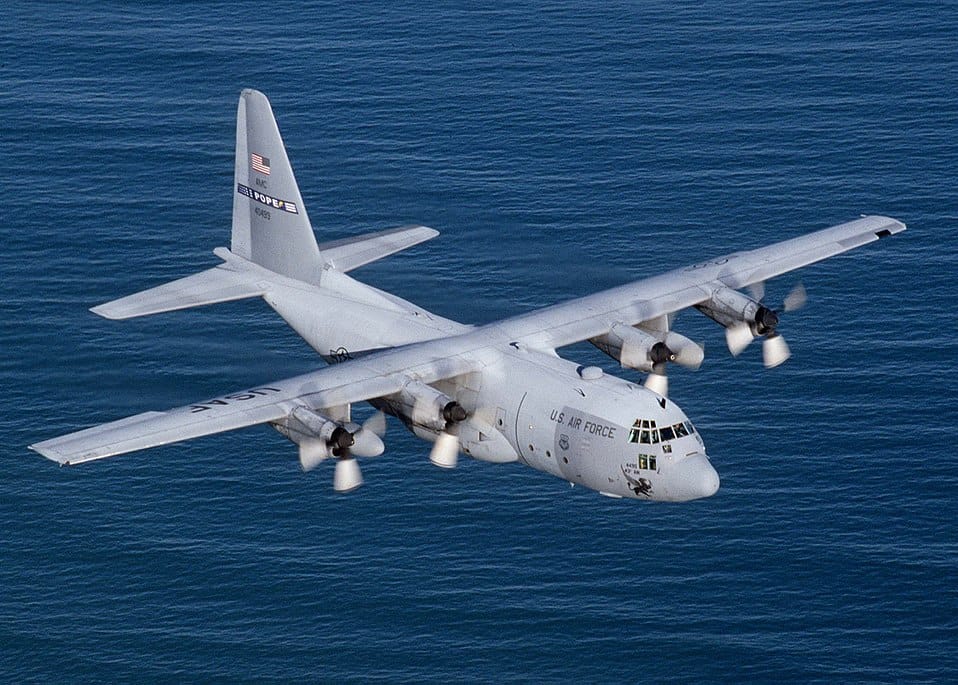
On February 27, 2026, a Bolivian Air Force C-130H Hercules loaded with freshly printed banknotes touched down at El Alto International Airport — one of the highest commercial airports on Earth at 4,061 meters above sea level. It never stopped. The aircraft overran the runway, ploughed through the perimeter, and crashed onto a busy highway outside the airport fence. Twenty-four people died. Forty-three were injured. Scattered across the wreckage and the road: millions of dollars in unissued currency.
The crash happened in a hailstorm. The aircraft was loaded to maximum capacity. And according to a technical report released afterward, it was physically impossible for the C-130H to stop safely at El Alto under those conditions. The question isn’t what went wrong — it’s who approved the flight in the first place.

Altitude Kills Performance
El Alto sits at 4,061 meters — over 13,000 feet. At that altitude, the air is roughly 40% thinner than at sea level. Thinner air means less engine power, less wing lift, and critically, less braking effectiveness. Every performance number in the C-130’s manual gets worse at altitude. Takeoff rolls get longer. Landing distances stretch. Thrust reversers become less effective. It’s physics, and physics doesn’t negotiate.
The Hercules was built for short, rough field operations — but even the Herc has limits. A maximum-weight landing at sea level is a completely different proposition from a maximum-weight landing at 13,000 feet during a hailstorm with a wet runway. The margins that exist at low altitude simply evaporate.
The Bolivian Air Force’s post-crash technical report was blunt. The investigators concluded that given the aircraft’s weight and the altitude of El Alto, the aircraft physically could not stop within the available runway length. The laws of aerodynamics made the overrun inevitable the moment the crew accepted the load and the destination.
A Highway Turned Into a Crash Site
The C-130 didn’t just slide off the end of the runway into an empty field. El Alto’s airport borders a major highway. The aircraft ploughed through the perimeter fence and struck 15 vehicles on the road. Of the 24 fatalities, 23 were people on the ground — commuters, families, children. Four of the dead were children. Only one of the eight crew members aboard the Hercules was killed.
The aircraft, registration FAB-81, was a 1977-built C-130H — nearly half a century old. Bolivia’s military transport fleet has been aging for decades, with limited budgets for modernisation or replacement. The Hercules was carrying an undisclosed amount of freshly printed banknotes on behalf of Bolivia’s Central Bank. Photos from the crash site showed currency scattered across the highway and wreckage.
Two C-130 Disasters in One Month
The Bolivia crash came just weeks after an even deadlier C-130 disaster in South America. On March 23, a Colombian Air Force C-130 crashed shortly after takeoff from Caucaya Airport carrying 126 people — far beyond the aircraft’s safe capacity. At least 70 were killed and 56 injured.
Two military C-130 crashes in the same region within a month raises uncomfortable questions about the state of ageing military transport fleets across Latin America. Both aircraft were decades-old Hercules variants. Both were operating in conditions — high altitude, heavy loads — that pushed the airframes beyond their safe performance envelopes. Both incidents point to a systemic problem: militaries flying missions that their aircraft and infrastructure can no longer safely support.
The C-130 Hercules is one of the most reliable aircraft ever built. More than 2,500 have been produced since 1954, serving in over 60 countries. But reliability doesn’t mean invulnerability. When an old aircraft is overloaded, sent to an airport at 13,000 feet, during a hailstorm, the best design in the world can’t save you from bad decision-making on the ground.
Sources: Aviation Safety Network, Simple Flying, Al Jazeera, AeroTime, Aerospace Global News


 English
0 Comments