

Quick Facts
Contract Value: $200 million (integration phase)
Missile: PAC-3 Missile Segment Enhancement (MSE)
Manufacturer: Lockheed Martin
Ship Class: Arleigh Burke-class guided-missile destroyers (DDG-51)
Combat System: Aegis Weapon System
Launch System: Mk 41 Vertical Launching System (modified canisters)
Planned Procurement: 405 PAC-3 MSE interceptors (FY2027 budget, $1.73 billion)
First Land-Based Test: Early 2027
Initial Operational Capability: 2028
Production Ramp: 600 → 2,000 interceptors/year ($4.7B contract)
Why the Navy Wants an Army Missile
The Navy already has interceptors. Standard Missiles — the SM-2, SM-3, and SM-6 — have been the backbone of fleet air defence for decades. The SM-3 Block IIA can shoot down ballistic missiles in space. The SM-6 can hit manoeuvring targets at extreme range. So why bolt a Patriot missile onto a destroyer? The answer is terminal defence against hypersonic weapons. China’s DF-21D and DF-26 anti-ship ballistic missiles — the so-called carrier killers — and newer hypersonic glide vehicles travel at speeds that compress the engagement timeline to seconds. The SM-6 can engage some of these threats, but the PAC-3 MSE adds a layer of defence that the Navy currently lacks: a hit-to-kill interceptor optimised for terminal-phase engagements against fast, manoeuvring targets at close range.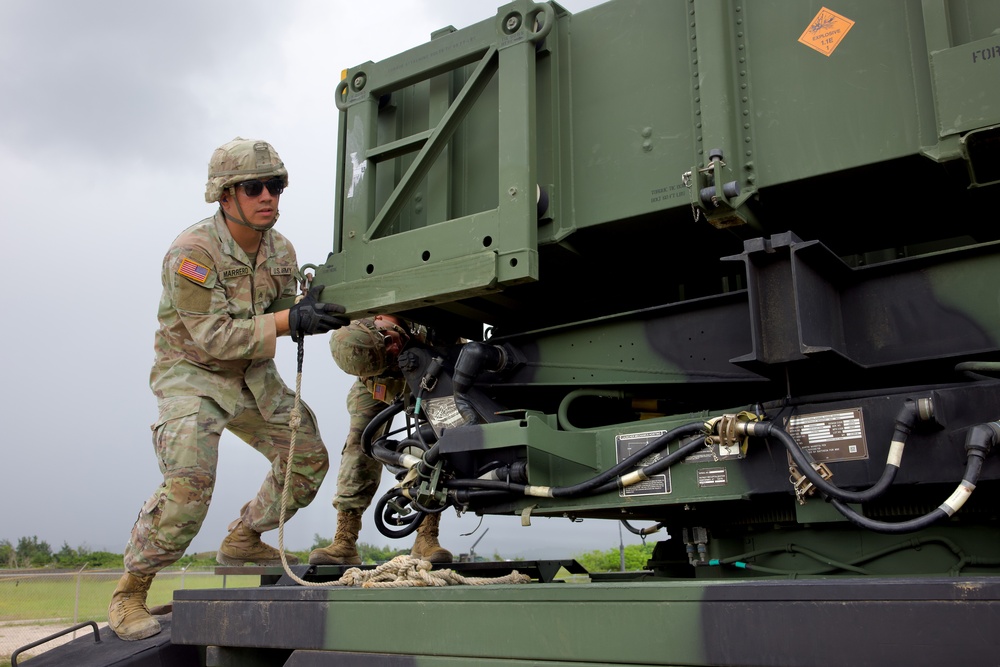
Making It Fit
Putting an Army missile on a Navy ship is not as simple as swapping one canister for another. The integration requires changes to the PAC-3 MSE’s command guidance radio frequencies to work with the Aegis system, and new missile canisters designed to fit inside the Mk 41 Vertical Launching System — the universal magazine that already holds Tomahawks, Standard Missiles, and ESSM interceptors aboard Arleigh Burke destroyers. Lockheed Martin anticipates a first land-based integration test in early 2027, with initial operational capability scheduled for 2028 — when the first destroyer is expected to deploy with navalised PAC-3 MSEs in its launch cells. The timeline is aggressive but reflects the urgency. The Navy requested just over $1.73 billion in the FY2027 budget to procure 405 PAC-3 MSE interceptors — a massive order that signals how seriously the fleet takes the hypersonic threat. Meanwhile, a separate $4.7 billion contract is ramping PAC-3 MSE production from roughly 600 to 2,000 interceptors per year over seven years.The Bigger Picture
The PAC-3 MSE naval integration is part of a broader shift in how the Pentagon thinks about missile defence. Service boundaries are dissolving. The Army’s best interceptor goes to sea. Navy radars feed Army batteries. Air Force sensors cue Marine Corps shooters. The goal is an integrated kill web where any sensor can direct any shooter against any threat, regardless of which service badge the operator wears. For the Navy’s surface fleet, the addition of PAC-3 MSE means one more layer in a defence that already includes the SPY-6 radar, SM-2/3/6 interceptors, ESSM, SeaRAM, and Phalanx CIWS. In a Pacific conflict, a carrier strike group approaching within range of Chinese anti-ship missiles would have multiple opportunities to kill an incoming hypersonic weapon — from boost-phase intercepts with SM-3 to midcourse engagements with SM-6 to terminal kills with PAC-3 MSE. No single layer is foolproof. But stacking them makes the defender’s math considerably better — and the attacker’s problem considerably harder.Sources: Naval News, Military Times, Lockheed Martin, Aviation Week, The War Zone


 English
0 Comments