
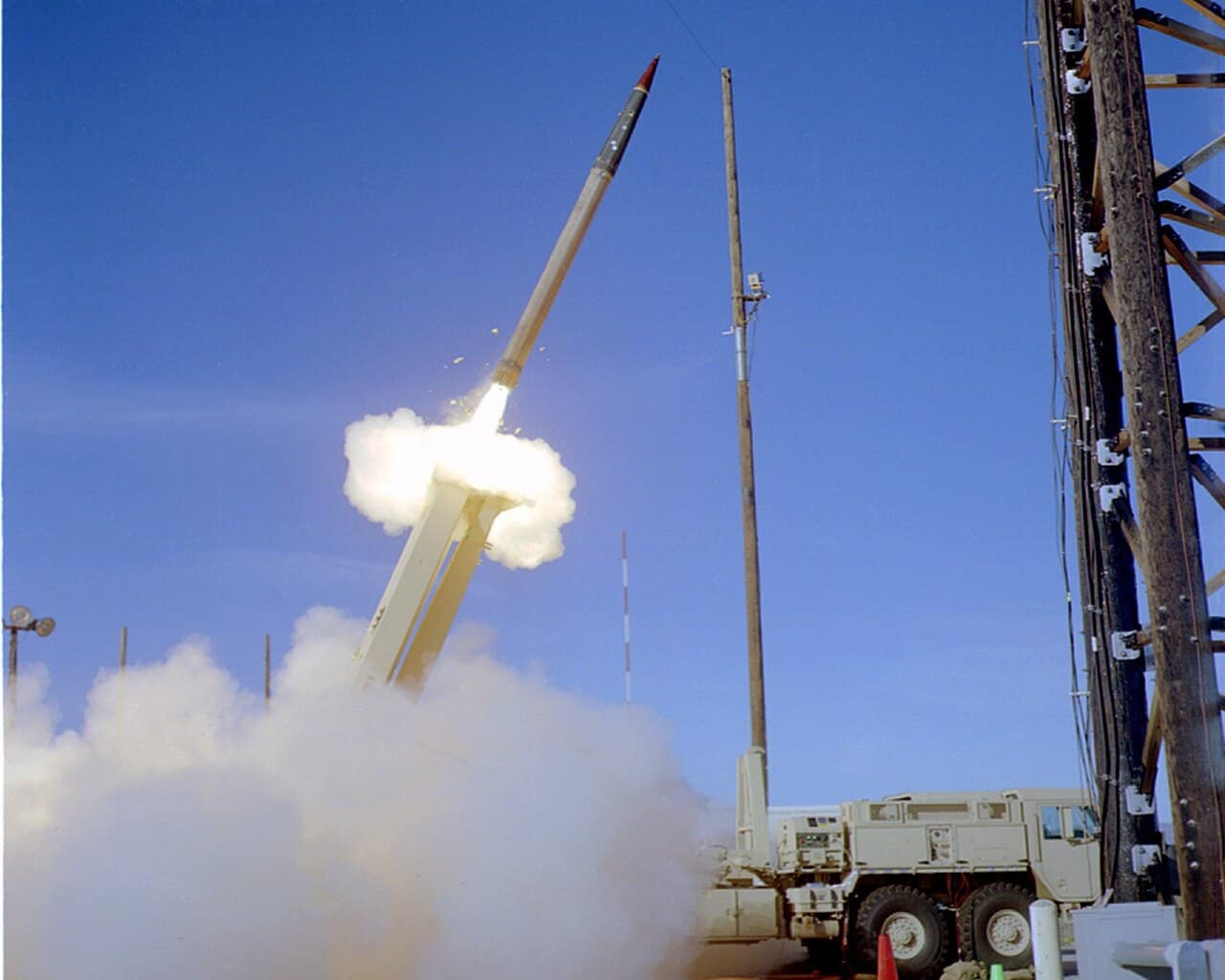
The Pentagon has finally put a date on the test that proves America can shoot down a hypersonic missile. The Missile Defense Agency (MDA) confirmed this week that a counter-hypersonic live-fire intercept test, known as Project Maverick, is now scheduled for fiscal year 2027 — Mach 5 chasing Mach 5, at altitudes and speeds the United States has never publicly engaged before.
Until now, “counter-hypersonic” has lived in PowerPoint slides and concept videos. By 2027, it has to live in a desert range with a fireball at the end.
Quick Facts
Agency: Missile Defense Agency (MDA)
Test: First U.S. counter-hypersonic live-fire intercept
Fiscal year: FY 2027
Threat speed: Mach 5+
Likely interceptor: An SM-6-based interim interceptor — the Glide Phase Interceptor (GPI) is not due until about 2031
Target: Hypersonic glide vehicle (representative threat)
Why it matters: China and Russia field operational hypersonic weapons today
Failed history: Multiple U.S. hypersonic offensive programmes cancelled or delayed
Catching a Glide Vehicle
A hypersonic glide vehicle is harder to kill than a ballistic missile for one reason: it manoeuvres. A ballistic warhead follows a predictable parabolic arc once it separates from its rocket booster. A hypersonic glide vehicle doesn’t — it pulls turns at Mach 6 inside the atmosphere, defeating the prediction algorithms that current interceptors rely on.
The MDA’s answer is a new family of interceptors, of which the Glide Phase Interceptor (GPI) is the long-term centrepiece — though it is not expected to be delivered until about 2031. It’s designed to engage a glide vehicle while it’s still in the upper atmosphere, before it begins its terminal manoeuvres.
Why 2027 Is the Test That Counts
China fielded its DF-17 hypersonic glide weapon as an operational system in 2020. Russia has the Avangard. The United States has spent two decades on its own hypersonic offensive programmes — AGM-183 ARRW, HAWC, LRHW — with mixed results. But until 2027, America has had no proven means to defeat the same class of weapons in its own enemies’ hands.
A successful 2027 intercept would close that gap. A failure would mean another decade of catching up.
Sources: Air & Space Forces Magazine, Missile Defense Agency, Defense News.

 English
0 Comments