
| Quick Facts | |
|---|---|
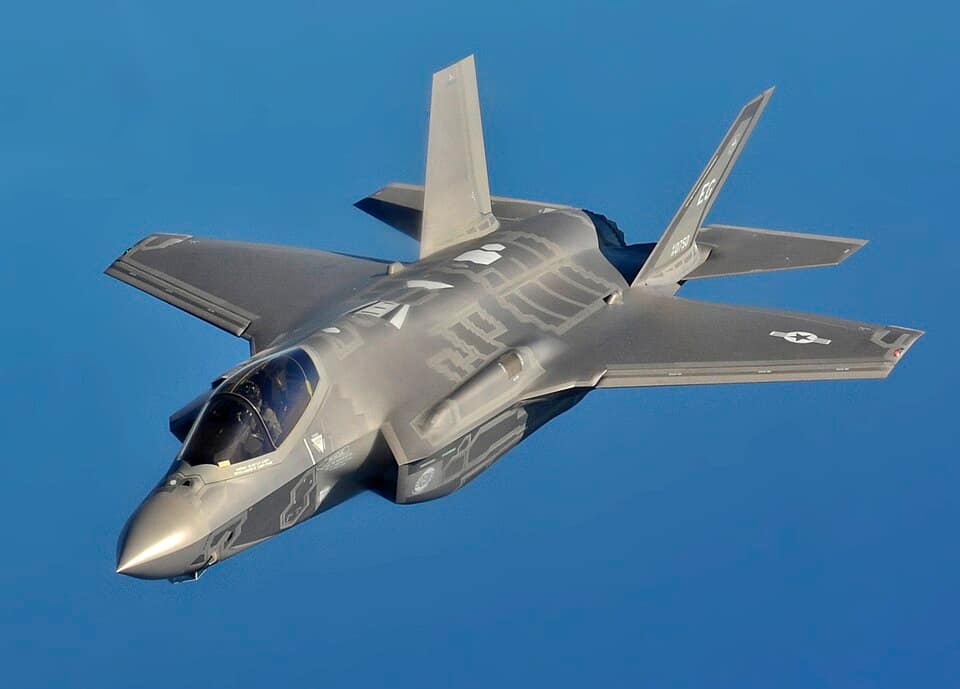
| Aircraft | Lockheed Martin F-35 Lightning II |
| 2027 Budget Request | 85 F-35s total — 38 for the Air Force, remainder for Navy, Marines, and allies |
| Engine Contract | $6.6 billion for Pratt & Whitney F135 engines (Lots 18 and 19) |
| Contract Breakdown | $3.8 billion modification definitising Lot 18, plus Lot 19 production funding |
| Engine | Pratt & Whitney F135 — 43,000 lbs thrust with afterburner, most powerful fighter engine ever built |
| Customers | USAF, USN, USMC, F-35 partner nations, and foreign military sales |
| Completion | March 2028 |

The Pentagon just placed the biggest F-35 order in years — and backed it up with a $6.6 billion engine deal to keep them flying. The 2027 defence budget requests 85 new Lightning IIs across all three services, with 38 earmarked for the Air Force. Separately, Pratt & Whitney locked in the largest F135 engine contract ever awarded, covering two full production lots and stretching through 2028.
The timing is no coincidence. Five weeks into Operation Epic Fury, the F-35 fleet is burning through flight hours at wartime rates. A crash in the Nevada Test Range on March 31 — the pilot ejected safely — is a reminder that peacetime attrition doesn’t stop just because a war is on. The Pentagon needs more jets, and it needs the engines to power them.
The $6.6 Billion Heart of the F-35
The F135 is the most powerful fighter engine ever built. It produces 43,000 pounds of thrust in afterburner — enough to push the F-35 past Mach 1.6 despite the jet’s hefty combat weight. Every F-35 variant, from the conventional-takeoff A model to the short-takeoff B and the carrier-launched C, runs on some version of the F135.
The new contract modification definitises Lot 18 production at $3.8 billion and funds the start of Lot 19, bringing the total across both lots to $6.6 billion. The engines will be built at Pratt & Whitney facilities in Connecticut and Indianapolis, with completion expected by March 2028. The contract covers engines for the US Air Force, Navy, Marine Corps, partner nations, and foreign military sales customers.

38 Lightning IIs for the Air Force
The 2027 budget requests 85 F-35s in total, with the Air Force taking 38 — a significant jump that reflects both the jet’s growing combat record and the need to replace ageing fourth-generation fighters faster than planned. The F-35A now costs around $80 million per unit in recent lots, down from over $100 million a decade ago. At 38 jets, the Air Force buy alone represents roughly $3 billion.
The remaining 47 jets will be split between the Navy’s F-35C carrier variant, the Marine Corps’ F-35B short-takeoff model, and deliveries to international partners and foreign buyers. The F-35 programme now spans more than a dozen allied nations, from the UK and Italy to Japan, South Korea, and — controversially — Turkey, which recently signed a training and support deal with the UK for a potential Eurofighter purchase after being expelled from the F-35 programme in 2019.
Wartime Demand Meets Production Reality
The US military has never fought a major air campaign with the F-35 as a primary strike platform before Epic Fury. The jet’s stealth and sensor fusion have proven decisive in suppressing Iran’s air defences, but the operational tempo is exposing logistical strains. Engine sustainment costs have been a persistent headache — the Pentagon awarded a separate $1.6 billion contract just to maintain existing F135s.
Meanwhile, the F-35 fleet continues to grow worldwide. Over 1,000 aircraft have been delivered globally, making it the most produced fifth-generation fighter in history. The 2027 budget request signals that the Pentagon sees no alternative: the F-35 is the fighter of the present and the foreseeable future, and the only way to keep it flying is to keep building engines.

Eighty-five jets. Six-point-six billion dollars in engines. The numbers are massive, and they’re growing. When historians look back at the F-35 programme — once mocked as the trillion-dollar jet that couldn’t fly straight — they may find that a real shooting war over Iran was the moment the Lightning II proved it was worth every cent.
Sources: Air & Space Forces Magazine, Breaking Defense, The Arsenal Report
 English
0 Comments